Acoustic Stimulation During Slow-Wave Sleep Improves Memory Consolidation in Trial
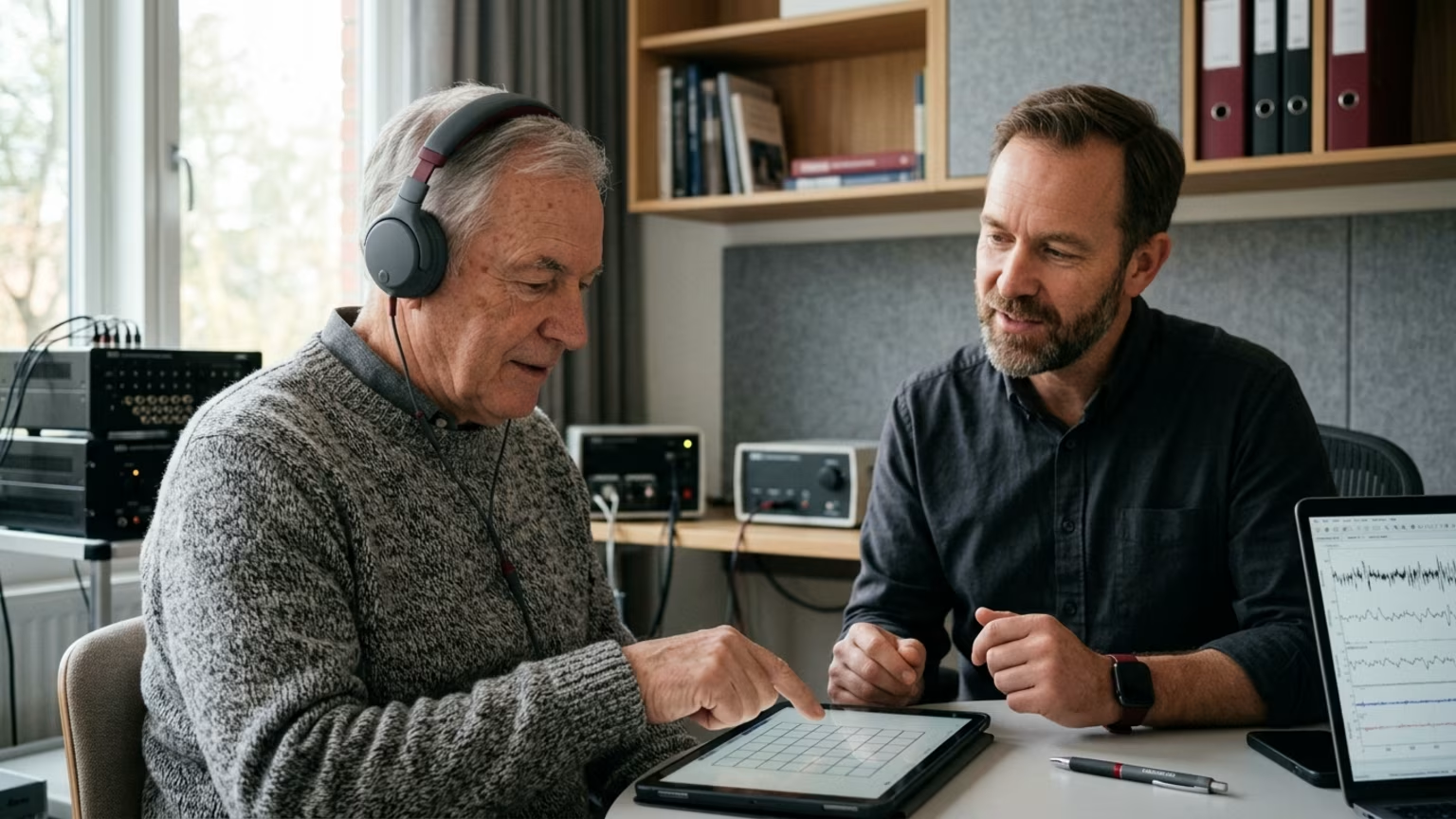
A study published online in the journal Sleep on September 11, 2026, examined whether closed-loop acoustic stimulation could strengthen slow-wave sleep and improve overnight memory retention.
How Researchers Tested Sleep and Memory
The investigators used a randomized, single-blind, crossover study design to evaluate how sound affects sleep physiology and learning. The trial included 20 healthy young adults. The mean age of the participants was 25 years, plus or minus 4 years. Women made up 75% of the study group.
Because it was a crossover study, every participant experienced both the active acoustic stimulation and the sham conditions. This specific design allowed the researchers to compare each person with themselves. It removes the variability of relying only on differences between separate groups. The intervention was tested over a single night of closed-loop stimulation.
The participants received acoustic stimulation during non-rapid-eye-movement sleep stages 2 and 3. These stages naturally include periods of slow-wave activity. The sound was closed-loop and timed specifically to the ongoing brain activity of the sleeper. The equipment monitored the participants' brain waves continuously.
When the system detected the specific signature of slow-wave sleep, it triggered the acoustic stimulation. This highly coordinated approach aligns the sound with the natural rhythm of the brain. To measure cognitive outcomes, the test involved paired word associates. This is a laboratory task designed to assess how well newly learned associations are retained overnight. Participants learn the words, sleep with the monitored equipment, and are tested on their retention upon waking.
The article is an original research paper in the journal Sleep. It was published by Oxford University Press on behalf of the Sleep Research Society. The publicly available page identifies it as an accepted manuscript. This status notes that the final typeset article may contain minor changes.
Physiological Outcomes and Brain Rhythms
The researchers reported that acoustic stimulation was associated with improved memory retention compared with the sham stimulation. The study focused on the coordination of several sleep-related processes. It did not just look at slow-wave activity in isolation. The findings suggest that the timing of different brain waves matters more than a simple increase in deep sleep.
The data points to specific mechanisms closely associated with memory improvement. First, there was greater spindle nesting within slow oscillations relative to delta waves. The researchers defined the relevant slow oscillations as 0.5 to 1.5 Hz. They defined delta activity as greater than 1.5 to 4 Hz.
Spindles are brief bursts of higher-frequency activity that occur during sleep. The nesting of these spindles within the slower waves appears to facilitate the transfer of information. The investigators found that the ratio of slow-oscillation-to-delta-wave spindle nesting predicted memory performance. Absolute slow-oscillation spindle nesting did not predict performance as effectively.
This detail suggests that the relative timing and coordination of these distinct brain waves is highly significant for processing information. Second, the researchers noted increased parasympathetic activity during slow-wave sleep. This was measured through heart-rate variability. The study found a strong correlation between the slow-oscillation-to-delta spindle-nesting ratio and this parasympathetic activity.
Expert Interpretation of Sleep Coordination
The investigators interpret these findings as evidence for a complex biological interaction. They propose that acoustic stimulation may improve memory consolidation by optimizing the interaction between sleep oscillatory networks and autonomic activity. This analysis is more specific than the common assumption that more deep sleep is always better.
The study suggests that the precise timing of slow oscillations, delta waves, and spindles matters most. Memory consolidation may depend on this coordinated brain regulation. A simple increase in one broad measure of slow-wave activity is likely not enough to guarantee cognitive benefits.
The autonomic finding links memory retention with parasympathetic activity during slow-wave sleep. This association is a correlated mechanism. It should not be interpreted as proof that deliberately increasing heart-rate variability will automatically improve memory.
This research is part of a wider effort to develop non-drug approaches for sleep physiology. A separate human study published in PubMed reported that phase-locked auditory stimulation increased cerebrospinal-fluid flow waves during sleep. This occurred when the sound was aligned with slow-wave peaks, providing biological context for how sound impacts the sleeping brain. The researchers of that separate study described the technique as a potential translational tool for future clinical populations.
What These Findings Mean for Cognitive Aging
The immediate result is relevant to healthy aging because sleep-dependent memory consolidation is a major part of learning and recall. The practical significance lies in the principle being tested. Precisely timed sound may be able to influence the brain rhythms that accompany deep non-rapid-eye-movement sleep.
These results may eventually matter to people who want to remain mentally sharp over time. Overnight consolidation helps stabilize newly learned information, which is useful for men continuing to work or learn technical skills. You can review how preserving focus and memory after 45 requires comprehensive strategies.
Playing relaxing music or background noise throughout the night is not the same thing. The stimulation in this study was a precise research protocol. It detected sleep-related brain activity and delivered acoustic stimulation at selected times during sleep.
The current evidence does not show that consumers can reproduce the result with a phone or a commercially marketed sound product. Treating this study as promising mechanistic research is appropriate. Treating it as a ready-made sleep product is not supported by the data.
Study Limitations and Unanswered Questions
While the physiological data is detailed, the study contains significant limitations. The sample was very small, testing only 20 healthy young adults. A sample of that size cannot establish how well the result generalizes across older adults or people with sleep disorders.
The participants were young adults, averaging 25 years old. The study does not establish that the same intervention improves memory in men aged 45 to 70. Responses to acoustic stimulation may vary significantly with age.
Because the trial only lasted one night, it does not establish whether benefits accumulate or disappear with repeated use. The public abstract also does not give the size of the memory benefit. It reports improved retention, but it lacks the numerical difference between active and sham conditions.
The outcome was strictly a laboratory memory task. The paper does not show that the intervention improves everyday recall, navigation, or work performance. Furthermore, there is no evidence here for physical performance benefits. The study did not measure muscle strength, recovery, mobility, testosterone, body composition, or physical energy.
Practical Steps for Men Over 45
Men should not substitute sound stimulation for established sleep fundamentals. The study did not test whether acoustic stimulation compensates for insufficient sleep or untreated sleep apnea. It also did not evaluate alcohol-related sleep disruption or chronic insomnia.
For men who train or remain active, consistent sleep timing and sufficient sleep opportunity remain defensible priorities. Evaluating persistent snoring or daytime sleepiness is far more practical than buying an unvalidated sound device. To see how breathing disruptions affect recovery, reviewing the link between sleep apnea and testosterone offers clearer guidance.
A consumer product should not be described as reproducing this trial unless it can document comparable capabilities. It would need to demonstrate comparable sleep-stage detection, precise timing, and exact stimulation parameters. It would also need to prove outcomes in a similar population. The public study abstract provides no evidence that a particular commercial device has done so.
Watch for age-specific trials over the coming years. The most useful next studies would include adults over 45, report results separately by sex and age, and test repeated-night use. Future research must measure clinically meaningful memory outcomes. The pressing need for such research follows directly from the fact that the current trial involved just 20 young adults and one night of stimulation.
Should future studies confirm the effect for older men, the likely role would be specific support for memory consolidation. It would not replace resistance training, cardiovascular activity, social engagement, or medical care. Physical practices remain foundational, as seen when adjusting routines to improve mobility for daily life.
Getting reliable, continuous rest remains a foundation for performance. For this reason, understanding the complete guide to reliable sleep provides more practical immediate steps. Also, understanding the trade-offs of substances like caffeine on energy and sleep can protect your sleep architecture without needing specialized equipment.
This research alters current theoretical models by demonstrating that improving memory retention through sound depends on precisely timing the coordination between distinct brain oscillations and parasympathetic activity, rather than merely increasing total slow-wave sleep.
How Everfitguys helps
Losing muscle, strength and physical capability with age often distracts men from addressing their simultaneous cognitive and recovery needs. The specific problem of declining memory consolidation during sleep requires separating early laboratory trials from proven lifestyle adjustments, and Everfitguys translates these clinical mechanisms so you can build a reliable foundation for long term vitality. Read the research
Sources
Stay sharp
Get stories
The best writing on craft and life, delivered once a week. No noise, just the good stuff.