You step off a high curb while carrying a heavy grocery box. Ten years ago, your feet would have hit the pavement with quick, quiet absorption. Today, the landing feels heavier, your knees take a fraction of a second longer to stabilize, and you feel the impact across your lower back.
Getting up from the living room floor requires a deliberate hand on the coffee table. You notice a slight hesitation when turning quickly to catch a falling set of keys.
These subtle shifts are rarely the result of a single injury. They reflect normal changes in how your muscles, tendons, joints, and nervous system coordinate physical action.
Aging alters the tissues and control systems that produce movement. It does not place a fixed limit on your capability. Many physical capacities, such as rising from a low seat, carrying heavy loads, climbing stairs, and recovering your footing, remain trainable for decades.
What the research shows about physical capability after 45
The scientific evidence separates physical change into biological aging, sedentary habits, and modifiable reserve. Chronological age measures time lived, but it does not determine what you can do. Two men aged 55 can show vast differences in walking speed, leg power, joint comfort, and balance.
Muscle mass and maximal force production peak in early adulthood, typically between ages 30 and 35. After midlife, physical power and movement velocity decline gradually at first. That decline can accelerate after age 65 or 70 if a person remains inactive.
Research indicates an estimated loss of muscle mass between 5% and 10% per decade after age 50. Individual trajectories vary widely based on physical activity, nutrition, and overall health. Sarcopenia, which involves the clinical loss of muscle mass, strength, and function, affects roughly 5% to 13% of adults aged 60 to 70.
Strength and physical power decline faster than visible muscle size. A man can lose functional capacity while his body weight remains unchanged.
Clinical research shows that systematic exercise alters this trajectory. Resistance training produces reliable gains in force production, gait speed, and sit-to-stand performance. In pooled clinical trials on older adults with muscle loss, resistance exercise produced meaningful improvements in handgrip strength, walking speed, and chair-rise speed.
Evidence from large systematic reviews confirms that physical training reduces the rate of falls. A comprehensive Cochrane review found that structured exercise reduced fall rates by roughly 23% among community-dwelling older adults. Programs focused on balance and functional movement reduced fall rates by 24%. Programs combining balance drills, functional tasks, and resistance work reduced fall rates by approximately 34%.
Tendons and connective tissues also respond to mechanical loading. Systematic reviews show that older tendons retain the ability to increase stiffness and modulus after resistance training. These adaptations are often smaller and develop more slowly than in younger individuals, but the capacity to adapt remains active.
Why movement changes after 45
Movement is not produced by muscles alone. It requires seamless interaction between four biological networks: the contractile system, the elastic system, the joint system, and the control system. Understanding how these systems change helps explain why movement feels different in midlife.
The contractile system
The contractile system includes skeletal muscle fibers, motor neurons, and cellular energy production. Age-related changes in this system involve a preferential loss of fast-twitch motor units. Fast-twitch fibers generate high amounts of force in short periods.
When fast-twitch fibers shrink or lose nerve connections, muscle power drops. Strength is the maximum force a muscle can generate during a slow effort. Power is force multiplied by speed.
Because power drops faster than slow-speed strength, quick corrections become harder. Inactivity speeds up this process. Muscle quality also declines, meaning a given volume of muscle produces less mechanical force than it did in younger years.
The elastic system
The elastic system consists of tendons, ligaments, and deep fascial tissues. Tendons store and return mechanical energy during walking, running, and jumping. They act like stiff biological springs that protect muscles from sudden shock.
With age, tendons often show reduced stiffness and altered collagen architecture. Cross-links from advanced glycation end-products accumulate within connective tissues over time. This makes the tissue less compliant during slow movements and less efficient at storing energy during quick movements.
Tendon healing capacity and cellular signaling also slow down. A sudden jump in running volume or explosive activity can trigger irritation before the tendon can adapt. Older connective tissue requires consistent, progressive loading to maintain its structural integrity.
The joint system
Joints are complex structures composed of articular cartilage, synovial fluid, subchondral bone, and stabilizing capsules. Joint symptoms after 45 are common. Data from the Centers for Disease Control and Prevention indicate that adults aged 45 and older account for over 88% of diagnosed arthritis cases in the United States.
Cartilage loses water content and cellular proteoglycans over decades. This structural shift can reduce the joint's ability to distribute high impact forces.
Joint changes do not automatically mean progressive damage or physical disability. Pain intensity correlates poorly with what appears on an X-ray or MRI. A joint with visible wear can function comfortably if the surrounding muscles are strong and movement habits are sound.
The control system
The control system includes the brain, spinal cord, sensory nerves, vision, and the inner ear vestibular apparatus. To maintain balance, your nervous system processes sensory inputs and coordinates rapid postural adjustments.
Sensory receptors in your feet and ankles become less sensitive with age. Visual contrast sensitivity and vestibular processing can also decline. The brain takes slightly more time to detect an unexpected shift in body position.
Reaction time involves perceiving a problem, choosing a response, and executing the physical correction. When nervous system signaling slows and leg power is reduced, protective stepping becomes delayed. Building physical capacity in your legs helps offset these sensory delays.
How physical capacity translates to daily life
Changes in physical tissues directly influence how you handle daily physical demands. Understanding this translation keeps you focused on functional capability rather than abstract fitness metrics.
The reserve gap in daily tasks
Physical reserve is the difference between the maximum capacity of your body and the effort needed to complete a task. When you are young and fit, climbing a flight of stairs uses only a small fraction of your total leg strength.
If age and inactivity reduce your leg power by half, that same flight of stairs requires near-maximum effort. The task feels exhausting, your breathing spikes, and your joints feel overloaded.
Building physical reserve makes ordinary life feel easy. You can learn more about building total-body strength in our guide to men's muscle and strength. A wide reserve protects you against unexpected fatigue, illness, or minor trips.
Real-world strength versus gym numbers
Lifting a heavy barbell while lying on a stable bench demonstrates isolated force. It does not automatically guarantee that you can carry a heavy bag of soil across an uneven lawn.
Real-world tasks require multi-planar stability, grip endurance, and trunk control. You must produce force while changing directions and shifting your weight.
Daily capability depends on your ability to move your own body weight through space. Getting off the floor, stepping over obstacles, and carrying awkward loads reflect practical physical competence.
Static balance versus dynamic balance
Standing on one foot on a firm floor is a test of static balance. It provides a basic baseline, but it does not replicate real-world balance challenges.
Most falls occur while moving, turning, or navigating uneven ground. Dynamic balance requires you to control your center of mass while your feet are in motion.
Reactive balance is the ability to recover after an unexpected disturbance. If your foot catches on a rug, your nervous system must launch a fast protective step. That protective step requires both quick decision-making and rapid force production from the hip and calf muscles.
Connective tissue recovery and training tolerance
Cardiovascular fitness can improve faster than connective tissue can remodel. A man over 45 who returns to intense training may feel aerobically fit within four weeks. His tendons and joint capsules may require months to build equal load tolerance.
This mismatch often leads to overuse problems. The heart and lungs feel ready for high volume, but the Achilles tendon or patellar tendon begins to ache.
Sustainable progress requires managing training volume to match the slower adaptation rate of connective tissues. You can explore structured strategies in our longevity science resource guides. Consistency over months matters far more than intensity in a single week.
Practical ways to rebuild movement and reserve
Improving movement after 45 does not require extreme workouts or complicated equipment. Evidence-based training focuses on three foundational elements: capacity, control, and confidence.
- THE MOVEMENT RESERVE PYRAMID
- CONFIDENCE
- CONTROL
- CAPACITY
The capacity, control, and confidence framework
Every physical action requires three things:
- Capacity: Do your muscles, tendons, and lungs have enough raw strength, power, and endurance?
- Control: Can your nervous system coordinate the movement, stabilize your joints, and keep you upright?
- Confidence: Do you trust your body to complete the movement without fear or excessive hesitation?
If a man struggles to get out of a low chair, he may lack quadriceps strength (capacity). He may struggle with foot placement and trunk lean (control). He may also fear knee pain, which causes him to brace awkwardly (confidence). Addressing all three areas restores smooth movement.
Core movement patterns to prioritize
A complete physical routine for men over 45 should train foundational movement patterns rather than isolated muscles:
- The Squat Pattern: Sitting down and standing up from varying heights to build quadriceps and hip strength.
- The Hinge Pattern: Bending at the hips with a neutral spine to strengthen the glutes, hamstrings, and lower back.
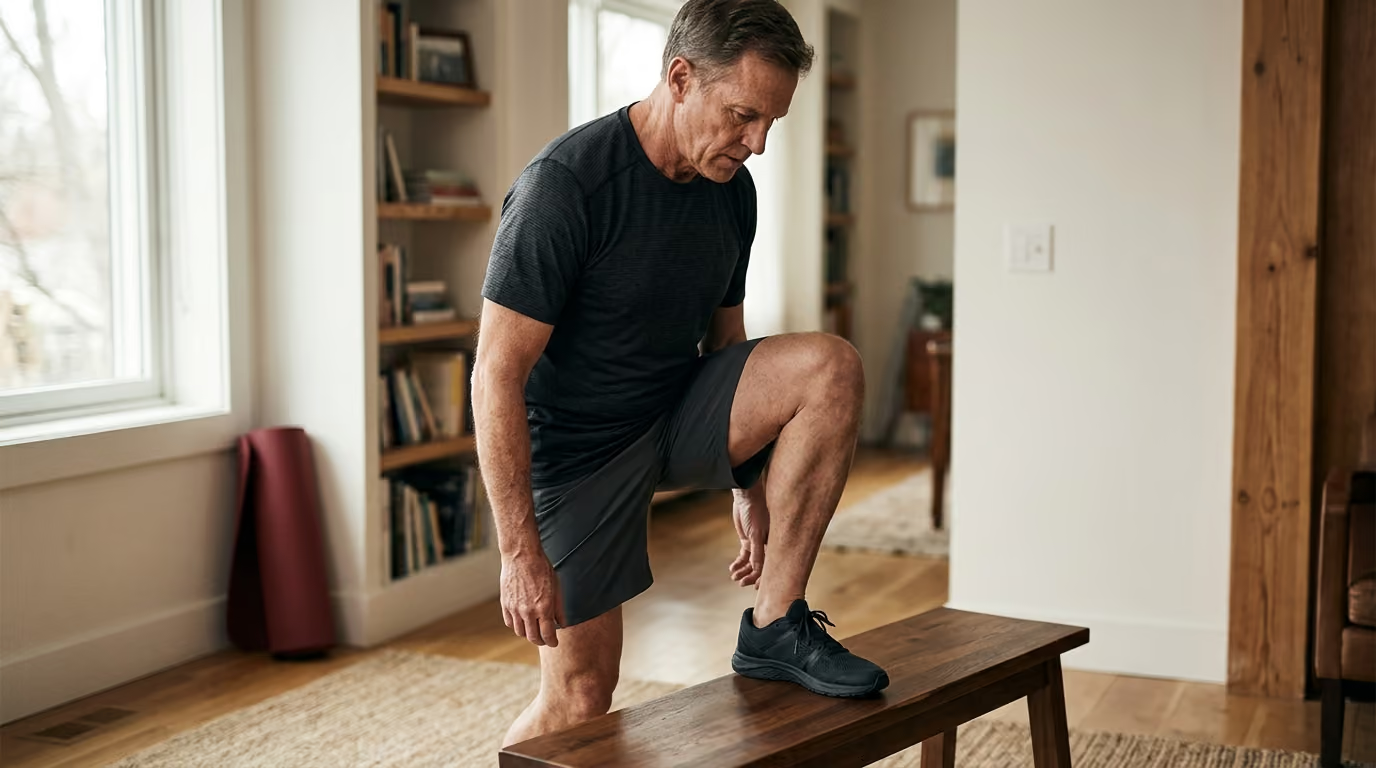
- The Step Pattern: Stepping onto and down from elevated platforms to develop single-leg stability and stair tolerance.
- The Upper-Body Push and Pull: Pressing and rowing movements to preserve shoulder stability and posture.
- The Loaded Carry: Walking with weights in your hands to build grip strength, core stability, and balance under load.
Training these patterns twice per week creates a strong foundation for daily movement. You can find detailed breakdowns in our mobility and recovery resources.
Incorporating power and rapid intent
To train the nervous system and fast-twitch muscle fibers, you must move with rapid intent. This does not mean moving recklessly or using dangerous weights.
Rapid intent means performing the lifting phase of an exercise as briskly as possible while maintaining strict control. When performing a bodyweight sit-to-stand, lower yourself under control for two seconds, pause briefly, and stand up with maximum speed.
Medicine ball throws, brisk step-ups, and controlled kettlebell swings are excellent tools for developing power. Always establish movement control and joint tolerance before increasing movement speed.
Structuring balance training for the real world
Effective balance training must progress beyond stationary stances. A practical balance program introduces gradual challenges across several tiers:
- Tier 1: Narrow Base Drills. Tandem standing, walking heel-to-toe, and standing with feet together on firm and soft surfaces.
- Tier 2: Dynamic Transitions. Walking with head turns, stepping sideways, walking backward, and performing controlled pivots.
- Tier 3: Obstacle and Task Drills. Stepping over low foam blocks, carrying an uneven load, and reaching outside your base of support.
- Tier 4: Dual-Task Practice. Balancing or stepping while counting backward, catching a ball, or answering questions.
The World Health Organization recommends that older adults engage in varied multicomponent physical activity emphasizing balance and strength on at least three days each week. This frequency creates repeated stimulus for neural adaptation.
Building aerobic endurance and tissue health
Aerobic exercise supports mitochondrial function, metabolic health, and tissue perfusion. Guidelines recommend 150 to 300 minutes of moderate-intensity aerobic activity, or 75 to 150 minutes of vigorous activity, each week.
Brisk walking, cycling, rowing, and swimming are effective options. Walking on varied outdoor terrain, such as dirt trails or rolling hills, offers an added benefit. It challenges your ankles, knees, and balance systems in ways that flat treadmills cannot match.
Illustrative training models and case examples
Examining how different men adapt their training clarifies how these principles work in real situations. These illustrative models describe practical applications of the research.
The desk worker with tight hips and stiff knees
Consider a 48-year-old office worker who sits for eight hours a day. He experiences persistent stiffness in his hips and knees when standing up. He assumes his joints are failing and avoids squatting.
A practical intervention focuses on rebuilding capacity and joint tolerance:
- Replacing deep unassisted squats with box squats to a comfortable bench height.
- Adding glute bridges and hip-hinge drills to wake up posterior muscle groups.
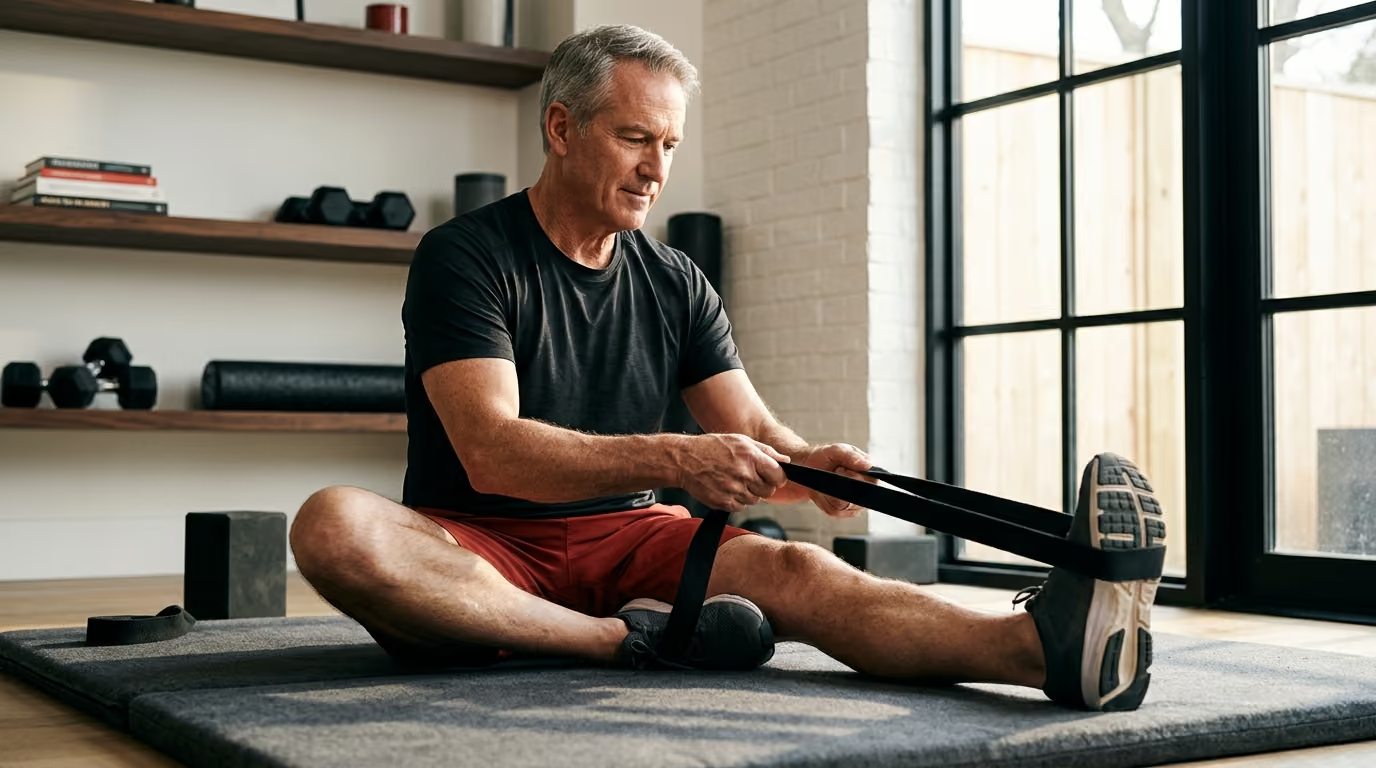
- Performing daily ankle dorsiflexion stretches against a wall.
- Taking five-minute walking breaks every ninety minutes during the workday.
Within eight weeks, hip mobility improves because the surrounding muscles have gained strength and stability. His movement confidence returns, allowing him to lower the box height safely.
The recreational runner with tendon sensitivity
Consider a 57-year-old runner who has completed multiple half-marathons. He decides to add high-intensity hill sprints and develops sharp Achilles tendon discomfort within two weeks.
His cardiovascular system handled the workload, but his Achilles tendons lacked the stiffness and load tolerance for sudden high-strain demands.
A structured adjustment involves:
- Temporarily replacing hill running with flat, steady aerobic runs and stationary cycling.
- Introducing slow, heavy calf raises on a flat surface, progressing to a stepped ledge.
- Focusing on a three-second lowering phase to stimulate tendon collagen remodeling.
- Reintroducing gentle incline running gradually over a ten-week period.
This approach resolves the tendon irritation by matching mechanical loading to tissue adaptation rates.
The lifter who feels unstable during fast turns
Consider a 63-year-old man who has lifted weights for decades. He can perform heavy leg presses and chest presses, but he recently stumbled and nearly fell while turning quickly on a wet driveway.
His gym routine developed slow-speed strength in fixed planes of motion. It neglected rapid lateral movement, single-leg stabilization, and reactive stepping.
A balanced modification includes:
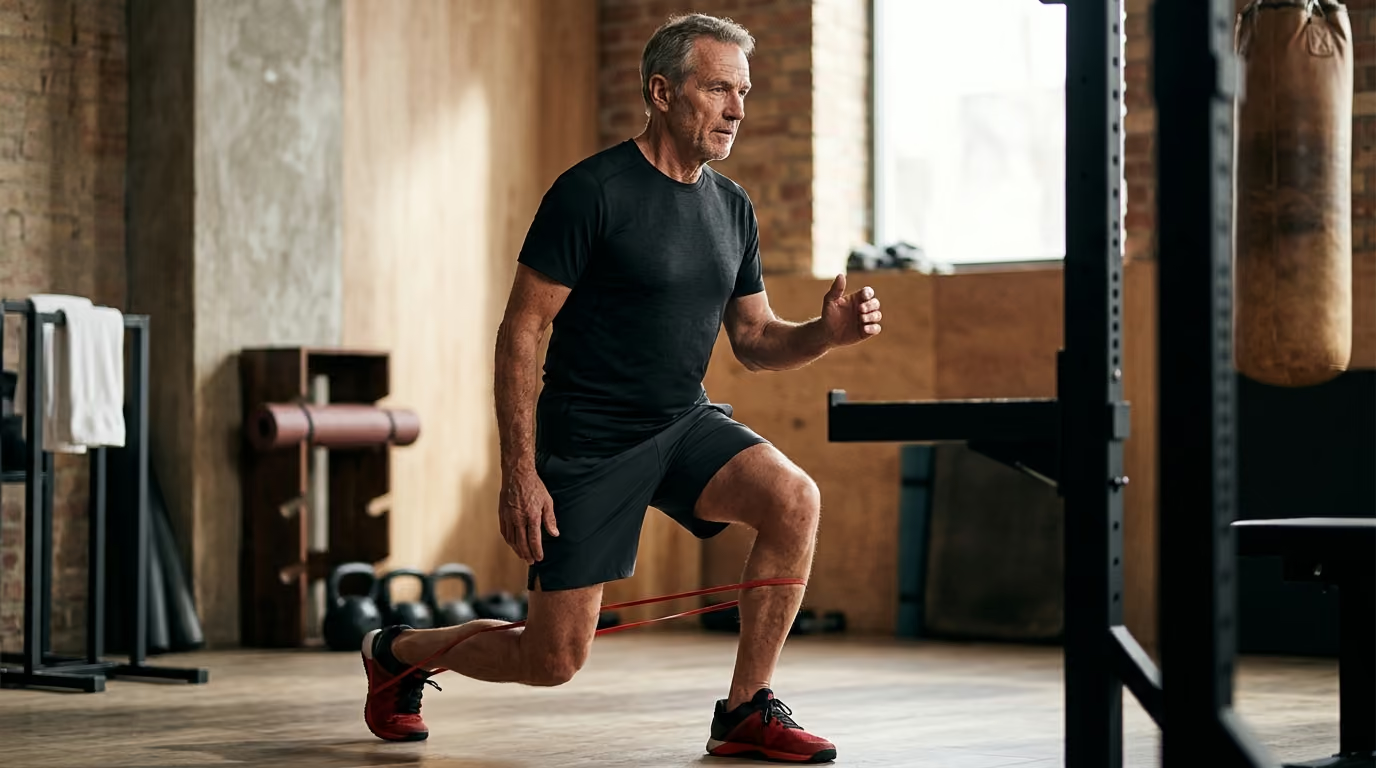
- Replacing some machine lifts with standing lunges and lateral step-downs.
- Adding agility ladder drills, crossover stepping, and figure-eight walking patterns.
- Incorporating reactive medicine ball catches while standing in a split stance.
- Practicing sudden stops and directional changes under controlled conditions.
These additions bridge the gap between gym strength and real-world coordination. You can read more about movement health in our healthy aging editorial section.
The older adult rebuilding stair-climbing capacity
Consider a 72-year-old man who walks two miles daily on flat pavement but struggles to carry laundry up a flight of stairs. His knees ache, and he must pull heavily on the handrail.
Flat walking maintains baseline cardiovascular health, but it does not require the peak leg power or knee range needed for climbing stairs.
A targeted progression includes:
- Low-box step-ups using a four-inch platform, focusing on pushing through the lead heel.
- Slow, controlled step-downs to build eccentric quadriceps control.
- Seated resistance-band knee extensions to strengthen the quadriceps safely.
- Carrying light dumbbells while walking short distances to build load capacity.
As his single-leg strength improves, the physical effort required for the home staircase drops below his maximum capacity, making daily movement painless.
Common mistakes and misreadings about aging bodies
Misunderstandings about aging can lead men to make poor training decisions. Here are four common claims that the scientific evidence does not support.
Misreading 1: Joint wear on an MRI means you must stop lifting
Many men undergo an MRI for knee or back discomfort and receive a report showing degenerative changes or mild cartilage thinning. They assume their joints are wearing out like car tires and stop all strenuous exercise.
This view is scientifically flawed. Joint cartilage requires mechanical loading to circulate synovial fluid and receive nutrients. Completely resting a joint weakens the surrounding muscles, degrades tendon stiffness, and increases joint irritability.
The research supports symptom-guided, progressive loading. Modifying the range of motion, reducing the load, and improving movement form keeps joints healthy without causing harm.
- JOINT HEALTH: ACTIVE VS INACTIVE PATHWAY
- AVOIDING LOAD Muscle Weakness Joint Instability
- Worse Symptoms Reduced Function
- PROGRESSIVE Stronger Muscles Better Load Sharing
- LOADING Joint Nutrition Higher Daily Capacity
Misreading 2: Stretching is the universal cure for body stiffness
When men over 45 feel tight, their default response is passive stretching. They spend fifteen minutes pulling their hamstrings or holding static quad stretches.
Age-related stiffness is rarely caused by short muscles alone. It often reflects joint guarding, weak stabilizing muscles, low fluid movement, or neural tension.
Holding a passive stretch does little to improve motor control or tissue resilience. Active mobility drills, dynamic warm-ups, and full-range strength exercises produce superior long-term improvements in usable movement.
Misreading 3: You need large muscle growth to regain functional strength
Many men believe that if they cannot build large, visible muscles like a 25-year-old, resistance training is not working.
Strength gains in midlife and later life are driven heavily by neural adaptations. Your nervous system learns to recruit motor units more efficiently, coordinate agonist and antagonist muscles, and fire muscle fibers with higher frequency.
Clinical trials consistently show that older adults achieve substantial improvements in functional tests, grip strength, and chair-rise speed with only modest changes in muscle size. Improving movement capability does not depend on bodybuilding-style muscle growth.
Misreading 4: Stationary balance is enough to prevent real-world falls
Standing still on one leg with your eyes open tests a basic postural baseline. It does not replicate the dynamic forces that cause real-world stumbles.
Real-world balance requires stepping reactions, trunk stabilization under dynamic loads, and divided attention. If your balance program consists only of standing motionless in a quiet room, you are missing critical components of fall prevention.
Dynamic balance drills that involve movement, turns, and carrying loads offer far greater protection against unexpected trips. Explore our full range of men's health research guides for deeper functional movement strategies.
Where the scientific evidence is limited
While the benefits of exercise for aging adults are clear, several areas of research remain limited or debated. Recognizing these boundaries prevents overconfidence in unproven methods.
Optimal tendon loading protocols for older adults
Researchers know that high-strain resistance training can increase tendon stiffness in older populations. The precise training frequency, load intensity, and rest intervals needed for optimal tendon remodeling remain unclear.
Most tendon research involves small sample sizes and relatively short intervention periods lasting eight to sixteen weeks. Long-term comparative studies examining different loading protocols across multiple decades are lacking. Individual variation in tendon response is significant.
Dose-response relationships for power training
The value of muscle power for fall prevention and mobility is well established. The ideal balance between high-velocity light-load training and slower heavy-load training remains under active investigation.
Some studies suggest that moving light weights quickly produces superior functional gains. Other trials indicate that heavier loads provide better improvements in tendon and bone health. Clear guidelines for combining both methods across different age brackets are still developing.
Translation of digital and isolated balance tools
A growing commercial market promotes specialized balance platforms, digital apps, and unstable surface devices. While these tools can improve performance on specific tests, evidence that they translate directly to fewer real-world falls is mixed.
Large systematic reviews show that comprehensive, ground-based multicomponent exercise programs provide the most reliable reduction in fall rates. High-tech balance gadgets should complement, not replace, progressive strength and dynamic stepping practice.
The takeaway
Aging changes your muscles, tendons, joints, and nervous system, but it does not fix your physical capability at a declining level. By applying progressive resistance, rapid movement intent, dynamic balance training, and steady aerobic work, you can expand your physical reserve and stay capable for decades.
When to revisit this resource
Revisit this guide if you experience a plateau in your movement confidence, notice new stiffness after periods of travel or desk work, or need to rebuild physical capacity after an illness or injury.
Physical capability after 45 is not about chasing the past. It is about building a body that handles daily life with strength, control, and resilience.
Sources
- Exercise for preventing falls in older people living in the community: an abridged Cochrane systematic review
- Exercise to prevent falls in older adults: an updated systematic review and meta-analysis
- Effect of eHealth-delivered exercise programmes on balance in people aged 65 years and over living in the community: a systematic review and meta-analysis of randomised controlled trials
- Effective exercise for the prevention of falls: a systematic review and ...
- The Effects of Physical Exercise on Balance and Prevention of Falls in Older People: A Systematic Review and Meta-Analysis
- Effectiveness of Balance- and Strength-Based Exercise ... - PMC
- Effects of exercise intervention on falls and balance function in ...
Stay sharp
Get the word
Join our newsletter for the best writing advice and stories from the field.