Twelve Week Clinical Trial Links Daily Creatine to Lean Tissue Gains in Adults Aged 45 to 65
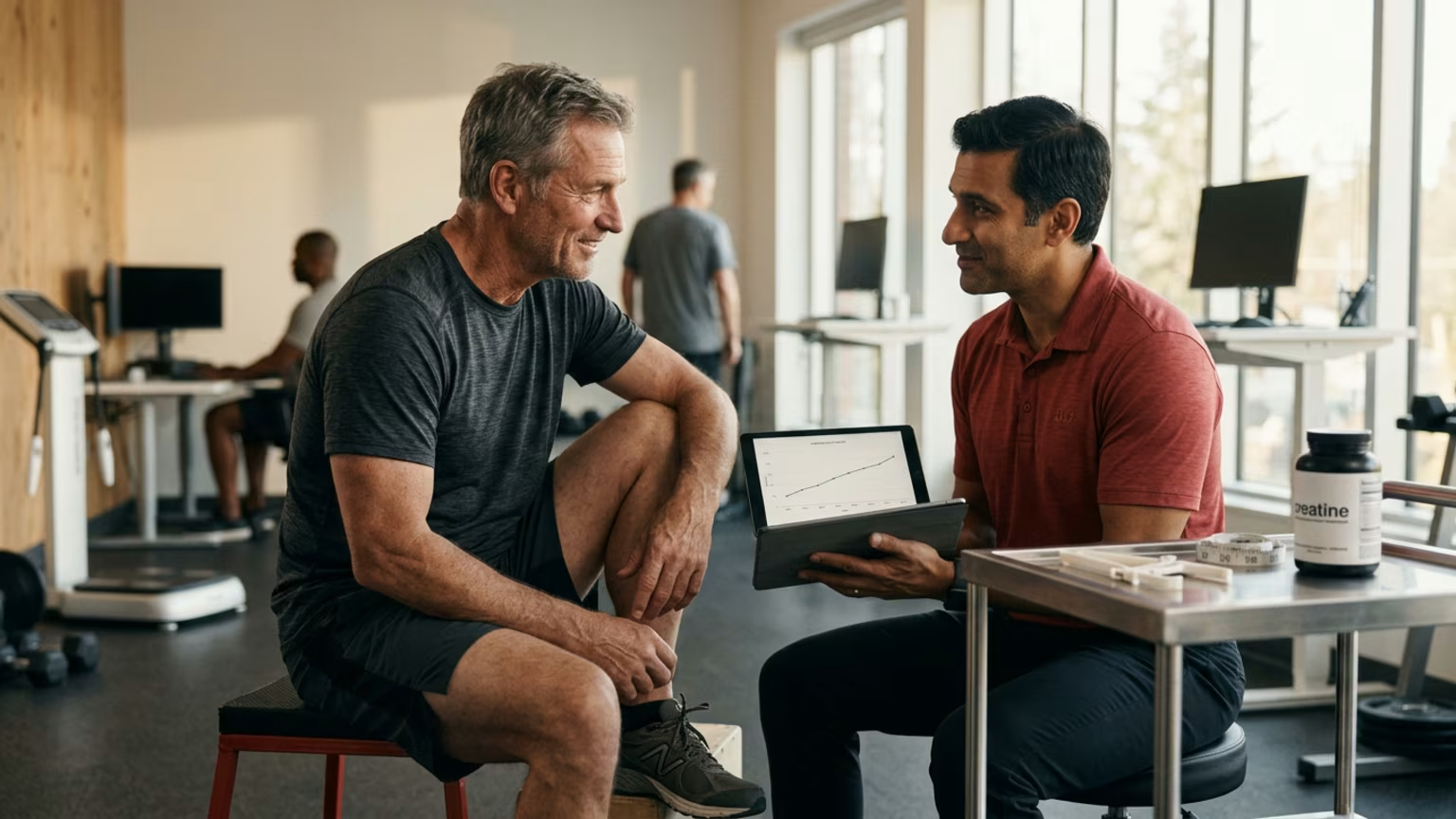
In August 2026, the Journal of the International Society of Sports Nutrition published a randomized trial investigating how creatine supplementation affects body composition in healthy adults between 45 and 65. The health website MindBodyGreen subsequently reported on these findings in September 2026, summarizing the reported benefits for lean tissue and fat loss.
How Was the Creatine Study Conducted?
Researchers designed a 12-week randomized, double-blind, placebo-controlled trial. The study enrolled 73 healthy, sedentary adults between the ages of 45 and 65. Out of the initial group, 64 participants completed the full 12 weeks of the intervention. The analyzed group consisted of 40 women and 24 men, carrying an average age of 54.5 years.
Before the randomization phase began, participants chose their preferred activity track. They could enter either a non-exercise group or an active exercise-and-diet program. After selecting their lifestyle track, they were randomly assigned to receive either a daily supplement or a placebo. This means the supplementation was randomized, but the exercise participation was entirely self-selected.
The supplement group took 10 grams of creatine monohydrate per day. This daily amount was divided into two equal doses of five grams. The placebo group consumed maltodextrin instead. Molly Knudsen wrote the MindBodyGreen report and noted that a typical maintenance intake is often lower, usually three to five grams daily.
The active program involved a highly structured regimen of diet and physical activity. Participants performed resistance and aerobic exercise three days per week. They also walked 10,000 steps four days a week. Furthermore, they followed a nutritional plan intended to create a daily energy deficit of 300 to 500 calories.
What Did the Researchers Find Regarding Muscle and Fat?
The study tracked physical changes using DXA body composition scans, strength tests, and muscular endurance assessments. Researchers reported that creatine increased lean tissue mass in both the non-exercise condition and the active condition. The active group experienced compounding benefits during their weight loss phase. In that exercise-and-weight-loss group, supplementation was associated with a greater reduction in body-fat percentage.
These active participants also showed marked improvements in muscular strength and muscular endurance over the 12 weeks. The non-exercise group also experienced documented physical gains. The study report notes increased lean tissue mass in the sedentary group compared to the placebo. Participants taking the supplement also showed greater strength and muscular endurance without a structured lifting routine. The publicly available abstract does not provide the exact between-group changes or specific p-values for those outcomes.
Researchers also investigated secondary health markers during the clinical trial. They noted favorable changes in selected measures of cognitive function and memory. They also recorded positive shifts in selected blood lipids and HbA1c levels. The authors explicitly classified these cognitive and metabolic findings as exploratory rather than definitive proof of disease prevention.
How Do These Findings Compare to Broader Research?
This new trial aligns with a larger body of evidence regarding midlife muscle preservation. A 2026 meta-analysis reviewed 22 randomized trials involving 721 older adults. That review found that combining creatine with resistance training increased lean tissue mass by a mean difference of 1.37 kilograms compared to training with a placebo. The 95 percent confidence interval for this lean mass addition was 0.97 to 1.76 kilograms.
The same review noted statistically significant improvements in chest press and leg press strength. Men testing supplements for their lifting routines must understand that the clearest benefits involve lean tissue. Body fat reductions appear less dramatic in the wider scientific literature.
Another meta-analysis looked at 19 studies featuring 609 adults aged 50 and older. This analysis found that supplementation combined with resistance training reduced body-fat percentage by an additional 0.55 percentage points compared to a placebo. The difference in absolute fat mass was approximately 0.5 kilograms and did not reach statistical significance. A separate review confirmed improvements in fat-free mass and selected mobility measures but found no significant effect on absolute fat mass.
These distinctions matter for older men tracking their body composition. A drop in body-fat percentage often reflects a rise in lean mass rather than a massive loss of actual body fat. Overall, the broader literature presents a stronger case for lean tissue gains than for direct fat burning. For men focused on protecting their physical capabilities as they age, adding this compound to a lifting routine makes clinical sense.
Does Supplementation Work Without Exercise?
The recent study suggests that the compound might have effects beyond conventional gym performance. Improvements in lean tissue, strength, and muscular endurance were reported in the non-exercise condition along with the active condition. This finding is notable for older adults attempting to maintain physical function during periods of inactivity.
However, this single 12-week trial does not prove that supplementation replaces the need for resistance training. Physical activity remains the primary driver of physical reserve and daily mobility. The most defensible takeaway is that this compound acts as a useful adjunct to structured physical activity. Relying on a supplement without adequate protein or exercise will not yield optimal long-term results.
Can Creatine Change Age Related Cognitive Decline?
The trial reflects growing interest in the potential cognitive effects of supplementation. The researchers recorded favorable changes in selected measures of cognitive function and memory among the participants. These cognitive findings were explicitly labeled as exploratory.
The study itself states that larger and longer trials are necessary before drawing strong conclusions about brain health. It is premature to treat this compound as a proven memory intervention. Men seeking clarity on supplements for focus and memory must maintain realistic expectations regarding these exploratory outcomes.
What Are the Limitations of This Trial?
While the findings are positive, men over 45 must evaluate several practical caveats. The intervention lasted only 12 weeks. A trial of this length cannot establish whether these body composition changes persist over years. It cannot prove whether supplementation reduces fall risk or changes long-term disease outcomes.
The participant pool was relatively small and skewed female. Only 24 of the 73 enrolled participants were men. Therefore, these results do not represent a male-only finding or evidence tailored exclusively to male physiology. Furthermore, all participants were considered healthy adults. The findings may not apply directly to people over 70, highly trained athletes, or those with significant chronic diseases.
The study design included a self-selection bias regarding the exercise program. Participants chose whether to exercise or remain sedentary before being randomized to the supplement or placebo. Differences between the active and inactive groups might reflect baseline motivation or lifestyle factors rather than the clinical intervention alone.
The publicly available study record reports qualitative outcomes but does not provide exact numerical changes for many measures. It lacks specific data on lean tissue and body-fat percentage. The abstract omits exact figures for strength and endurance. It also lacks specific data regarding cognition, blood lipids and HbA1c. We cannot determine the precise effect sizes from the available abstract.
Additionally, the paper outlines clear industry relationships. Author Richard B. Kreider has conducted industry-sponsored research and received conference support. He serves as an expert witness and acts as the chair of the scientific advisory board for AlzChem. AlzChem is a known manufacturer of creatine products. This disclosure does not invalidate the findings, but it provides highly relevant context.
Practical Implications for Older Men
The practical target for older adults should be muscle retention and functional performance, not simply a lower number on the scale. Creatine can increase body weight through additional stored water inside muscle tissue. Scale weight may not fall during supplementation, even when true body composition improves. Men using basic bathroom scales might misinterpret this water retention as stalled weight loss. Focusing on strength gains and clothing fit provides a more accurate metric of progress.
The evidence does not support extending this narrative to every aspect of healthy aging. For example, a separate meta-analysis found no significant improvement in bone mineral density from adding this supplement to resistance training in older adults. The strongest recurring signal remains additional lean mass when combined with lifting.
Men with complex medical conditions should consult a healthcare professional before beginning any new protocol. The available abstract does not provide detailed adverse-event data or kidney-function results. Individualized medical advice remains crucial, consistent with standard consumer health recommendations. Before turning to aggressive medical options to manage hormonal changes and falling energy, optimizing basic nutrition and safe supplementation provides a reliable baseline.
What this changes is the scope of standard supplementation advice, confirming existing knowledge about lean tissue retention while demonstrating that short-term physical adaptations are possible even during periods of caloric restriction.
How Everfitguys helps
Distinguishing proven muscle retention benefits from exploratory cognitive claims requires careful evaluation of trial limitations rather than accepting broad supplement marketing. Declining focus, memory and mental sharpness often lead men toward unproven interventions, and Everfitguys translates clinical data to help you separate legitimate physiological support from preliminary hype.
Sources
- Effects of creatine supplementation with and without exercise and ...
- Study Shows Creatine Helps People 45+ Build Muscle & Lose Fat
- Changes in Fat Mass Following Creatine Supplementation and Resistance Training in Adults ≥50 Years of Age: A Meta-Analysis.
- Effect of creatine supplementation during resistance training on lean tissue mass and muscular strength in older adults: a meta-analysis.
Stay sharp
Get stories
The best writing on craft and life, delivered once a week. No noise, just the good stuff.