Combining Daily Protein Intake with Strength Work to Protect Midlife Muscle Mass and Function
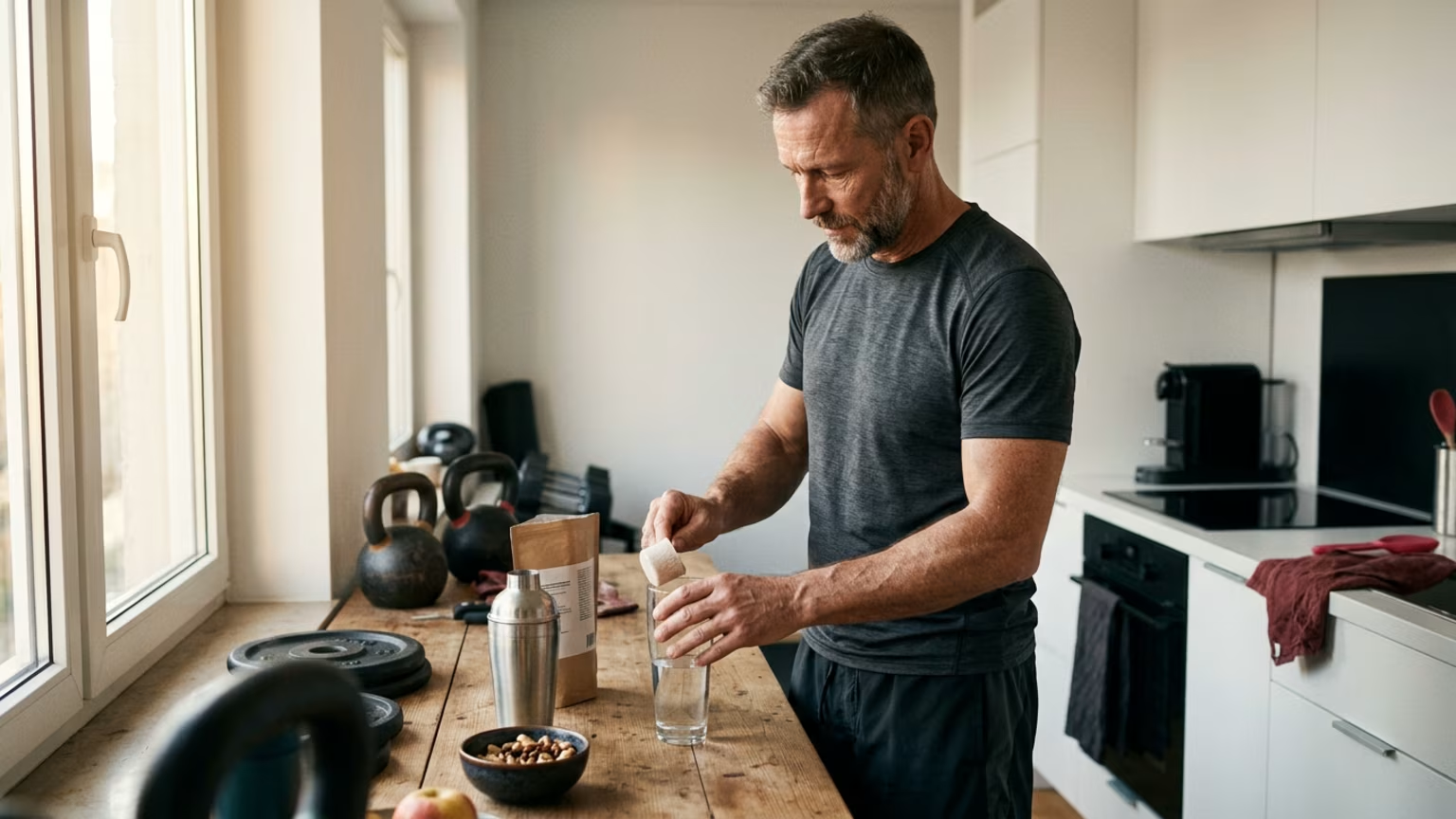
Deciding how to preserve muscle mass and function during midlife often comes down to choosing between relying solely on a higher dietary protein intake or combining targeted protein consumption with progressive resistance training.
How Increasing Dietary Protein Works in Isolation
Increasing your daily nutrient intake without changing your baseline exercise habits represents a very common nutritional intervention for aging men. For healthy older adults, expert guidance has commonly placed protein intake above the standard adult recommended dietary allowance of 0.8 grams per kilogram of body weight per day. The PROT-AGE position paper is widely cited as recommending approximately 1.0 to 1.2 grams per kilogram daily for healthy older people. The foundational theory behind this isolated approach assumes that providing more raw materials will automatically help the body maintain its physical structure over time.
The biological case for this nutritional method relies on providing the body with consistent doses of amino acids throughout the day. A recent review summary reports that older adults may benefit from consuming at least 20 to 30 grams of protein at a meal. Some dietary recommendations advocate spreading roughly 30 to 40 grams across three or four meals throughout the day. These are recommendations from practitioner or educational sources rather than strict proof that this exact distribution consistently outperforms all other schedules.
The most sensible practical interpretation is simply to divide the daily target into three reasonably substantial meals. This distribution prevents the common mistake of eating very little throughout the morning and relying on one massive portion at dinner. For a man targeting 120 grams of total daily intake, eating three meals of roughly 35 to 40 grams provides a highly workable and realistic pattern. For someone aiming at a lower target of 90 grams daily, three meals of approximately 25 to 35 grams might fit their appetite better.
A man who finds four specific feeding times inconvenient or overly filling may do remarkably well with three standard meals. A man who struggles to eat enough whole food may use yogurt, milk, eggs, tofu or a modest supplement to make the daily target easier. The cited evidence firmly supports adequate daily intake and reasonable distribution, but it does not prove that one highly specific meal schedule is universally superior. The goal is building a sustainable long term habit rather than creating a rigid feeding schedule that causes daily anxiety.
However, relying on nutrition alone has distinct limitations when the body lacks a physical demand. A cited review summary notes that randomized feeding trials averaging approximately 1.3 grams per kilogram daily did not measurably improve lean mass or physical function in non-stressed baseline conditions. Without a mechanical reason to build or retain functional tissue, the body simply processes the extra dietary nutrients for daily energy or waste. Men aiming to rebuild lost strength cannot depend entirely on larger portion sizes or frequent meals to restore their physical capability.
This isolated dietary approach also requires careful consideration of long term kidney health. A clinical summary of the 2024 KDIGO guidance reports that adults with chronic kidney disease stages G3 to G5 are commonly advised to maintain protein around 0.8 grams per kilogram daily. The same guidance suggests avoiding high intake above 1.3 grams per kilogram when patients are at risk of disease progression. Men with mildly abnormal laboratory results must individualize their nutrition plans with a healthcare professional instead of blindly adopting an aggressive feeding strategy.
How Resistance Training Changes the Biological Response
Combining adequate nutrition with progressive mechanical loading fundamentally changes how the aging body utilizes its daily nutrients. Structured resistance exercise acts as a powerful direct signal that forces the nervous system and muscle fibers to adapt. According to a recent review summary, resistance training actively improves the efficiency with which dietary amino acids are used for muscle protein synthesis. This biological shift means the food you eat becomes much more effective at rebuilding tissue after a physically demanding workout.
The clinical data strongly supports this combined method for aging men who want to retain their physical independence. A widely cited 2018 meta-analysis pooled 49 studies involving 1,863 participants to examine these exact physiological effects. The researchers found that protein supplementation clearly supported resistance training gains in both fat-free mass and overall physical strength. A recent evidence summary characterizes the actual training as the main driver of progress, with nutrition providing a more modest additional benefit.
This extensive research provides a highly useful upper reference point for men who lift weights consistently. The 2018 meta-analysis noted that the estimated benefit for lean mass reached a clear plateau at approximately 1.6 grams per kilogram daily in exercising adults. The statistical confidence interval around this estimate was broad, extending approximately from 1.03 to 2.20 grams per kilogram daily. Because of this wide variance, the 1.6 figure should be viewed as a helpful reference rather than a precise biological cutoff for every individual.
Combining these elements is critical for men who are returning to a regular gym routine after a long layoff. The most defensible strategy for returning trainees is combining adequate nutrition with progressively challenging workouts. Maintaining a structured weekly resistance training habit requires gradual progression to allow tendons and joints to safely adapt to the new loads. While the sources support exercise as the key partner to nutrition, they do not establish a single universal comeback routine for every man over 45.
Why the Evidence Favors a Combined Approach
When evaluating comparative studies and clinical trials, the evidence clearly positions targeted nutrition as a supportive adjunct to active physical training. The physiological benefits of a higher intake become much more apparent during periods of calorie restriction or active mechanical loading. During a deliberate fat loss phase, preserving existing lean mass is incredibly difficult without a strong mechanical stimulus from the gym. Combining a modest daily calorie deficit with intense strength workouts and adequate amino acids helps the body retain its valuable functional tissue.
Food selection also plays a major role in how well this combined strategy supports your long term metabolic health. One 2026 review summary reports observational associations between 1.0 and 1.6 grams per kilogram daily intakes and better overall muscle strength. Some of these observational associations favored animal sources specifically for measuring outcomes related to sarcopenia and physical function. However, observational data reflects total diet and lifestyle patterns, so it does not serve as definitive proof that animal sources are inherently superior to plants.
A high quality dietary pattern incorporates a wide variety of nutrient dense whole foods over time. Kidney Care UK lists beans and lentils alongside chickpeas and nuts as healthy dietary options. Seeds and lean poultry are also strongly recommended alongside fresh fish and eggs. The organization also recommends that red meat and processed meats be handled differently, with both categories being actively moderated in the daily diet.
Men can successfully protect their physical reserve after 45 by choosing a flexible mix of plant and animal sources that fit their specific health needs. Higher daily intakes can be highly useful for managing appetite and satiety, but these foods are not automatically a free pass for weight loss. High protein foods naturally carry significant calories, so excessive portion sizes can make it easier to accidentally exceed your daily energy needs. Fatty cuts of beef, full fat dairy products and oversized commercial meal replacement bars can quickly push a man past his true calorie requirements.
Men seeking to improve their body composition over time should focus on total dietary quality rather than obsessing over a single macronutrient in isolation. A high protein diet can still be poor overall if it is built around processed meat, excess calories and low dietary fiber. A cited review of aging biology referenced work on diet quality and timing as mediators of metabolism and healthy aging. This reinforces that nutritional intake should always be considered within the whole dietary pattern rather than in total isolation.
Final Verdict on Your Protein Strategy
The most effective path forward depends entirely on a man's current kidney health status and his specific physical performance goals. Relying strictly on a moderate nutritional intake of 1.0 to 1.2 grams per kilogram daily is appropriate for healthy men who are largely sedentary and focused only on baseline weight maintenance. This isolated nutritional approach is also absolutely necessary for men managing moderate to severe chronic kidney disease, as they must typically restrict their daily intake to around 0.8 grams per kilogram under strict medical supervision.
Conversely, pairing a higher intake of up to 1.6 grams per kilogram daily with progressive physical training is vastly preferable for men actively trying to build strength or preserve lean mass during a diet. The mechanical stress of consistent weight training serves as the primary biological driver of physical capability, and adequate daily nutrition simply fuels that vital recovery process. Men who want to stay highly capable, energetic and independent through their later years should prioritize regular structured workouts while using high quality foods to support that ongoing effort.
How Everfitguys helps
Deciding how to balance daily nutrition against the physical demands of aging requires interpreting conflicting gerontology data rather than blindly eating more calories. Losing muscle, strength and physical capability with age forces men to rethink their routines, and Everfitguys translates current physiological research to help you preserve your functional independence over time.
Sources
Stay sharp
Get stories
The best writing on craft and life, delivered once a week. No noise, just the good stuff.