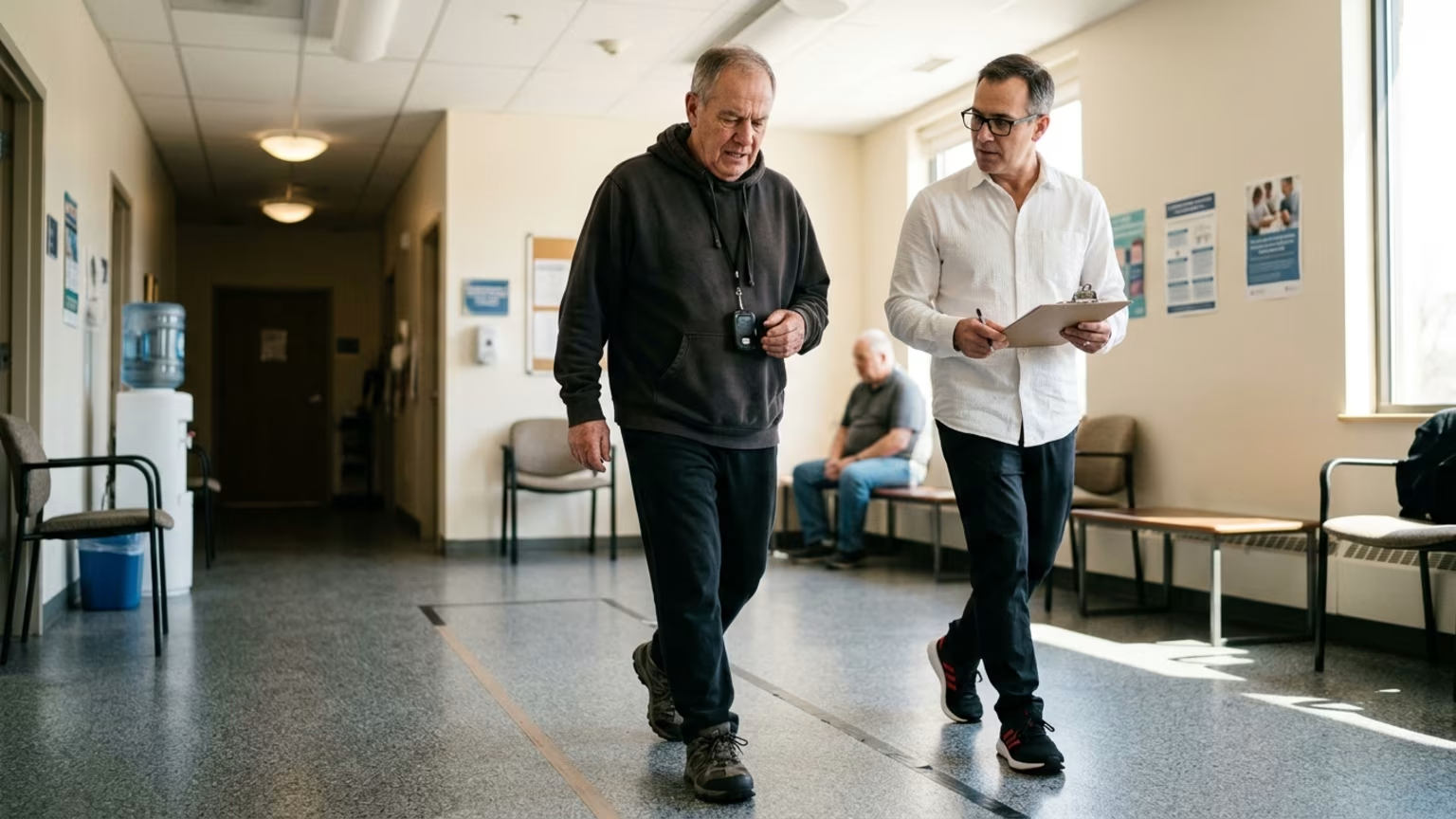
Why Midlife Cardiovascular Health Between Ages 35 and 65 Is Critical for Preventing Dementia

In September 2026, the University of Texas at San Antonio highlighted research in Alzheimer’s and Dementia showing that physical activity and blood sugar control in midlife are associated with slower cognitive decline later in life.
Tracking Cardiovascular Health Over Time
The study analyzed longitudinal data from a well defined cohort of 402 residents in San Antonio. Researchers first assessed the participants during the original San Antonio Heart Study between 1979 and 1988. The same individuals later participated in the San Antonio Longitudinal Study of Aging between 1992 and 2004. This long term tracking allowed scientists to observe how early physiological conditions translated into later life outcomes. At the time of their initial midlife assessment, the participants had an average age of 57.9 years.
The cohort was deliberately bi-ethnic and demographically diverse. Records indicate that 58.5 percent of the participants identified as women and 52 percent identified as Mexican American. To evaluate midlife cardiovascular status, the research team applied the established Life’s Simple 7 framework. Cognitive performance was subsequently measured up to four separate times using the Mini-Mental State Examination. The statistical models adjusted for age, sex, income, and education to isolate the specific lifestyle variables under investigation. The researchers also conducted detailed sensitivity analyses to account for possible attrition bias over the decades of observation.
Measuring The Impact On Cognitive Decline
The primary findings revealed that physical activity was associated with slower cognitive decline across the observed cohort. This protective association was particularly strong among the Mexican American participants in the study. The researchers noted that cardiovascular and metabolic factors did not operate identically across different ethnic groups. Among non-Hispanic White participants, maintaining a fasting glucose level below 126 mg/dL was associated with slower cognitive decline in models that accounted for attrition.
Janette Vazquez, the study’s first author, provided clear context for these distinct results. She noted that engaging in any level of physical activity in midlife is linked to a slower rate of cognitive decline later in life. Maintaining optimal fasting blood glucose during these middle years showed a similar positive association in the research. Claudia Suemoto, a medical doctor and researcher involved with the findings, described dementia prevention as a comprehensive life course issue. She identified physical inactivity, diabetes, high blood pressure, high cholesterol, depression, social isolation, and limited cognitive stimulation as key modifiable risk factors.
Suemoto stressed that ages 35 to 65 form an important window for active prevention. However, she also clarified that beneficial lifestyle changes can begin at any age. The University of Texas at San Antonio places these findings within a massive public health challenge. Approximately 7.4 million Americans aged 65 and older are currently living with Alzheimer’s disease. That number is expected to nearly double over the next 25 years.
Claudia Satizabal, an associate professor at the university, explained the broader societal importance of the data. She stated that improving cardiovascular health through lifestyle changes could help people maintain their mental sharpness. This proactive approach could reduce the broader impact of dementia on individuals, families, and surrounding communities.
Translating Findings For Active Men
These findings support a broad approach to healthy aging for older men managing their own routines. Preserving memory and mental clarity involves managing multiple cardiovascular factors over decades rather than relying on one specific intervention. The data suggests that men should treat daily movement as a long term investment in metabolic health. While the study supports the value of physical activity, it does not define a single optimal workout plan or guarantee total dementia prevention.
For men returning to regular training, a practical takeaway is to reduce prolonged sedentary time first. Building activity progressively through walking, cycling, hiking, or recreational sport provides a solid baseline for physiological health. This study directly supports the importance of physical activity for the brain, even though it did not test a specific progression or combination of exercises. Adding routine resistance training remains highly relevant to the goal of maintaining muscle strength and everyday mobility.
Readers should pair consistent exercise with routine medical monitoring for the best long term results. Checking blood pressure, diabetes risk, and blood glucose with a clinician is a critical step in middle age. The study evaluated fasting glucose as just one cardiovascular health factor. Both the study authors and the university coverage place glucose control alongside other modifiable risks rather than treating it as an isolated solution. Men must not treat the study specific glucose cutoff of 126 mg/dL as an individualized clinical target.
Fasting glucose interpretation always depends on personal medical history, current medications, and repeat clinical testing. The most defensible takeaway for readers is cumulative rather than dramatic. Regular movement, attention to metabolic health, and management of other cardiovascular risks support healthier aging over time. Understanding how these daily lifestyle factors influence protecting cognition helps men build sustainable routines that last. Starting exactly where you are is key, as the researchers stress that healthy changes remain beneficial at any stage of life.
Observational Limitations And Methodological Context
The researchers noted several structural limitations in their work that require careful consideration. This was strictly an observational longitudinal analysis rather than a randomized controlled exercise trial. Therefore, the results show associations and cannot prove that physical activity or lower fasting glucose directly caused the slower cognitive decline. The researchers evaluated a relatively small sample of 402 residents. This means the specific findings should not be automatically generalized to all older adults, all men, or all ethnic groups across the country.
The cohort consisted of 58.5 percent women, meaning the data does not exclusively represent men aged 45 to 70 and older. The public study record also lacks quantified exercise doses. The paper does not specify the weekly minutes, intensity, or step counts required to achieve these cognitive associations. Readers cannot extract a proven cognitive preservation target or daily checklist from this specific dataset. The study also highlighted how complex population data can be when evaluating multiple intersecting physiological variables.
For example, an initial finding linked a body mass index below 30 kg/m² to faster cognitive decline among Mexican American participants. However, that specific association weakened significantly after researchers adjusted the statistical models for attrition bias. This shift illustrates why individual study results should not be converted into simplistic rules about body weight. Differences between ethnic groups could reflect biological, social, environmental, or measurement factors. The authors concluded that physical activity and glycemic status were differentially associated with cognitive change across ethnicities, without establishing the exact mechanisms behind these distinct differences.
Ultimately, the university article notes that current research cannot specify how an individual can completely avoid dementia. Addressing multiple modifiable risks may support cognitive health, but it does not provide absolute protection against aging.
What this changes: This research confirms existing knowledge that managing midlife cardiovascular health and maintaining physical activity supports long term cognitive retention without prescribing a single universal exercise protocol.
How Everfitguys helps
Stiffness, joint pain, and reduced mobility that limits activity frequently discourage older men from maintaining the physical movement required for long term cardiovascular health. Overcoming these physical barriers requires careful adjustment to daily routines, and Everfitguys translates the latest clinical research to help men stay capable and active.
Sources
Stay sharp
Get stories
The best writing on craft and life, delivered once a week. No noise, just the good stuff.