Multicomponent Training Reduces Fall Risk and Improves Gait in Older Adults
On September 13, 2026, El Periódico reported that experts associated with the EU-funded Vivifrail project consider multicomponent training the most suitable approach for preventing frailty and falls among adults older than 70.
Analyzing Clinical Methodology
The latest guidance from European experts relies on extensive clinical data evaluating physical activity. Researchers analyzed the specific outcomes of varying fitness interventions to track functional decline. A 2026 clinical review in the Journal of Clinical Endocrinology & Metabolism synthesized findings across 59 separate studies. This massive review involved 12,981 older adult participants in total.
The participant demographics largely included community-dwelling older adults and frail individuals facing mobility challenges. Instead of isolating a single fitness variable, the Vivifrail methodology combines four distinct exercise categories. The program integrates resistance training, balance drills, coordination tasks, and aerobic endurance work into one continuous routine. This multicomponent approach requires careful adaptation to match the physical baseline of each individual participant.
The studies evaluated programs that utilize minimal equipment to keep the physical protocols highly accessible. This structure allows participants to train safely using common items like a sturdy chair or a blank wall. The resistance training component focused on fundamental daily movements rather than isolated muscle contraction alone. Researchers utilized basic bodyweight exercises like chair squats, supported heel raises, and practical wall push-ups.
These specific movements replicate the physical demands of standing up, reaching high shelves, and bracing against momentum. By testing these functional resistance movements, researchers could measure practical strength rather than theoretical gym performance. The methodology prioritizes muscular strength that directly translates to performing daily household tasks without physical assistance. To evaluate balance and coordination, the clinical trials incorporated specific postural control drills into the testing phase.
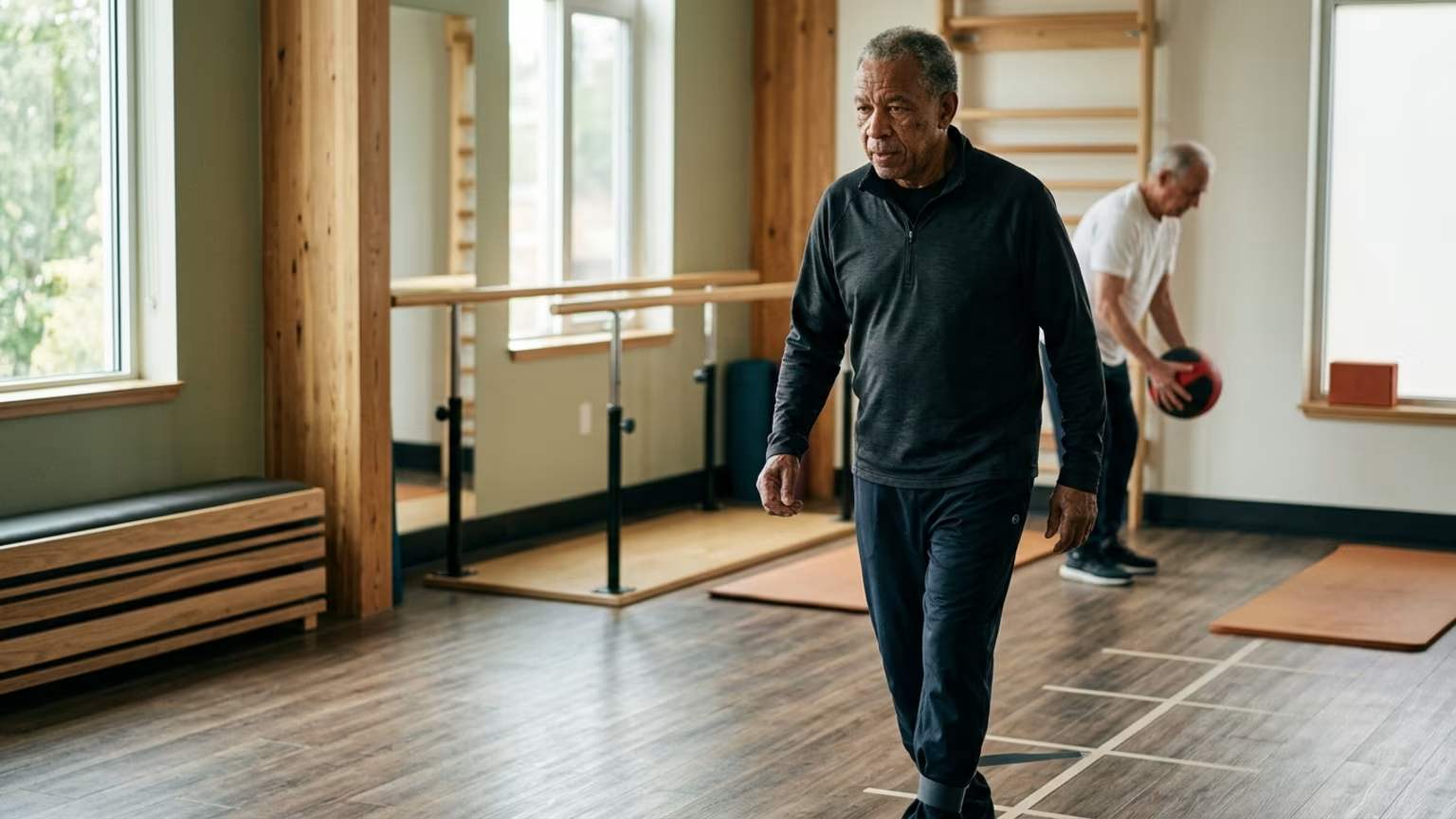
Participants performed brief single-leg stands and tandem walking exercises under direct clinical observation. They also practiced shifting their center of gravity smoothly from one foot to the other. The aerobic endurance methodology similarly focused on functional mobility rather than high-intensity cardiovascular conditioning. Researchers measured physical outcomes based on variable-pace walking, stepping up and down stairs, and pedaling on a stationary bicycle.
Measuring Clinical Outcomes
The accumulated data reveals significant physiological improvements for older adults following multicomponent training protocols. The comprehensive clinical review found a clear reduction in physical accidents among active participants. The evidence demonstrated an overall pooled rate ratio for falls of 0.77 across the analyzed studies. This confirms that structured physical activity actively protects older adults from dangerous trips and tumbles.
A 2026 review on muscle health also cited a multicenter randomized evaluation of the Vivifrail training program. This specific multicenter evaluation reported clearly improved functional capacity in frail older adults. The data confirms that combining different exercise modes improves walking ability, postural control, and overall physical strength. The clinical review noted that the most successful programs specifically targeted physical balance and functional tasks like gait.
Coordination drills, sometimes combined with targeted resistance training, produced highly reliable health improvements across the studies. The researchers concluded that addressing multiple physical systems simultaneously yields the most protective physiological response. The 0.77 pooled rate ratio represents a highly meaningful drop in dangerous physical accidents for this demographic. For older adults living independently, preventing a single trip over a rug can mean the difference between health and hospitalization.
The clinical evidence exposes distinct limitations when older adults rely solely on single-mode exercise routines. The clinical review described the evidence for walking or resistance training alone as less certain than the evidence for combined programs. Many active men assume that simply lifting weights provides complete protection against sudden physical decline. However, one pooled analysis in the World Journal of Experimental Medicine examined resistance training in older adults with functional decline.
This isolated analysis found a non-significant trend toward fewer falls, reporting an incidence-rate ratio of 0.86. The 95 percent confidence interval for this specific finding ranged from 0.71 to 1.05. Because this range crosses the null value, the finding did not reach conventional statistical significance. This data suggests that pure muscular strength offers only partial physical protection against mobility loss.
Muscular strength provides the structural support needed to remain upright during a sudden trip or stumble. The nervous system still requires dedicated coordination training to react quickly and plant the feet correctly. Incorporating balance and fall resilience protocols alongside heavy lifting creates a much stronger physical foundation. Physical independence demands a nervous system that can rapidly coordinate muscle contractions across multiple joints simultaneously.
Practical Training Applications
The current healthy aging literature strongly advocates for functional capacity over narrow fitness metrics alone. The physical focus has shifted away from solely maximizing aerobic capacity or building visible aesthetic muscle. Clinical programs aim to help aging adults walk confidently, manage uneven ground, and tolerate sudden changes in pace. Men in their late 60s and 70s can apply these findings by restructuring their weekly physical activity habits.
Treating human mobility as a combined physical skill requires blending strength, balance, and endurance in regular practice. A practical starting template based on the clinical examples begins with supported lower-body strength work. Active adults can start with several sets of chair squats or supported heel raises near a kitchen counter. Following the strength movements, they can transition directly into supported balance work like brief single-leg stands.
The physical session can conclude with purposeful walking that incorporates modest pace changes over safe terrain. Progressing through these movements helps men maintain capacity in aging joints without requiring expensive fitness equipment. For men who already lift weights regularly, the clinical data provides a clear training adjustment strategy. The evidence does not suggest abandoning heavy squats, deadlifts, or overhead presses as you age.
The science highlights the physical necessity of adding specific gait, balance, and coordination work to those established routines. A strong lower body provides an excellent physical base, but coordination dictates how effectively you deploy that physical strength. Blending traditional heavy lifting with multicomponent strength and cardio movements maximizes long-term physical capability. Men returning to regular exercise after prolonged inactivity should prioritize physical safety and practice slow movement progression.
The Vivifrail model explicitly features individualized exercise adjustments to match the starting physical ability of the patient. Beginners should perform all balance and strength movements near a sturdy support structure like a heavy table. As physical control and movement consistency improve, the individual can gradually increase the speed or complexity of the task. Building a foundation of muscle strength for everyday independence means that gym efforts actually improve daily living.
Context And Limitations
While the clinical data is highly encouraging, the researchers note several structural limitations and strict medical caveats. The statement that multicomponent training is the most effective approach represents a summary of clinical expert interpretation. It does not serve as undeniable proof that one universal physical routine works perfectly for every single older adult. The primary news article does not detail the specific participant characteristics or effect sizes comparing Vivifrail directly to every alternative.
The evidence supports combined functional work but does not claim that isolated resistance training holds absolutely no value. Exercise prescription always requires careful individualization to prioritize patient safety and promote long-term routine compliance. The experts explicitly note that Vivifrail training routines are adapted specifically to each individual user. People managing profound frailty, previous severe falls, or degenerative neurological disease face highly unique physical movement challenges.
Patients with significant joint limitations, recurring dizziness, or impaired cognition require a thorough medical evaluation before starting. These individuals should obtain an individualized physical assessment rather than attempting a generalized internet workout routine. The practical physical exercises themselves carry inherent physical risks if performed carelessly without proper support. Single-leg balance drills, tandem walking, and stair climbs can easily create a severe fall hazard for an unsteady adult.
Readers must clear physical obstacles from their floor and use reliable handholds when practicing unfamiliar weight shifts. The primary sources advocate for safe physical adaptation, but they do not provide an exhaustive safety protocol for home training. Men lacking confidence in their physical stability should seek direct professional supervision from a licensed physical therapist. Readers should note that this specific evidence heavily targets adults over 70 and frail clinical populations.
Men aged 45 to 60 cannot assume that these exact effect sizes apply directly to their younger physical demographic. The current evidence confirms that targeted physical activity improves functional outcomes and reduces total human fall risk. It does not establish that multicomponent exercise prevents all falls, guarantees cognitive protection, or reverses biological aging. This research firmly alters current best practices by proving that active adults must train functional balance and coordination alongside strength, rather than relying on isolated resistance training or walking alone to prevent physical decline.
How Everfitguys helps
Rebuilding physical stability to prevent dangerous falls usually rests entirely on the individual older man programming his own workouts, and this demanding task gains immediate precision when Everfitguys analyzes the current literature. Confusion about hormonal changes and testosterone claims regularly disrupts his efforts to maintain genuine muscular power, and we isolate the scientific facts needed to secure true functional capability.
Sources
Stay sharp
Get stories
The best writing on craft and life, delivered once a week. No noise, just the good stuff.