Resistance Training Linked To Lower Brain Biological Age In New Coverage Of Aging Research
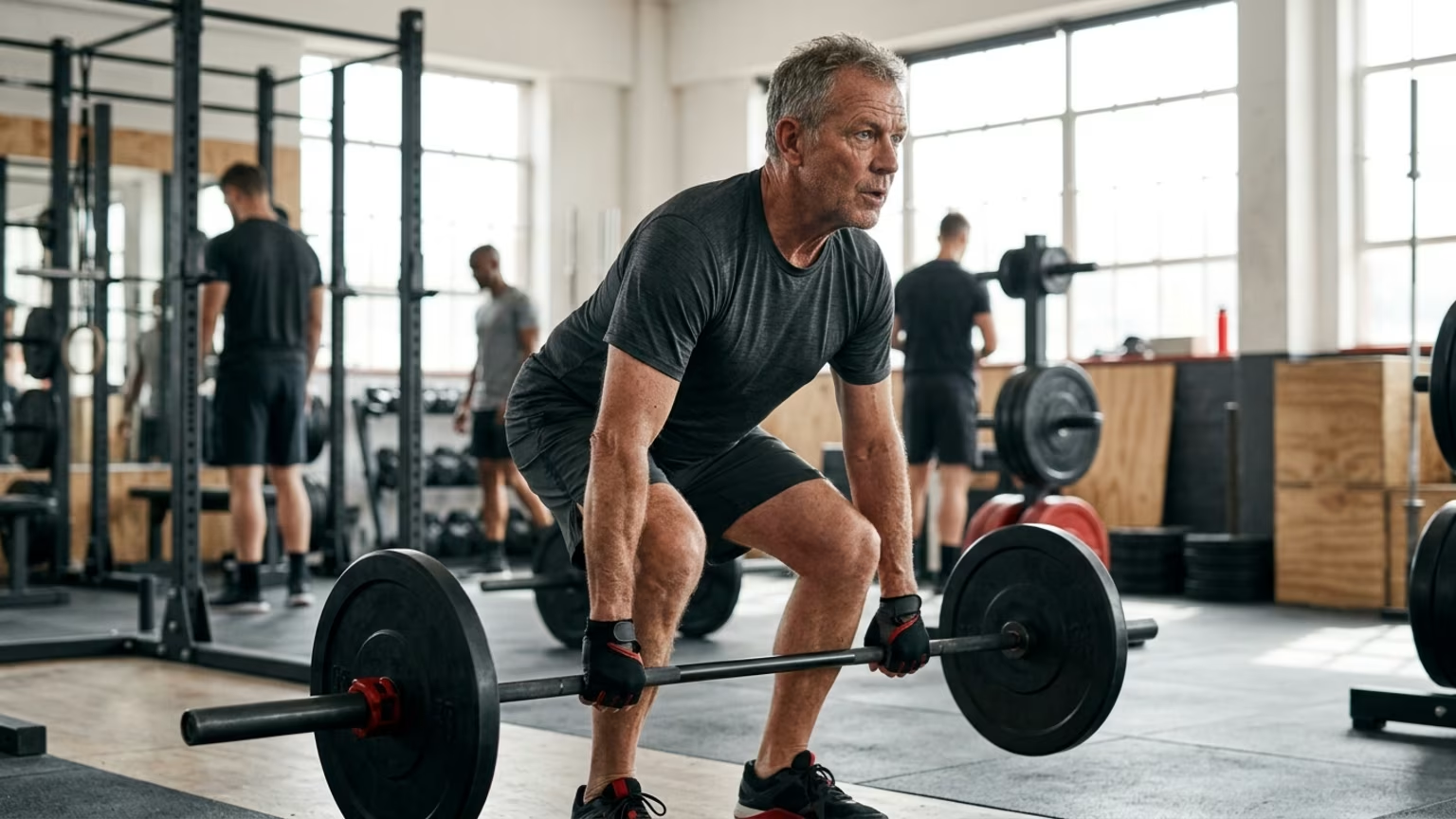
In September 2026, MindBodyGreen covered a GeroScience study showing that resistance training was associated with a lower biological brain age. The research utilized functional MRI data to demonstrate how structured lifting might influence physical aging signals inside the brain.
Study Design and Brain Clocks
The researchers built their MRI models using resting state functional MRI data from 2,433 healthy adults. These models functioned as biological brain clocks to estimate structural aging across different neural pathways. The research team then applied these predictive models to a distinct group of 309 healthy adults. These older adults were aged 62 to 70 and enrolled in the Live Active Successful Aging randomized trial.
The trial divided the participants into three specific intervention categories for the duration of the study. Participants engaged in heavy resistance training, moderate intensity training or a non exercise control protocol. The formal training intervention lasted for one full year. The program utilized supervised or partly supervised exercise sessions to maintain compliance.
Trainers prescribed exercise intensity individually for each older adult in the active groups. They progressively increased the training load over time as participants built physical capacity and muscular strength. The researchers conducted follow up clinical assessments at the one year mark and the two year mark. The study design strengthened its methodology by training the brain clocks on an independent sample before applying them to the LISA participants.
Assessors and data analysts were blinded to group allocation to maintain objective measurement standards. However, participants could not realistically be blinded to whether they were exercising. The study was not designed to prove that resistance training prevents dementia or extends maximum lifespan.
Measuring Biological Brain Age Changes
After one year of lifting, the heavy resistance group showed an estimated brain age gap reduction of approximately 1.4 years. The moderate intensity group demonstrated a very similar reduction of approximately 1.39 years. Depending on the specific brain clock model and follow up point, the broader reported range was approximately 1.4 to 2.3 years of slower brain aging. This indicates a measurable physiological shift during the training window.
These favorable MRI measurements persisted well beyond the formal exercise intervention. At the two year assessment point, the heavy resistance group recorded a brain age gap reduction of approximately 1.84 years. The moderate intensity group showed an approximate reduction of 2.26 years. The researchers noted that these benefits remained observable one year after the formal training period ended.
The non exercise control group did not show any statistically significant change during this same two year timeframe. The study authors concluded that resistance exercise training decelerated brain aging as indexed by the brain clocks. They described the result as supporting resistance exercise as a preventive strategy for overall brain health. However, they also cautioned that the true clinical significance of this MRI change remains uncertain.
Network Connectivity and Leg Strength
The GeroScience study documented increased prefrontal functional connectivity following heavy resistance training. The prefrontal brain regions govern critical daily functions like decision making, attention and executive control. The heavy group's increase in connectivity offers a plausible neurological signal related to these executive function networks. However, the study measured neural connectivity rather than proving participants experienced better real world memory.
The researchers noted that this brain age effect appeared at the whole brain level. They found no isolated improvements in the default mode or motor networks. They also saw no localized changes in the somatosensory, cerebellar, auditory or visual pathways. The researchers characterized the overall result as a distributed network level change.
Physical strength improvements did not guarantee identical cognitive markers across the board. The reported association between improved leg strength and a reduced brain age gap was relatively small overall. The researchers reported a Spearman's r of negative 0.12 and a p value of 0.036 for this association. This correlation was statistically significant in the moderate intensity group but absent in the heavy resistance group.
This discrepancy means greater leg strength gains do not automatically produce proportionally younger brains. The researchers suggested that measurement noise, baseline fitness and individual responsiveness potentially influenced the varied results.
Diagnostic Limitations and Error Margins
The central result is promising but carries clear clinical limitations for men who want to monitor their cognitive longevity. The brain age models had a reported mean absolute error of approximately 8.65 years. This wide margin means the individual age estimates lacked the precision needed for personal biological age measurements. The findings represent a group level change in an MRI signal rather than a diagnostic tool.
The LISA sample exclusively included healthy older adults aged 62 to 70. The study excluded participants with significant medical, musculoskeletal or neurological conditions. This specific demographic means the results cannot automatically be generalized to men in their late 40s. The findings also do not directly apply to men who are already experiencing cognitive impairment.
The authors noted that understanding the importance of a one to two year gap reduction requires much longer follow up. MindBodyGreen suggests older adults may not need maximal or powerlifting style training to pursue potential brain health benefits. Because this is a single study in healthy older adults, the safest interpretation is simply that both tested training intensities produced favorable changes. It does not prove that every form of lifting will have the exact same effect in every age group.
Examining the Wider Clinical Context
These findings align with a broader systematic review and meta analysis of exercise interventions in adults older than 50. That comprehensive review analyzed 39 studies and found a significant overall improvement in general cognitive function. The reported effect size was 0.29, with a confidence interval of 0.17 to 0.41.
The review analyzed aerobic training alongside resistance protocols and multicomponent routines. It also included tai chi interventions, which means the data supports broad physical activity over isolated lifting. A separate randomized trial evaluated 155 older women over a 52 week period. The trial compared once weekly resistance training, twice weekly resistance training and twice weekly balance routines.
At the two year follow up, both resistance training groups demonstrated better executive function outcomes than the balance group. The twice weekly resistance group also showed specific benefits in memory, cortical white matter atrophy and peak muscle power. This suggests that adjusting your workout volume over the week plays a role in long term physiological outcomes.
Other recent work paints a more mixed picture for structured lifting routines. One study examined resistance training sets in cognitively impaired individuals to measure physical and mental changes. Both training formats improved physical performance without producing detectable between group changes in cognition or brain derived neurotrophic factor. Building sustainable physical resilience requires acknowledging that strength and cognitive test performance are related but not interchangeable outcomes.
Practical Weekly Programming After 45
For men returning to exercise, consistent resistance training supports muscle retention, mobility and potential brain aging signals. MindBodyGreen translates the research into a practical approach of two to three weekly strength sessions. International physical activity guidance recommends strengthening all major muscle groups on at least two days per week. The same guidance prioritizes multicomponent activity that includes functional balance and strength for older adults.
A well rounded routine often features a squat or leg press, a hinge variation and a horizontal press. Adding a row or pulldown and loaded carries provides additional stability and core strength. However, the LISA study did not prove that squats, deadlifts, rows and presses are individually necessary to achieve the brain age effect. Any appropriately loaded movement pattern can support baseline muscle maintenance.
Progressing these movements should be a gradual process rather than an aggressive pursuit of maximum weight. A trainee might add a small amount of load, an additional repetition or a new set when technique remains stable. Men with high blood pressure, cardiovascular disease or major joint problems must obtain individualized medical guidance before beginning strenuous programs.
Ultimately, this research confirms existing knowledge that consistent resistance training supports comprehensive physical resilience rather than introducing a radically new clinical treatment for brain aging.
How Everfitguys helps
Deciding how to apply clinical MRI data to a weekly lifting routine requires objective physiological analysis rather than isolated health advice. Confusion about hormonal changes and testosterone claims frequently obscures the deeper metabolic factors driving genuine vitality. Everfitguys translates current cognitive aging research so you can build a resilient foundation for long term capability.
Sources
- This Type Of Workout Can Lower Your Brain's Biological Age By 2 Years
- Long-Term Effects of Resistance Exercise Training on Cognition and Brain Volume in Older Women: Results from a Randomized Controlled Trial.
- Effects of Resistance Training Sets on Cognition and Brain ...
- Physical activity guidance update - The BMJ
Stay sharp
Get stories
The best writing on craft and life, delivered once a week. No noise, just the good stuff.