Sleep Deprivation, Muscle Synthesis and Hormones: Analyzing the Data
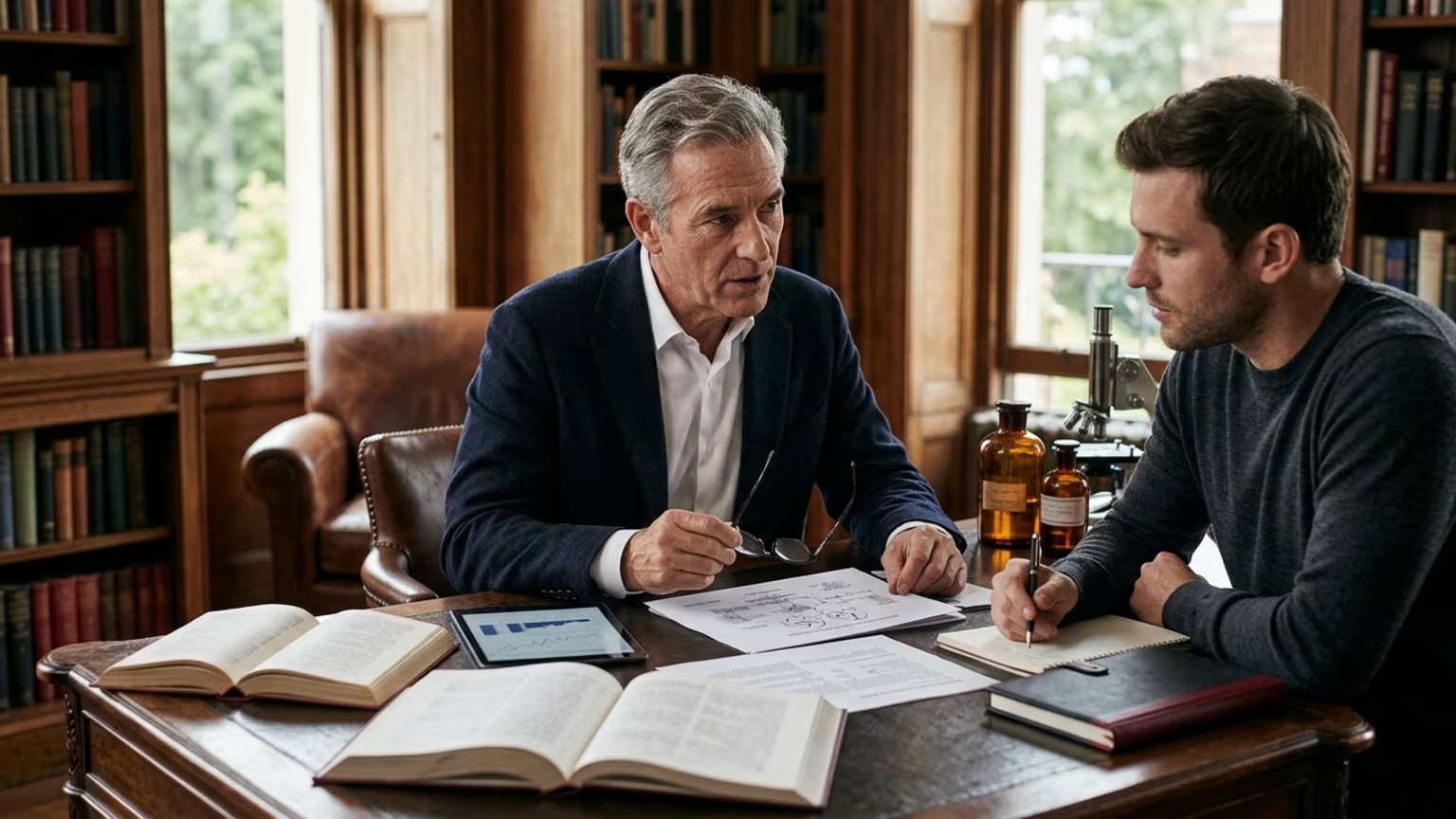
In January 2021, Physiological Reports published a randomized crossover study examining how one night of total sleep deprivation affects skeletal-muscle protein synthesis and hormone levels.
The experiment included 13 healthy young adults. The group consisted of seven men and six women. Their average ages were approximately 22 and 20 years, respectively. Participants completed both a normal-sleep trial and a total-sleep-deprivation trial.
The researchers randomized the order of these trials. Each trial was separated by at least four weeks. During the control condition, participants slept at home from 10 p.m. to 7 a.m. During the deprivation condition, they stayed awake overnight under continuous laboratory observation.
After the sleep-deprivation night, post-meal mixed-muscle protein fractional synthesis rate fell from 0.072 percent per hour to 0.059 percent per hour. This represented an 18 percent reduction that reached statistical significance. The researchers measured this muscle response after providing standardized meals. Breakfast contained approximately 20 grams of protein, and lunch contained approximately 21 grams of protein.
The study also reported a 21 percent increase in daytime cortisol exposure. This metric was measured as the area under the curve between 10 a.m. and 4 p.m. Additionally, testosterone exposure fell by 24 percent during the sleep-deprivation condition.
The hormone findings were not uniform across the entire day. Cortisol was higher late in the day after sleep deprivation. The normal-sleep condition showed the expected decline in cortisol over the day.
The study did not find sleep-deprivation effects on plasma insulin or plasma IGF-1. It also recorded no changes in muscle IGF-1 gene expression or several measured markers of muscle-protein degradation. This distinction matters because the experiment demonstrated a short-term reduction in muscle protein synthesis, not proof that one sleepless night caused measurable muscle loss.
How Sleep Loss Alters Muscle Metabolism
The authors characterized the findings as evidence of acute anabolic resistance. This means the muscle showed a reduced ability to respond normally to a protein-containing meal. They also noted a more pro-catabolic hormonal environment following total sleep loss. For someone who trains, that suggests recovery may be impaired even if the workout itself was completed successfully.
The authors stated that the observed changes could represent mechanistic precursors of metabolic and body-composition problems. These problems are associated with chronic sleep deprivation. The researchers did not prove that those long-term outcomes follow from one sleepless night. The findings clarify a temporary shift in how the body processes nutrients and regulates basic hormone activity.
The study measured muscle protein synthesis over a short experimental window. It did not measure changes in muscle size, strength, or physical function over weeks or months. It therefore cannot establish that the reported 18 percent reduction translates directly into an 18 percent reduction in muscle growth or strength.
The testosterone result should also be interpreted as a short-term exposure change. It is not evidence of chronic testosterone deficiency or a reason to begin hormone treatment. The study could not determine whether the testosterone change caused the protein-synthesis result.
Why Performance Research Shows Varying Effects
Men's Journal reported that a 2025 review in Sleep and Breathing examined 13 studies of sleep loss and strength performance. Ten of those studies found a significant difference in at least one strength measure. The review concluded that people performing strength-based exercise should prioritize adequate sleep to optimize physical performance.
Men's Journal also cited a 2022 Sports Medicine meta-analysis covering 25 studies. This review associated acute sleep loss with an average 2.85 percent reduction in strength. The negative effect was more consistent when exercise occurred later in the day. That performance finding is separate from the muscle-protein-synthesis experiment.
The available evidence shows that results vary by sleep-loss protocol and exercise test. Some studies found no meaningful decline in maximal strength after one night of sleep loss. Nathaniel Watson, MD, a former president of the American Academy of Sleep Medicine, told Men's Journal that sleep functions alongside a healthy diet and regular exercise. The American Academy of Sleep Medicine recommends that adults regularly obtain at least seven hours of sleep.
How to Approach Repeated Rest Restriction
The experiment tested total sleep deprivation, not the more common situation of getting five or six hours of rest. Men's Journal explicitly noted that one poor night does not automatically erase training gains. The distinction between acute total sleep deprivation and accumulated sleep restriction is particularly relevant for active adults. Integrating these insights into recovery-aware strength training after 45 requires distinguishing between an isolated poor night and a continuous pattern.
When a single night of sleep is missed, the metabolic penalty is acute but not permanent. The experiment tested a strict laboratory protocol of being awake all night. Real-world applications usually involve partial sleep restriction over days or weeks. Men's Journal reported that three consecutive nights limited to three hours of sleep reduced maximal strength.
That study showed reduced lifting capacity across major compound movements like the bench press, leg press and deadlift. The available evidence does not justify saying that every short night causes a measurable loss of strength. It does support treating repeated or severe sleep loss as a potential recovery problem.
This accumulation of fatigue requires attention when it coincides with hard training. Men pursuing functional longevity after 45 should monitor multi-day patterns rather than panicking over a single disruption. Persistent insomnia, loud snoring, witnessed breathing pauses, restless legs or ongoing daytime sleepiness deserve clinical evaluation.
Practical Nutrition Steps Following Poor Rest
The study authors suggested that nutrition and exercise may help protect muscle in sleep-deprived populations. This could apply to shift workers, new parents and older adults facing severe sleep disruption. However, they did not establish that extra protein or exercise reverses the effect.
The study used standardized protein-containing meals and found that sleep deprivation reduced the muscle response to those meals. That supports maintaining normal meals rather than skipping food after poor sleep. It does not prove that simply adding more protein cancels the metabolic impact. Men balancing nutrition and blood sugar management after 45 should prioritize consistency.
Since the study found reduced post-meal muscle protein synthesis, avoiding maximal training on severely deprived days is reasonable. It is sensible to postpone personal records without abandoning light movement entirely. Treating sleep as a managed variable helps maintain a successful long-term strength plan.
The American Academy of Sleep Medicine acknowledges that individual sleep needs vary. Finding a sustainable schedule helps maintain consistent nutritional habits over time. The study provides a physiological reason to protect sleep opportunities without demanding perfection. Treating recovery biology with practical consistency yields better outcomes than reacting aggressively to a single disruption.
The study carries several structural limitations. Only 13 people participated, making the estimates vulnerable to individual variation. The participants were aged 18 to 35, so the findings cannot be assumed to apply directly to men aged 45 to 70 or older. The sample included seven men and six women, but the study was not powered to establish sex-specific differences.
Actigraphy indicated that participants slept approximately 5.9 to 6.1 hours during the preceding week, a fact that conflicted with the study’s eligibility criteria. The authors said it was unclear whether that mild pre-study sleep restriction influenced the results. The normal-sleep condition took place at home, while the deprivation condition took place in a controlled laboratory. This prevented identical overnight blood sampling across conditions.
Participants could consume low-protein snacks and water overnight during the deprivation condition. The authors noted that nighttime food intake could have influenced hormone concentrations. Sleep was assessed with wrist actigraphy rather than the gold-standard sleep-laboratory method of polysomnography. The study measured protein synthesis and hormones, not whether participants lifted less weight the following day.
What this changes is the physiological understanding of how acute sleep deprivation blunts the immediate post-meal muscle building response, while reinforcing that repeated or severe sleep loss remains the true threat to long-term physical performance.
How Everfitguys helps
Separating short term hormonal fluctuations from chronic medical conditions requires careful evaluation of acute laboratory research. Confusion about hormonal changes and testosterone claims frequently complicates recovery planning for active older adults, so Everfitguys translates the current clinical evidence to help men make rational daily training decisions. Read the research
Sources
Stay sharp
Get stories
The best writing on craft and life, delivered once a week. No noise, just the good stuff.