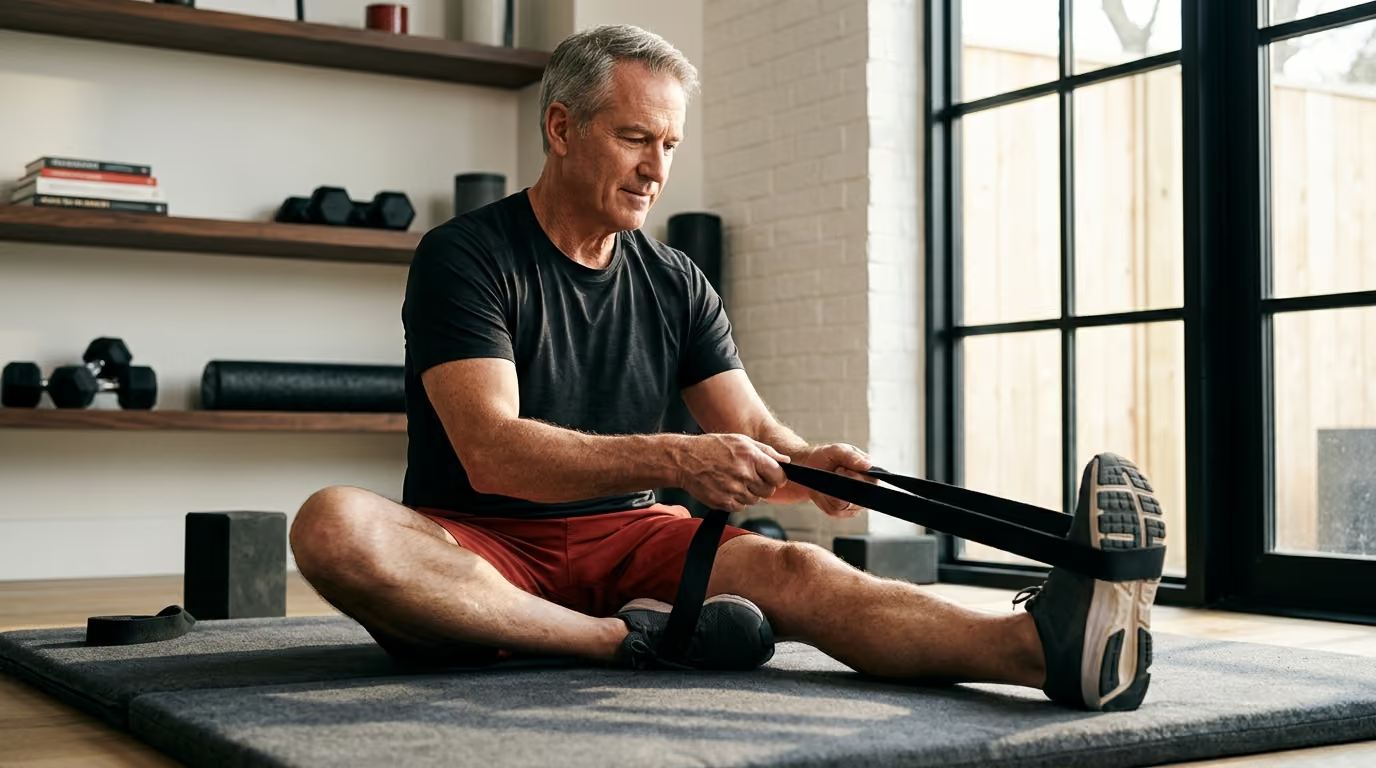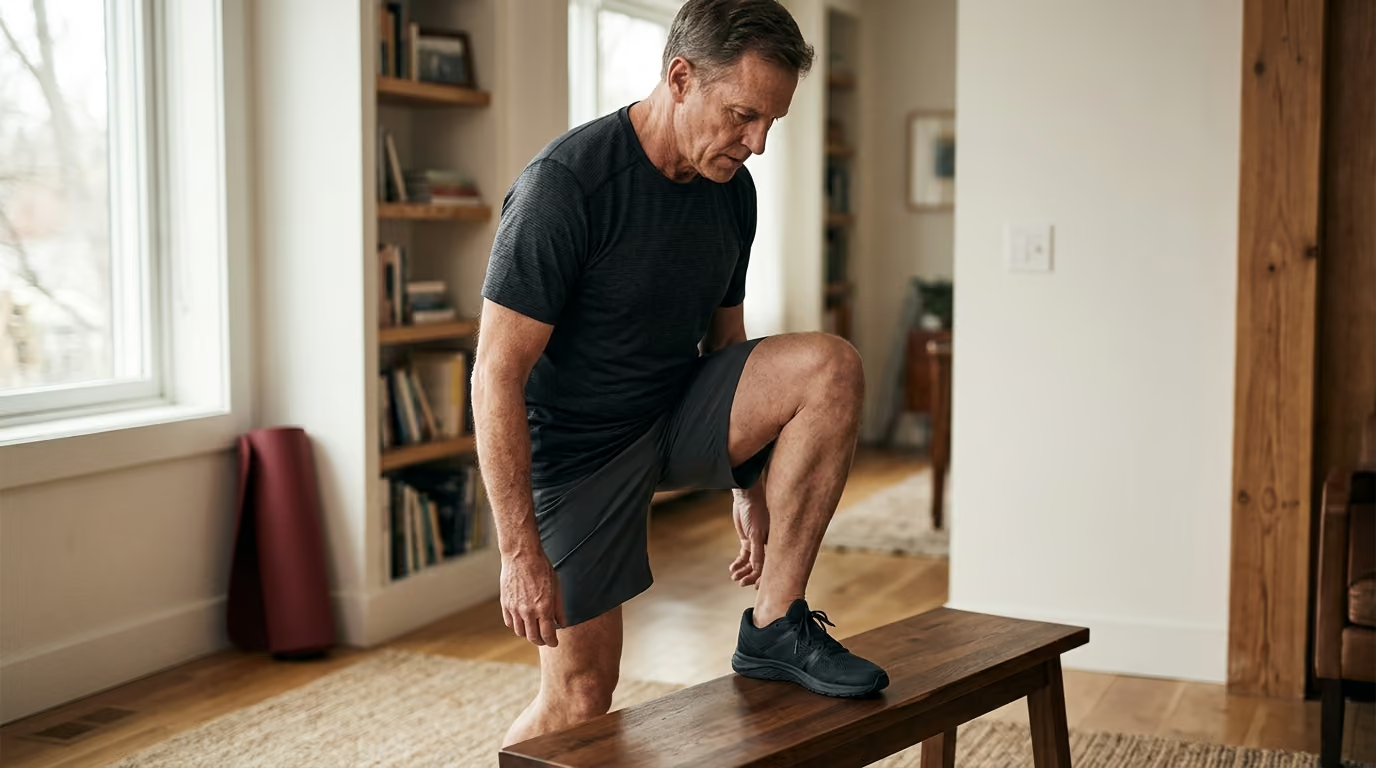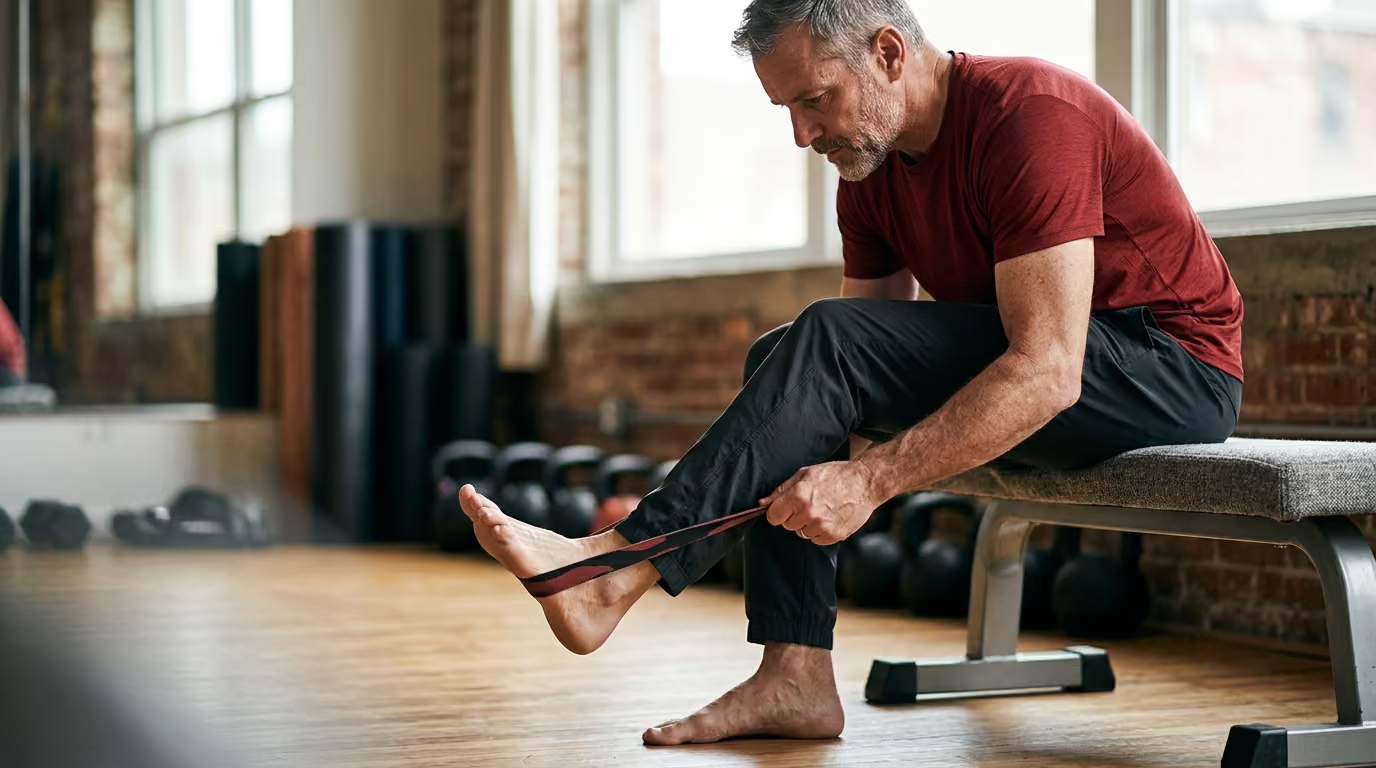
Most men assume that stiff ankles are simply tight calf muscles that need aggressive stretching. When a squat feels restricted or balance feels unsteady on a trail, the default reaction is usually to drop the heels off a curb or pull the toes upward with a strap.
This narrow focus on stretching rarely solves the problem. Ankle and foot function is not just passive flexibility. It is an integrated system of joint range, muscular strength, tendon capacity, and sensory feedback from the bottom of the foot.
Stretching a joint that lacks active strength or stability creates temporary sensation changes without building durable function. If you want to move confidently, lift weights safely, and handle rough ground after 45, you need a complete approach.
This guide examines the clinical research on lower leg mechanics and provides an evidence-based manual for training your feet and ankles.
Examine What The Research Shows About Lower Leg Function
Scientific studies on ankle and foot function show that lower leg capacity directly influences balance, walking mechanics, and joint comfort. Research examining adults across middle and older age groups indicates that restricted ankle range and reduced lower leg strength correlate with balance deficits and altered movement patterns.
A systematic review of ankle and foot exercise programs found measurable physical improvements across multiple clinical trials. The review showed that structured lower leg training improved plantarflexion strength with a standardized mean difference of 0.35. Ankle flexibility showed a standardized mean difference of 0.48, while eyes-open balance improved with a standardized mean difference of 0.41.
The same research revealed clear boundaries in what generalized foot programs achieve. While plantarflexion strength and flexibility improved, the trials showed no statistically significant gains in dorsiflexion strength or eyes-closed balance. General calf training does not automatically strengthen the muscles on the front of your shin.
Evidence also highlights the importance of the smaller structures within the foot. Clinical reviews evaluating intrinsic foot muscle strengthening demonstrate that training the toe flexors improves toe strength, balance, and physical mobility. Research in adults over 60 consistently identifies a meaningful correlation between toe-flexor strength and postural stability.
Manual therapy research provides additional insight into joint mechanics. Randomized trials on older adults with restricted ankle mobility found that targeted joint mobilization of the talus bone produced measurable improvements in functional tests such as the Timed Up and Go, Functional Reach, and single-leg stance. These gains were most durable when participants paired joint mobilization with progressive strength and balance drills.
The research indicates that ankle training must be comprehensive. Isolated stretching is rarely sufficient. A complete program must develop joint mobility, muscular force in both directions, foot sensory awareness, and dynamic balance.
Understand How Lower Leg Mechanics Shift After 45
Physical changes in the lower leg occur gradually throughout midlife. Tendons lose a portion of their natural water content, which increases tissue stiffness. Muscle mass in the calves and feet declines slowly if it is not challenged with resistance training.
These shifts do not mean your body is breaking down. They represent normal biological changes that respond directly to physical loading. Without regular training through a full range of motion, connective tissues adapt to the shortened positions they occupy during daily sitting and walking.
The calf complex consists of two primary muscles that behave differently. The gastrocnemius crosses both the knee joint and the ankle joint, making it most active when your knee is straight. The soleus sits underneath the gastrocnemius and crosses only the ankle joint.
The soleus plays a massive role in upright posture and walking because it controls the forward movement of your shin over your foot. As men age, the soleus often loses strength quietly because standard walking does not load it heavily enough. When the soleus lacks capacity, the Achilles tendon absorbs excess strain during prolonged standing, hiking, or running.
Aging also alters neuromuscular control. Studies on ankle force regulation show that older adults experience greater force variability and reduced precision during dorsiflexion tasks. Producing maximum force is only one part of the equation. Your nervous system must also regulate subtle force changes smoothly to keep you stable on uneven ground.
Sensory receptors on the soles of your feet undergo gradual changes as well. Thick footwear and decades of walking on flat indoor floors reduce the sensory input reaching your brain. When your brain receives less clear information about ground contact, your reaction time slows. Rebuilding strength in the foot intrinsics and restoring sensory awareness helps offset these normal age-related changes.
Understanding these mechanics helps you choose targeted exercises for joint mobility and functional movement.
Recognize What Ankle Function Means In Real Life
Your feet and ankles form your only base of support whenever you are standing, walking, lifting, or running. When ankle dorsiflexion is restricted, your body finds alternative movement pathways to complete a task.
Ankle dorsiflexion occurs when your shin moves forward over your planted foot. In a deep squat, your knees must travel forward to keep your torso balanced over your midfoot. A study examining back squat mechanics found that squat depth was strongly associated with weight-bearing ankle dorsiflexion, showing a correlation of r = 0.69.
When your ankles cannot bend sufficiently, your body compensates. You might lift your heels off the floor, flare your feet outward excessively, collapse your arches, or pitch your chest forward. These compensations are natural adaptations, but they place higher stress on your lower back and knees during heavy barbell training.
Walking mechanics also rely on smooth ankle motion. During a normal stride, your ankle must absorb impact, allow your shin to glide forward, and then push your body weight ahead. If your dorsiflexion is limited, your stride shortens, and your foot may slap the ground or rotate outward during push-off.
Uphill walking and stair climbing demand even greater ankle capacity. As the slope steepens, your shin must travel farther forward over your foot while your calf muscles generate high levels of propulsion. Inadequate calf strength and stiff ankles turn a simple hill walk into a tiring struggle that overloads the front of your knees.
Maintaining lower leg strength is also a foundational element of long-term independence. The Centers for Disease Control and Prevention reports that more than 14 million adults aged 65 and older fall each year in the United States. About 37 percent of those falls result in injuries that require medical attention or restrict daily activity.
Building lower leg capacity during midlife creates physical reserves long before severe balance problems develop. The World Health Organization recommends that adults complete multicomponent physical activity emphasizing balance and functional strength on three or more days per week to support healthy aging.
A well-conditioned lower leg improves your ability to hike steep trails, lift weights comfortably, and react quickly to unexpected slips. Prioritizing foot mechanics is a practical step for maintaining overall mobility and recovery over time.
Assess Your Current Ankle And Foot Baseline
Before starting a training program, you need to assess your current range, strength, and balance. Objective assessments help you track genuine progress rather than relying on subjective feelings of tightness.
Measure Dorsiflexion With The Weight-Bearing Lunge Test
The weight-bearing lunge test is a reliable assessment tool used in clinical research. Studies confirm high measurement reliability for this test, with intraclass correlation coefficients ranging from 0.80 to 0.99.
Follow these steps to perform the test:
- Place a tape measure on the floor perpendicular to a smooth, flat wall.
- Stand facing the wall with your bare foot aligned along the tape measure.
- Keep your heel firmly planted on the ground.
- Lunge your knee forward in a straight line toward the wall, tracking over your second or third toe.
- Move your foot backward gradually until your knee can touch the wall only while your heel stays flat.
- Measure the distance from the wall to your big toe.
Research shows that the minimal detectable change for this test is approximately 1.6 to 1.9 centimeters. Small changes below this threshold reflect normal testing variance rather than true tissue adaptation. Compare both legs and note whether your restriction feels like calf tension in the back or a hard pinch in the front of your joint.
Test Calf And Soleus Strength Capacity
Calf capacity requires both strength and muscular endurance. You should evaluate both straight-knee and bent-knee positions.
- Stand on one leg on a flat surface with your fingertips lightly touching a wall for balance.
- Rise onto your big toe joint as high as possible, then lower slowly over two seconds.
- Count how many continuous, full-height repetitions you can complete with a straight knee.
- Rest for two minutes, then repeat the test with your knee bent at a thirty-degree angle.
- Repeat the entire process on the other leg.
A target for active men is the ability to complete 20 to 25 smooth, full-range repetitions on each leg without bouncing or losing height. Significant differences between legs indicate an area that needs structured strength work.
Evaluate Foot Control And The Foot Tripod
The foot tripod concept represents the three primary weight-bearing zones of your foot: the center of your heel, the base of your big toe, and the base of your pinky toe.
Stand barefoot on a firm floor. Distribute your weight evenly across all three points of contact on both feet.
Observe your feet in a mirror or record a video. Notice whether you can press your big toe into the floor while lifting your smaller toes. Then, try pressing your smaller toes down while lifting your big toe.
If your toes curl aggressively or your entire arch collapses inward, your foot intrinsics need targeted activation. Developing intentional control over these contact points improves your base of support during heavy lifting.
Assess Static And Dynamic Balance
Balance involves visual, vestibular, and sensory systems working together. You can assess your baseline with simple progressive positions.
- Stand on one leg on a firm, flat surface with your arms crossed over your chest.
- Time how long you can maintain this position with your eyes open without stepping or swaying excessively.
- If you can hold the position for 30 seconds comfortably, try the test with your eyes closed while standing near a wall or sturdy counter for safety.
- Note any substantial time differences between your left and right sides.
Practicing these tests gives you a clear baseline. You can use these numbers to track your progress as you work through structured training phases.
Identify Clinical Red Flags
Self-directed training is appropriate for general stiffness and conditioning, but certain symptoms require a medical evaluation. Consult a physician or physical therapist if you experience any of the following:
- Inability to bear weight on your foot or ankle.
- Unexplained swelling, redness, or heat in the calf or ankle joint.
- Numbness, tingling, or progressive loss of muscle strength.
- Sharp, pinching pain in the front of the joint during movement.
- A history of frequent giving-way episodes after an old injury.
- Suspected fractures, severe bruising, or recent acute trauma.
Addressing these issues with a medical professional prevents minor joint problems from turning into long-term limitations.
Build Usable Range And Joint Control
Restoring ankle range requires a balance of joint mobilization, active muscle loading, and controlled movement. Passive stretching alone produces transient gains, while loaded movement creates lasting adaptations in connective tissues.
Practice Controlled Knee-To-Wall Mobilizations
Knee-to-wall mobilizations apply gentle, weight-bearing load to the ankle complex. This drill helps your shin learn to travel forward over a stable foot.
- Set up in a split stance facing a wall, with your front foot a few inches away.
- Keep your front heel glued to the floor and your foot pointing straight ahead.
- Slowly push your knee forward so it tracks directly over your middle toes until you feel a gentle stretch.
- Hold the end position for two seconds, then return to the starting position.
- Complete two sets of 10 to 12 controlled repetitions per side.
Focus on smooth, pain-free movement. Do not force your joint past a painful pinch in the front of the ankle.
Strengthen The Tibialis Anterior Directly
Most training programs focus exclusively on the calves and neglect the front of the lower leg. The tibialis anterior pulls the foot into dorsiflexion and controls the foot as it lowers to the ground during walking. Because research shows general programs often fail to improve dorsiflexion strength, direct training is valuable.
- Stand with your back leaning flat against a wall, with your feet placed about two feet out in front of you.
- Keep your knees straight and your heels planted firmly on the floor.
- Pull your toes and the balls of your feet upward toward your shins as high as possible.
- Pause at the top for one second, then lower your feet under control.
- Complete three sets of 15 to 20 smooth repetitions.
To increase the challenge, move your feet farther away from the wall. You will feel a strong muscular burn along the front of your shins.
Load The Plantarflexors Through Full Range
Calf training must address both the gastrocnemius and the soleus through their full excursion. You need both straight-knee and bent-knee variations in your weekly routine.
Straight-Knee Heel Raises
- Stand on the edge of a sturdy step or block with your heels hanging off the back.
- Hold onto a wall or rail for balance.
- Lower your heels below the step over a three-second count to achieve a full stretch.
- Press through the balls of your feet, especially your big toe joints, to rise to full height.
- Pause at the top for one second before lowering again.
- Perform three sets of 10 to 15 controlled repetitions.
Bent-Knee Heel Raises
- Sit on a bench with your knees bent at a 90-degree angle and the balls of your feet on a block.
- Place a weight plate, dumbbell, or barbell across your lower thighs.
- Lower your heels below the block to feel a stretch in the deep lower calf.
- Press upward to maximum height, squeezing the soleus muscle at the top.
- Lower slowly over three seconds.
- Perform three sets of 12 to 15 repetitions.
You can learn more about structured resistance training in our guides covering strength and muscle development.
Train The Intrinsic Foot Muscles
Strengthening the small muscles inside your feet supports your arch and improves your ground contact control.
The Short-Foot Exercise
- Sit in a chair with your bare feet flat on the floor.
- Keep your heel and the balls of your feet firmly on the ground.
- Without curling your toes, attempt to draw the ball of your big toe toward your heel.
- Your arch will lift slightly as the muscles on the bottom of your foot contract.
- Hold this contraction for five seconds, then relax.
- Perform two sets of eight holds per foot, progressing to standing as your control improves.
Toe Yoga Drills
- Stand barefoot with your weight balanced on your foot tripod.
- Keep your smaller toes flat while lifting only your big toe toward the ceiling.
- Hold for two seconds, then lower your big toe.
- Next, keep your big toe pressed down while lifting your four smaller toes.
- Hold for two seconds, then lower them smoothly.
- Alternate between these two movements for 10 repetitions per side.
These drills build fine motor control in tissues that are often neglected by standard footwear.
Integrate Balance, Gait, And Terrain Capacity
Isolated exercises build the capacity of individual tissues, but you must integrate that capacity into whole-body movement patterns. Balance and walking require your brain, joints, and muscles to coordinate force in dynamic environments.
Advance Your Single-Leg Balance
Balance training should move from stable, static positions to dynamic, unpredictable challenges.
- Static Single-Leg Stance: Stand on one leg on a firm floor. Maintain an upright posture with your foot tripod engaged. Aim for 30 seconds of quiet, controlled balance per leg.
- Reaching Single-Leg Stance: Stand on your left leg. Reach your right foot forward to tap the floor lightly, then return to center. Repeat by reaching out to the side and then behind you. Complete six reaching cycles per leg.
- Sensory Challenge: Stand on one leg and turn your head slowly from left to right. This movement forces your foot and ankle to maintain balance while your visual field changes.
Perform balance training near a sturdy wall so you can touch it immediately if you feel unstable.
Practice Loaded Step-Downs For Knee And Ankle Coordination
Step-downs challenge your weight-bearing dorsiflexion while strengthening your quadriceps and hip stabilizers.
- Stand on top of a low, stable step or platform (four to six inches high).
- Balance on one leg while slowly lowering the opposite heel toward the floor in front of you.
- Allow your working ankle to bend deeply, keeping your heel flat on the step.
- Tap the floor lightly with your opposite heel without shifting your body weight onto it.
- Press through your working foot to return to the standing position.
- Complete three sets of eight to 10 controlled repetitions per leg.
Focus on keeping your knee aligned with your middle toes. Do not let your knee collapse inward or your heel lift off the step.
Progress Uphill Walking And Stair Climbing
Walking uphill provides an excellent cardiovascular workout while loading your calves and Achilles tendons through a deep range of motion.
Begin with moderate inclines on a treadmill or outdoor paved hills. Focus on maintaining an upright posture, striking the ground with your midfoot, and driving through your big toe joint with every stride.
As your strength improves, introduce short outdoor hill walks or stair climbing sessions. Increase only one variable at a time, such as slope, duration, or pace. This controlled progression gives your tendons adequate time to adapt without developing chronic irritation.
Introduce Barefoot Movement Safely
Spending time barefoot or in minimal footwear can increase sensory feedback from the ground. However, transitioning too rapidly can overload tissues that have spent decades inside stiff, cushioned shoes.
Begin by walking barefoot inside your home on flat, clean floors for 15 to 30 minutes each day. Practice your foot drills and balance exercises without shoes.
Avoid jumping straight into running or long hikes in minimalist shoes. Give your calves, plantar fascia, and intrinsic foot muscles several months to adapt to new demands. Gradual exposure builds strength while protecting your connective tissues.
Explore our comprehensive library of men's health research guides for more science-backed training protocols.
Avoid Common Ankle And Foot Training Misconceptions
Several widespread myths cause men to waste time or injure themselves when trying to improve their ankle function. Understanding the limits of these claims helps you train more effectively.
Misconception 1: Tight Calves Are Always The Problem
When an ankle feels stiff, most people blame the calf muscles. However, restrictions often come from the ankle joint capsule, previous sprains, or poor motor control rather than muscle shortness.
Aggressively stretching an ankle that has a bony or capsular restriction will only cause joint irritation. If stretching does not produce measurable gains on a lunge test within two weeks, shift your focus toward joint mobilization, strength training, and movement drills.
Misconception 2: More Range Of Motion Is Always Better
Extreme mobility is not a healthy goal for every individual. Having massive dorsiflexion range without the strength to stabilize that range increases the risk of joint strain.
The goal is functional mobility. You need enough comfortable, controllable range to squat to your desired depth, walk up hills, and step down stairs without pain. Chasing excessive flexibility beyond your functional needs offers little practical benefit.
Misconception 3: Arch Flattening Is Always A Structural Defect
Many men believe that an arch that lowers during movement is abnormal and dangerous. In reality, the human foot is designed to pronate and adapt to uneven surfaces to absorb impact forces.
A foot that moves naturally into pronation and then returns to a stable arch is functioning correctly. Arch movement becomes an issue only when it is painful, completely uncontrolled, or associated with persistent tendon symptoms. Having a flat foot appearance while standing quietly does not automatically predict poor athletic function.
Misconception 4: Improving Joint Range Automatically Fixes Balance
Many people assume that gaining an extra inch on a wall lunge test will automatically make them more stable. A randomized trial comparing balance training alone against balance training combined with joint mobilization found that both groups improved their mobility, but joint mobilization did not produce superior balance outcomes.
Mobility creates the physical room for movement, but balance requires coordination, strength, and sensory practice. You must train balance directly rather than expecting joint range to solve stability problems on its own.
Address Past Ankle Sprains And Chronic Instability
Many men over 45 carry persistent deficits from ankle sprains that occurred decades earlier during sports or military service. An untreated lateral ankle sprain often leaves lingering ligament laxity, reduced proprioception, and protective guarding.
Clinical practice guidelines for lateral ankle sprains emphasize progressive active loading, sensorimotor training, and graded manual therapy. When an ankle has been sprained repeatedly, the mechanoreceptors in the damaged ligaments provide less reliable feedback to the brain.
To rehabilitate an old ankle injury, prioritize three areas:
- Peroneal Muscle Strengthening: The peroneal muscles run along the outside of your lower leg and help prevent your ankle from rolling inward. Train them using resisted lateral foot movements against a resistance band.
- Dynamic Balance and Reaction Drills: Practice rapid stepping drills, direction changes, and single-leg balance on firm surfaces to retrain your nervous system to respond quickly to lateral shifts.
- Gradual Uneven-Surface Exposure: Before walking on rocky hiking trails, build tolerance by walking on grass, packed dirt, or gentle gravel paths. This exposure teaches your ankle to adapt to minor surface variations safely.
Addressing past injuries systematically restores movement confidence and helps prevent recurrent roll episodes.
Recognize Where The Scientific Evidence Is Thin
While research provides clear guidance on many lower leg mechanics, several popular claims in fitness culture lack strong scientific backing.
Evidence regarding direct dorsiflexion strength training across large populations remains limited. Most commercial and clinical trials measure calf raises and plantarflexion capacity, while fewer studies investigate isolated tibialis anterior training. While training the front of the shin is biomechanically sound, the exact dose-response curve for dorsiflexion strength in midlife men is still being established.
The relationship between laboratory balance improvements and real-world fall reduction is also nuanced. While foot and ankle exercises reliably improve scores on tests like the Timed Up and Go or single-leg balance tests, these improvements do not guarantee that an individual will never fall. Real-world falls involve vision, cognitive distractions, environmental hazards, medication side effects, and unexpected trips.
Claims that minimalist footwear will automatically cure foot ailments or rebuild fallen arches are largely observational and commercially driven. While minimalist shoes challenge foot musculature, individual responses vary widely depending on body weight, training volume, joint anatomy, and existing tissue tolerance.
Manual therapy and joint adjustments also have clear boundaries. While joint mobilization can provide immediate, short-term improvements in weight-bearing dorsiflexion, the research does not show that passive treatments create lasting changes without consistent, active exercise.
Being honest about these scientific limitations helps you build a sensible training plan based on proven methods rather than commercial trends. You can read our health and medical disclaimer for additional context on research-led exercise.
Apply Structured Multi-Week Progression Models
To turn these principles into practical results, follow an eight-week progressive training framework. This model divides training into distinct phases that build joint capacity, strength, and movement control.
Phase 1: Weeks 1 to 4 (Awareness, Mobility, and Base Strength)
Complete this routine three times per week on non-consecutive days.
- Knee-to-Wall Mobilization: 2 sets of 10 smooth repetitions per side.
- Tibialis Anterior Wall Raises: 3 sets of 15 repetitions with a one-second pause at the top.
- Double-Leg Standing Heel Raises (Straight Knee): 3 sets of 15 repetitions with a three-second lowering phase.
- Seated Bent-Knee Heel Raises: 3 sets of 15 repetitions using moderate resistance.
- Short-Foot Holds: 2 sets of 8 five-second holds per foot.
- Single-Leg Static Balance: 3 sets of 30-second holds per leg on a firm floor.
Phase 2: Weeks 5 to 8 (Loaded Range, Dynamic Balance, and Capacity)
Advance your training by increasing resistance, moving to single-leg loading, and adding dynamic balance work.
- Knee-to-Wall Mobilization: 2 sets of 12 repetitions per side, testing your distance on the tape measure weekly.
- Tibialis Anterior Wall Raises: 3 sets of 20 repetitions with your feet placed farther from the wall.
- Single-Leg Standing Heel Raises (Straight Knee): 3 sets of 10 to 12 repetitions per leg with a controlled three-second descent.
- Loaded Bent-Knee Heel Raises: 3 sets of 10 to 12 repetitions using heavier resistance.
- Loaded Step-Downs (Four-Inch Step): 3 sets of 8 to 10 repetitions per leg.
- Single-Leg Reaching Balance: 3 sets of 6 multi-directional reaches per leg.
- Incline Walking: 15 to 20 minutes of moderate uphill walking on a treadmill or outdoor trail twice weekly.
Track your weight-bearing lunge distance and single-leg heel-raise repetitions every four weeks to monitor your progress objectively.
Key Takeaways
- Ankle mobility is an active system combining joint range, muscular force, tendon durability, and sensory feedback rather than simple flexibility.
- Plantarflexor training must include both straight-knee calf raises for the gastrocnemius and bent-knee variations for the soleus.
- Direct dorsiflexion strengthening using wall toe raises targets the front of the lower leg, which general calf exercises neglect.
- Intrinsic foot muscle training and toe-flexor strengthening improve your base of support, sensory awareness, and postural control.
- Balance requires dedicated, progressive balance practice and does not improve automatically from joint stretching alone.
Restoring lower leg strength and mobility after 45 gives you the physical foundation to lift heavy, walk rough trails, and stay capable for decades to come.
Sources
- Reliability and Validity of a Weight-Bearing Measure of Ankle ...
- Reliability and minimal detectable change of the weight- ...
- Is the weight-bearing lunge test a better tool for assessing ankle ...
- The intra and inter-rater reliability of a modified weight ...
- Reliability and minimal detectable change of the weight ...
- Intra-rater and inter-rater reliability of a weight-bearing ...
- Reliability of the weight-bearing ankle dorsiflexion range of ...
- What Is the Relationship Between Ankle Dorsiflexion Range ... - OUCI
- Validity of clinical outcome measures to evaluate ankle range of motion during the weight-bearing lunge test
- WITHIN-SESSION RELIABILITY FOR INTER-LIMB ... - PMC
Stay sharp
Get the word
Join our newsletter for the best writing advice and stories from the field.