Foam rolling is a method of self-applied pressure where you move parts of your body over a dense cylinder. Self-myofascial release is a broader term for self-massage using rollers, dense balls, sticks, or vibration devices. These tools are often marketed as ways to break up scar tissue, lengthen muscles, and speed up recovery.
Scientific research paints a much more specific picture. Foam rolling is a temporary stimulus that alters neural sensitivity and short-term movement tolerance. It does not remodel muscle architecture, break scar tissue, or replace active exercise.
This guide examines what self-myofascial work does and does not do for men over 45. It outlines the biological changes that occur in midlife tissues. It also provides a practical framework for using self-massage as an adjunct to regular strength, mobility, and cardiovascular training.
- THE 3 PHASES OF ROLLING EFFECTS
- 1. IMMEDIATE (0 - 30 MIN)
- Increased range of motion (neural stretch tolerance)
- Lower perceived stiffness and discomfort
- No significant loss of muscular power
- 2. SHORT-TERM RECOVERY (24 - 72 HOURS)
- Reduced perception of muscle soreness (DOMS)
- Minor speed-up in sprint/strength recovery
- Functional capacity and tissue healing may still lag
- 3. LONG-TERM ADAPTATION (WEEKS TO MONTHS)
- Inconsistent gains in chronic flexibility
- No direct increase in strength, power, or muscle mass
- Requires progressive loading and active movement for real change
What Does the Research Actually Show About Foam Rolling?
The scientific literature on foam rolling focuses on three primary areas: immediate joint range of motion, athletic performance, and post-exercise recovery. Understanding the strength and limits of this research helps you set realistic expectations for what a roller can accomplish.
- RESEARCH EVIDENCE AT A GLANCE
- OUTCOME: Acute Range of Motion, EVIDENCE LEVEL: Strong, OBSERVED EFFECT: Moderate to large gain
- OUTCOME: Pre-Workout Power/Force, EVIDENCE LEVEL: Strong, OBSERVED EFFECT: Neutral (no drop or gain)
- OUTCOME: Perceived Soreness (DOMS), EVIDENCE LEVEL: Moderate, OBSERVED EFFECT: Meaningful reduction
- OUTCOME: True Tissue Healing, EVIDENCE LEVEL: Limited, OBSERVED EFFECT: Minimal to no change
- OUTCOME: Long-Term Flexibility, EVIDENCE LEVEL: Mixed, OBSERVED EFFECT: Inconsistent over time
- OUTCOME: Athletic Performance, EVIDENCE LEVEL: Weak, OBSERVED EFFECT: No lasting direct boost
Acute Range of Motion Changes
The most consistent finding across sports science is that foam rolling creates a temporary increase in joint range of motion. Systematic reviews show that rolling a muscle group for 30 to 120 seconds can immediately increase joint excursion. A comprehensive meta-analysis reported a large immediate effect size on joint range of motion without decreasing muscular force output.
This acute window usually lasts between 15 and 30 minutes. The change is primarily neurological rather than mechanical. The pressure from the roller stimulates sensory receptors in the skin, fascia, and muscle tissue.
This sensory input down-regulates local muscle tone and alters your brain's perception of pain. You are not physically lengthening the muscle. Instead, your nervous system temporarily allows you to move deeper into a range that was already available.
Athletic Performance and Muscle Output
Static stretching held for long durations before a workout can sometimes cause a minor, temporary reduction in maximal strength and power. Foam rolling does not appear to cause this deficit. Research shows that brief pre-exercise rolling does not meaningfully reduce strength, sprint speed, or jumping capacity.
At the same time, rolling does not boost baseline performance. Multiple systematic reviews confirm that pre-workout rolling does not make you run faster, jump higher, or lift heavier weights. It simply gives you a short period of improved movement comfort without compromising your force production.
Soreness and Recovery Metrics
Foam rolling can reduce the perceived severity of delayed-onset muscle soreness after hard training. A systematic review on self-myofascial tools found that rolling after intense exercise can attenuate post-workout muscle soreness. Meta-analyses have shown small positive effects on the recovery of strength and sprint speed over subsequent days compared to passive rest.
One study examining high-intensity interval training found that post-exercise massage reduced muscle soreness ratings by roughly half compared to an unmassaged control leg. That same study showed a modest improvement in hip range of motion. However, jumping performance and biomechanical force metrics did not show parallel improvements.
This difference is critical for mature athletes. You may feel less sore after rolling, but your underlying muscle fibers, tendons, and nervous system can still carry significant fatigue.
- SYMPTOM RELIEF VS. TRUE RECOVERY (POST-EXERCISE)
- Foam Rolling Applied
- Perceived Soreness (DOMS) drops by 50%
- (Nervous system sensitivity decreases)
- Mechanical Force Output remains depressed
- (Muscle microtrauma and fatigue persist)
- TAKEAWAY: Feeling less sore does not mean tissues are 100% repaired.
Why Does Movement and Tissue Recovery Change After 45?
Aging is a normal physiological process, not a medical condition. As the decades advance, connective tissues, muscles, and the nervous system undergo subtle structural and functional shifts. Recognizing these mechanisms explains why recovery strategies that worked at 25 need refinement at 50.
- AGE-RELATED TISSUE SHIFTS AFTER 45
- CONNECTIVE TISSUE: Increased collagen cross-linking, lower: water content, and reduced passive sliding
- CONNECTIVE TISSUE: SKELETAL MUSCLE, Increased collagen cross-linking, lower: Sarcopenia, slower motor unit firing rates
- CONNECTIVE TISSUE: Increased collagen cross-linking, lower: and longer microtrauma repair cycles
- CONNECTIVE TISSUE: ARTICULAR JOINTS, Increased collagen cross-linking, lower: Thinned cartilage and reduced synovial flow
- CONNECTIVE TISSUE: Increased collagen cross-linking, lower: under sedentary conditions
- CONNECTIVE TISSUE: VASCULAR & NERVOUS, Increased collagen cross-linking, lower: Slower local blood clearance and altered
- CONNECTIVE TISSUE: Increased collagen cross-linking, lower: pain thresholds across joints
Connective Tissue and Fascial Changes
Fascia and tendons are made primarily of collagen, elastin, and a water-rich ground substance. After age 45, several natural adaptations alter these structures:
- Collagen fibers develop more non-enzymatic cross-links, making the tissue stiffer and less compliant.
- The ground substance loses some of its water-binding capacity, decreasing fluid shear between adjacent muscle layers.
- Tendons experience reduced cellular turnover, meaning they adapt more slowly to sudden spikes in volume.
- The elastin-to-collagen ratio shifts, reducing passive spring-like recoil in lower-limb tendons.
These shifts cause men over 45 to feel stiffer in the morning or after prolonged sitting. A foam roller can transiently shift fluid within tissues and stimulate mechanical receptors. However, it cannot reverse collagen cross-linking. Lasting tissue suppleness requires consistent hydration, movement across full ranges, and progressive mechanical loading.
Muscular and Neuromuscular Adaptation
Muscle mass naturally declines over time if it is not actively maintained through resistance training. Alongside this loss of muscle tissue, motor units experience gradual remodeling. The nervous system becomes slightly slower at recruiting high-threshold motor units during rapid movements.
Microtrauma from heavy resistance training or high-impact running also takes longer to resolve. Satellite cell activity, which drives muscle repair, operates at a calmer pace in older adults. When you use self-massage to manage post-workout soreness, you are altering sensory feedback to the spinal cord. You are not accelerating the underlying rate of cellular protein synthesis or tendon remodeling.
Joint Cartilage and Blood Flow
Articular cartilage does not have a direct blood supply. It relies on cyclic compression and decompression during active movement to pump nutrients in and waste products out. Simply rolling the muscles around a joint does not replace this fluid exchange.
Microvascular circulation in peripheral tissues also changes with age. Capillary density can decrease if cardiovascular conditioning is neglected. Foam rolling creates short mechanical compressions that temporarily alter local blood flow. To create lasting vascular adaptations, you need structured aerobic exercise and dedicated strength work.
What Does the Science Mean for Your Daily Training and Mobility?
Because foam rolling creates short-term neurological effects rather than structural alterations, it must be used intentionally. It should serve as a preparatory bridge to active movement, not as the main event of your workout.
- THE PRE-WORKOUT MOVEMENT PROGRESSION
- Step 1: Self-Myofascial Check (1-2 Minutes)
- Brief, moderate rolling on tight target areas.
- Purpose: Down-regulate threat and desensitize stiffness.
- Step 2: Active Dynamic Mobility (3-5 Minutes)
- Leg swings, hip openers, thoracic rotations, ankle rocks.
- Purpose: Move joints through newly accessible ranges.
- Step 3: Loaded Movement Patterning (3-5 Minutes)
- Bodyweight squats, lunges, light hinges, push-up planks.
- Purpose: Own the range of motion with muscular tension.
- Step 4: Primary Workout Session (30-45 Minutes)
- Progressive resistance training or cardiovascular work.
- Purpose: Build durable tissue capacity and bone density.
The Concept of the Usable Movement Window
When you roll your quadriceps, hamstrings, or upper back, you obtain a 15 to 30 minute window of increased joint excursion and reduced pain perception. If you spend that window sitting down, the benefit is lost. The proper approach is to immediately load that new range of motion with active movement.
For example, if tight hip flexors restrict your squat depth, rolling the anterior hips for 60 seconds can reduce local guarding. You should immediately follow that rolling with active hip hinges, split squats, or bodyweight squats.
By contracting your muscles through the newly available range, your nervous system learns to control that position. This bridges the gap between passive flexibility and active mobility and recovery routines.
- PASSIVE FLEXIBILITY VS. ACTIVE MOBILITY
- PASSIVE FLEXIBILITY: Joint moved by an external force, ACTIVE MOBILITY: Joint moved by active
- PASSIVE FLEXIBILITY: (roller, strap, or gravity), ACTIVE MOBILITY: muscular contraction
- PASSIVE FLEXIBILITY: Neural tolerance without control, ACTIVE MOBILITY: Motor control and stability
- PASSIVE FLEXIBILITY: Does not prevent joint collapse, ACTIVE MOBILITY: Builds functional resilience
- PASSIVE FLEXIBILITY: Temporary range increase, ACTIVE MOBILITY: Transfers directly to tasks
Warm-Ups: Speed, Efficiency, and Focus
Long, grueling warm-up routines that involve 20 minutes of floor rolling drain mental and physical energy. For men over 45, training time is valuable. A warm-up should be concise and focused on the tasks ahead.
Limit pre-workout foam rolling to one or two muscle groups that feel notably restricted or uncomfortable. Spend no more than 60 to 90 seconds on each target zone. Once the area feels desensitized, stand up and perform dynamic warm-up drills, such as leg swings, lunges, and light movement rehearsal.
- THE 8-MINUTE PRE-LIFT WARM-UP MODEL
- MINUTE 0-2: Targeted foam rolling on 1-2 restricted muscle groups.
- MINUTE 2-4: Active joint mobility (cat-cow, hip circles, ankle rocks).
- MINUTE 4-6: Bodyweight movement patterns (squats, hinges, lunges).
- MINUTE 6-8: Specific warm-up sets with an empty barbell or light load.
Post-Workout and Non-Training Days
Using a foam roller after training or on rest days can serve as a calming ritual. Gentle, rhythmic self-massage stimulates parasympathetic nervous system activity. This helps lower heart rate and reduce resting muscle tone.
However, do not use reduced post-workout soreness as a green light to add unplanned training volume. If your legs feel refreshed 24 hours after a hard lifting session because you rolled them, remember that structural recovery takes time. Stick to your planned training schedule rather than adding extra heavy sessions.
How Can You Apply Self-Myofascial Work Safely and Effectively?
Self-myofascial work requires proper dosage, technique, and awareness of personal limits. Follow these six practical principles to keep your self-massage productive and low-risk.
- THE 6 PRINCIPLES OF PRACTICAL SMR
- 1. START LOW THREAT: 2. MODERATE PRESSURE, Use softer rollers and moderate body support: Stay at a 4-6 out of 10 on the discomfort scale
- 1. START LOW THREAT: 3. KEEP IT BRIEF, Use softer rollers and moderate body support: 30 to 90 seconds per muscle group is sufficient
- 1. START LOW THREAT: 4. MAINTAIN BREATH, Use softer rollers and moderate body support: Inhale and exhale slowly; do not brace or tense
- 1. START LOW THREAT: 5. RE-TEST MOVEMENT, Use softer rollers and moderate body support: Verify that joint comfort or range improved
- 1. START LOW THREAT: 6. LOAD ACTIVELY, Use softer rollers and moderate body support: Follow up immediately with controlled exercises
Step 1: Manage Pressure and Roller Density
Many men mistakenly believe that the hardest, knobbliest roller is the most effective. Extremely hard materials can cause protective muscle guarding, bruising, or localized inflammation.
Choose a roller with moderate density. You should be able to support a portion of your body weight with your hands and feet to regulate the pressure. Keep discomfort at a moderate level, around 4 to 6 on a 10-point scale. You should be able to breathe slowly and comfortably throughout the movement.
Step 2: Control Movement Speed and Duration
Avoid rapid, aggressive rolling back and forth over a muscle belly. Move the roller slowly, covering about one inch per second. When you find a tender or stiff area, pause on that spot for 15 to 30 seconds while maintaining relaxed breathing.
Limit total rolling time on any single muscle group to 60 to 90 seconds per session. Spending five or ten minutes grinding on a single tissue offers no added benefit and often leads to skin irritation or muscle bruising.
Step 3: Use the Retest Method
To determine if self-myofascial work is worth your time, test your movement before and after rolling. Select a functional movement relevant to your training, such as a bodyweight squat, hip hinge, or overhead reach.
- Perform three repetitions of the movement and note any stiffness or restriction.
- Roll the target muscle group for 60 seconds.
- Immediately perform three more repetitions of the movement.
If the movement feels smoother and more comfortable, keep that rolling drill in your preparation routine. If there is no noticeable difference after several sessions, the roller is not addressing your specific limitation. You can replace it with active mobility work from our functional movement guides.
- THE RETEST DECISION FRAMEWORK
- Test Functional Movement (e.g. Squat or Hinge)
- Roll Target Muscle Group for 60 Seconds
- Retest Same Functional Movement
- Movement Improved?
- No Noticeable Change?
- KEEP DRILL IN ROUTINE DROP DRILL FROM ROUTINE
- Proceed to loaded movement. Switch to active loaded mobility.
How Does Foam Rolling Differ by Body Region?
The body responds differently to self-massage depending on regional anatomy, muscle size, and underlying neural structures. Understanding these regional differences helps you apply pressure where it helps and avoid sensitive areas.
- REGIONAL ROLLING MATRIX
- BODY REGION: Quadriceps, EVIDENCE FOR ROM: Moderate-Strong, BEST TOOL: Dense Foam Roll, PRIMARY CAUTION: Knee caps
- BODY REGION: Hamstrings, EVIDENCE FOR ROM: Moderate-Strong, BEST TOOL: Roller or Ball, PRIMARY CAUTION: Sciatic branch
- BODY REGION: Calves/Achilles, EVIDENCE FOR ROM: Weak-Mixed, BEST TOOL: Massage Stick, PRIMARY CAUTION: Direct tendon
- BODY REGION: Gluteals, EVIDENCE FOR ROM: Moderate, BEST TOOL: Large Firm Ball, PRIMARY CAUTION: Sciatic notch
- BODY REGION: Thoracic Spine, EVIDENCE FOR ROM: Moderate, BEST TOOL: Large Foam Roll, PRIMARY CAUTION: Lumbar hyperext
- BODY REGION: Lumbar Spine, EVIDENCE FOR ROM: Very Weak, BEST TOOL: Avoid Direct, PRIMARY CAUTION: Kidney/Vertebra
- BODY REGION: Neck/Throat, EVIDENCE FOR ROM: Contraindicated, BEST TOOL: Avoid Direct, PRIMARY CAUTION: Carotid/Nerves
Quadriceps and Hip Flexors
The anterior thighs respond well to foam rolling before lower-body training. Increased knee flexion and hip extension range are commonly observed in clinical studies after quadriceps rolling.
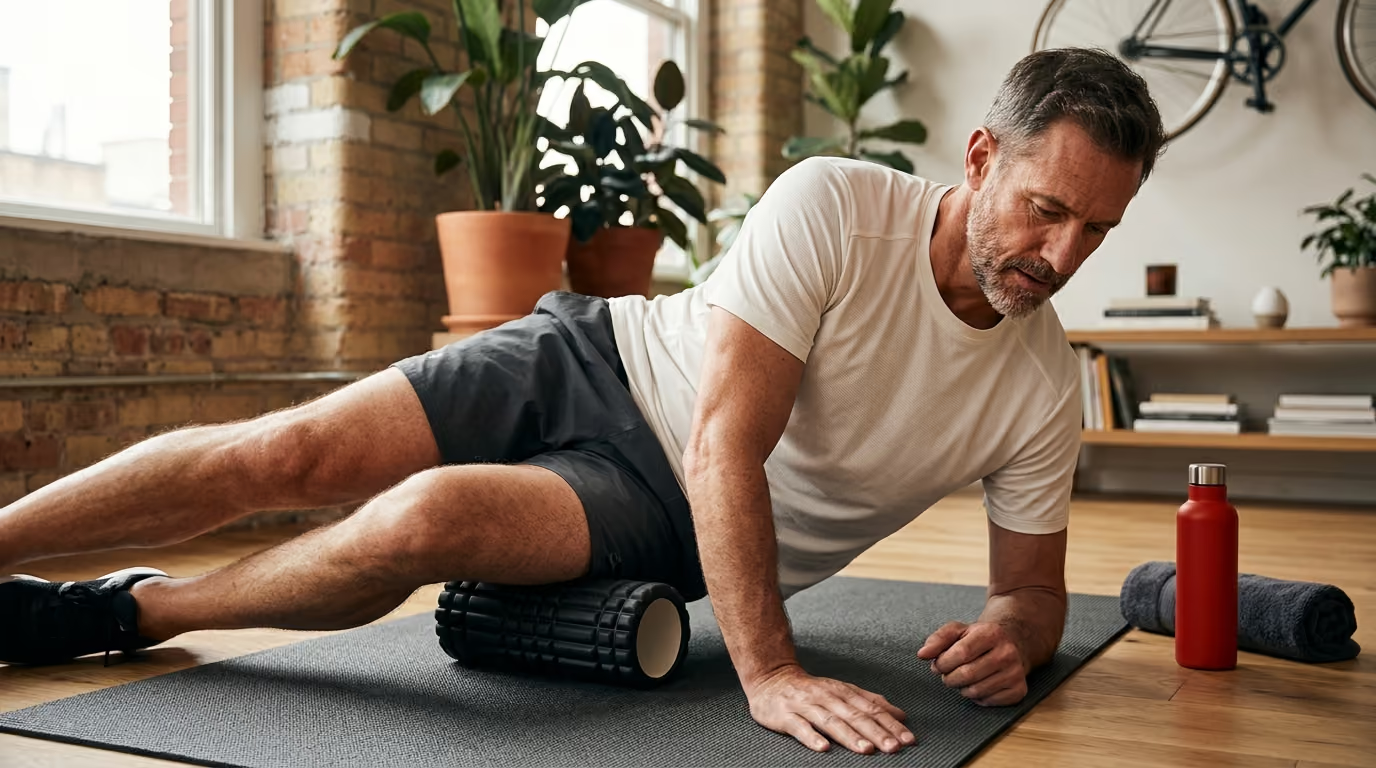
- Technique: Lie prone with the roller positioned under your mid-thigh. Support your upper body with your forearms in a plank position. Slowly roll from two inches above the kneecap up to the hip crease.
- Follow-Up: Perform ten bodyweight reverse lunges or split squats to actively use your quadriceps across their full excursion.
Hamstrings and Posterior Thigh
Hamstring stiffness is a frequent complaint among men who sit for long hours. Research shows measurable acute increases in hamstring flexibility following rolling.
- Technique: Sit on the floor with the roller under your thighs. Place your hands behind you for support. Roll from two inches above the back of the knee to just below the sit bones.
- Follow-Up: Perform eight to ten slow Romanian deadlifts with light dumbbells or a resistance band, focusing on a deep hip hinge with a flat back.
Calves and the Ankle Complex
The calves present an interesting contrast in the research literature. While athletes often report that calf rolling feels productive, a systematic review found no significant improvements in ankle dorsiflexion range of motion when rolling the triceps surae.
- CALF ROLLING VS. ANKLE MOBILITY TRUTH
- PERCEPTION: "Rolling my calf will unlock my stiff ankle joint."
- REALITY: Systematic reviews show NO consistent gain in ankle
- dorsiflexion from rolling the calf muscles alone.
- BETTER ALTERNATIVE: Combine light calf rolling with loaded knee-to-wall
- mobilizations and weighted calf raises through a full deficit.
- Technique: Sit on the floor and place the roller under your calf belly. Cross your opposite leg over for added pressure only if tolerable. Roll slowly through the thickest part of the muscle. Avoid direct compression over the narrowest part of the Achilles tendon.
- Follow-Up: Perform active knee-to-wall ankle mobility rocks or deficit calf raises on a step.
Gluteal Complex and Deep Hip Rotators
The gluteal muscles are large, dense tissues that absorb significant force during running, walking, and lifting. Using a medium-sized massage ball often works better than a large foam roller in this area.
- Technique: Sit on a firm ball placed under one glute cheek. Cross the ankle of that leg over the opposite knee to open the hip. Slowly shift your weight to locate areas of muscle tension.
- Caution: If you feel a sharp, shooting, or electric sensation down the back of your leg, you are compressing the sciatic nerve. Move the ball away from that spot immediately.
Thoracic Spine and Upper Back
The thoracic spine is built for rotation, flexion, and extension, but desk work can leave it feeling rigid. Foam rolling the upper back is an effective way to encourage extension before pressing or pulling workouts.
- Technique: Lie on your back with the roller placed horizontally across your mid-back. Cross your arms over your chest to pull your shoulder blades apart. Support your head with your neck muscles relaxed, and slowly roll between your mid-back and the top of your shoulder blades.
- What to Avoid: Never roll aggressively onto the lower back (lumbar spine) or the cervical spine (neck). The lumbar spine lacks the structural rib cage support of the upper back. Compressive pressure there can cause uncomfortable spinal extension and muscle spasm.
What Are the Most Common Foam Rolling Misunderstandings?
Marketing claims around self-myofascial release often exaggerate how human tissues respond to mechanical pressure. Clarifying these misunderstandings ensures you use these tools effectively.
- COMMON CLAIMS VS. EVIDENCE FACTS
- CLAIM 1: "Rolling breaks down scar tissue and fascial adhesions.": FACT: Human fascia requires thousands of pounds of force to deform.
- CLAIM 1: "Rolling breaks down scar tissue and fascial adhesions.": Changes are driven by neurological sensory modulation.
- CLAIM 1: "Rolling breaks down scar tissue and fascial adhesions.": CLAIM 2: "More pain means a more effective release."
- CLAIM 1: "Rolling breaks down scar tissue and fascial adhesions.": FACT: Excessive pain causes muscle guarding, bruising, and stress.
- CLAIM 1: "Rolling breaks down scar tissue and fascial adhesions.": Moderate pressure provides equal or superior neural calming.
- CLAIM 1: "Rolling breaks down scar tissue and fascial adhesions.": CLAIM 3: "Foam rolling builds long-term flexibility like stretching."
- CLAIM 1: "Rolling breaks down scar tissue and fascial adhesions.": FACT: Long-term flexibility studies show conflicting or weak results.
- CLAIM 1: "Rolling breaks down scar tissue and fascial adhesions.": Active loading and regular stretching are required for lasting
- CLAIM 1: "Rolling breaks down scar tissue and fascial adhesions.": tissue adaptations.
- CLAIM 1: "Rolling breaks down scar tissue and fascial adhesions.": CLAIM 4: "Feeling less sore means your muscles are fully repaired."
- CLAIM 1: "Rolling breaks down scar tissue and fascial adhesions.": FACT: Soreness desensitization happens in the nervous system.
- CLAIM 1: "Rolling breaks down scar tissue and fascial adhesions.": Force production and cellular repair can lag behind comfort.
Claim 1: "Rolling Breaks Up Scar Tissue and Adhesions"
A common myth is that moving over a plastic cylinder physically breaks apart dense scar tissue or unglues fascial layers. Biomechanical studies show that human fascia is exceptionally tough. Deforming dense connective tissue by even one percent requires mechanical loads far beyond what bodyweight on a roller can generate.
The immediate relief you feel comes from sensory modulation. Pressure stimulates mechanoreceptors, which send signals to the central nervous system to lower muscle guarding. The tissue has not been physically restructured; your brain has simply turned down the tone.
Claim 2: "No Pain, No Gain in Tissue Work"
Some lifters believe that self-massage must be intensely painful to work. Applying excessive pressure triggers a sympathetic fight-or-flight response. Your heart rate rises, your breathing becomes shallow, and the target muscle tenses up to protect itself.
Aggressive pressure can also bruise muscle fibers and irritate superficial nerves. Self-myofascial work is most effective when it stays within a tolerable discomfort range. You should be able to breathe through your nose and keep surrounding muscles relaxed.
Claim 3: "Foam Rolling Replaces Strength and Mobility Training"
Because a roller can improve short-term range of motion, some people treat it as a replacement for stretching and lifting. However, systematic reviews examining long-term foam rolling interventions show inconsistent or negligible improvements in lasting flexibility and athletic performance.
Durable mobility requires structural adaptations, including changes in tendon stiffness, motor unit coordination, and the addition of sarcomeres in muscle fibers. These changes require progressive resistance training and active flexibility work. A roller can prepare you to move, but the movement itself creates the lasting change.
- THE ADAPTATION HIERARCHY FOR MEN 45
- LEVEL 1: BASELINE RESILIENCE (Highest Long-Term Impact)
- Progressive resistance training 2-4x per week
- Zone 2 aerobic base conditioning
- 7-8 hours of quality sleep and sufficient protein
- LEVEL 2: ACTIVE JOINT CAPACITY (Moderate-High Impact)
- Loaded end-range mobility drills
- Dedicated balance and stability practice
- Full-body multi-planar movement
- LEVEL 3: SYMPTOM MANAGEMENT & PREP (Short-Term Impact)
- Foam rolling and self-massage
- Hot/cold contrast therapies
- Passive stretching
When Should You Avoid Foam Rolling After 45?
While foam rolling is generally safe for healthy individuals, midlife brings specific health conditions where self-applied mechanical pressure can be harmful. An expert consensus on myofascial release cautions against using these tools in the presence of certain medical issues.
- CONTRAINDICATIONS AND CAUTION SCREENING
- CONDITION CATEGORY: Bone Health, SPECIFIC DIAGNOSIS: Osteoporosis / Penia, ACTION REQUIRED: Avoid hard rolling on
- CONDITION CATEGORY: SPECIFIC DIAGNOSIS: Unhealed fractures, ACTION REQUIRED: spine, ribs, and hips
- CONDITION CATEGORY: Vascular Health, SPECIFIC DIAGNOSIS: Deep Vein Thrombosis, ACTION REQUIRED: STRICT AVOIDANCE
- CONDITION CATEGORY: SPECIFIC DIAGNOSIS: Severe varicose veins, ACTION REQUIRED: Do not roll directly
- CONDITION CATEGORY: Medications, SPECIFIC DIAGNOSIS: Anticoagulants, ACTION REQUIRED: Extreme caution; risk
- CONDITION CATEGORY: SPECIFIC DIAGNOSIS: Blood thinners, ACTION REQUIRED: of deep hematoma
- CONDITION CATEGORY: Neurological, SPECIFIC DIAGNOSIS: Peripheral neuropathy, ACTION REQUIRED: Avoid rolling numb or
- CONDITION CATEGORY: SPECIFIC DIAGNOSIS: Radiculopathy, ACTION REQUIRED: tingling extremities
- CONDITION CATEGORY: Integumentary, SPECIFIC DIAGNOSIS: Open wounds, burns, ACTION REQUIRED: STRICT AVOIDANCE
- CONDITION CATEGORY: SPECIFIC DIAGNOSIS: Active skin infections, ACTION REQUIRED: Over affected region
Bone Density and Osteoporosis
Men can develop osteopenia and osteoporosis as they age. Applying high-pressure rolling over the ribs, spine, or femoral neck can pose a risk of bone microfracture in individuals with low bone mineral density. If you have been diagnosed with osteoporosis, consult your physician before using foam rollers on your back or hips.
Vascular Conditions and Blood Clots
Deep vein thrombosis (DVT) is a serious medical condition where a blood clot forms in a deep vein, most commonly in the calf or thigh. Applying mechanical pressure to a clot can dislodge it, creating a life-threatening pulmonary embolism.
Never use a foam roller on a calf that is swollen, red, unusually warm, or tender to the touch. Severe varicose veins should also not be rolled directly, as pressure can damage vessel walls and valves.
- RED FLAG VASCULAR WARNING SIGNS
- DO NOT FOAM ROLL IF YOU NOTICE
- Unilateral (one-sided) calf swelling or tightness
- Visible redness or warmth in the calf or behind the knee
- Deep, throbbing calf pain during walking
- Palpable cord-like hardness along a vein
- ACTION: Seek prompt medical evaluation. Do not massage or roll.
Anticoagulant Medications
Many men over 45 take prescription blood thinners or daily aspirin for cardiovascular health. These medications increase the risk of internal bruising and deep muscle hematomas from heavy compression. If you take anticoagulant medication, keep rolling pressure light and use broad, soft surfaces.
Nerve Symptoms and Sensation Loss
If you have peripheral neuropathy from diabetes or another condition, your ability to feel tissue pain is reduced. You might accidentally apply excessive pressure without noticing it, causing tissue damage. If you have active radiating pain, numbness, or tingling from a herniated disc, avoid direct rolling over the affected nerve pathway.
Illustrative Training Models: How to Integrate Rolling
These four illustrative models show how men over 45 can integrate self-myofascial work into their weekly schedules without wasting time or compromising safety.
- FOUR APPLIED TRAINING PROFILES (45 )
- SCENARIO: 1. Stiff Lifter, PRIMARY FOCUS: Hip mobility for squat, RECOMMENDED PROTOCOL: Roll quads/glutes 60s
- SCENARIO: PRIMARY FOCUS: depth and positioning, RECOMMENDED PROTOCOL: follow with split squats
- SCENARIO: 2. Trail Runner, PRIMARY FOCUS: Post-hill soreness, RECOMMENDED PROTOCOL: Light calf/quad roll
- SCENARIO: PRIMARY FOCUS: and heavy legs, RECOMMENDED PROTOCOL: prioritize sleep & walk
- SCENARIO: 3. Desk Worker, PRIMARY FOCUS: Upper back stiffness, RECOMMENDED PROTOCOL: Thoracic roll 90s
- SCENARIO: PRIMARY FOCUS: and forward shoulders, RECOMMENDED PROTOCOL: follow with band pull
- SCENARIO: 4. Active Senior (65 ), PRIMARY FOCUS: Balance and lower-body, RECOMMENDED PROTOCOL: Stick massage seated
- SCENARIO: PRIMARY FOCUS: fall prevention, RECOMMENDED PROTOCOL: active balance drills
Model 1: The Stiff Recreational Lifter (Age 52)
This lifter experiences hip stiffness that limits his squat depth. Instead of spending 20 minutes stretching on the floor, he follows a targeted pre-workout sequence:
- Step 1: Rolls his anterior quadriceps and lateral hip rotators for 60 seconds per side.
- Step 2: Performs ten deep bodyweight squats holding onto a solid upright support for balance.
- Step 3: Moves immediately to his barbell warm-up sets, using the newly accessible range under load.
- Outcome: Better squat positioning achieved in less than four minutes of preparation time.
Model 2: The Trail Runner Managing Post-Hill Soreness (Age 49)
After an intense weekend hill workout, this runner experiences heavy quadriceps soreness. He wants to support recovery without causing tissue irritation:
- Step 1: Uses a soft roller on his quadriceps and glutes for 90 seconds per side on his rest day.
- Step 2: Keeps pressure light to moderate, avoiding any bruising or protective tensing.
- Step 3: Takes a 20-minute flat walk to promote circulation and synovial fluid movement.
- Real-world caution: Because reduced soreness does not mean his tendons are fully recovered, he keeps his next run short and easy.
Model 3: The Desk-Bound Professional (Age 47)
Sitting at a computer for eight hours leaves this professional with an aching upper back and rounded shoulders before his evening workout:
- Step 1: Spends 90 seconds rolling his thoracic spine, pausing on stiff mid-back segments.
- Step 2: Performs 10 prone arm raises (Y-T-W drills) to activate lower trapezius and rhomboid muscles.
- Step 3: Proceeds directly into his upper-body pulling routine, including cable rows and face pulls.
- Long-term view: He uses the roller for a quick sensory reset, but relies on strength and muscle training to build lasting posture support.
Model 4: The Active Older Adult with Balance Needs (Age 68)
An older adult wants to keep his legs moving well for hiking, but must be mindful of balance and bone density:
- Step 1: Uses a handheld massage stick on his thighs while seated in a chair, avoiding the need to get down on the floor.
- Step 2: Avoids any heavy rolling over his lumbar spine.
- Step 3: Pairs his self-massage with five minutes of single-leg balance drills and step-ups.
- Safety focus: He follows healthy aging principles by ensuring recovery work never replaces fall-prevention training.
Where Is the Scientific Evidence Still Thin or Mixed?
Being honest about the limitations of scientific research prevents you from wasting time on unproven fitness trends. In self-myofascial release, several widespread claims rest on weak evidence.
- WHERE THE EVIDENCE STANDS TODAY
- AREA OF RESEARCH: Young vs. Older Cohorts, CURRENT STATE OF SCIENTIFIC EVIDENCE: THIN: Most studies test 20-year-old men.
- AREA OF RESEARCH: CURRENT STATE OF SCIENTIFIC EVIDENCE: Direct data on adults 50-75 is limited.
- AREA OF RESEARCH: Vibration Rollers, CURRENT STATE OF SCIENTIFIC EVIDENCE: MIXED: Marginal short-term ROM boosts
- AREA OF RESEARCH: CURRENT STATE OF SCIENTIFIC EVIDENCE: but high cost and low functional impact.
- AREA OF RESEARCH: Long-Term Flexibility, CURRENT STATE OF SCIENTIFIC EVIDENCE: CONFLICTING: Few randomized trials show
- AREA OF RESEARCH: CURRENT STATE OF SCIENTIFIC EVIDENCE: lasting flexibility gains beyond 4 weeks.
- AREA OF RESEARCH: Cellular Mechanism Proof, CURRENT STATE OF SCIENTIFIC EVIDENCE: EARLY: Fascial release claims are unproven
- AREA OF RESEARCH: CURRENT STATE OF SCIENTIFIC EVIDENCE: in living human muscle tissue.
Study Demographics Skew Young and Athletic
The vast majority of published foam rolling studies have been conducted on college-aged athletes and healthy physical education students. Very few peer-reviewed trials focus specifically on men between 45 and 75.
Older connective tissues, altered microcirculation, and joint wear mean that mature adults may respond differently than 21-year-old sprinters. Applying athletic protocols to older adults requires moderation and individualized screening.
Vibration Foam Rollers
Vibration rollers have entered the commercial market with claims of superior muscle activation and deeper fascial release. Systematic reviews and meta-analyses show that while vibration rollers may produce a small additional increase in acute range of motion compared to non-vibrating rollers, the practical difference is minor.
They do not create greater long-term functional gains. For most men, standard high-density foam rollers or simple massage balls provide the same practical benefits at a fraction of the cost.
- STANDARD ROLLER VS. VIBRATION ROLLER
- FEATURE: Acute ROM Increase, STANDARD ROLLER: Moderate to Large, VIBRATION ROLLER: Slightly Larger ( 5%)
- FEATURE: Performance Impact, STANDARD ROLLER: Neutral, VIBRATION ROLLER: Neutral
- FEATURE: Cost & Complexity, STANDARD ROLLER: Low ($15-$30), VIBRATION ROLLER: High ($100-$200 )
- FEATURE: Durability & Battery, STANDARD ROLLER: Indestructible, VIBRATION ROLLER: Requires charging
- FEATURE: Practical Verdict, STANDARD ROLLER: Fully sufficient, VIBRATION ROLLER: Unnecessary luxury
Lack of Long-Term Adaptive Evidence
There is little high-quality evidence showing that regular foam rolling leads to permanent structural changes in resting muscle length, tendon stiffness, or athletic power over months or years. Long-term studies produce conflicting flexibility results. When you want to build lasting physical capacity, your weekly training hours are better spent on progressive resistance training, cardiovascular conditioning, and dedicated balance practice.
Frequently Asked Questions About Foam Rolling After 45
Is it safe to foam roll every single day?
Light to moderate foam rolling for 5 to 10 minutes per day is generally safe for healthy adults without underlying medical contraindications. However, daily aggressive rolling that leaves your skin bruised or your muscles sore is counterproductive. If you choose to roll daily, use light pressure and treat it as a gentle movement ritual rather than an intense deep-tissue session.
Should I foam roll before or after my workouts?
Use pre-workout rolling if you feel localized joint stiffness or restriction that interferes with your exercise form. Keep pre-workout sessions brief (30 to 90 seconds per muscle group) and follow up immediately with active movement. Use post-workout rolling if you enjoy the relaxation effect and want to reduce perceived muscle soreness over the next 24 to 48 hours.
What should I do if foam rolling causes sharp pain or numbness?
Stop immediately. Sharp pain, numbness, tingling, or radiating sensations indicate nerve compression or joint irritation, not a productive muscle release. Adjust your position away from that area. If symptoms persist, consult a physical therapist or physician for an evaluation.
Are massage guns better than traditional foam rollers?
Percussive massage guns operate on the same neurological principle as foam rollers. They provide rapid sensory input that can temporarily reduce muscle tone and desensitize discomfort. Massage guns offer better precision around small muscle groups and do not require you to hold your body up on the floor. However, they do not remodel tissue or accelerate cellular healing any better than a standard roller.
The Takeaway on Foam Rolling After 45
Foam rolling is a low-cost, low-risk tool that temporarily improves movement comfort and reduces perceived soreness through short-term neurological mechanisms. Use it briefly to open up usable range of motion, then build lasting strength and mobility by actively training through that range.
Sources
- Effects of foam roller-based combined exercise on functional ...
- Expert Consensus on the Contraindications and Cautions of ...
- Effect of vibration foam rolling on the range of motion in healthy adults: a systematic review and meta-analysis - PubMed
- Coming of Age: Considerations in the Prescription of Exercise ...
- Foam Rolling by Shanie Williams
- When should you not use a foam roller? - Resto NYC
- Immediate Effects of Foam Roller Exercises With and Without ...
Stay sharp
Get the word
Join our newsletter for the best writing advice and stories from the field.