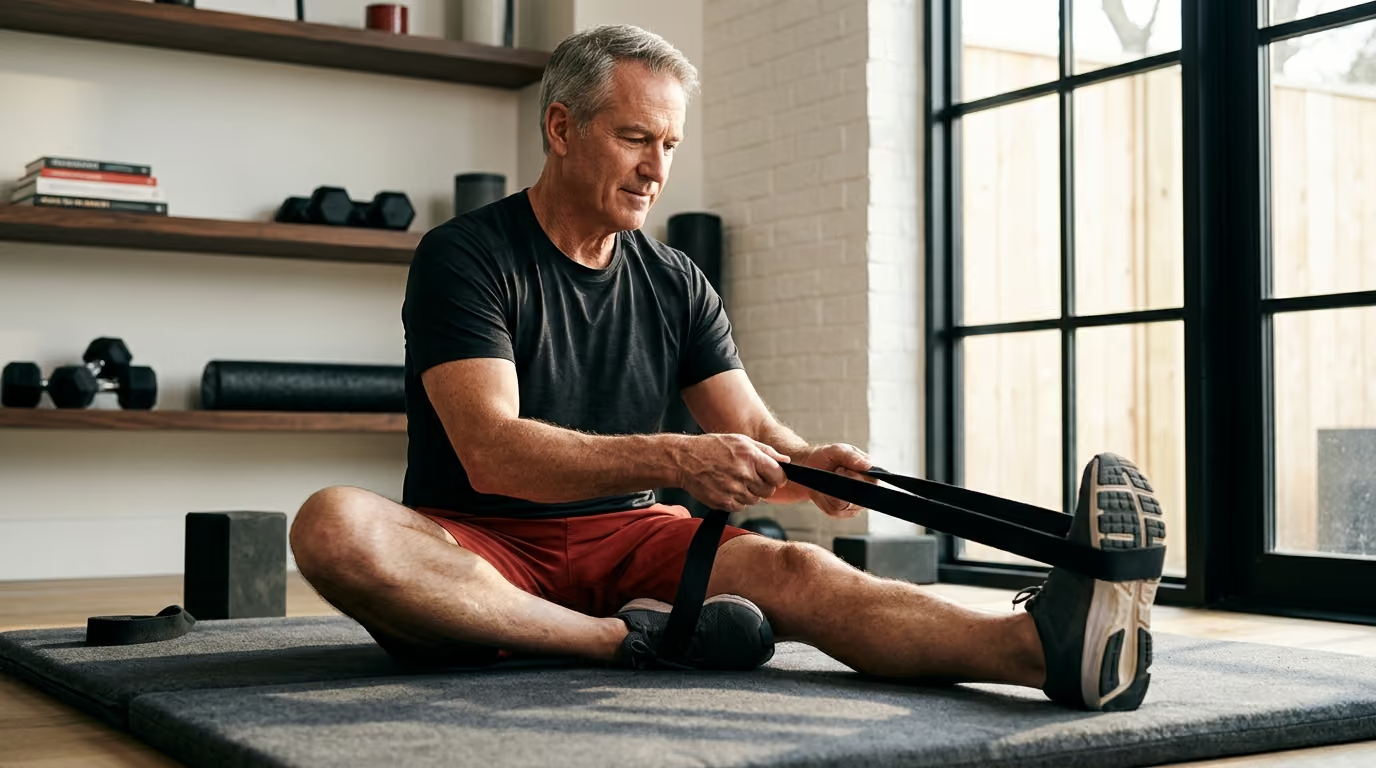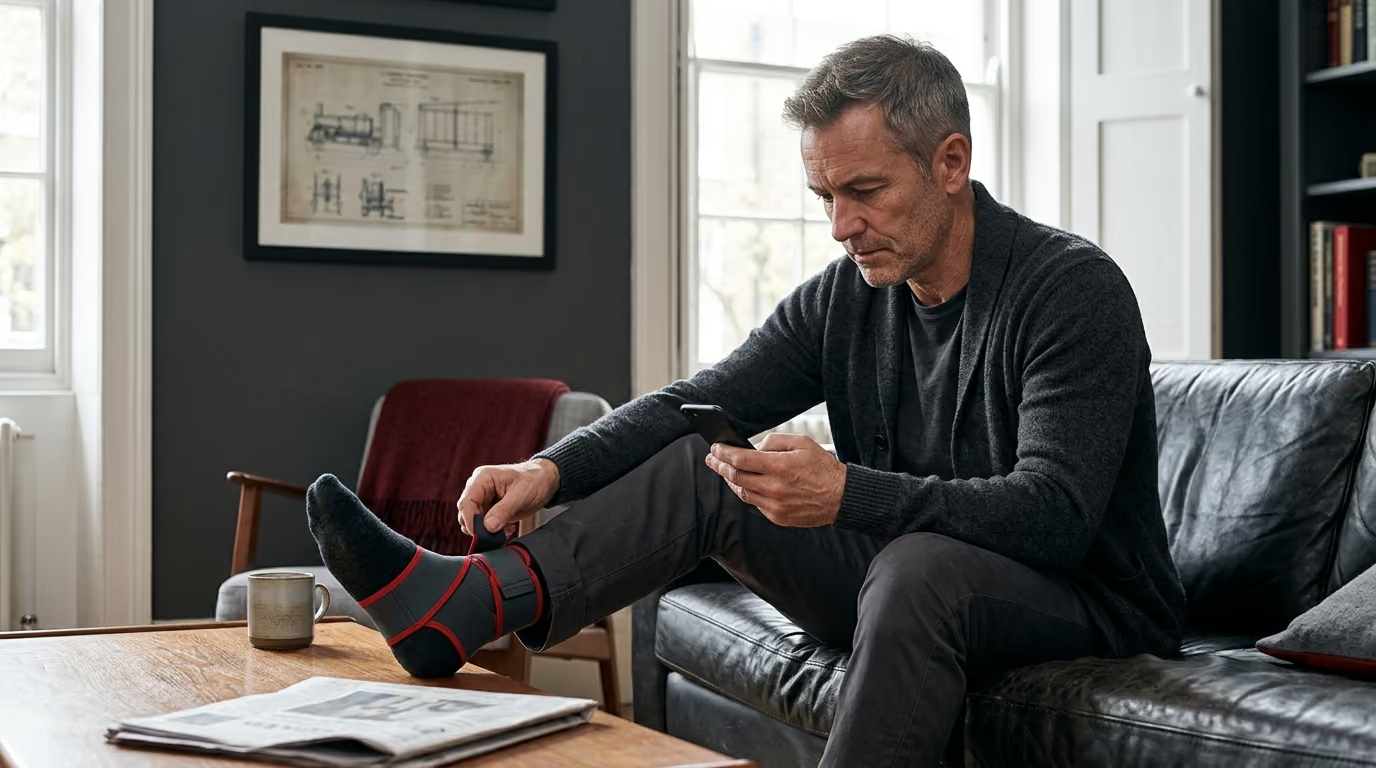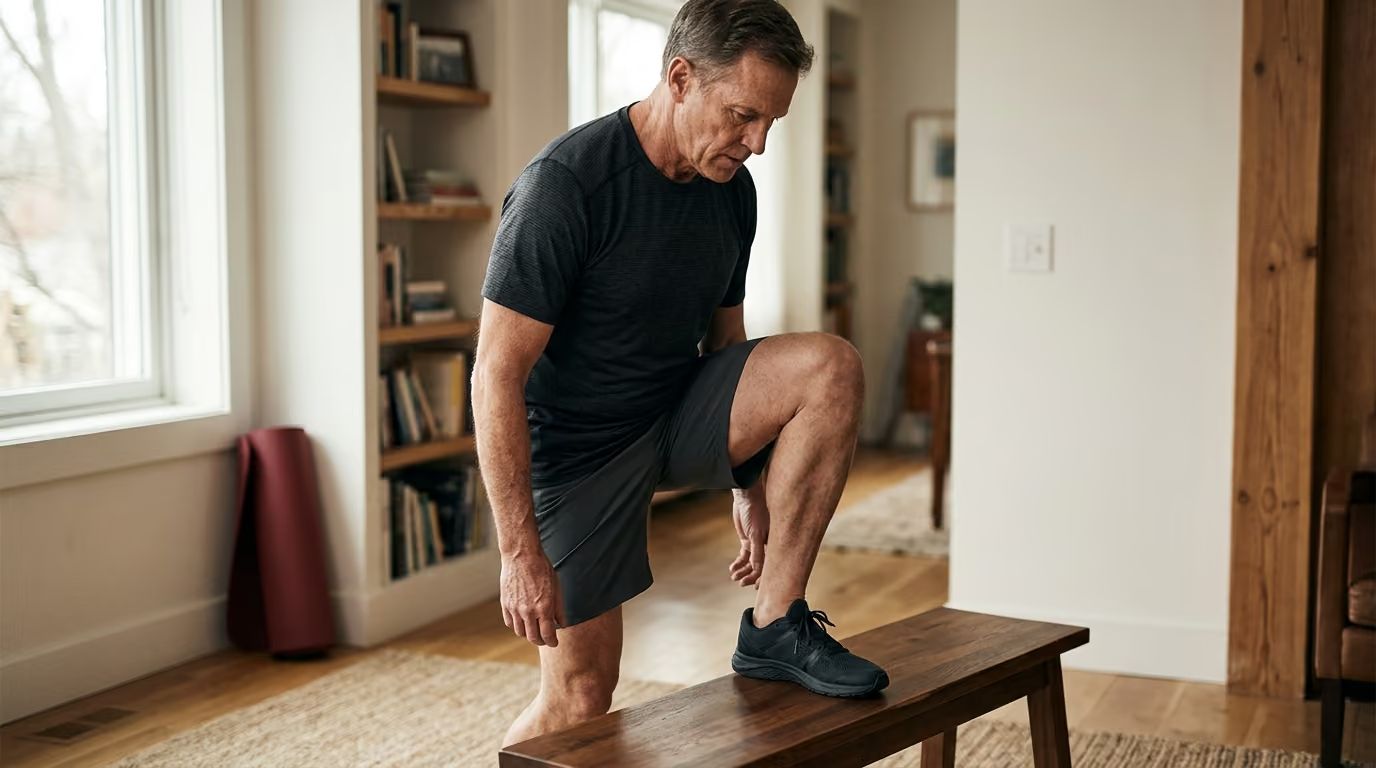
You step off a high curb onto an uneven patch of grass. Your lead foot hits the slope, twists slightly, and your ankle stiffens. For a brief second, you feel off balance. You recover quickly, but you notice something new. Ten years ago, your feet handled sudden shifts in terrain without a second thought. Today, your steps feel a bit more rigid, your ankles feel less springy, and you find yourself watching the ground more closely.
Many men notice these small changes in their late forties and fifties. You might feel early morning stiffness in your arches. You might notice your ankles losing their push on steep trails. Perhaps your balance feels less sharp on loose gravel or wet pavement.
The human foot is not a simple rigid block of bone. It is an active, sensory foundation made of dozens of joints, muscles, and nerves. When foot function begins to decline, the effects travel upward into your knees, hips, and lower back.
Maintaining foot strength and mobility after 45 is not about fighting normal aging. It is about keeping your physical options open. Strong, adaptable feet allow you to walk, lift, hike, and move across uncertain ground with confidence.
What the research shows about foot mechanics and aging
Scientific research views the foot as an active system rather than a passive base. It serves two main mechanical jobs during walking. First, it acts as a shock absorber that adapts to the ground when your heel lands. Second, it shifts into a stiff lever that propels your body forward during push-off.
The foot relies on a group of small muscles called the plantar intrinsic foot muscles. These muscles begin and end within the foot itself. They support the medial longitudinal arch, stabilize the toes, and assist larger calf muscles during dynamic movement.
A systematic review of intrinsic foot muscle training showed that targeted foot exercises improve local strength, balance, and general mobility in adults. Researchers observed that training these muscles improves balance testing, such as single-leg standing time. Improved sensory feedback from the sole of the foot plays a key role in these gains.
Foot mechanics also influence the joints above them. Biomechanical studies show that excessive or poorly timed foot pronation alters movement at the knee and hip. When the arch collapses without active muscular control, the lower leg rotates inward. Research indicates that this shift can alter ankle push-off mechanics and increase stress on the knee and hip joints.
Research on minimalist footwear and foot-strengthening interventions shows measurable changes in muscle structure. Systematic reviews report that regular use of minimalist footwear or targeted foot-core exercises can increase intrinsic muscle cross-sectional area and toe flexor strength.
However, the strength of the evidence varies. While muscle size and lab-based balance scores show clear improvements, direct effects on walking gait and real-world fall rates remain mixed. Intrinsic foot strength is a valuable piece of physical capability, but it works best alongside whole-body strength and balance training.
Why foot and ankle function changes after 45
Foot changes after 45 stem from predictable biological and structural shifts. These changes reflect normal tissue aging and decades of cumulative mechanical load rather than disease.
Reductions in muscle mass and push-off power
Age-related loss of muscle mass affects the small muscles of the feet just like the larger muscles of the thighs and back. When intrinsic foot muscles lose volume, the foot relies more heavily on passive ligaments and the plantar fascia to support the arch.
At the same time, the larger calf muscles experience changes in power output. Systematic reviews show that older adults produce less ankle plantar-flexion power during the push-off phase of walking. When ankle push-off power declines, walking speed slows down, and steps become shorter. The body begins to pull forward from the hip flexors rather than pushing dynamically from the ankle and foot.
Changes in connective tissue and joint mobility
The tendons, ligaments, and joint capsules of the feet change with age. Collagen fibers lose some of their natural water content and elasticity. This shift makes the Achilles tendon, plantar fascia, and arch ligaments stiffer and slower to absorb impact.
This stiffness often shows up as reduced ankle dorsiflexion, which is the ability to pull your toes toward your shin. When your ankle joint cannot flex freely, your foot must find mobility elsewhere. Often, the foot compensates by flattening the arch excessively or turning the toes outward during walking. This compensation can place uneven strain on the plantar fascia and the big toe joint.
Declines in sensory feedback
The sole of your foot contains thousands of specialized nerve endings called mechanoreceptors. These receptors detect pressure, vibration, skin stretch, and surface texture. They send instant messages to your central nervous system to help your brain calculate where your body is in space.
With age, the skin on the bottom of the foot becomes less sensitive, and the fat pads under the heel and forefoot become thinner. Reduced sensory input makes it harder to detect small shifts in surface angle. When sensory signals slow down, your nervous system compensates by adopting a stiffer, more cautious walking pattern.
How foot mechanics influence the knees, hips, and posture
The foot is the only part of your body in direct contact with the ground during standing and walking. The movement of the foot directly affects the rest of the kinetic chain.
- Foot Contact & Arch Motion
- Tibial & Femoral Rotation
- Knee & Hip Alignment
- Pelvic Stability & Posture
When your foot strikes the ground, it naturally pronates. Pronation is a normal combination of eversion, dorsiflexion, and abduction that allows the foot to absorb impact. As the rearfoot pronates, the shin bone rotates inward. This inward rotation causes the thigh bone to rotate inward as well.
If the foot lacks the muscular strength to control this inward roll, the movement can place increased torque on the knee joint. Biomechanical studies confirm that uncontrolled pronation can increase the adduction moment at the knee and hip. Over time, this mechanical shift can irritate the inner knee, the kneecap tendon, or the outer hip tissues.
Conversely, a foot that is too stiff presents the opposite problem. A rigid, high-arched foot that does not pronate adequately fails to dampen impact forces when you land. Those unabsorbed forces travel straight up the tibia into the knee, hip joint, and lumbar spine.
The kinetic chain works in both directions. Weak hip abductors, such as the gluteus medius, can cause the knee to collapse inward during single-leg support. This hip collapse forces the foot to pronate harder against the ground.
Improving foot strength supports mobility and joint function throughout the entire lower body. Treating the foot and hip as partners creates a balanced, stable kinetic chain.
Walking surfaces, balance, and real-world confidence
Walking across a smooth hardwood floor requires very little active foot adaptation. The surface is predictable, flat, and consistent. Outdoor environments demand a completely different set of physical skills.
When you walk across grass, gravel, dirt trails, or wet cobblestones, your foot must make micro-adjustments with every step. Research comparing gait on smooth versus uneven brick surfaces shows significant differences in movement patterns. On uneven ground, adults show decreased ankle dorsiflexion, reduced gait smoothness, and lower margins of dynamic stability.
The role of lower-limb strength on uneven terrain
Studies demonstrate that lower-limb strength is the strongest predictor of hip stability and gait control on uneven surfaces. When the ground shifts beneath your foot, your intrinsic muscles, ankle stabilizers, and hip muscles must fire rapidly to prevent a stumble.
If you spend decades walking exclusively on flat concrete in heavily cushioned shoes, your feet lose their natural adaptability. The small joints between the tarsal bones become stiff. The nervous system becomes accustomed to predictable ground, making unexpected surface changes feel threatening.
Building real-world foot confidence
Foot confidence is your willingness to walk briskly, change directions, step over obstacles, and navigate rough terrain without hesitation. When foot sensation or strength declines, many men develop subtle movement avoidance. You might find yourself avoiding hiking trails, choosing only paved paths, or looking down constantly while walking.
This avoidance creates a negative cycle. Avoiding uneven ground leads to further weakness and sensory loss, which reduces confidence even more.
To maintain foot confidence, you must expose your feet to varied challenges gradually:
- Smooth, stable indoor floors in bare feet or socks.
- Firm, flat outdoor surfaces such as asphalt or clean concrete.
- Slightly compliant outdoor surfaces such as packed dirt or manicured grass.
- Irregular natural terrain such as loose dirt, small gravel, or forest paths.
- Complex tasks such as turning, carrying loads, or walking on slopes.
This progressive exposure trains your nervous system to trust your feet on unpredictable ground.
Practical exercises for foot and ankle strength
Building foot strength does not require complex gym machines. You can train the intrinsic muscles and ankle stabilizers using simple, focused exercises at home. Focus on movement quality, steady muscle tension, and clear joint alignment.
1. The Short-Foot Exercise
The short-foot exercise is the foundational movement for intrinsic foot strength. It trains the abductor hallucis and flexor digitorum brevis to support the medial arch without curling the toes.
- Starting Position (Foot Flat on Floor)
- Heel
- Ball of Foot
- Flat Toes
- Active Position (Arch Shortened and Raised)
- How to do it: Sit in a chair with your bare feet flat on the floor. Keep your heel, the base of your big toe, and the base of your pinky toe firmly on the ground.
- The movement: Without curling your toes, gently draw the ball of your big toe toward your heel. Your arch will rise slightly, shortening the length of your foot.
- Key cue: Keep your toes completely flat and relaxed against the floor. Do not claw the ground.
- Progression: Hold the contraction for 5 to 8 seconds, relax, and repeat 8 to 10 times. Once mastered while seated, perform the exercise standing on two legs, and eventually on a single leg.
2. Toe Spreading and Independent Toe Control
Toe mobility allows your forefoot to widen and distribute pressure evenly across the ground.
- How to do it: Stand or sit with your feet flat. Lift all five toes off the floor while keeping the ball of your foot grounded.
- The movement: Spread your toes as wide apart as possible in the air. While keeping them spread, press only your big toe down to the floor while leaving the four smaller toes lifted.
- The reverse: Press your four smaller toes down to the floor while keeping your big toe lifted.
- Volume: Alternate between these positions for 10 to 12 repetitions per foot.
3. Controlled Calf Raises with Arch Awareness
Calf raises build the ankle plantar-flexor power necessary for dynamic walking and running push-off.
- How to do it: Stand barefoot with your feet hip-width apart near a wall for balance support. Set a light short-foot arch tension before moving.
- The movement: Rise onto the balls of your feet over a slow, three-second count. Push straight through the base of your big toe rather than letting your ankles roll outward.
- Lowering: Lower your heels back to the floor under control over three seconds.
- Progression: Start with two legs on flat ground. Progress to single-leg calf raises, and eventually perform them with your heels hanging off a step to build full range of motion. Aim for 2 to 3 sets of 10 to 15 controlled repetitions.
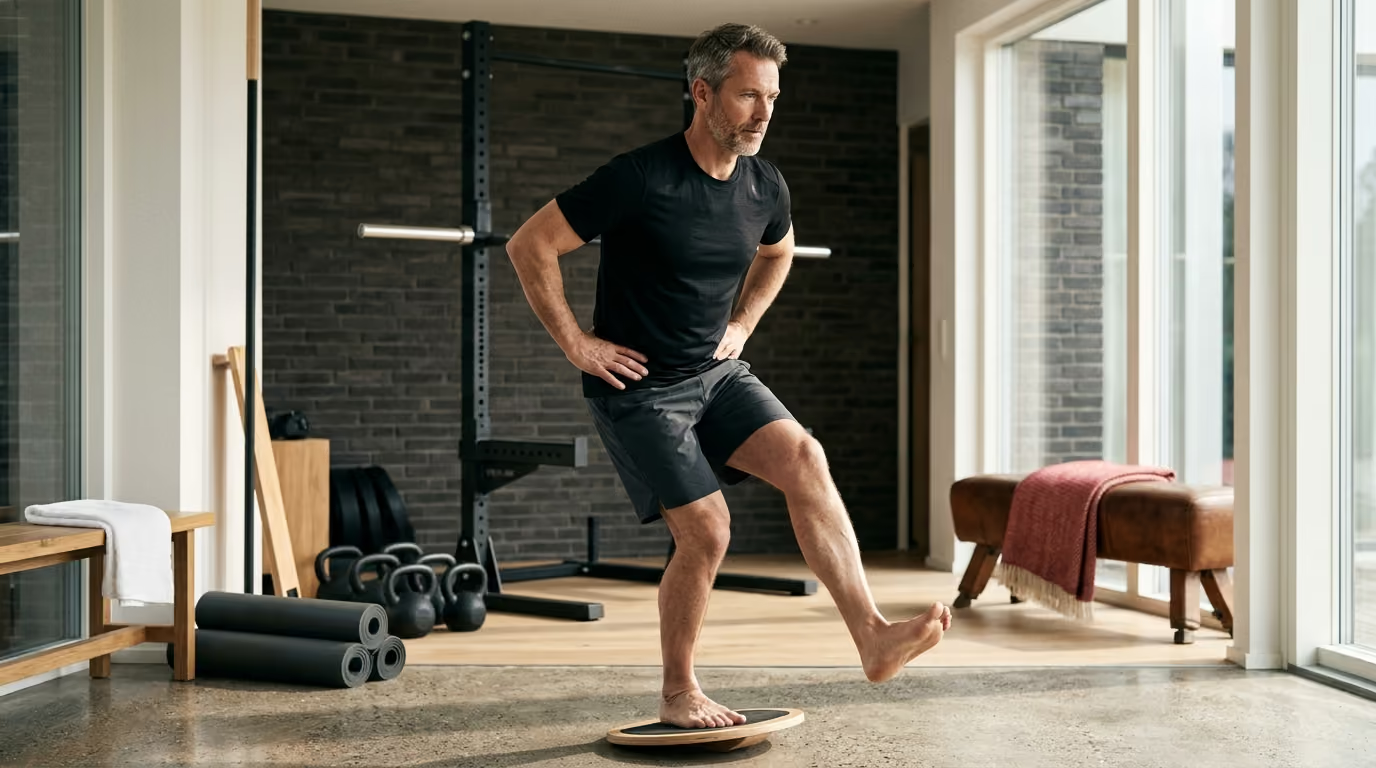
4. Single-Leg Barefoot Balance
Single-leg balance forces the intrinsic foot muscles, peroneal muscles, and hip stabilizers to work together.
- How to do it: Stand barefoot on a firm floor. Lift one foot slightly off the ground, keeping your standing knee soft and unlocked.
- Execution: Maintain pressure through the tripod of your foot: the heel, the first metatarsal head, and the fifth metatarsal head. Hold your position for 30 seconds without letting your arch completely collapse or roll outward.
- Progression: Close your eyes, turn your head slowly side to side, or stand on a slightly compliant surface such as a folded towel.
Regular practice of these exercises supports overall mobility and recovery across your entire lower body.
Footwear choices for stability, strength, and joint health
Footwear acts as the direct interface between your foot and the environment. The shoes you choose affect how your muscles fire, how your joints absorb force, and how clearly your brain receives sensory feedback.
Key features of footwear design
Understanding shoe anatomy helps you choose the right tool for your specific movement goals:
- Toe box width: Conventional shoes often taper at the toes, squeezing the big toe inward. A wide, foot-shaped toe box allows the toes to splay naturally, improving balance and load distribution.
- Heel-to-toe drop: This is the height difference between the heel and the forefoot. Traditional running and walking shoes feature an 8 to 12 millimeter drop. A zero or low drop (0 to 4 millimeters) keeps your heel and forefoot level, encouraging natural Achilles tendon excursion.
- Sole flexibility: A stiff sole limits the motion of your foot joints, acting like a protective splint. A flexible sole allows your metatarsal joints to bend and flex during push-off.
- Stack height and cushioning: Thick, plush foam dampens impact forces, which can provide comfort during long periods of standing. However, excessive cushioning reduces sensory feedback from the ground and can increase lateral instability.
The role of minimalist footwear
Minimalist shoes feature wide toe boxes, zero drop, thin soles, and high flexibility. Research confirms that walking in minimalist shoes can increase foot muscle size and strength over time.
However, minimalist shoes increase the mechanical demands placed on your Achilles tendon, calf muscles, and forefoot metatarsals. If you have worn elevated, heavily cushioned shoes for decades, switching overnight to minimalist shoes can cause tissue overload.
A gradual transition is essential:
- Begin by wearing wide-toed, low-drop shoes for short daily walks on flat surfaces.
- Keep your conventional shoes for running, heavy lifting, or long hikes.
- Monitor your calves and Achilles tendons for persistent tightness or soreness.
- Increase your time in minimal footwear slowly over several months.
Rocker soles and orthotics
Rocker-sole shoes have a curved, rigid bottom that rolls the foot forward during walking. Biomechanical studies show that rocker soles reduce the bending demands on the big toe joint and forefoot. They can be very helpful for men managing severe toe arthritis or forefoot pain.
However, studies also indicate that rocker soles can increase the feeling of instability in older adults. Because the curved sole reduces ground contact area, the nervous system must work harder to control balance.
Foot orthotics and arch supports can provide helpful symptom relief for acute conditions such as plantar fasciitis or tendon overload. Orthotics alter joint moments and redistribute pressure across the sole.
Using an orthotic does not automatically weaken your foot muscles if you continue to stay active. Think of an orthotic as a temporary or task-specific tool that manages tissue load while you build active strength.
Selecting functional footwear is a core part of long-term healthy aging and physical longevity.
Common misconceptions about foot health and aging
Several persistent myths prevent men from taking practical, effective care of their feet.
Myth 1: Flat feet are weak and defective
Many men believe that having a low arch automatically means their feet are broken or prone to injury. This is incorrect. Arch height varies naturally across the human population.
A flat foot that is flexible, strong, and pain-free can function exceptionally well in sports and daily life. The goal of training is not to force every foot into a high arch. The goal is to ensure the foot can absorb load, control motion, and generate push-off power regardless of its resting shape.
Myth 2: Pronation is an abnormal movement that must be stopped
Pronation has earned an undeserved negative reputation in fitness culture. In reality, pronation is a vital shock-absorption mechanism. Without pronation, every step would send harsh impact forces directly into your knees and spine.
The problem is not pronation itself. The issue is uncontrolled, painful, or excessively rapid pronation that exceeds your tissue capacity. Foot training aims to build strength and control throughout the entire range of pronation, not eliminate it.
Myth 3: Going barefoot immediately cures all foot problems
Barefoot movement has become popular, with claims that ditching shoes instantly restores perfect mechanics. While barefoot training provides valuable sensory input and strengthens intrinsic muscles, it is not an instant cure.
Decades of wearing structured shoes change tissue stiffness in the Achilles tendon and plantar fascia. Jumping directly into intense barefoot running or hiking can lead to stress fractures, tendon irritation, or plantar heel pain. Barefoot training should be applied systematically as a training stimulus, not treated as an all-or-nothing philosophy.
Building dedicated lower-body strength alongside sensible foot care improves your overall strength and muscle performance.
Where the evidence is limited or mixed
While scientific interest in foot mechanics has grown, several areas of research remain limited or inconclusive.
Evidence quality in minimalist footwear studies
Many studies evaluating foot-core exercises and minimalist shoes involve small sample sizes and short intervention periods. Systematic reviews often rate the overall evidence quality as fair or low due to a high risk of bias in study designs.
Long-term randomized trials tracking men over several years are scarce. We know that minimalist shoes increase muscle volume, but we have limited data proving that this shift directly prevents running injuries or degenerative joint changes over decades.
Direct effects on fall prevention
Research clearly shows that foot strengthening improves lab-measured balance, such as single-leg stance time and sway metrics. However, evidence showing that foot exercises alone reduce real-world fall rates in older adults is limited and mixed.
Falls are complex events caused by many overlapping factors. Vision changes, inner-ear balance deficits, medication side effects, environmental hazards, and total-body reaction time all play major roles. Strengthening your feet is an important component of stability, but it cannot replace comprehensive fall-prevention strategies.
Fear of falling and psychological confidence
Clinical studies note that improving physical foot strength does not automatically reduce a person's fear of falling. Fear of falling is a psychological state influenced by past injuries, perceived vulnerability, and nervous system guarding.
Overcoming movement hesitation requires progressive, real-world exposure to challenging surfaces alongside strength work. Building physical capacity in the foot is the first step, but rebuilding movement confidence requires regular practice in real environments.
Staying informed about these nuances is central to understanding longevity science and physical optimization.
A practical self-assessment and training framework
You can evaluate your own foot function using simple, objective self-tests. Use these screens to identify areas that need attention and track your progress over time.
- Self-Assessment Flow
- Ankle Mobility
- Toe Flexor Strength
- Single-Leg Balance
- Pass / Needs Work Pass / Needs Work Pass / Needs Work
Self-Assessment Screens
- The Knee-to-Wall Test (Ankle Mobility): Stand facing a wall with your bare foot flat on the floor, about four inches away from the baseboard. Keep your heel firmly glued to the ground and push your knee straight forward toward the wall. If your knee can touch the wall without your heel lifting, your ankle dorsiflexion is adequate.
- The Single-Leg Calf Raise Test (Push-Off Strength): Stand barefoot on one leg with your fingertips lightly touching a wall for balance. Perform smooth, full-range calf raises at a steady tempo of two seconds up and two seconds down. Men over 45 should aim to achieve 20 to 25 continuous, high-quality repetitions without curling the toes or losing height.
- The 30-Second Single-Leg Balance (Stability): Stand barefoot on one leg on a firm floor. Cross your arms over your chest and lift the other foot. Maintain a quiet, steady posture for 30 seconds without putting your foot down or grabbing external support.
When to Seek Professional Guidance
While general stiffness and mild weakness respond well to progressive exercise, certain symptoms require professional evaluation from a podiatrist, physical therapist, or physician:
- Sharp, stabbing pain in the heel or arch that is worse during your first morning steps.
- Numbness, tingling, or burning sensations in your toes or the sole of your foot.
- Persistent swelling, heat, or redness in any foot or ankle joint.
- A sudden loss of balance, frequent unexplained stumbles, or near-falls.
- Inability to bear full weight on your foot after a twist or sudden impact.
- Severe joint deformities that cause skin breakdown, blistering, or chronic pain.
If you have diabetes or diagnosed peripheral neuropathy, avoid unsupervised barefoot drills. Seek professional medical guidance to protect skin integrity and maintain joint health safely.
When to revisit this resource
Revisit this resource whenever you change your training program, plan a hiking trip on rugged terrain, or notice changes in your walking balance.
Foot strength and function after 45 rely on regular sensory input, progressive muscular loading, and adaptable joints that keep you moving with authority on any ground.
Sources
- The Effects of Minimalist Shoes on Plantar Intrinsic Foot ...
- Effects of Barefoot and Minimalist Footwear Strength-Oriented ... - PMC
- Gait retraining targeting foot pronation: A systematic review ...
- The effects of foot core exercises and minimalist footwear on foot muscle sizes, foot strength, and biomechanics: A systematic review and meta-analysis
- Effects of foot pronation on the lower limb sagittal plane ... - PubMed
- Classification of the foot kinematics during gait and the characteristics of the knee and hip kinematics in individuals with pronated foot - PubMed
- Minimalist Footwear in the Treatment and Rehabilitation of Lower ...
- Effects of foot pronation on the lower limb sagittal plane ...
- (PDF) The Influence of Minimal Footwear on the Biomechanics of Walking
Stay sharp
Get the word
Join our newsletter for the best writing advice and stories from the field.