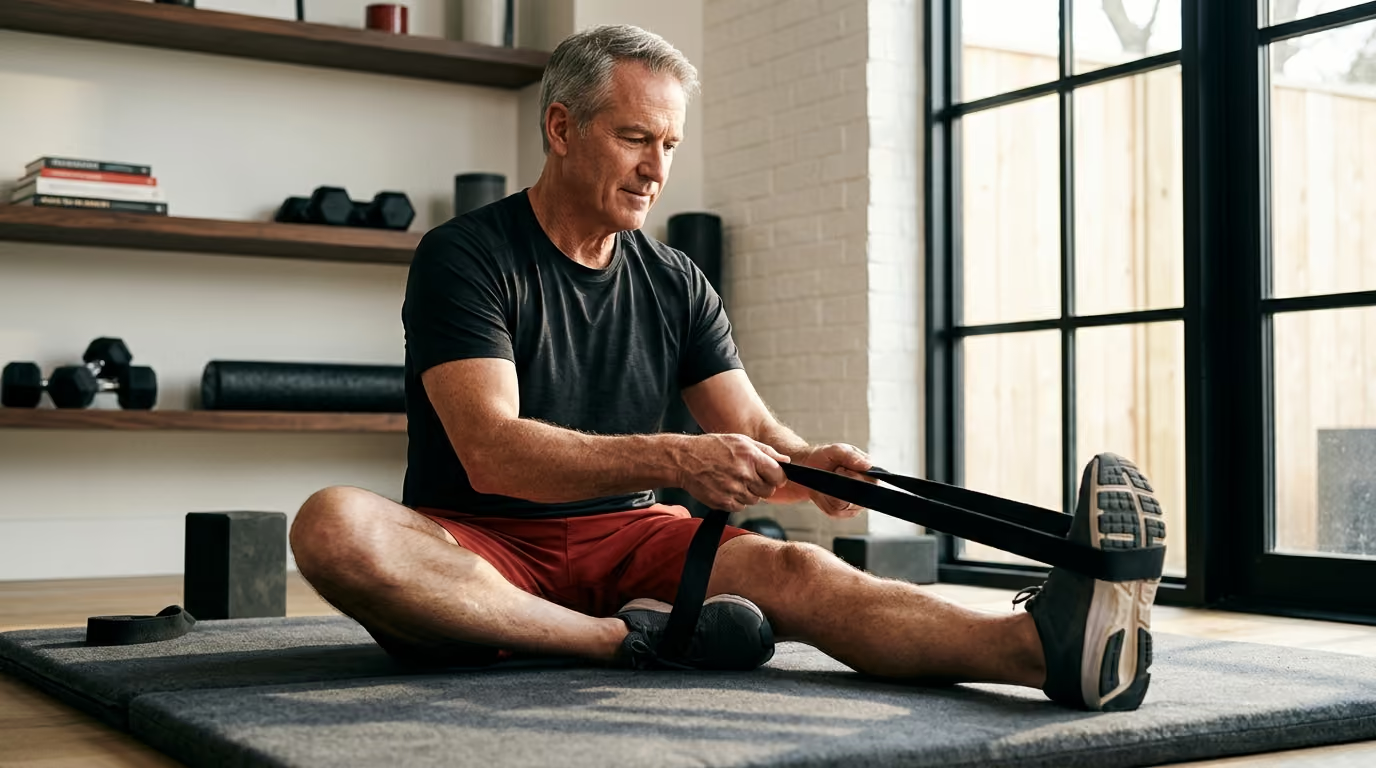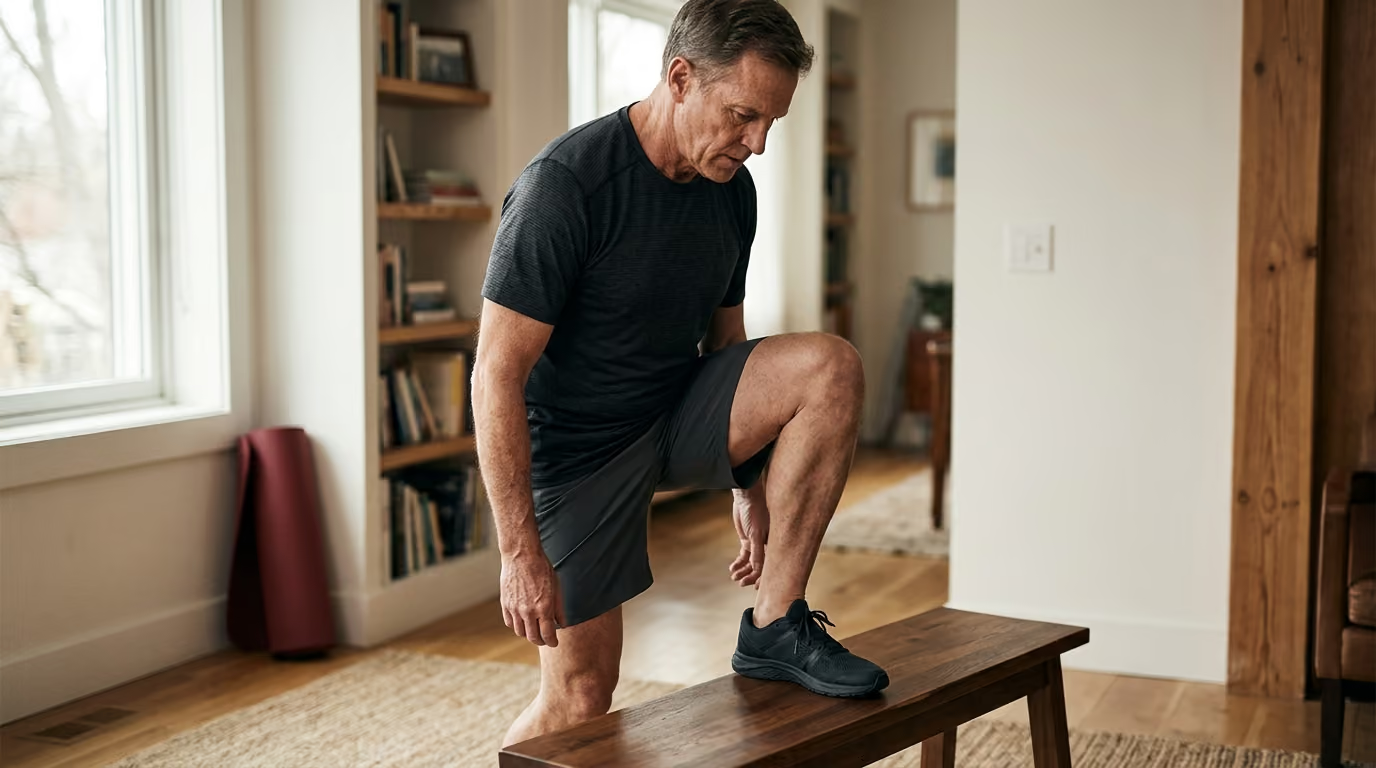
Most online mobility advice operates on an unproven assumption. It assumes that bending farther automatically protects your joints, relieves discomfort, and restores physical youth. The evidence tells a very different story. Gaining passive flexibility often does nothing to improve your balance, your daily strength, or your ability to lift a heavy box.
Social media feeds are filled with thirty-second drills promising to unlock your hips, fix bad posture, or melt away tissue adhesions. When you are over 45, following bad advice can waste months of effort or aggravate an existing joint issue. You do not need to become a clinical researcher to separate useful advice from marketing theater. You only need a structured, science-backed way to evaluate what you see.
This guide provides a practical system to audit online movement claims. You will learn how to distinguish joint range from actual capability, how to spot flawed before-and-after demonstrations, and how to verify whether a routine fits your specific physical profile.
Separate Range of Motion from Real Movement Capability
To judge any mobility program, you must first understand the terms being used. Online creators frequently treat words like flexibility, mobility, and joint health as if they mean the exact same thing. In exercise science, these terms represent distinct physical qualities.
Range of motion describes the total distance a joint can travel along a specific path. Flexibility refers to the extensibility of your muscles and connective tissues under passive conditions. When someone lifts your leg while you lie on your back, they are testing your passive range of motion.
Active range of motion is the distance you can move a joint using only your own muscular effort. Functional mobility combines that active range with balance, strength, coordination, and confidence during real-world tasks. Walking up steep stairs, getting up from the floor, and carrying luggage overhead require functional mobility rather than passive flexibility alone.
- Five Dimensions of Movement
- 1. Range of Motion (ROM): Total available joint movement angle
- 2. Flexibility: Extensibility of passive tissues
- 3. Active ROM: Distance controlled by your own muscular effort
- 4. Passive ROM: Distance reached when an outside force moves the limb
- 5. Functional Mobility: Usable movement, strength, and balance
A systematic review published in the Journal of Aging Research examined flexibility training and functional ability in older adults. The researchers found that while flexibility exercises often improve joint range, their effect on daily physical function remains inconsistent. Moving a joint farther on an examination table does not automatically help you walk faster, climb stairs, or prevent a fall.
When you see a post promising to restore your movement, your first step is to clarify the target. Ask what is actually changing in the demonstration. A routine that only increases passive joint range without building active control will not deliver the daily physical freedom it promises.
Strength training is an overlooked way to gain usable range. A systematic review and meta-analysis of eleven studies with 452 participants compared resistance training directly against stretching. The researchers found no significant difference in range-of-motion improvements between the two methods. Lifting weights through a full, controlled range can improve your joint mobility just as effectively as traditional stretching, with the added benefit of building muscle.
Distinguish Biological Changes from Chronological Age
Reaching 45 is not a biological cliff. Your body does not suddenly lose its capacity to adapt on your forty-fifth birthday. A 48-year-old who lifts weights, walks daily, and sleeps well often has better tissue tolerance than an inactive 30-year-old.
Physical changes across midlife are real, but they develop gradually over decades. Connective tissues lose some water content and natural elasticity. Muscle mass declines if it is not stimulated through progressive loading. Joint cartilage experiences normal wear, and the nervous system can become more sensitive to unfamiliar positions after long periods of inactivity.
Online fitness marketing frequently pathologizes these normal age-related changes to sell quick fixes. Creators use alarming language about decaying joints, frozen hips, or toxic stiffness to create urgency. These physical shifts are natural adaptations to lifestyle and time, not permanent structural failures.
The World Health Organization provides clear physical activity guidelines for aging adults. They recommend 150 to 300 minutes of moderate-intensity aerobic activity each week, combined with muscle-strengthening activities on two or more days. For adults with poor physical mobility, the WHO recommends multicomponent physical activity that emphasizes balance and strength on three or more days per week.
- WHO Activity Recommendations
- • 150 to 300 minutes of moderate aerobic activity weekly
- • Muscle-strengthening activity at least 2 days weekly
- • Balance-focused training at least 3 days weekly for poor mobility
Notice what is missing from these global recommendations. International health bodies do not instruct older adults to spend hours passively pulling on their muscles. They prioritize progressive resistance training, cardiovascular conditioning, and dynamic balance.
When you evaluate mobility advice, check whether the program respects your actual functional capacity. A healthy 50-year-old does not need a gentle rehabilitation program simply because of their birth year. Your training history, current strength, and joint health matter far more than your chronological age.
Apply the CLEAR Framework to Online Claims
Evaluating online content requires a systematic filter. You can assess any exercise, drill, or video routine by running it through the five-part CLEAR framework.
The C Component: Clarify the Claim
Begin by identifying exactly what the creator is promising. Are they claiming to increase your passive joint angle, eliminate chronic pain, or correct your posture? Are they promising to reverse osteoarthritis, break up scar tissue, or prevent athletic injuries?
Each of these claims requires a different standard of evidence. A drill that temporarily increases your shoulder range for ten minutes does not prove that it cures rotator cuff irritation. A stretch that changes how your lower back feels during a workout does not mean it repaired a spinal disc. When a claim sounds too broad, treat it with caution.
The L Component: Evaluate the Listener
Check who was tested in the underlying research and who the creator is speaking to. Many viral mobility protocols are demonstrated by 22-year-old gymnasts, flexible yoga instructors, or collegiate athletes.
A drill that feels comfortable for an uninjured 20-year-old can overload sensitive joint structures in a 55-year-old with joint space narrowing. Look for programs that state their intended audience clearly. Credible creators specify whether a routine is designed for healthy active adults, people recovering from surgery, or individuals managing joint conditions.
The E Component: Inspect the Endpoint
The endpoint is the outcome that was measured to prove the method works. Strong evaluation requires distinguishing between immediate sensations and durable physical changes.
A creator who touches their toes after rolling on a lacrosse ball is demonstrating an immediate endpoint. That demonstration does not tell you if the range will still be there tomorrow morning. It does not measure whether their walking endurance improved or whether their back is more stable under a load.
The A Component: Search for Alternative Explanations
Ask yourself whether something other than the advertised mechanism produced the visible result. When someone shows a dramatic increase in flexibility after a thirty-second drill, several hidden factors could explain the change:
- The person may simply have warmed up their tissues through repeated movement.
- The demonstrator may have relaxed their breathing, reducing their brain's protective muscle guarding.
- The camera angle, foot position, or spinal posture may have shifted between the two shots.
- The demonstrator may have tried harder on the second attempt after practicing the test.
A temporary change in flexibility is often a nervous system response. When your brain realizes a position is safe, it allows you to move slightly farther into that range. This is an alteration in stretch tolerance, not an instant physical lengthening of the muscle fibers.
The R Component: Assess Risk and Referral
Every credible exercise recommendation must include boundaries, modifications, and stop rules. Responsible advice tells you what sensations are normal and what signs mean you should stop immediately.
If a creator tells you to push through sharp pain, numbness, or joint clicking, they are giving you dangerous advice. Legitimate programs state who should avoid the movement and when you should consult a physical therapist or medical physician.
Audit Common Online Mobility Promises
Now that you have the CLEAR framework, you can apply it to the most common mobility claims found on social media platforms.
The Instant Hamstring Release
A classic video format shows an instructor failing to touch their toes, pressing a hard ball into the bottom of their foot for a minute, and reaching past their toes. The creator claims this drill permanently lengthens the posterior chain.
When you audit this claim, the alternative explanations become obvious. The improvement is an acute change in sensory tolerance. Rolling the foot provides intense sensory input to the nervous system, which temporarily dampens the stretch reflex. The hamstrings did not physically grow longer in sixty seconds.
For a man over 45, touching your toes is rarely the ultimate goal. The real question is whether you can hinge at the hips to pick up a heavy toolbox without losing spinal control. A brief sensory change from a foot massage will not build the hip strength required for that task.
The Foam Rolling Cure
Foam rolling is frequently marketed as a way to break up fascial adhesions, melt scar tissue, and realign muscular fibers. The scientific evidence regarding foam rolling does not support these mechanical claims.
A systematic review published in Frontiers in Physiology analyzed the literature on foam rolling and pre-rolling. The researchers confirmed that foam rolling produces short-term increases in joint range of motion without decreasing muscular force output. However, they found limited and conflicting evidence that foam rolling speeds recovery, boosts athletic performance, or changes underlying fascial structures.
Human fascia is extraordinarily tough. Mechanical engineering studies demonstrate that deforming dense connective tissue requires thousands of pounds of force. A person lying on a piece of foam cannot generate the pressure needed to break up structural adhesions. Foam rolling works by stimulating sensory receptors in the skin and muscle, signaling the central nervous system to reduce local tone temporarily.
Foam rolling can be a pleasant, low-risk way to prepare for a training session or reduce the sensation of stiffness. It becomes problematic only when it is sold as a permanent structural repair.
The Posture Correction Fix
Another frequent claim is that rounded shoulders and a forward head posture are caused by shortened chest muscles that require aggressive daily stretching. Men over 45 are often told that their desk posture is destroying their joints and causing chronic neck pain.
Research on posture shows a very weak correlation between static sitting angles and pain levels. People with severe thoracic curves often experience no pain, while individuals with textbook posture can experience severe discomfort.
Static stretching of the pectoral muscles rarely changes everyday resting posture. Lasting improvements in upper-body function come from building strength in the upper back, improving thoracic extension, and varying your physical position throughout the day. Focusing entirely on passive stretches ignores the muscular strength needed to support your torso.
- Mobility Claims vs Scientific Evidence
- • Claim: Foam rolling breaks up deep fascial adhesions.
- Evidence: Produces short-term sensory changes in joint range.
- • Claim: Stretching is the only way to improve joint range.
- Evidence: Full-range strength training yields equivalent ROM gains.
- • Claim: Poor resting posture is the primary cause of neck pain.
- Evidence: Pain correlates poorly with static resting angles.
Recognize the Flaws in Popular Movement Beliefs
Evaluating mobility advice requires unlearning several common assumptions that have circulated in gyms for decades.
Misconception 1: Tightness Always Means a Muscle Is Physically Short
When you feel tension in your hamstrings, hips, or shoulders, it is natural to assume the muscle has physically shortened. Muscular tightness is a sensory experience generated by the nervous system, not a direct measurement of tissue length.
Your brain increases resting muscle tone when it perceives a joint as weak, unstable, or unfamiliar with a specific position. Stretching a muscle that feels tight because it lacks stability can make the sensation worse. In many cases, strengthening the muscle through a full range of motion resolves the sensation of tightness far more effectively than static stretching.
Misconception 2: Pain During an Exercise Is a Direct Gauge of Tissue Damage
The International Association for the Study of Pain defines pain as an unpleasant sensory and emotional experience associated with, or resembling that associated with, actual or potential tissue damage. Pain is an alarm system designed to protect you, not an accurate gauge of structural damage.
This distinction cuts both ways when assessing online advice:
- Experiencing mild discomfort during a new movement does not prove your joint is being injured.
- The absence of pain while performing an aggressive stretch does not prove the exercise is safe for your joint anatomy.
Advice that tells you to ignore pain completely is reckless. Advice that tells you every ache represents torn cartilage or spinal degradation is equally false. You need a balanced approach that respects pain as a warning signal without falling into fear.
Misconception 3: Flexibility Is the Primary Defense Against Falls
Many stretching routines aimed at adults over 45 claim that maintaining high levels of flexibility prevents slips, trips, and fall-related injuries.
Data from the Centers for Disease Control and Prevention show that more than 14 million adults aged 65 and older report falling each year. Approximately 37 percent of those who fall sustain an injury that requires medical treatment or restricts their daily activity. Falls are the leading cause of injury-related death among older adults.
When researchers study fall prevention, flexibility training alone does not reduce fall rates. A meta-analysis in the Cochrane Database of Systematic Reviews evaluated exercise interventions for preventing falls in older people. The evidence shows that multicomponent programs emphasizing balance challenge and lower-body strength provide the greatest protection against falls.
- Real-World Fall Realities (CDC Data)
- • Over 14 million older adults fall annually in the United States.
- • 37% of falls cause injuries requiring medical care or downtime.
- • Lower-body strength and reactive balance reduce falls, not passive
- flexibility alone.
To stay safe on your feet, you need the leg power to catch yourself when you stumble and the balance to navigate uneven surfaces. Passive stretching cannot build those physical capabilities.
Build a Realistic Framework for Everyday Movement
Instead of chasing viral stretches, men over 45 should build a balanced routine that addresses active capability. A reliable movement practice includes three main elements: full-range resistance work, dynamic balance challenges, and task-specific training.
Step 1: Use Strength Training for Joint Health
Resistance training through a full range of motion is one of the most efficient ways to maintain your joint function. Exercises like goblet squats, Romanian deadlifts, lunges, and overhead presses demand both active control and joint extensibility.
When you lower yourself into a deep squat under control, your quadriceps, glutes, and calves lengthen under load. This eccentric loading stimulates muscular adaptations while signaling your nervous system that the deep joint angle is safe. You gain active range of motion and functional strength at the same time.
For an in-depth breakdown of program design, read our guide on how to build a balanced strength program after 45.
- Three Core Components of Functional Mobility
- 1. Full-Range Strength: Eccentric loading through usable joint angles
- 2. Dynamic Balance: Single-leg work and multi-directional stability
- 3. Task Practice: Direct training of floor transfers and stair climbs
Step 2: Incorporate Balance and Coordination
Balance is a skill that deteriorates quickly without deliberate practice. If your goal is to stay agile and prevent injuries during sports or outdoor recreation, dedicate time each week to challenging your stability.
Effective balance training does not require complicated equipment. Simple exercises performed consistently yield substantial benefits:
- Standing on one leg while brushing your teeth or preparing food.
- Walking heel-to-toe along a straight line across the floor.
- Performing single-leg Romanian deadlifts using body weight.
- Stepping over obstacles of varying heights during a warm-up.
These movements train your visual, vestibular, and somatosensory systems to work together. They build the reactive stability needed to recover from a slip on a wet trail or icy sidewalk. To learn more about functional movement strategies, review our resources on mobility and recovery.
Step 3: Train for Meaningful Daily Tasks
Mobility tests should reflect the physical tasks you care about in daily life. An impressive pose on an exercise mat has little value if you struggle with basic physical movements.
Pair your mobility training with clear functional tests:
- Can you sit down on the floor and get back up without using your hands for support?
- Can you step up onto a tall bench without your knee collapsing inward?
- Can you hinge forward to lift a heavy bag of mulch while maintaining a neutral spine?
- Can you comfortably reach behind you to grab a seatbelt?
Track your progress by how these real-world tasks feel. When your daily movements feel smoother, stronger, and more confident, your mobility program is working. You can explore our foundational approaches to long-term health in the healthy aging section.
Identify Gaps Where Mobility Claims Outpace the Science
Scientific research into human movement has expanded rapidly, but significant gaps remain. Being an informed consumer means understanding where the evidence is thin, early, or commercially driven.
The Limits of Fascial Remodeling Research
Many popular mobility tools are sold on the premise of remodeling connective tissues. While laboratory studies on isolated animal tissues show that cells respond to mechanical tension, translating these findings to human movement is problematic.
High-quality clinical trials showing that ten minutes of self-applied rolling or massage permanently alters human fascia are lacking. Most measured changes in tissue stiffness after self-massage last between five and thirty minutes. Treat these methods as short-term preparation tools rather than permanent anatomical corrections.
The Lack of Long-Term Stretching Trials for Joint Longevity
Commercial programs frequently claim that daily stretching prevents the development of osteoarthritis or stops joint cartilage degeneration. Peer-reviewed clinical trials do not support these claims.
While moderate physical activity helps nourish joint cartilage through cyclical loading, excessive passive stretching has not been proven to prevent cartilage wear. In some cases, forcing an arthritic joint into extreme ranges can irritate surrounding tissues and accelerate pain flare-ups.
The Problem of Commercial Bias
A massive industry has developed around mobility gadgets, massage guns, specialized stretching straps, and proprietary certification routines. Much of the published content supporting these tools is funded by the equipment manufacturers or published in low-tier journals with weak peer review.
When evaluating a study cited by a product manufacturer, check the methodology carefully. Many studies look only at immediate joint angles in small groups of young, healthy volunteers. They rarely evaluate long-term outcomes, injury rates, or functional changes in adults over 45.
To understand how clinical research applies to everyday health optimization, check our resources on longevity science and optimization.
- Where the Evidence Stands
- • Strong Evidence: Strength training and balance prevent falls.
- • Moderate Evidence: Regular stretching increases chronic ROM.
- • Weak Evidence: Stretching alone cures chronic back or joint pain.
- • Inconclusive: Foam rolling permanently breaks down scar tissue.
Establish Hard Boundaries and Red Flags for Self-Treatment
Self-experimentation has clear limits. A major danger of online mobility advice is that it encourages people to treat serious medical conditions as minor muscular restrictions.
The Veterans Affairs and Department of Defense clinical practice guidelines for the management of low back pain provide an excellent model for safety. The guidelines emphasize screening for neurological deficits, systemic pathology red flags, and psychosocial factors before prescribing exercise interventions.
- Red Flag Symptoms Requiring Professional Medical Evaluation
- • Numbness, tingling, or progressive muscle weakness in an arm or leg
- • Loss of normal bowel or bladder control
- • Unexplained fever, chills, or sudden unintentional weight loss
- • Constant, severe joint pain that worsens at night
- • A joint that is visibly swollen, hot to the touch, or locked solid
If you experience any of the symptoms listed above, stop all self-directed mobility routines immediately and consult a qualified medical professional. Attempting to stretch your way through nerve compression, an active infection, or an unstable joint fracture will only cause further harm.
Age over 50 is not an automatic reason to seek emergency care for minor stiffness. However, if your movement limitations are accompanied by neurological symptoms, unremitting night pain, or systemic illness, professional diagnosis is mandatory. Never let an online fitness coach convince you that medical red flags are simply tight muscles that need stretching.
For a broader perspective on safe movement design, browse our library on functional movement and joint health.
Use the 12-Question Evaluation Checklist
Before investing your time, energy, or money into any online mobility protocol, run the recommendation through this twelve-point checklist:
- What precise physical problem does this drill claim to solve?
- Is the creator promising an increase in passive range, active control, or pain relief?
- Is the demonstrated improvement immediate or shown to last over months?
- Were the participants in the referenced research similar to you in age and health status?
- Could a general warm-up or nervous system relaxation explain the visible results?
- Does the routine build strength and motor control within the newly gained range?
- Does the program translate directly to a meaningful task, such as walking, lifting, or balance?
- Does the creator provide clear modifications, regress options, and stop rules?
- Does the routine respect existing joint conditions, previous injuries, or structural variations?
- Does the creator rely on fear-based language about aging, decaying joints, or broken posture?
- Is the recommendation trying to sell an expensive tool based on unproven tissue-release claims?
- Could your time be spent more effectively on progressive resistance training or balance work?
If a program fails several of these questions, move on. You do not need extreme flexibility to live a vigorous, capable life after 45. You need strong muscles, resilient connective tissues, reliable balance, and the active control to move safely through your daily routine.
Key Takeaways
- Mobility is not a single physical attribute; it combines range of motion, muscular strength, balance, coordination, and movement confidence.
- Passive stretching and full-range resistance training produce equivalent improvements in joint range of motion.
- Age 45 is not a biological switch; your functional capacity, activity habits, and strength history matter far more than your chronological age.
- Muscular tightness is a sensory signal from your nervous system, not proof that a muscle has physically shortened.
- Foam rolling and self-massage provide temporary sensory relief and short-term range improvements, but they do not break down fascial adhesions or melt scar tissue.
- Fall prevention in mature adults relies on lower-body strength and dynamic balance training rather than passive stretching routines.
- Warning signs like radiating nerve pain, progressive weakness, joint locking, and unexplained weight loss require medical assessment, not stretching drills.
Evaluate mobility advice by whether it helps you move safely, strongly, and confidently in the real world, rather than how far it lets you bend on an exercise mat.
Sources
- Effectiveness of exercise interventions on fall prevention in ... - PMC
- Is Stretching Exercise An Adequate Control Group in Clinical Trials Aimed at Improving Physical Fitness and Function of Older Adults? A Systematic Review and Meta-Analysis - PubMed
- Effectiveness of Balance- and Strength-Based Exercise ... - PMC
- Flexibility Training and Functional Ability in Older Adults: A Systematic Review
- Falls and Fall Prevention in Older Adults - StatPearls - NCBI
- Strength Training versus Stretching for Improving Range of Motion
- Strength Training to Prevent Falls in Older Adults - PMC - NIH
Stay sharp
Get the word
Join our newsletter for the best writing advice and stories from the field.