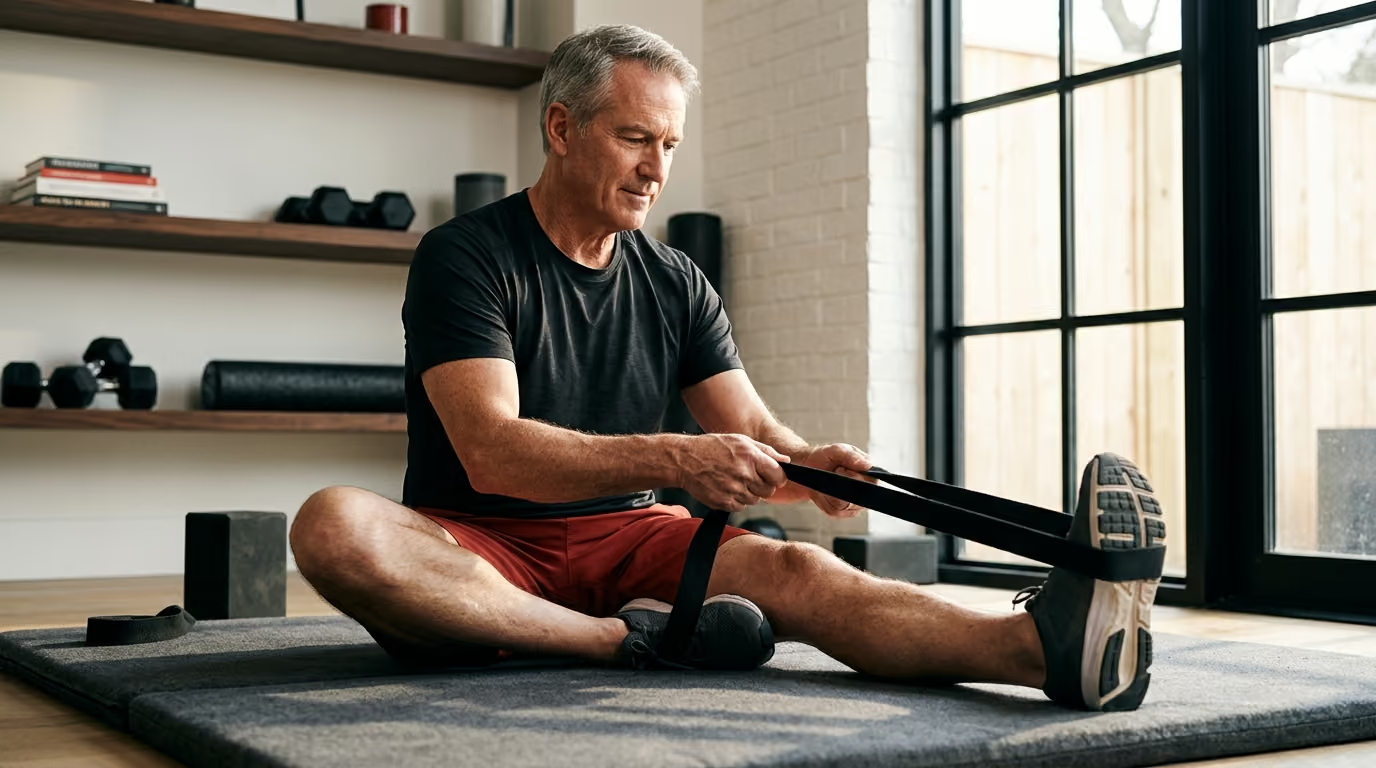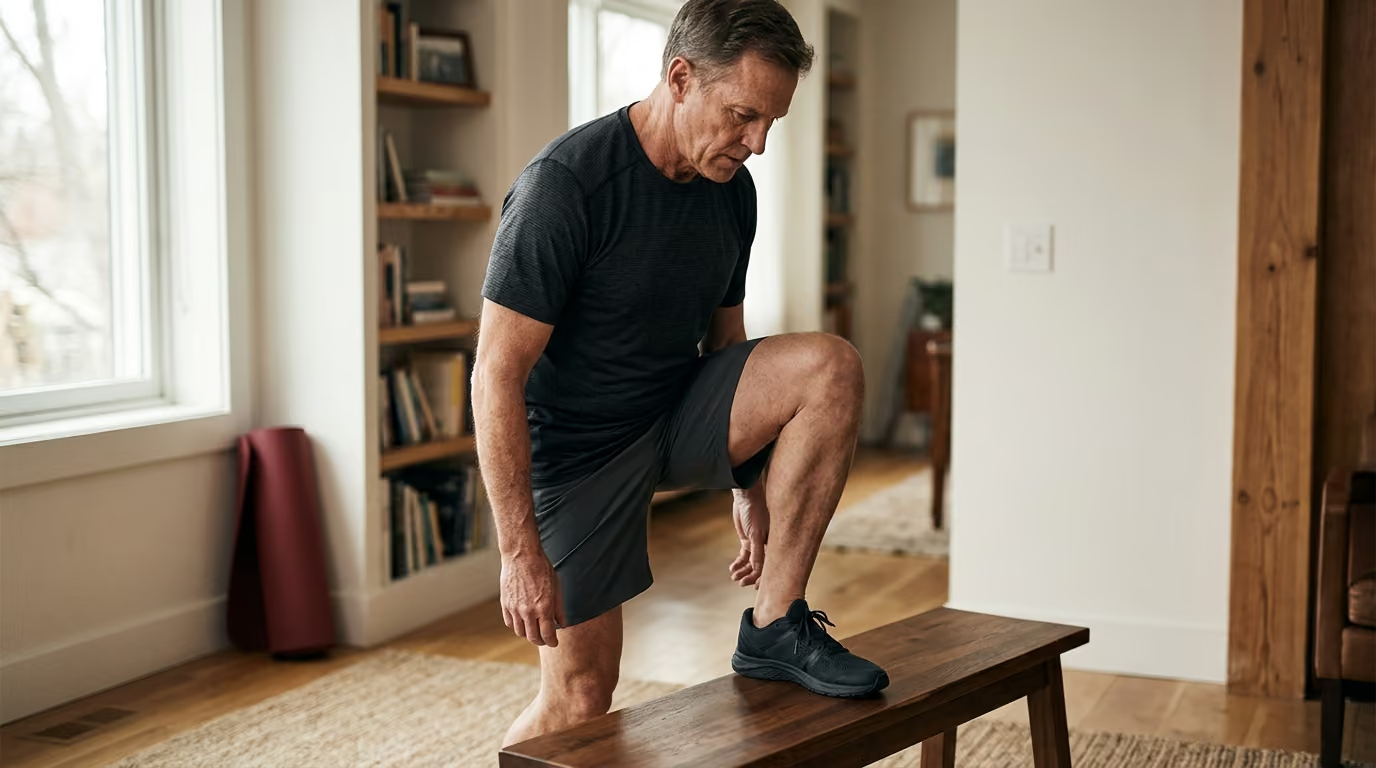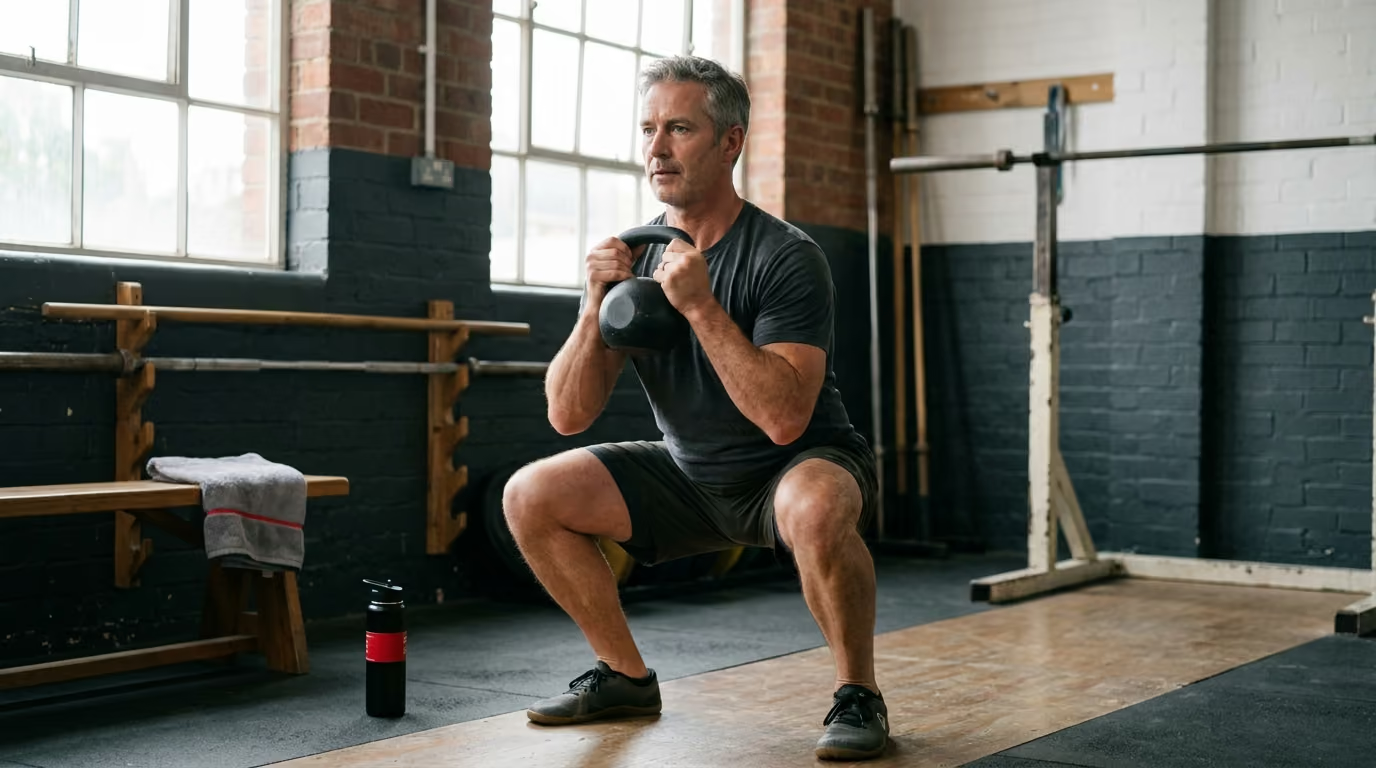
Protecting your joints after 45 does not mean handling light pink dumbbells or moving like fragile porcelain. In fact, resting aching joints often accelerates stiffness, weakens connective tissue, and speeds up muscle loss. The prevailing belief that heavy lifting destroys cartilage is contradicted by modern clinical research. The real problem is not the load itself, but how that load is applied, directed, and managed over time.
Staying strong into your fifties, sixties, and beyond requires a clear understanding of joint mechanics. You do not need to abandon compound movements or accept chronic pain as a normal tax on aging. Instead, you need a systematic method to train your muscles hard while keeping joint stress within a manageable threshold. This guide breaks down the clinical science of joint adaptation, exercise substitutions, symptom tracking, and load management for long-term physical independence.
Examine What The Clinical Research Shows
Clinical evidence consistently demonstrates that resistance training is one of the most effective non-pharmacological tools for joint health and osteoarthritis management. A major 2024 meta-analysis examining 27 studies and 1,712 participants with osteoarthritis revealed that resistance training significantly improved pain, strength, and physical function. The researchers calculated a pain standardized mean difference of -0.48, a strength improvement of 0.40, and a functional improvement of -0.56. These figures show that targeted loading produces meaningful, measurable relief rather than accelerated joint destruction.
Earlier systematic reviews confirm these physical benefits across aging populations. In an analysis of eight randomized controlled trials, researchers documented a significant increase in lower-extremity extensor strength alongside functional improvements and notable pain reductions. A broad review of resistance training in knee osteoarthritis patients found an average muscle strength improvement of 17.4 percent across evaluated trials. More than half of those studies reported direct improvements in self-reported pain scores and daily movement performance.
A comprehensive dose-response meta-analysis published in 2025 further clarified how training volume affects joint pain. The analysis calculated an overall effect size of -0.57 for pain reduction compared with inactive control groups. Interestingly, the data suggested a possible U-shaped curve, identifying an optimal weekly volume around 680 MET-minutes per week for pain relief. Both excessively high volumes and very low volumes proved less effective, and the pain reductions lasted up to six months after completing the structured training protocols.
Research published in major exercise science position statements confirms that older adults do not require fragile handling. The National Strength and Conditioning Association points out that older adults benefit from varied loading strategies, including machines, free weights, and power training at moderate intensities. Furthermore, systematic reviews of unsupervised home resistance training in older adults report that adverse event rates remain identical to inactive control groups. Musculoskeletal pain that does appear during progressive training is typically transient and resolves with simple volume adjustments.
Understand Why Joint Dynamics Shift After 45
Joints change over time through normal physiological shifts rather than sudden disease states. As men age, connective tissues experience changes in water content, collagen turnover, and cellular repair capacity. The cartilage covering bone surfaces becomes slightly less hydrated, which alters its shock absorption capabilities under sudden impact. Synovial fluid production, which lubricates the internal surfaces of the capsule, responds directly to movement and regular mechanical loading. When men reduce their physical activity to protect stiff joints, synovial fluid circulation drops, causing increased morning stiffness.
Tendon and ligament structures also alter their material properties across midlife. The cross-linking of collagen fibers shifts, making tendons slightly stiffer but less tolerant of rapid, uncontrolled stretch-shortening cycles. At the same time, muscle mass naturally declines if it is not stimulated through progressive tension. When the muscles surrounding a joint lose strength and cross-sectional area, they transfer more compressive and shear forces directly onto passive joint structures. Maintaining building strength and muscle creates a dynamic muscular brace that absorbs impact and stabilizes joint motion during daily tasks.
Hormonal transitions in mature men also influence recovery rates and structural integrity. Reductions in circulating testosterone and growth hormone lower the rate of protein synthesis in muscle and tendon tissue. Microscopic stress from hard training sessions takes longer to clear, meaning recovery periods between identical workouts must be managed thoughtfully. This is not an indication of fragility, but a signal to adjust training frequency, volume, and exercise selection.
Movement history and cumulative mechanical wear shape individual joint geometry over decades. Previous sports injuries, minor ligament sprains, or years spent sitting at a desk alter how bones track within their joint sockets. For example, the subacromial space in the shoulder or the patellofemoral tracking path in the knee may no longer tolerate the exact movement paths used in your twenties. Adapting your lifting angles allows you to bypass worn areas of cartilage while still loading target muscles through safe mechanical vectors.
Translate Joint Science Into Real World Capability
Translating joint science into daily life means shifting the focus from arbitrary gym numbers to functional capacity and longevity. When your knees, hips, and shoulders remain robust and pain-free, basic physical tasks remain effortless. You can carry heavy luggage, climb steep hiking trails, lift home improvement materials, and play recreational sports without bracing for days of inflammation. Physical independence across later life depends directly on your ability to produce force without provoking joint distress.
A joint-friendly approach changes how you evaluate a successful workout. Success is no longer measured by surviving a punishing barbell workout that leaves your joints aching for 48 hours. Instead, success is defined by muscular fatigue achieved with minimal joint irritation, followed by complete recovery within 24 hours. This shift allows you to maintain high training consistency week after week, which is the single most important variable for long-term muscle retention.
This practical mindset also supports better energy, mobility, and focus outside the gym. Chronic joint inflammation drains mental focus and creates hesitation during simple physical activities. By strengthening the supportive tissues around your knees, hips, and spine, you eliminate the constant low-grade ache that wears down your daily vitality. Integrating smart mobility and recovery strategies into your weekly routine protects your ability to stay active and engaged with family, work, and outdoor hobbies.
Muscular strength serves as an internal health insurance policy for men over 45. Research continually links lower-body extensor power and grip strength to reduced fall risks, better metabolic health, and lower all-cause mortality. Training within comfortable, joint-friendly pathways ensures you can build this critical physical capacity without burning out your structural hardware. You maintain high functional output while your joints remain calm, resilient, and fully capable.
Master The Four Levers of Exercise Adjustment
When an exercise irritates a joint, you do not need to abandon the movement pattern entirely. You can modify any lift by manipulating four distinct training variables. These four levers give you the flexibility to maintain muscular challenge while protecting sensitive connective tissue.
Adjust The Range of Motion
Reducing the range of motion is the first and most effective lever for eliminating joint pain during a lift. Every joint has an available range, a comfortable range, a training range, and a long-term goal range. If deep knee flexion causes pain in a squat, you can perform a box squat to a height that stops just short of the painful angle. The target muscles still experience intense tension, but the joint avoids the specific mechanical impingement point.
Shortened ranges do not have to be permanent restrictions. A reduced range allows irritated tissues to calm down while surrounding muscles grow stronger and more coordinated. Over several weeks or months, you can gradually lower the box or deepen the descent by small increments. This progressive expansion of working range rebuilds joint confidence safely without triggering inflammatory setbacks.
Modulate The External Load
Reducing external load while altering another training variable allows you to maintain muscular tension without heavy compressive stress. High absolute loads place large compressive forces across articular cartilage, which can be problematic during flare-ups. By lowering the weight on the bar, you decrease the passive stress placed on the joint structure.
To compensate for the lighter load, you can bring your sets closer to muscular fatigue by performing higher repetitions. Research shows that sets of 12 to 15 repetitions taken close to failure stimulate muscle growth just as effectively as heavy sets of 5 repetitions. This allows men over 45 to achieve robust hypertrophy and strength adaptations while sparing their connective tissues from excessive crushing forces.
Control Movement Speed and Tempo
Controlling repetition speed removes joint-damaging momentum and increases the time your muscles spend under active tension. Fast, bouncing reversals at the bottom of a lift place extreme peak forces on tendons and joint capsules. By slowing down the eccentric or lowering phase, you distribute the load evenly across the muscle fibers and keep mechanical stress predictable.
A practical tempo framework is the 3-1-1 protocol. You lower the resistance under control for three full seconds, pause for one second at the transition point, and lift smoothly in one second. The brief pause eliminates the stretch reflex, forcing the muscle to initiate movement without jarring the joint. You can also utilize five-to-ten-second isometric holds at comfortable angles to build strength without any joint movement at all.
Select The Appropriate Stability Level
Altering the stability of an exercise changes the demand on stabilizing musculature and joint integrity. Highly stable options, such as selectorized machines or chest-supported benches, guide the movement along a fixed or guided track. This external support allows you to drive the primary muscles to fatigue without worrying about balance or uncontrolled joint drift.
Conversely, free weights and standing cable movements demand greater active stabilization from smaller surrounding muscles. If a joint feels unstable or irritable, shifting toward higher-stability options provides immediate relief and predictable tracking. Once stability, strength, and tissue tolerance improve, you can transition back toward standing, unilateral, or free-weight variations to challenge dynamic balance and core control.
Select Joint-Friendly Substitutions Across Major Movement Patterns
You can rebuild your entire exercise program around joint-friendly variations without losing the benefits of foundational human movement patterns. Every major pattern can be modified to reduce shear stress, avoid painful end-ranges, and match your individual anatomy.
The Squat Pattern
Traditional deep barbell back squats place high compressive loads on the lumbar spine and demand extreme mobility from the hips, knees, and ankles. When knee cartilage or lower back structures become sensitive, back squats often provoke unnecessary symptoms.
Replace the deep back squat with these sustainable alternatives:
- Box squats to a parallel or slightly above-parallel bench, which eliminate the painful bounce and keep shins more vertical.
- Goblet squats with a kettlebell or dumbbell held at the chest, which naturally uprights the torso and reduces lower back torque.
- Leg press machines with foot placement set high on the sled, allowing you to train quadriceps and glutes through a controlled, supported path.
- Sit-to-stand repetitions from an elevated box using bodyweight or light external loads for deconditioned knees.
- Isometric wall sits held at a 60-to-90-degree knee angle to build quadriceps strength without joint motion.
Progress these movements by gradually lowering the box height, increasing the dumbbell load in the goblet position, or transitioning from a two-leg leg press to a staggered-stance variation.
The Hip Hinge Pattern
Heavy barbell deadlifts pulled from the floor require significant hamstring flexibility and place substantial shear forces on the lumbar vertebrae. If you have a history of lower back stiffness or hip impingement, pulling off the floor can cause recurring irritation.
Substitute traditional deadlifts with these joint-sparing options:
- Kettlebell or trap bar deadlifts elevated on riser blocks, reducing the required hip flexion angle at the start.
- Dumbbell Romanian deadlifts with soft knees, stopping the descent just below the kneecap before the pelvis tilts.
- Barbell or machine hip thrusts, which load the glutes and hamstrings with almost zero compressive load on the spine.
- Cable pull-throughs, which provide horizontal resistance and continuous tension without vertical spinal loading.
- Seated or lying hamstring curl machines to isolate knee flexors without involving the lower back.
Progress by lowering the block height an inch at a time, extending the eccentric lowering phase, or adding controlled pauses at the top of the hip thrust.
The Lunge and Unilateral Pattern
Deep walking lunges and explosive split jumps create high deceleration forces across the patellar tendon and can challenge compromised balance. An uncontrolled forward knee slide during lunging often aggravates anterior knee pain.
Use these joint-friendly single-leg alternatives instead:
- Reverse lunges stepping backward onto a flat surface, which keeps the front shin vertical and reduces patellofemoral stress.
- Supported static split squats holding a sturdy rack or wall for balance, allowing complete control over depth and speed.
- Low box step-ups onto a four-to-six-inch platform, focusing on pushing through the heel without jumping off the trailing foot.
- Single-leg leg presses with moderate depth to develop unilateral hip and quad strength safely.
- Elevated rear-foot split squats using a low three-inch block rather than a high bench to avoid hyperextending the rear hip.
Progress by increasing hand-held dumbbell weights, increasing the step-up platform height slowly, or pausing for two seconds at the bottom of the split squat.
The Upper Body Push Pattern
Barbell bench presses lock the hands into an inflexible pronated position and force the shoulders into deep extension at the bottom. This mechanical combination frequently pinches the rotator cuff tendons and strains the anterior shoulder capsule.
Swap aggressive barbell presses for these shoulder-friendly movements:
- Dumbbell floor presses, which physically stop your elbows at the floor and prevent excessive shoulder extension.
- Neutral-grip dumbbell bench presses with palms facing each other, opening up the subacromial space in the shoulder.
- Incline push-ups against a sturdy bench or bar in a power rack to reduce total bodyweight load while maintaining core bracing.
- Standing or seated cable chest presses, allowing your hands to follow a natural converging arc that fits your shoulder structure.
- Angled landmine presses, which provide a hybrid horizontal-vertical pressing path that spares the shoulders from overhead impingement.
Progress by elevating feet during push-ups, gradually increasing dumbbell weight on the floor press, or slowing down the lowering phase.
The Upper Body Pull Pattern
Unsupported bent-over barbell rows place prolonged static loads on the lumbar spine and hamstrings while pulling the shoulders into awkward angles. Wide-grip pull-ups can also overstretch the shoulder capsule at the bottom hang position.
Utilize these supportive pulling alternatives:
- Chest-supported dumbbell rows on an incline bench, completely eliminating lower back fatigue and spinal shear.
- Seated cable rows using a close-grip, neutral attachment to keep elbows tight and shoulders packed.
- Neutral-grip lat pulldowns using individual handles that allow wrists and forearms to rotate naturally during the pull.
- Single-arm supported dumbbell rows with one hand and knee resting on a flat bench for total spinal support.
- Standing resistance-band face pulls to strengthen the rear deltoids, rhomboids, and external rotators of the shoulder.
Progress by adding brief two-second contractions at full squeeze, increasing row resistance smoothly, or utilizing thicker resistance bands.
The Carry Pattern
Heavy, awkward carries can strain the cervical spine, shoulders, and lower back if posture breaks down. However, loaded locomotion remains one of the best ways to build total-body work capacity, grip strength, and hip stability.
Implement these safe carry variations:
- Bilateral farmer carries with dumbbells held at your sides, using moderate weights and short, controlled paces.
- Suitcase carries holding a weight in only one hand, challenging lateral core stability without overloading total body weight.
- Trap bar carries with high handles, keeping the load centered directly in line with your body's center of gravity.
- Marching in place with light kettlebells, building single-leg balance and hip flexion without forward trip hazards.
- Sled pushes or backward sled drags, providing intense lower-body muscular conditioning with zero spinal compression.
Progress by increasing walking distance, extending duration under tension, or slowing down step rate to demand greater balance.
Track Symptoms Using Objective Monitoring Rules
Managing joint health requires an objective system to track your body's response to training. Guesswork often leads to two extremes: either stopping all exercise out of fear, or pushing through sharp pain until severe injury occurs. Applying a structured monitoring protocol removes emotion and keeps your training productive.
Evaluate your joints across three distinct time windows:
- Baseline status: Check your resting pain, stiffness, and joint mobility before you begin your warm-up.
- Training response: Monitor whether discomfort stays within acceptable limits or escalates with each subsequent set.
- Next-day recovery: Assess whether joint pain and morning stiffness return to baseline within 24 hours of finishing the workout.
Use a simple numerical pain scale from 0 to 10 to guide your exercise decisions. A pain rating between 0 and 2 represents a safe, benign response where full training proceeds as planned. A rating between 3 and 5 represents acceptable discomfort, which is common when strengthening arthritic or deconditioned joints, provided the sensation is dull and stable. A rating of 6 or higher indicates an unacceptable flare, requiring you to immediately stop that exercise, lighten the load, or adjust the range of motion.
The 24-hour rule is your primary safety guardrail. Any mild joint discomfort or stiffness provoked by your training session must return to its pre-exercise baseline within 24 hours. If pain remains elevated, if significant swelling appears, or if joint function worsens the next day, your training dose was too high. For your next session, apply the four levers by reducing volume, lowering weight, or cutting back the range of motion.
Certain red flag symptoms require stopping exercise immediately and obtaining professional medical evaluation:
- Sudden, sharp, stabbing pain that causes a muscle to give out.
- Rapidly expanding joint swelling accompanied by heat and redness.
- True mechanical locking where a joint physically catches and cannot straighten.
- Progressive numbness, tingling, or shooting pain radiating down an arm or leg.
- Unexplained, deep aching pain that wakes you up consistently during the night.
Dismantle Common Misreadings About Joint Training
Several persistent myths prevent men over 45 from building the strength they need. Clearing away these misconceptions is critical for establishing a long-term, sustainable training routine.
Pain Does Not Always Equal Tissue Damage
Many men believe that any sensation of discomfort during lifting indicates that cartilage is tearing or bone is wearing away. In reality, pain is an alarm system modulated by the central nervous system, joint sensitivity, and previous injury history. Clinical studies on osteoarthritis regularly allow mild, controlled discomfort up to a 5 out of 10 during exercise without causing structural harm. As long as symptoms remain mild and clear within 24 hours, the joint is safely adapting to the mechanical stimulus.
Full Range of Motion Is Not Mandatory for Muscle Growth
Fitness culture often insists that every repetition must travel through an extreme, full anatomical range of motion to be effective. While full range is valuable when tolerated, forced deep ranges often cause joint impingement and tendon irritation in mature lifters. Research confirms that muscle fibers experience robust hypertrophy when loaded in partial ranges, provided the effort is sufficiently close to fatigue. Training through your comfortable, tolerable range protects your joints while delivering excellent strength adaptations.
Machines Are Not Inferior to Free Weights
A common lifting dogma suggests that real strength can only be built using free barbells and dumbbells. While free weights develop valuable coordination, selectorized machines provide external stability and fixed safety paths that spare sensitive joints. Machines allow you to safely push a muscle to complete fatigue without the risk of dropping weights or losing balance. A well-designed routine uses the best tools from both categories based on your individual needs.
Stretching Alone Will Not Fix Joint Pain
When joints feel stiff, the default reaction is often to perform prolonged static stretching. While gentle mobility work has its place, stretching without strengthening does not provide stability to an unstable joint. Osteoarthritis guidelines emphasize progressive resistance training and aerobic activity over passive stretching because strong muscles actively support joint capsules. You must build dynamic muscular strength to control and protect the range of motion you have.
Acknowledge Where The Evidence Remains Thin
While the broad benefits of resistance training for joint health are well documented, several specific areas of exercise science remain uncertain or under-researched. Recognizing these scientific limitations prevents reliance on overhyped claims and rigid protocols.
Current literature clearly shows that resistance training reduces osteoarthritis pain and improves function, but the exact optimal dosage remains unproven. Clinical trials vary widely in their prescribed sets, repetitions, weekly frequencies, and intensity thresholds. Scientists have not yet established a universal blueprint that guarantees optimal outcomes for every individual joint condition. Programs must be adjusted based on personal tolerance rather than rigid formulas.
Research on specific non-surgical joint therapies, specialized mobility devices, and commercially marketed joint supplements is often preliminary, mixed, or heavily reliant on animal models. Long-term human trials showing structural cartilage regeneration through specific exercise protocols are limited. Most structural changes seen on MRI scans do not correlate cleanly with a person's actual pain or physical function.
Data on the management of acute joint flares during ongoing resistance training programs is also largely based on clinical observation rather than large randomized controlled trials. Recommendations for adjusting volume during acute inflammatory episodes stem from clinical consensus rather than definitive laboratory testing. Maintaining open communication with your healthcare provider ensures that training modifications match your personal medical history.
Follow Structured Training Models for Common Joint Profiles
The following illustrative models demonstrate how to structure practical, joint-friendly workouts for different physical profiles. These examples show how to organize sets, repetitions, tempo, and exercise selection without exceeding joint tolerances.
Illustrative Model 1: Managing Knee Sensitivity
This model is designed for a lifter dealing with mild patellofemoral irritation or knee stiffness who wants to maintain lower-body power.
Weekly Schedule: Two to three nonconsecutive days per week.
- Box Squats to a parallel bench: 3 sets of 8 to 10 repetitions, using a controlled 3-second descent, a 1-second pause on the box, and a smooth ascent.
- Seated Hamstring Curls: 3 sets of 10 to 12 repetitions, emphasizing a 2-second hold at full knee flexion to balance joint forces.
- High-Foot-Placement Leg Press: 2 sets of 12 to 15 repetitions through a pain-free partial range of motion.
- Supported Standing Calf Raises: 3 sets of 12 to 15 repetitions with both feet, holding a wall for balance and pausing at the top.
- Isometric Wall Sits: 2 sets held for 30 to 45 seconds at a comfortable, pain-free knee angle.
Progression occurs by gradually increasing repetitions within the target range before adding small increments of weight. If knee stiffness returns to baseline within 24 hours, the working range on the box squat can be slowly lowered over time.
Illustrative Model 2: Protecting Sensitive Shoulders
This model is designed for a trainee experiencing anterior shoulder pinching during traditional bench pressing or overhead work.
Weekly Schedule: Two upper-body sessions per week.
- Dumbbell Floor Press with Neutral Grip: 3 sets of 8 to 10 repetitions, pausing lightly with triceps flat on the floor before pressing.
- Chest-Supported Incline Dumbbell Row: 3 sets of 10 to 12 repetitions, pulling elbows back smoothly without shrugging the neck.
- Angled Landmine Press: 2 sets of 10 to 12 repetitions per arm, pressing along a natural 45-degree angle that spares the rotator cuff.
- Neutral-Grip Lat Pulldown: 3 sets of 10 to 12 repetitions, stopping the bar at chin level to avoid extreme shoulder extension.
- Standing Resistance-Band Face Pulls: 3 sets of 15 repetitions, focusing on pulling the band toward the forehead and rotating hands back.
Progression focuses on adding repetitions and improving movement control. If shoulder symptoms remain quiet, the lifter can experiment with slight incline dumbbell presses while maintaining a neutral hand position.
Illustrative Model 3: Deconditioned Return to Strength
This model is designed for a man over 45 returning to physical exercise after years of inactivity, focusing on building a broad foundation of healthy aging principles.
Weekly Schedule: Two full-body sessions per week.
- Sit-to-Stand from a High Chair: 2 sets of 8 to 10 repetitions using bodyweight, focusing on driving through the heels.
- Incline Push-Ups against a high bar or counter: 2 sets of 8 to 10 repetitions with a straight, braced spine.
- Seated Cable Row or Resistance Band Row: 2 sets of 10 to 12 repetitions with a neutral grip.
- Low Step-Ups onto a four-inch platform: 2 sets of 8 repetitions per leg, stepping down under complete control.
- Bilateral Farmer Carries: 3 sets of 30-second walks carrying light dumbbells with tall posture.
Progression involves increasing total work time, adding a third set to each exercise, and slowly reducing the incline on push-ups as core and upper-body strength improve. Reviewing structured physical performance guides can help direct long-term programming adjustments as base conditioning grows.
Structure Your Weekly Joint-Friendly Routine
Organizing your weekly routine requires balancing training stimulus with adequate recovery time. Men over 45 generally thrive on full-body routines performed two to three days per week or an upper-lower split performed across four days. Spacing intense training sessions with nonconsecutive rest days allows connective tissues to clear metabolic fatigue and rebuild collagen matrix integrity.
A sample three-day full-body schedule might look like this:
- Monday: Full-Body Session A (Squat pattern, Push pattern, Pull pattern, Core carry).
- Tuesday: Active recovery, light walking, and gentle mobility.
- Wednesday: Full-Body Session B (Hinge pattern, Unilateral leg pattern, Vertical push/pull, Lateral core).
- Thursday: Active recovery or dedicated aerobic conditioning.
- Friday: Full-Body Session C (Supported leg press, Floor press, Chest-supported row, Sled work).
- Saturday and Sunday: Recreational outdoor activities, hiking, or full rest.
Always begin each lifting session with a thorough dynamic warm-up rather than passive stretching. Spend five to ten minutes elevating your body temperature on an exercise bike or rowing machine. Follow this with low-load movement preparations, such as bodyweight squats, glute bridges, arm circles, and band pull-aparts. This warm-up increases synovial fluid circulation inside joint capsules, preparing cartilage surfaces for heavier loading.
Listen to your body's recovery signals week to week. If life stress, poor sleep, or travel compromises your recovery, reduce your workout volume by cutting one set from each exercise. Consistently showing up and completing high-quality, joint-friendly work beats pushing into chronic inflammation and needing weeks off to recover.
Key Takeaways
- Resistance training is clinically proven to reduce joint pain, improve physical function, and build muscular strength in mature adults.
- Joint-friendly training is not about lifting light weights, but about selecting angles, speeds, and loads that target muscles without aggravating joint surfaces.
- Adjust exercises using the four levers: range of motion, external load, movement speed, and external stability.
- Substitute aggressive lifts with joint-sparing options like box squats, floor presses, chest-supported rows, and elevated deadlifts.
- Follow the 24-hour rule: mild exercise discomfort is acceptable during training, provided all symptoms return to baseline by the following day.
- Partial ranges of motion and selectorized machines are effective, legitimate tools for building muscle and protecting connective tissue.
- Progress your training gradually by adding repetitions, extending pauses, or improving control before increasing weight on the bar.
Train your muscles with sufficient effort to drive positive adaptation, while exposing your joints only to the range, load, and speed they can comfortably recover from.
Sources
- Strength training for treatment of osteoarthritis of the knee
- The Effects of Resistance Training on Pain, Strength, and Function in Osteoarthritis: Systematic Review and Meta-Analysis - PubMed
- The Role of Resistance Training Dosing on Pain and Physical Function in Individuals With Knee Osteoarthritis: A Systematic Review - Meredith N. Turner, Daniel O. Hernandez, William Cade, Christopher P. Emerson, John M. Reynolds, Thomas M. Best, 2020
- The Role of Resistance Training Dosing on Pain and Physical ...
- Strength training in older adults: The benefits for osteoarthritis
- A Systematic Review of Testing Protocols and Adverse Events
- Which strength and balance activities are safe and efficacious ...
Stay sharp
Get the word
Join our newsletter for the best writing advice and stories from the field.