Lower-body mobility is not passive flexibility, and it is not the ability to drop into a deep split. It is the active, usable capacity of your hips, knees, ankles, and feet to move through necessary ranges of motion under control. True mobility combines joint freedom, muscular strength, balance, and nervous system coordination.
When you lose mobility in the lower body, basic tasks become noticeably harder. Getting up from a low chair, climbing stairs without gripping a handrail, stepping over obstacles on a trail, or dropping into a clean squat all require coordinated movement across multiple joints.
This guide examines what the scientific evidence says about lower-body mobility as we age. It breaks down joint mechanics from the pelvis to the toes. It explains how to build a durable, practical training routine that supports lifelong strength, walking speed, and daily physical independence.
What Does the Research Actually Show About Lower-Body Mobility and Aging?
Public health surveillance data shows that movement limitations are common in adulthood. National Health Interview Survey data collected by the Centers for Disease Control and Prevention indicates that 18.2 percent of American adults experience at least some difficulty walking or climbing steps. Difficulty with stairs and walking is not confined to advanced old age. It frequently begins to appear during midlife when physical activity patterns shift.
Data from a nationally representative study of Medicare beneficiaries aged 65 and older highlights how specific motor capabilities decline at different rates. Among adults aged 65 to 69, difficulty standing up from a chair was the most prevalent motor impairment, affecting 42.4 percent of participants. In contrast, among adults aged 90 and older, walking speed impairment was the most common issue, affecting 90.4 percent. The ability to generate force quickly from a seated position declines earlier than basic walking speed.
Systematic reviews demonstrate that structured exercise reliably improves these functional outcomes. A meta-analysis examining 24 randomized controlled trials of adults aged 63 to 83 found that resistance training produced clear gains in functional performance. Participants in resistance programs increased their six-minute walk distance by an average of 16.1 meters compared to inactive control groups. They also increased their usual walking speed by 0.05 meters per second and demonstrated higher lower-body strength.
The research also clarifies that training must target multiple physical qualities. A systematic review evaluating community-based exercise programs showed that resistance training improves lower-extremity strength and balance. Dedicated balance training improves static, dynamic, and reactive balance. Multicomponent exercise programs that blend strength, balance, and aerobic work show the strongest track record for reducing falls and preserving physical independence.
Comprehensive reviews on physical activity guidelines reinforce these findings. The World Health Organization guidelines recommend that older adults complete 150 to 300 minutes of moderate aerobic activity weekly, or 75 to 150 minutes of vigorous activity. The organization advises performing muscle-strengthening activities twice weekly and multicomponent balance training at least three days per week. Position statements from the American College of Sports Medicine support this balanced combination of resistance, aerobic, flexibility, and neuromotor training.
Why Do Lower-Body Joints and Tissues Change After 45?
The physical changes that occur in the lower body during midlife are normal biological processes rather than diseases. Understanding the underlying mechanisms helps you target your training without unnecessary anxiety.
Tendons, ligaments, and joint capsules experience gradual shifts in collagen architecture as the decades advance. Tendon tissue loses some water content and becomes stiffer. Cross-linking between collagen fibers increases, which reduces the passive spring and compliance of connective structures like the Achilles tendon and plantar fascia. This stiffness can make your first morning steps feel tight, particularly around the ankles and arches of the feet.
Muscular changes also contribute directly to mobility losses. Muscle cross-sectional area tends to decrease over time when heavy loads are absent. Fast-twitch muscle fibers, which are responsible for rapid force production and dynamic stabilization, show more atrophy than slow-twitch endurance fibers. When hip and thigh muscles lose power, the nervous system often restricts joint range of motion as a protective strategy. The brain senses a lack of strength at the end range and tightens surrounding tissues to create artificial stability.
Articular cartilage within the hips, knees, and ankles undergoes subtle biochemical modifications over time. Proteoglycan content in the cartilage matrix decreases, reducing its water-binding capacity. Synovial fluid production inside the joint capsule can decline during periods of prolonged sitting or inactivity. Joints rely on cyclic movement and compression to circulate synovial fluid and deliver nutrients to cartilage. A sedentary routine starves the joint environment, creating a sensation of stiffness that is often mistaken for permanent damage.
Neural signaling and proprioception change across the lifespan. Proprioceptors are sensory receptors located in your muscles, tendons, and joint capsules that inform your brain about your body position in space. Reduced physical variety decreases the sensitivity of these feedback loops. When sensory input from the feet and ankles becomes sluggish, your balance deteriorates and your gait stiffens.
How Does Lower-Body Mobility Affect Daily Movement and Sports?
Lower-body mobility functions as an integrated kinetic chain. If one link lacks range of motion or dynamic control, the adjacent joints must compensate. These compensations show up during routine daily tasks and recreational activities.
Walking and Trail Hiking
Walking requires smooth hip extension as your trailing leg pushes off behind you. When your hip flexors are tight or your glutes are weak, you cannot extend your hip fully. Your body compensates by arching your lower back or shortening your stride length. Over thousands of steps, this compensation strains the lumbar spine and reduces walking efficiency.
Hiking on uneven dirt, loose gravel, or rocky terrain demands substantial ankle mobility and dynamic foot stability. If your ankles cannot tilt inward and outward smoothly, your knees must absorb rotational forces they are not designed to handle. A lack of ankle dorsiflexion also makes hiking uphill exhausting, forcing your feet to turn outward like a duck.
Cycling and Pedal Stroke Mechanics
Cycling is a repetitive, closed-chain activity with a fixed path of motion. It provides excellent cardiovascular conditioning and low joint impact, but it takes your joints through a restricted range. The hips stay flexed between roughly 30 and 110 degrees, never reaching full extension.
If you spend hours on a road bike or indoor stationary trainer without complementary mobility work, your hip flexors adaptively shorten. When you dismount the bicycle, your hips struggle to open up completely. Limited ankle mobility can also cause your knees to track inward toward the top tube during the power phase of the stroke, irritating the patellar tendon.
Stair Climbing and Descending
Ascending stairs requires sufficient knee flexion and hip flexion to clear the step, paired with single-leg quad and glute strength to lift your body weight. Descending stairs is even more demanding on joint control.
Going downstairs requires adequate ankle dorsiflexion so your lower leg can travel forward over your foot while the opposing leg reaches down. If your calf muscles or ankle joints are stiff, you cannot lower yourself smoothly. You will either drop heavily onto the next step or twist your torso to bypass the ankle restriction.
Resistance Training and Lifting
Lifting weights builds the strength needed to protect joints, but poor mobility limits your exercise choices and form. Performing a basic bodyweight or goblet squat requires adequate ankle dorsiflexion, knee flexion, and hip rotation.
When your ankles are stiff, your heels lift off the floor or your chest collapses forward as you descend. When your hips lack internal or external rotation, your lower back rounds at the bottom of the movement. Maintaining active joint mobility allows you to train through full, healthy ranges of motion safely. You can read more about building functional resilience in our healthy physical aging guides.
How Should You Build a Practical Joint-by-Joint Mobility Routine?
An effective mobility routine works through the entire lower extremity, addressing the specific demands of each joint segment.
The Feet: Ground Contact and Arch Support
Your feet contain 26 bones, 33 joints, and over a hundred muscles, tendons, and ligaments. They serve as the primary sensory interface between your body and the ground. Stiff, weak feet impair balance and force your ankles and knees to work harder.
Target these key foot movements regularly:
- Great Toe Extension: Your big toe needs to bend upward roughly 60 degrees so you can push off smoothly while walking. Practice lifting your big toe while keeping the smaller four toes flat on the floor, then switch and lift the small toes while keeping the big toe down.
- Toe Spreading: Modern footwear often squeezes the toes together, weakening the intrinsic muscles of the foot. Practice actively spreading your toes as wide apart as possible without using your hands.
- Arch Domestication and Short-Foot Drills: Place your foot flat on the ground. Without curling your toes, draw the ball of your foot toward your heel by contracting the muscles in your arch. Hold for five seconds and release.
The Ankles: Dorsiflexion and Plantar Control
The ankle joint must balance mobility in the sagittal plane with stability in the frontal plane. The most common mobility deficit in the lower body is limited ankle dorsiflexion.
A clinical review on lower-limb factors and fall risk points out that older adults frequently display reduced ankle range of motion, particularly in dorsiflexion. This reduction impairs the normal mechanics of walking and balance recovery.
Focus on these ankle drills:
- Half-Kneeling Ankle Mobilization: Kneel on one knee with your front foot flat on the floor. Keeping your front heel glued down, drive your knee forward directly over your middle toes until you feel a stretch in your calf or ankle. Hold for two seconds, return, and repeat for 10 to 12 smooth repetitions per side.
- Standing Calf Raises with Deficit: Stand with the balls of your feet on the edge of a step. Lower your heels below step level to achieve a deep, controlled stretch, then press up onto your toes. This movement strengthens the calf while taking the ankle through its entire excursion.
The Knees: Controlled Flexion and Extension
The knee is a hinge joint that relies heavily on the joints above and below it for proper alignment. It requires complete terminal extension to lock out efficiently during standing and deep flexion to allow comfortable kneeling or squatting.
Train these knee mechanics:
- Terminal Knee Extensions: Loop a light resistance band behind your knee and anchor it in front of you. Step back until the band is taut. Start with the knee slightly bent, then contract your quadriceps to straighten the leg fully against the band resistance.
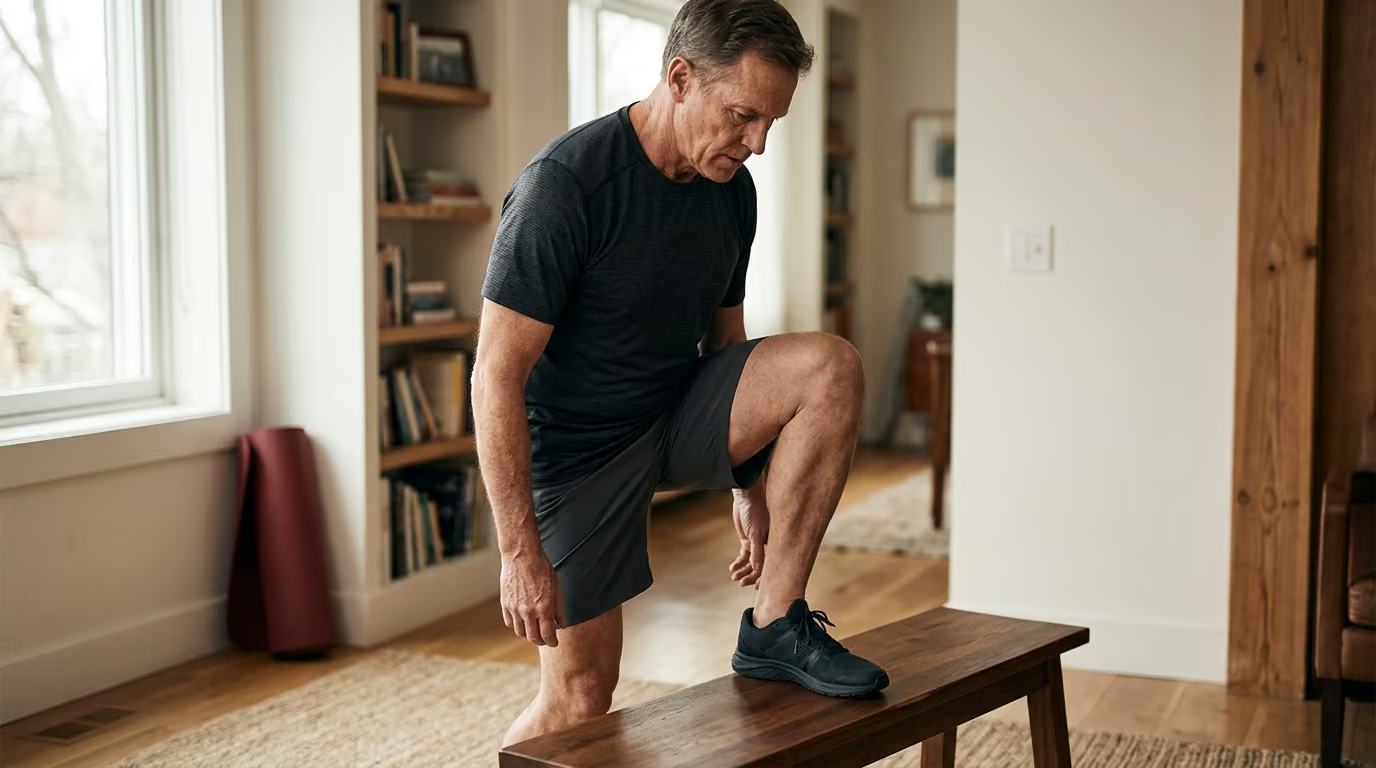
- Step-Downs from a Low Platform: Stand on a four-inch box or step. Slowly bend your supporting knee and lower your opposite heel toward the floor under strict control. Touch the heel lightly without resting your weight, then press back up. This develops eccentric quad control and patellofemoral stability.
The Hips: Three-Dimensional Movement and Control
The hip is a multi-axial ball-and-socket joint capable of moving in all anatomical planes. Sedentary modern life tends to lock the hips into a narrow band of flexion, sacrificing extension and rotation.
Target these primary hip capacities:
- Half-Kneeling Hip Flexor Stretch with Glute Squeeze: Kneel on your right knee with your left foot forward. Tuck your pelvis underneath you to flatten your lower back, then squeeze your right glute firmly. Shift your weight forward two inches while keeping your torso tall to open the front of the right hip.
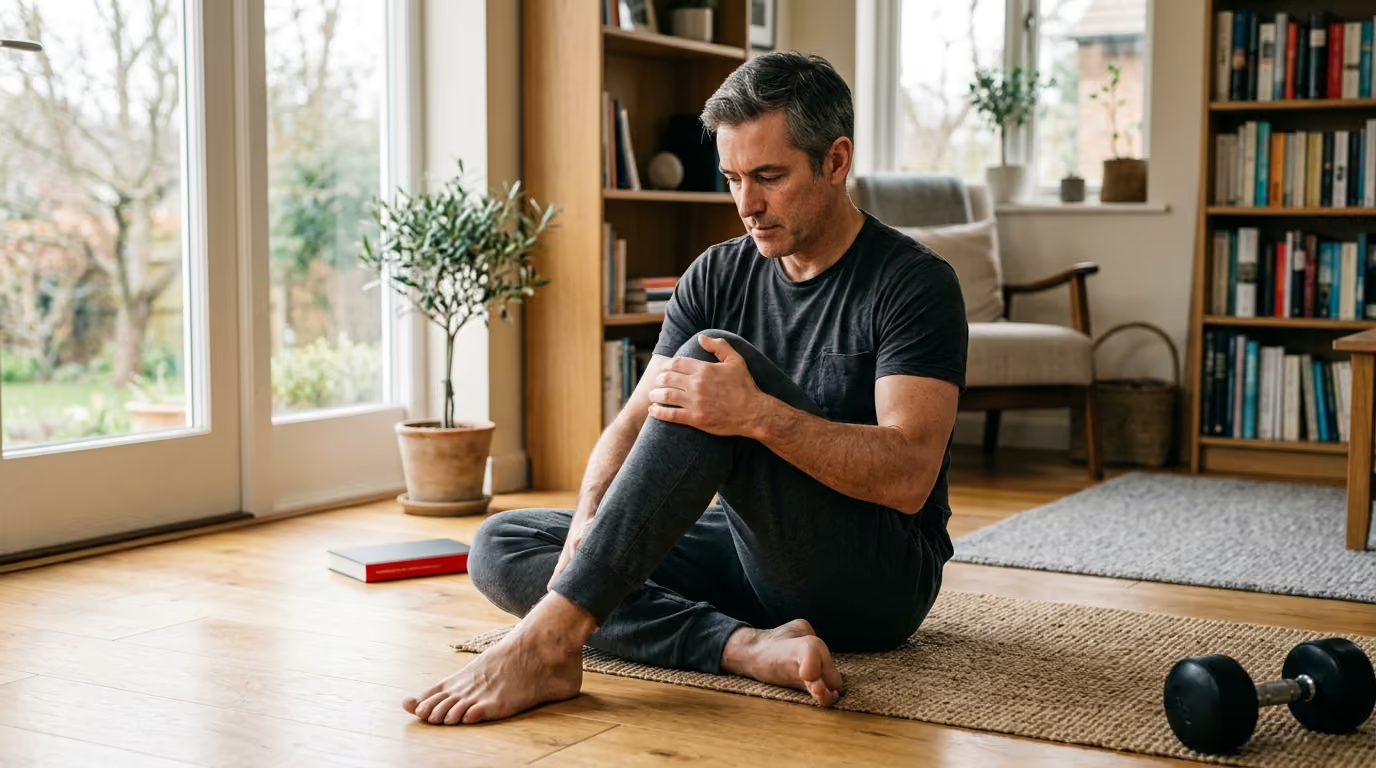
- Seated 90-90 Hip Switches: Sit on the floor with both knees bent at 90-degree angles, one leg in front of you and one leg to the side. Keeping your heels anchored on the floor, rotate your knees up and over to the opposite side. This drill moves both hips through simultaneous internal and external rotation.
- Standing Hip Airplanes: Stand on one leg with your hands on a sturdy support. Hinge forward at your hip, keeping your back leg straight. Slowly rotate your pelvis open away from the standing leg, then rotate your pelvis inward toward the standing leg. This builds powerful stability in the deep hip rotators and gluteus medius.
For deeper technical breakdowns on movement mechanics, review our joint health and functional movement guides.
What Exercise Combination Delivers the Best Mobility Outcomes?
Mobility work is most effective when embedded within a comprehensive physical program. Doing passive stretches in isolation will not produce lasting functional change. You must combine daily movement, progressive resistance, balance practice, and aerobic conditioning.
- COMPLETE LOWER-BODY MOBILITY FRAMEWORK
- 1. Daily Joint Range Work
- 5 to 10 minutes of hip, knee, ankle, and toe movement
- Restores synovial fluid and relieves morning stiffness
- 2. Resistance Training (2 to 3 days per week)
- Loaded squats, hinges, step-ups, split squats, and carries
- Builds strength across the entire joint range
- 3. Neuromotor Balance Drills (3 days per week)
- Single-leg stands, tandem walking, weight shifts
- Sharpens proprioception and dynamic stability
- 4. Aerobic Conditioning (150 to 300 minutes per week)
- Brisk walking, trail hiking, cycling, or rowing
- Maintains tissue vascularity and systemic stamina
1. Daily Range-of-Motion Flow
Dedicate 5 to 10 minutes every morning or before workouts to move your lower-body joints through comfortable ranges. This is not about pushing into pain. It is about waking up sensory receptors and circulating synovial fluid.
- Toe lifts and spreads: 1 minute
- Half-kneeling ankle glides: 10 reps per side
- 90-90 hip switches: 8 reps per side
- Standing bodyweight squats to a comfortable depth: 10 slow reps
2. Progressive Resistance Training (2 to 3 Days Weekly)
Strength training builds the structural support that allows joints to operate smoothly. The World Health Organization emphasizes muscle-strengthening activities involving all major muscle groups at least two days weekly. Resistance training directly improves walking distance, gait speed, and physical capacity in older adults.
Key resistance movements to include:
- Squat Patterns: Goblet squats, box squats, or bodyweight sit-to-stands. Focus on keeping your feet flat and your chest tall.
- Hinge Patterns: Romanian deadlifts or kettlebell deadlifts. Push your hips backward while maintaining a neutral spine to load the glutes and hamstrings.
- Unilateral Stepping: Step-ups onto a stable bench, reverse lunges, or split squats. Single-leg movements challenge hip stability and ankle control simultaneously.
- Calf and Foot Loading: Standing calf raises and loaded farmer walks on your toes or flat feet. Carrying heavy loads improves foot arch stiffness and ankle stability.
Explore our dedicated lower-body strength and muscle articles to structure these lifting sessions effectively.
3. Neuromotor and Balance Drills (3 Days Weekly)
Balance training trains your brain to coordinate rapid adjustments at the ankles, knees, and hips. Systematic reviews confirm that balance training improves dynamic balance and mobility, reducing fall risks significantly.
Useful balance exercises include:
- Single-Leg Stance: Stand on one foot near a counter or sturdy wall for safety. Maintain balance for 30 seconds per side without letting your arches collapse.
- Tandem Walking: Walk in a straight line, placing the heel of one foot directly in front of the toes of the other with each step.
- Controlled Multi-Directional Reaches: Stand on your right leg and reach your left foot forward, to the side, and backward, tapping the floor lightly before returning to center.
4. Aerobic Exercise Options
Aerobic activity delivers blood flow, oxygen, and nutrients to the muscles and connective tissues of the lower body. Aim for the recommended 150 to 300 minutes of weekly moderate aerobic activity.
Walking on level ground or rolling hills provides functional conditioning. If joint discomfort makes high-volume walking difficult, stationary cycling is a proven low-impact alternative. A clinical study examining adults with knee osteoarthritis found that 12 weeks of stationary group cycling significantly increased walking speed and reduced pain during a six-minute walk test. Cycling keeps knees and hips moving without heavy compressive loads, making it an excellent bridge back to regular walking. Regular cardiovascular training also supports energy and daily metabolic health.
What Are the Most Common Misunderstandings About Lower-Body Mobility?
Several persistent myths prevent men over 45 from achieving good joint function. Clearing away these misconceptions makes training simpler and more productive.
Misconception 1: Passive Stretching Alone Restores Functional Movement
Many people believe that holding long, static stretches on a mat will fix joint stiffness and improve movement. While static stretching temporarily increases muscle tolerance to stretch, it does not build the strength required to control that range.
If you stretch a hamstring without strengthening it in an extended position, your nervous system will quickly tighten the muscle again to protect the joint. True mobility requires active muscular control throughout the entire range of motion.
Misconception 2: Joint Pain Means You Are Wearing Away Your Cartilage
A common fear among adults over 45 is that exercise and weight-bearing movement cause cartilage wear and tear. This belief often leads to complete rest, which actually accelerates joint stiffness and muscle weakness.
Population research indicates that while joint osteoarthritis becomes more common with age, structural changes on an X-ray do not correlate directly with pain levels. Cartilage relies on compressive movement to absorb nutrients from synovial fluid. Systematic reviews confirm that strengthening and aerobic exercise reduce pain and improve physical function in people with knee and hip osteoarthritis. Movement nourishes joint cartilage when loads are managed progressively.
Misconception 3: You Must Achieve Extreme Joint Angles to Be Functional
Social media fitness content often portrays extreme mobility, such as touching your toes to your head or doing deep pistol squats, as the standard for health. These extreme ranges are unnecessary for daily capability and athletic performance.
You do not need gymnastic flexibility to hike steep trails, lift weights, or navigate stairs safely. You need adequate joint ranges that match your lifestyle demands, backed by solid strength and balance. Chasing excessive flexibility without adequate strength can destabilize joints and increase injury risk.
Learn more about sustainable physical practices across our mobility and recovery strategies.
Where Is the Scientific Evidence Still Thin or Developing?
While the broader benefits of strength, balance, and aerobic exercise are well established, several specific areas of mobility research have clear limitations.
Most high-quality clinical trials evaluate adults aged 65 and older, or individuals who already have diagnosed mobility limitations, osteoarthritis, or severe balance impairments. Direct randomized controlled trial data focusing specifically on healthy, active men aged 45 to 60 is much smaller. While the physiological principles apply across midlife and older age, recommendations for 50-year-olds are often extrapolated from older cohorts.
The evidence supporting isolated foot and ankle training remains modest. A 2025 systematic review and meta-analysis found low to very low quality evidence that isolated foot and ankle exercises improved plantarflexion strength, ankle flexibility, and open-eye balance. The same meta-analysis found no significant improvements in dorsiflexion strength, closed-eye balance, or walking speed. Isolated toe and ankle drills are reasonable additions to a program, but they cannot replace whole-body compound training.
The scientific literature does not support a universal range-of-motion standard that every individual must hit. Joint anatomy varies widely between people. Hip socket depth, femoral neck angles, and tibial torsion vary naturally across the population. A squat stance or hip rotation angle that is comfortable for one person may be biomechanically unsuitable for another. Mobility goals must be tailored to individual anatomy and functional needs rather than rigid numerical scorecards.
What Is the Core Takeaway for Long-Term Physical Capability?
Maintaining lower-body mobility after 45 requires moving your hips, knees, ankles, and feet through full ranges daily, backed by progressive resistance training and deliberate balance practice. Lasting joint health comes from active muscular control and regular movement, not passive stretching.
Frequently Asked Questions About Lower-Body Mobility After 45
How quickly can I expect to see improvements in lower-body mobility?
Neural adaptations and tissue hydration changes occur within two to four weeks of consistent training. You will likely notice less morning stiffness and smoother stair climbing fairly quickly. Measurable structural changes in tendon stiffness, muscle strength, and active joint range typically require 8 to 12 weeks of progressive resistance and balance work.
What should I do if a specific mobility exercise causes joint pain?
Differentiate between the healthy sensation of muscular effort or stretching and sharp, pin-point, or worsening joint pain. If a movement causes joint discomfort, reduce the range of motion, lower the load, or adjust your foot angle. If joint swelling, warmth, or sharp pain persists, pause that movement and consult a physical therapist or physician for an individualized assessment.
Can I do mobility exercises every day, or do I need rest days?
Light range-of-motion drills, dynamic foot work, and gentle joint rotations can be performed daily. These brief sessions promote synovial fluid circulation and do not cause significant muscular fatigue. Heavy resistance training and high-intensity balance sessions require 48 hours of recovery between sessions for the same muscle groups.
Do I need special equipment or barefoot shoes to improve foot mobility?
You do not need expensive tools or minimalist footwear to build capable feet. Practicing toe drills and balance exercises barefoot on a clean indoor floor is sufficient. If you choose to transition toward flatter or wider shoes, do so gradually over several months to allow your calves, Achilles tendons, and plantar tissues time to adapt safely.
Sources
- Effectiveness of exercise interventions on fall prevention in ...
- Exercise interventions for older adults: A systematic review of ...
- The effects of group cycling on gait and pain-related ...
- Are dose-response relationships of resistance training reliable to improve functional performance in frail and pre-frail older adults? A systematic review with meta-analysis and meta-regression of randomized controlled trials
- Effects of Cycling Rehabilitation Training on Patients with ...
- Effects of resistance training on self-reported disability in older adults with functional limitations or disability - a systematic review and meta-analysis - PubMed
- Role of Resistance Training in Mitigating Risk for Mobility Disability ...
- Role of Resistance Training in Mitigating Risk for Mobility Disability in Community-Dwelling Older Adults: A Systematic Review and Meta-analysis - PubMed
- A Systematic Review and Meta-Analysis of Resistance Training on Quality of Life, Depression, Muscle Strength, and Functional Exercise Capacity in Older Adults Aged 60 Years or More
- Effects of Physical Activity Interventions on Strength, Balance ...
Stay sharp
Get the word
Join our newsletter for the best writing advice and stories from the field.