You bend down in the garage to pick up a dropped bolt from beneath a workbench. Sitting on the living room floor the night before, you could touch your toes without trouble. Reaching for that bolt while balancing on one leg, your hip feels locked, your lower back tightens, and your balance wavers.
Having flexibility while lying on a padded mat does not always mean you can move freely in the real world. A joint might move through a wide path when an outside force pushes it. That same joint may freeze or feel weak when your own muscles must control the movement under load.
Many men notice this gap as the years pass. They spend time stretching tight hamstrings or stiff shoulders, yet their daily movement remains restricted. Real movement capability requires both joint clearance and muscular control.
Building usable movement requires a clear look at how flexibility, strength, and the nervous system work together. When you train strength across a full, comfortable range of motion, you build joints that are strong, stable, and ready for daily demands.
What the research shows about flexibility, strength, and mobility
Scientific research makes a clear distinction between three movement terms that are often mixed together.
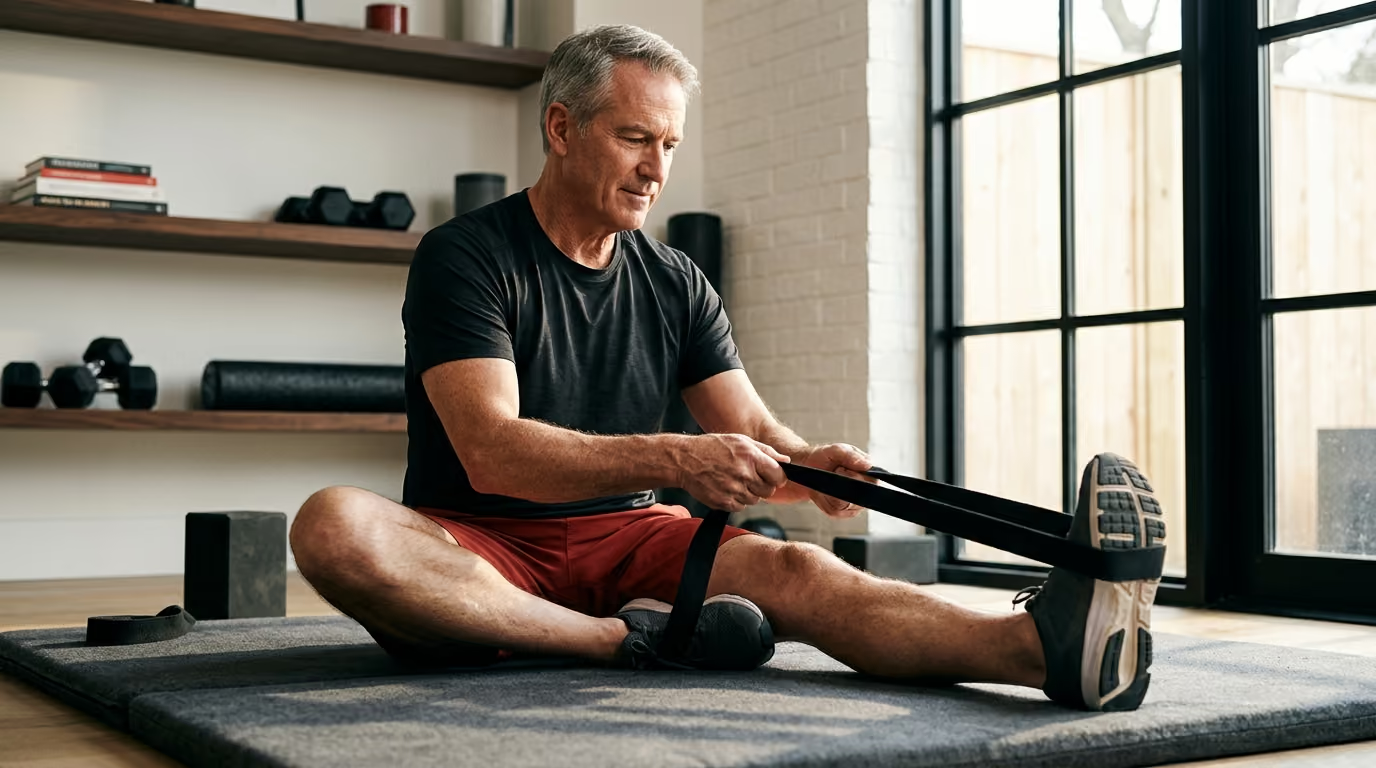
Passive range of motion is the total distance a joint can travel when an outside force moves it. This outside force can be gravity, a stretching strap, a partner, or your own body weight resting against the floor.
Active range of motion is the distance you can move a joint using only your own muscular effort.
Functional mobility describes how well you use that movement during actual physical tasks. These tasks include walking up steep stairs, lifting a heavy box, stepping over an obstacle, or pressing overhead.
- Passive Range: Total motion available with outside assistance.
- Active Range: Motion produced solely by your own muscle contraction.
- Functional Mobility: Controlled movement applied to real-world tasks.
A comprehensive review of 22 flexibility studies involving 1,127 older adults examined what happens when people focus purely on stretching. The researchers found that stretching programs reliably increased passive joint range in the specific areas trained.
The evidence that this stretching improved daily functional performance was conflicting and weak. The review assigned flexibility training a Level 4, Grade C evidence rating for improving functional independence.
Stretching helped joints reach farther under relaxed conditions. It did not consistently help participants walk faster, climb stairs with more power, or carry loads with greater ease.
In one study examined within the review, participants who only performed flexibility exercises gained joint range. They lost a small amount of strength and balance during the same period.
Participants who combined strength training with flexibility work gained joint range while also improving their balance, gait mechanics, and total physical performance. Having passive reach without muscular force can leave a joint unsupported.
A meta-analysis examining 52 resistance training studies evaluated how lifting weights affects flexibility. The analysis showed that resistance training produced significant improvements in joint range of motion, with an effect size of approximately 0.73.
When researchers compared strength training directly against stretching, they found no statistically significant difference in range of motion gains between the two methods.
Resistance training through a full, comfortable movement path can improve joint range just as effectively as static stretching. It also provides the added benefit of increasing force production and bone density.
Research comparing strength and stretching protocols in active adults revealed another important pattern. High-intensity passive stretching often failed to improve active range of motion.
Strength training and low-intensity mobility work produced significant gains in active, usable range. Strengthening the muscles that pull a joint into position gives the nervous system the capacity to control that space.
Controlled resistance training also produces meaningful changes in functional mobility tests. Systematic reviews show that resistance programs improve walking speed, chair-rise times, step-test performance, and balance confidence in mature adults.
A meta-analysis on older adults with mobility limitations showed that progressive resistance training significantly increased six-minute walking distance and lower-body strength. Gaining control over your movement requires muscles that can produce and absorb force.
Why joint range and movement quality change after 45
Movement changes after 45 are not a sudden breakdown. They are the result of gradual, predictable shifts in tissue biology, nervous system activity, and daily physical habits.
The internal structure of tendons, ligaments, and joint capsules alters over time. Connective tissues lose a portion of their water content and proteoglycan concentration. Collagen fibers develop more cross-links, which makes the tissue stiffer and less compliant under passive tension.
This structural stiffness is not an inherent flaw. It can help transmit muscular force efficiently. When paired with long periods of sitting, it can make movement feel restricted.
Muscle tissue experiences structural shifts as well. Sarcopenia involves a gradual loss of muscle fiber number and size. Type II fast-twitch muscle fibers, which generate rapid force to stabilize joints during sudden slips or turns, show the greatest decline.
When stabilizing muscles lose strength, the body often responds by increasing baseline muscle tone. The brain uses resting muscular tension as a mechanical brake to protect joints that lack dynamic support.
- Biological Shifts
- Connective Tissue: Lower water content, higher collagen cross-linking.
- Muscle Fibers: Reduction in type II fast-twitch fiber size and count.
- Neuromuscular System: Slower motor unit recruitment and protective tension.
- Movement Diet: Repetitive, narrow ranges from daily sitting and walking.
The nervous system plays a primary role in governing movement limits. Your brain monitors joint positions through sensory receptors in muscles, tendons, and joint capsules.
If your nervous system detects that you lack the strength to stabilize a joint at a specific angle, it restricts your access to that position. The tightness you feel in your hips or shoulders is often a neurological defense mechanism rather than a short muscle.
Daily movement patterns compound these biological shifts. Decades of sitting at desks, driving, and walking on flat, paved surfaces narrow the movement vocabulary of your joints.
Joints follow the principle of use. Cartilage receives its nutrition through the compression and decompression of joint fluid during varied movement.
When joints move through only a small portion of their available arc day after day, the unused edges lose lubrication and active muscular control. You can learn more about preserving joint health through our mobility and joint resources.
What passive range versus usable range means in real life
A wide gap between passive range and active control can cause problems in daily life. Understanding this gap helps clarify why common stretching routines often fail to deliver real-world movement freedom.
Passive range is passive capacity. It shows how far an external load can push your bones before ligaments or joint capsules stop the movement.
Active range is usable capability. It shows the arc of motion your nervous system can coordinate, stabilize, and power under its own control.
- Passive Range: Sitting on the floor pulling your knee to your chest with your arms.
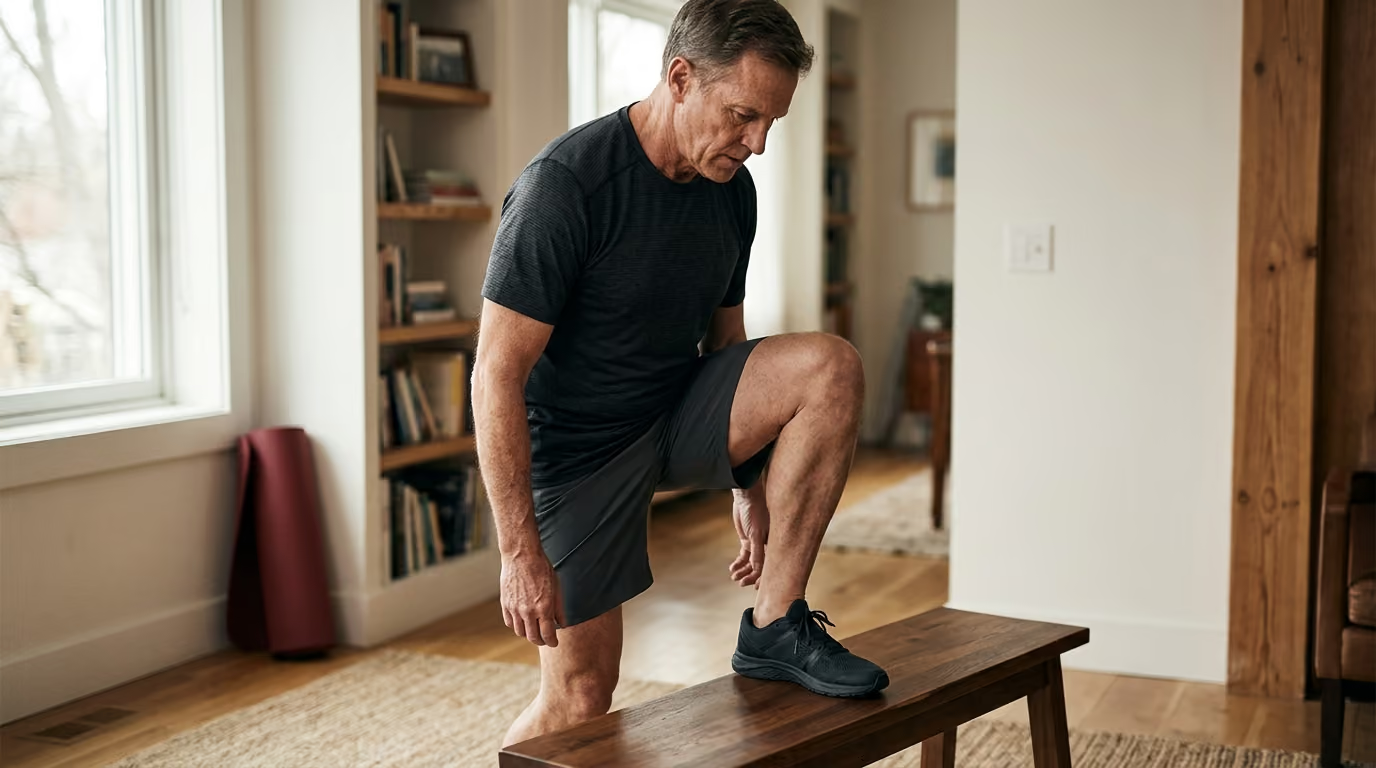
- Active Range: Standing on one leg and lifting your knee as high as possible using hip flexors.
- Functional Demand: Stepping high over a fallen log on a trail while wearing a backpack.
Consider a man who can sit on the floor and pull his knee tightly against his chest using his hands. This demonstrates ample passive hip flexion.
When that same man stands on one leg and tries to lift his knee using only his hip muscles, his knee might only reach waist height. If he stumbles over an obstacle on a hike, his body can only safely navigate the range his muscles can actively control.
If he is forced beyond his active range under the load of his body weight, his muscles cannot produce the force needed to stabilize his pelvis. This imbalance increases the risk of strains or joint irritation.
The same dynamic applies to upper-body movement. A man might let gravity pull his arms behind his head while lying on a foam roller.
If he tries to press a heavy tool overhead or reach behind the seat of his truck, his shoulders may ache or feel weak. The body does not trust positions where it cannot generate force.
When you build muscular strength at the outer edges of your comfortable range, your brain recognizes that the position is safe. The nervous system then permits deeper, smoother movement during sport, work, and recreation.
Integrating usable range into your training supports better strength and physical performance across every decade.
How strength training builds range of motion
Strength training improves flexibility through mechanical, structural, and neurological pathways. Lifting weights through a full movement path is one of the most reliable ways to maintain joint freedom.
When a muscle contracts while lengthening under load, it experiences eccentric tension. Eccentric loading sends a powerful mechanical signal to the muscle fibers.
Research indicates that consistent eccentric training can stimulate the addition of sarcomeres, which are the basic contractile units of muscle, in series along the muscle fibers. Adding sarcomeres in series increases the functional length of the muscle fascicles, allowing the muscle to produce force at longer lengths without excessive passive tension.
- Mechanisms of Strength-Driven Mobility
- 1. Sarcomerogenesis: Adding muscle units in series through eccentric load.
- 2. Reciprocal Inhibition: Relaxing opposing muscles during active contractions.
- 3. Neurological Reassurance: Proving stability to the nervous system under load.
- 4. Tissue Remodeling: Strengthening tendons and joint capsules through full arcs.
Strength exercises also take advantage of reciprocal inhibition. When you contract the muscles on one side of a joint, the nervous system signals the muscles on the opposite side to relax.
Performing a controlled leg extension or deep squat actively fires the quadriceps, which encourages the hamstrings to release excess resting tension. This coordinated muscle action trains the nervous system to coordinate joint movement rather than fighting against tight opposing muscles.
Moving under control through a full path improves connective tissue health. Tendons and ligaments adapt to the mechanical loads placed upon them.
Loading a joint throughout its comfortable limits stimulates collagen remodeling, which reinforces the connective structures at angles where injuries commonly occur. This creates a joint that is resilient to awkward movements, sudden loads, and unexpected trips.
Strength training also builds mental and neurological confidence. When you lower a weight under control and successfully reverse the movement, your brain registers stability.
Over time, the nervous system reduces protective muscle guarding. This unlocks natural movement pathways that were previously restricted by fear or weakness. You can read more about balancing strength with longevity in our healthy aging section.
A practical framework for building usable range
Building usable mobility requires a structured process that moves from basic joint control to loaded, complex tasks. A five-step framework provides a clear path for turning tight joints into capable movement systems.
- Step 1: Active Entry (Move yourself into position)
- Step 2: Isometric Ownership (Hold and stabilize the position)
- Step 3: Force Production (Move through resistance)
- Step 4: Deceleration (Control lowering and direction changes)
- Step 5: Task Integration (Apply movement to real-world tasks)
1. Enter the range actively
Begin by moving your joint into position using only the power of the target muscle groups. Avoid pulling on your limbs with straps, bands, or your hands.
If you are working on shoulder flexion, stand tall and raise your arm forward and overhead as high as you can without arching your lower back. If you are working on hip mobility, lift your knee toward your chest using your hip flexors and abdominal muscles.
This step shows you where your true active limits lie. It immediately exposes any compensations, such as tilting the pelvis, shrugging the shoulders, or twisting the spine.
Working within your unassisted range teaches the brain to recruit the correct muscles while building joint awareness.
2. Isometrically own the position
Once you reach the edge of your active range, pause and hold that position under tension. Static holds near end range teach the nervous system that the joint is stable and secure.
Hold the position for five to ten seconds while breathing steadily through your nose. Keep the surrounding muscles engaged without clenching your jaw or holding your breath.
- Example Isometric Drills
- Hip Flexion Hold: Stand on one leg, lift the opposite knee to maximum height, and hold for 8 seconds.
- Overhead Reach Hold: Stand tall, reach both arms overhead, push upward, and hold without arching your spine.
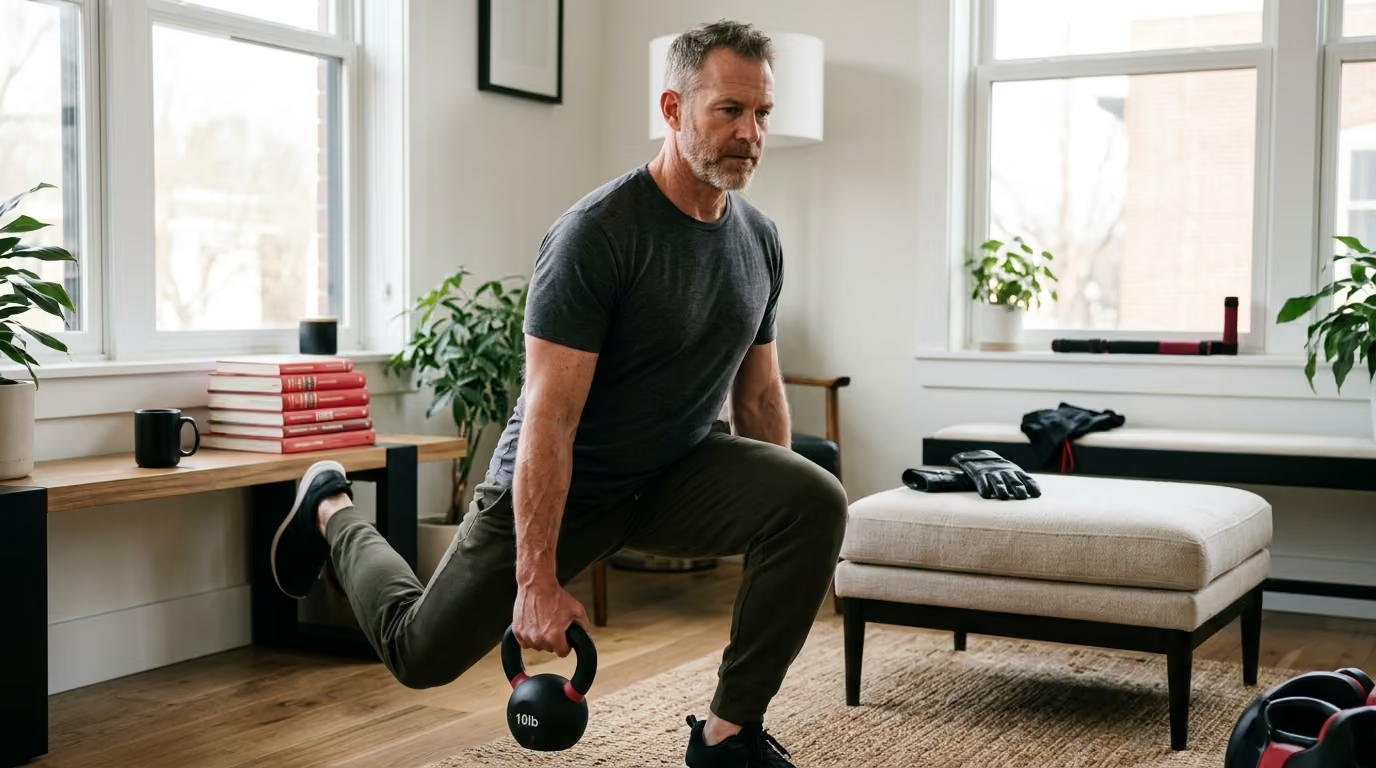
- Split Stance Hold: Lower into a shallow split squat, hold the bottom position, and maintain steady tension.
Isometric holds build high levels of muscular tension without joint grinding or rapid momentum. They serve as a safe bridge between relaxed stretching and heavy resistance training.
3. Produce force through the range
After establishing active control and isometric stability, introduce resistance through the movement path. The resistance can come from body weight, dumbbells, barbells, cables, or weight machines.
Select exercises that move your joints through a comfortable excursion. Lower the weight smoothly, pause briefly at the bottom, and lift with controlled intent.
- Movement Patterns for Usable Range
- Deep Sit-to-Stand or Squat: Trains hip, knee, and ankle flexion under load.
- Split Squat: Stretches the rear hip flexor while strengthening the front leg.
- Romanian Deadlift: Lengthens the hamstrings under control while loading the hips.
- Cable or Dumbbell Row: Retracts the shoulder blades through a full horizontal pull.
- Overhead Press or Landmine Press: Builds active shoulder elevation and stability.
Focus on working through your full, pain-free path rather than using excessive weight on a shortened range. Quality of movement always comes before the number of plates on the bar. Explore our strength and muscle articles for more on structured lifting.
4. Decelerate and reverse direction
Real life requires you to slow down moving loads, absorb impact, and change directions smoothly. A joint that can only move slowly in one direction remains vulnerable to sudden movements.
Incorporate controlled tempos into your training. Take three to four seconds to lower a weight during a squat, hinge, or press.
Practice pausing at the bottom of the movement before reversing direction with control. This builds eccentric strength, enhances tendon elasticity, and eliminates reliance on bouncing or momentum.
Controlled step-downs from a low box or curb provide a practical example for the lower body. Lower yourself slowly on one leg until your opposite heel lightly touches the floor, then push back up to standing. This develops the decelerating strength needed to walk down steep trails or stairs without knee discomfort.
5. Integrate the range into real-world tasks
The final step is connecting isolated joint strength to multi-joint, real-world physical activities. Daily life does not happen on fixed exercise machines.
Incorporate loaded carries, multi-directional lunges, floor-to-standing transitions, and balance tasks into your weekly routine. Practice picking up uneven objects from the floor, stepping over obstacles, and carrying weights in one hand.
- Functional Integration Tasks
- Farmer Carries: Walks with heavy weights in each hand to build core and hip stability.
- Suitcase Carries: Walks with a weight in one hand to train anti-lateral flexion.
- Get-Ups: Moving from lying on the floor to standing upright under control.
- Incline Walking: Hiking or walking uphill to demand active ankle and hip range.
These compound movements require your muscles, connective tissues, and nervous system to work as a unified unit. They ensure that the joint range you build in the gym shows up when you need it outside.
Common mistakes when training mobility after 45
Men over 45 often run into roadblocks when trying to improve their movement. Avoiding these common mistakes will keep your joints healthy and your progress steady.
- Common Mistakes
- 1. Relying solely on long, passive stretching.
- 2. Forcing joints past sharp pain or bone-on-bone stops.
- 3. Treating mobility as a separate, disconnected activity.
- 4. Neglecting balance and deceleration training.
Relying solely on passive stretching
Holding long, relaxed stretches on the floor can temporarily alter your stretch tolerance. It does little to build the muscular strength needed to support that new range.
If you spend twenty minutes stretching your hamstrings every morning but never perform loaded hinges or split squats, your hips will likely feel tight again a few hours later. The brain tightens muscles when it senses a lack of strength.
Pair every stretching movement with an active contraction or a loaded exercise. This locks in the range and gives your nervous system a reason to maintain it.
Forcing joints past sharp discomfort
There is a distinct difference between the muscular effort of a deep movement and sharp joint discomfort. Pushing through pinching sensations in your hips or shoulders will not loosen the joint.
Joints have unique anatomical shapes. The depth of your hip sockets or the shape of your acromion bone dictates how your joints move best.
Forcing a joint past its structural limits leads to inflammation, bursitis, and protective muscle spasms. Work within a comfortable, pain-free range, and let your active control expand naturally over time.
Separating mobility from strength training
Many men view mobility as a boring warmup routine consisting of light arm swings and band pull-aparts. They do these movements quickly before moving on to the heavy lifting.
Mobility is not a separate discipline. Every well-executed resistance exercise is a mobility drill under load.
A full-range Romanian deadlift is a dynamic hamstring stretch that builds strength. A deep split squat is an active hip flexor stretch.
Treat your strength exercises as your primary mobility work. Control the eccentric phase, pause in the stretched position, and move through the largest comfortable arc on every repetition.
Neglecting balance and single-leg work
Bilateral exercises like barbell squats and leg presses are valuable for building general strength. They allow your stronger side to compensate for your weaker side, hiding asymmetries and stability deficits.
Real-world movement happens on one leg at a time. Walking, running, climbing stairs, and stepping over objects require single-leg stability and pelvic control.
Include single-leg exercises such as split squats, reverse lunges, and single-leg deadlifts in your weekly schedule. Single-leg training builds balance, recruits deep hip stabilizers, and ensures both sides of your body share the work equally. For additional recovery strategies, review our mobility and recovery resources.
Where the scientific evidence remains limited
Maintaining an honest, evidence-led approach requires recognizing the gaps in current scientific research. While the broad principles of strength and movement are well-established, several specific questions require more study.
Much of the mobility literature focuses on adults over 65 or community-dwelling older adults with existing functional limitations. Other studies examine young, athletic populations with high baseline movement capacity.
There are fewer clinical trials isolating men aged 45 to 54. We must extrapolate findings from broader adult studies while observing how mature bodies respond in practice.
Flexibility studies also show significant variation in their testing methods. Researchers use different stretch durations, intensities, frequencies, and measurement tools.
Some studies measure passive joint range using a goniometer, while others assess active movement or functional tests like chair stands. This variation makes it difficult to pinpoint a single, optimal stretching prescription.
- Evidence Gaps
- Limited data isolating healthy men aged 45-54.
- Mixed definitions of active versus passive range across trials.
- Heterogeneous stretching and resistance protocols in the literature.
- Lack of a single validated formula for converting passive gains to functional tasks.
The exact relationship between flexibility and injury prevention remains complex. Research shows that extreme stiffness can increase the risk of muscle strains.
Excessive passive joint laxity without sufficient muscular strength also increases the risk of joint instability and injury. Having balanced strength across an adequate movement path appears far more protective than pursuing extreme flexibility alone.
Scientific evidence does not support a rigid, one-size-fits-all mobility routine. The human body adapts to consistent, progressive movement demands.
Focusing on progressive resistance, active joint control, and varied movement provides a reliable foundation supported by research.
Long term principles for moving well
Staying strong, mobile, and capable throughout midlife and beyond does not require complicated routines or extreme flexibility feats. It requires training your muscles to control your joints through every degree of movement you use.
Build active range, then train the strength, balance, and control required to use it in daily life. Judge your progress by real capabilities: a stable sit-to-stand, comfortable stair climbing, a strong hinge, and the confidence to handle unexpected physical tasks.
When you notice a joint feeling tight or restricted, do not rely solely on passive stretching. Ask yourself whether you can actively enter that position, hold it under control, and produce force to move out of it.
Address the underlying weakness, move through full movement paths during your strength sessions, and practice balance regularly. This builds a body that remains capable, durable, and resilient for years to come.
When to revisit this resource
Revisit these guidelines whenever you notice recurring joint stiffness, when recovering from periods of physical inactivity, or when planning a new strength training block. Reviewing these principles will help keep your training centered on usable capability rather than empty flexibility.
Focus on building active, usable strength, and your body will serve you well in every activity you choose to pursue.
Sources
- Passive and active exercises are similarly effective in elderly ...
- Role of Resistance Training in Mitigating Risk for Mobility Disability in Community-Dwelling Older Adults: A Systematic Review and Meta-analysis - PubMed
- Resistance Training for Older Adults: Position Statement ...
- A comparison of strength and stretch interventions on ...
- Exercise interventions for older adults: A systematic review of ...
- Resistance training effects on gait parameters in older adults ...
- Exercise interventions for older adults: A systematic review ...
- Strength Training versus Stretching for Improving Range of ...
Stay sharp
Get the word
Join our newsletter for the best writing advice and stories from the field.