If you have ever searched for why your neck aches after two hours in the saddle or why your hips feel locked after a weekend ride, you are not alone. Many riders notice that their cycling endurance remains high while their joints feel stiff, their lower backs complain on climbs, and their off-bike strength begins to slip.
Cycling builds great cardiovascular fitness, but it keeps your body locked in a fixed position. This guide provides a clear, evidence-based plan to rebuild joint mobility, balance muscle strength, and protect your physical independence after 45.
Scientific Findings on Cycling Posture and Physical Capacity
Cycling is an effective way to train your heart, lungs, and leg endurance. The movement pattern is highly repetitive and takes place almost entirely in one direction. Your legs travel in circles within a fixed line while your trunk, spine, shoulders, and neck stay relatively still.
Research shows that high aerobic fitness from cycling does not automatically translate into total body strength or complete joint function. Systematic reviews of cycling injuries reveal that neck, lower back, knee, and wrist discomfort are common across all experience levels. These issues often happen when the physical demands of riding exceed the tissue tolerance of the rider.
- CYCLING VS WHOLE-BODY MOVEMENT PROFILE
- Cycling Demands Whole-Body Needs
- Sagittal plane only - Multi-planar rotation & lateral
- Fixed spinal flexion - Spinal extension & rotation
- High muscular endurance - Peak force & power
- Low skeletal impact - Bone-loading resistance
Studies comparing resistance training with static stretching show that lifting weights through a full range of motion improves joint mobility just as well as stretching alone. Active mobility means controlling your joints with your own muscles, while passive flexibility is simply how far an outside force can push you. A cyclist might have enough passive flexibility to touch their toes, but lack the hip and spinal strength to hold an aggressive riding posture without fatigue.
Public health research from the World Health Organization emphasizes that cardiovascular exercise alone is insufficient for long-term health. Guidelines recommend that adults perform muscle-strengthening activities covering all major muscle groups at least two days per week. For older adults, guidelines recommend multicomponent physical activity that combines balance, functional movement, and strength work at moderate or high intensity on three or more days each week.
Biological Mechanisms and Structural Shifts After 45
Your body experiences normal structural changes as you move through your late forties, fifties, and sixties. These changes are a natural part of biology rather than a medical condition. Understanding them helps you adjust your training approach with precision.
Muscle tissue naturally loses mass and fast-twitch force production over time if it is not challenged with heavy loads. Cycling works slower-twitch endurance fibers, but it does not demand the high-force output needed to preserve fast-twitch motor units. When these higher-threshold fibers decline, your ability to catch yourself during a slip or lift heavy household objects diminishes.
Tendons and ligaments also undergo shifts in collagen turnover and water content. Connective tissues become stiffer and take longer to remodel after heavy training sessions. A weekend ride that features hours of repetitive pedaling creates steady metabolic fatigue in your quadriceps and glutes. Without targeted loading, the tendons around the patella and hips may become sensitive to sudden increases in mileage or hill climbing.
- STRUCTURAL CHANGES IN MIDLIFE CYCLISTS
- Declining Fast-Twitch Fibers
- Stiffer Tendon Collagen
- Low Bone Loading Stimulus
- Prolonged Flexed Posture
Bone mineral density requires impact or high mechanical tension to stay dense and strong. Because cycling supports your body weight on the saddle, handlebars, and pedals, it provides very little bone-loading stimulus. Riders who cycle exclusively for decades often show lower bone density in the spine and hips than athletes who run or lift weights. Adding off-bike resistance training creates the direct muscular pull that bones need to maintain their mineral structure.
Finally, spending long periods in a bent-forward riding posture places a sustained isometric demand on your posterior neck and spinal extensor muscles. Research shows that cyclists who experience lower back pain often have reduced endurance in their spinal stabilizing muscles. When these postural muscles tire, the load shifts onto passive ligaments and spinal discs, leading to the familiar dull ache at the end of a long ride.
Functional Implications for Daily Life and Riding
A high functional capacity means you can handle everyday tasks, recreational sports, and long rides with equal confidence. When training is limited to cycling, specific movement restrictions can develop.
- THE CYCLING CONFINEMENT CYCLE
- Hours in Flexed Saddle Hip Extensor Weakness
- Neck & Back Strain Reduced Thoracic & Hip Control
Riding locks your hips into a constant zone of flexion. The hip joint rarely moves into full extension behind your pelvis during a pedal stroke. Over time, your nervous system becomes comfortable in this shortened hip range. When you stand up, walk, or run, your pelvis may tilt forward, placing extra mechanical strain on your lower back.
The forward-leaning position on road, gravel, or mountain bikes also demands sustained thoracic spine flexion. To look down the road, you must extend your neck backward while your upper back remains curved forward. This combination creates sustained tension across the upper trapezius, levator scapulae, and deep neck stabilizers. Off the bike, this posture can show up as difficulty looking over your shoulder while driving or upper back stiffness when sitting at a desk.
Daily independence requires multi-directional movement. Life demands that you step sideways, rotate your torso, carry heavy loads on one side, and get up off the floor quickly. Cycling trains your body to move in a single plane. Incorporating functional movement and joint health work helps balance these repetitive patterns and maintains your overall physical capability.
Consider these common movement patterns that illustrate how saddle time affects daily performance:
Illustrative Pattern: Neck Discomfort on Sustained Rides
A rider feels comfortable for the first forty-five minutes of a ride, but develops a burning ache in the neck and upper back after two hours. The rider holds a low handlebar position and stays on the brake hoods without changing hand placement. Off the bike, the rider has limited upper back rotation and weak shoulder blade retractors. Adding upper back extension exercises, building rowing strength, and raising the handlebars slightly helps distribute the load across the entire spine.
Illustrative Pattern: Lower Back Tension During Hill Climbs
A cyclist experiences lower back fatigue whenever the road pitches upward on long climbs. During steep ascents, the rider remains seated, drops their cadence into a heavy gear, and pulls hard on the handlebars. This creates high rotational torque through a flexed lumbar spine with minimal contribution from the glutes. Building hip hinge strength off the bike and shifting to a lighter gear allows the hips to generate power while sparing the lower back.
Illustrative Pattern: Hip
Tightness After Long Road Rides
A rider steps off the bike after a four-hour ride feeling stiff across the front of the hips and tight in the hamstrings. The natural instinct might be to aggressively stretch the hip flexors. The real issue is often muscular fatigue from hours of stabilizing the pelvis in deep flexion. Short movement breaks, walking, and multi-directional bodyweight lunges restore comfort faster than forceful passive stretching.
Targeted Strength Strategies for Cyclists
To offset the repetitive demands of riding, you need a balanced resistance plan. Incorporating dedicated strength training twice per week builds the strength, joint stability, and bone density that cycling misses. Focus on compound movements across six fundamental patterns.
- CORE OFF-BIKE STRENGTH ARCHITECTURE
- 1. Knee-Dominant: Squats, split squats, step-ups
- 2. Hip-Dominant: Romanian deadlifts, kettlebell hinges
- 3. Upper Pulling: Dumbbell rows, cable rows, band face pulls
- 4. Upper Pushing: Push-ups, landmine presses, overhead presses
- 5. Loaded Carries: Farmer walks, single-arm suitcase carries
- 6. Trunk Control: Side planks, bird dogs, Pallof presses
Knee-Dominant Exercises
Cycling develops quadriceps endurance, but it does not build maximum quadriceps strength or eccentric deceleration control. Knee-dominant exercises strengthen the muscles around the knee joint and build power for climbing.
- Goblet Squats: Stand with feet shoulder-width apart, holding a kettlebell or dumbbell at your chest. Sit back and down between your hips until your thighs are parallel to the floor, then drive through your whole foot to stand. Perform 3 sets of 8 to 10 repetitions.
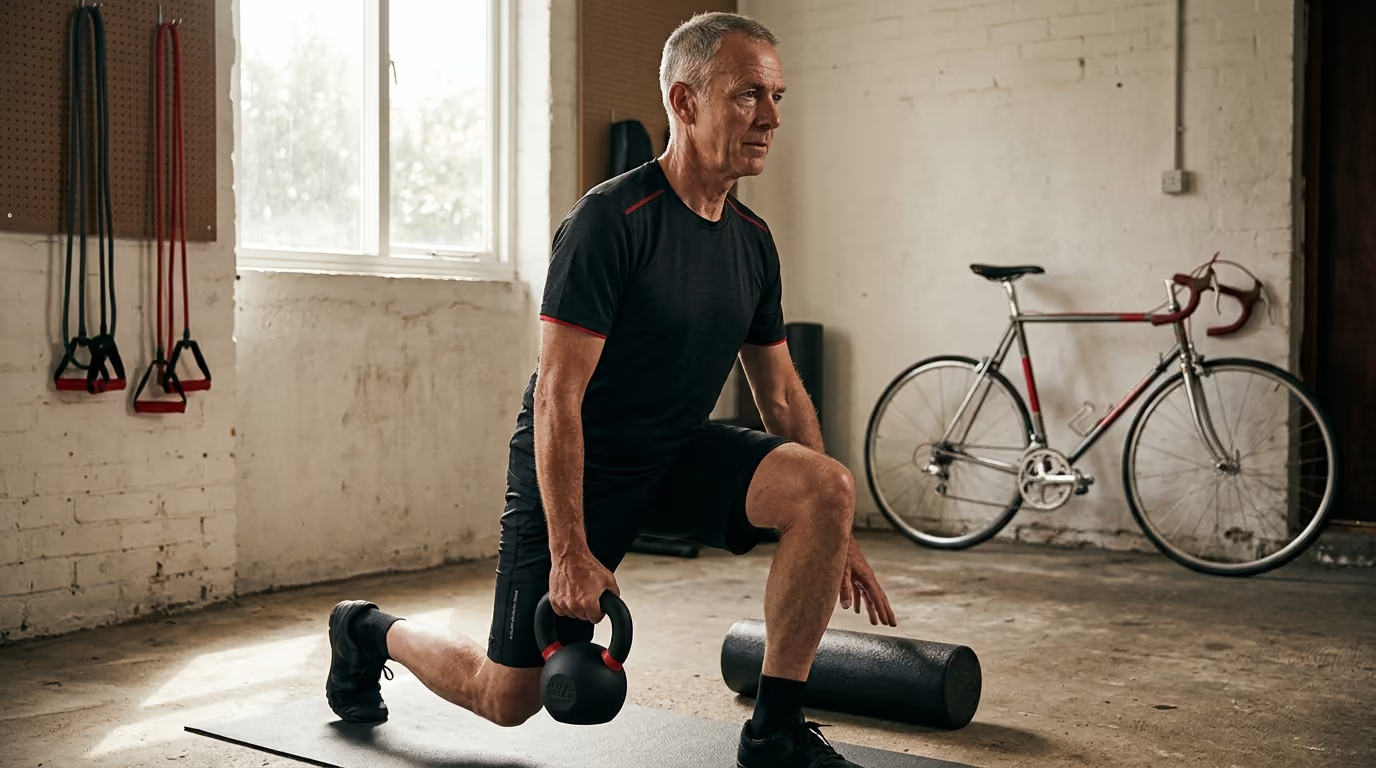
- Split Squats: Take a long stride forward and lower your back knee toward the ground while keeping your front heel firmly planted. Push through your front leg to return to the top position. Perform 3 sets of 8 repetitions per leg.
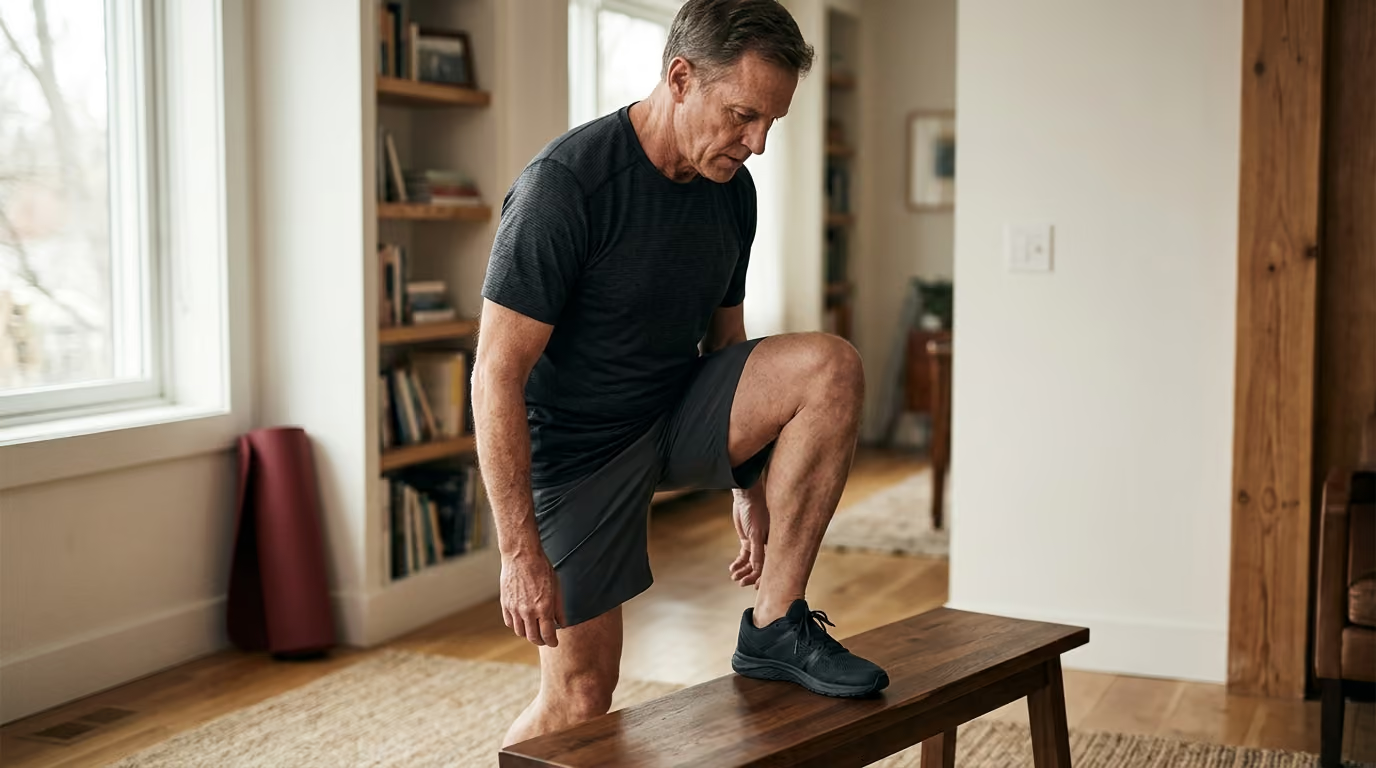
- Step-Ups: Step onto a sturdy box or bench that is roughly knee height. Drive through the heel of your lead foot without bouncing off the back leg, bringing your body into full standing balance. Complete 3 sets of 8 repetitions per side.
Hip-Dominant Exercises
Your glutes and hamstrings are primary power producers on the bike, yet cycling rarely takes the hip into deep extension under high mechanical tension. Hip-dominant training strengthens the posterior chain and reinforces proper pelvic control.
- Romanian Deadlifts: Stand tall holding a barbell or two dumbbells in front of your thighs. Push your hips back with a slight bend in your knees, keeping your spine flat as the weights slide down your shins. Squeeze your glutes to pull your hips back forward. Perform 3 sets of 8 to 10 repetitions.
- Kettlebell Hip Hinges: Stand with your feet slightly wider than hip-width. Hinge at your hips while keeping your back flat, grasp the kettlebell handle, and drive your hips forward to snap into a tall standing posture. Perform 3 sets of 10 to 12 repetitions.
- Single-Leg Romanian Deadlifts: Balance on one foot with a soft knee. Hinge forward at your hip, extending your opposite leg behind you like a counterweight while keeping your pelvis level. Return to standing using the glute and hamstring of your working leg. Complete 3 sets of 6 to 8 repetitions per side.
Upper-Body Pulling Exercises
Hours of leaning forward on handlebars leave the upper back in a stretched, passive position. Pulling exercises strengthen the rhomboids, middle trapezius, and posterior deltoids, helping you support your upper body on long rides.
- Single-Arm Dumbbell Rows: Place one hand and one knee on a flat bench. Hold a dumbbell with your free arm, let it hang fully, and pull the weight toward your hip while keeping your elbow close to your ribcage. Perform 3 sets of 8 to 10 repetitions per arm.
- Seated Cable or Band Rows: Sit tall with legs slightly bent, holding a resistance band or cable handle. Pull your hands toward your lower ribcage, squeezing your shoulder blades together without shrugging your shoulders toward your ears. Perform 3 sets of 10 to 12 repetitions.
- Band Face Pulls: Anchor a resistance band at eye level. Grasp the ends with thumbs pointing backward, and pull the center of the band toward your forehead while separating your hands and driving your elbows back. Perform 3 sets of 12 to 15 repetitions.
Upper-Body Pushing Exercises
Pushing movements build strength through your chest, shoulders, and triceps, improving your ability to support yourself over rough terrain and push off the ground.
- Incline Push-Ups: Place your hands on a sturdy bench or countertop. Lower your chest toward the surface while keeping your body in a straight line from heels to head, then press back to full arm extension. Perform 3 sets of 8 to 12 repetitions.
- Floor Presses: Lie on your back on the floor with your knees bent and feet flat. Hold dumbbells above your chest and lower your upper arms until your elbows touch the floor lightly, then press back up. Complete 3 sets of 8 to 10 repetitions.
- Landmine Presses: Anchor a barbell in a corner or pivot sleeve. Hold the end of the bar at your shoulder, brace your torso, and press upward and forward in an arc until your arm is fully straight. Perform 3 sets of 8 repetitions per arm.
Loaded Carries and Trunk Control
A stable trunk allows your legs to produce power efficiently on the pedals without excessive twisting in your spine. Building trunk endurance keeps your spine stable under load.
- Farmer Carries: Hold a heavy dumbbell or kettlebell in each hand by your sides. Walk with a tall, upright posture and smooth steps for 30 to 40 meters. Perform 3 to 4 rounds.
- Single-Arm Suitcase Carries: Hold a single heavy weight in one hand. Walk in a straight line without letting the weight pull your torso to one side. Complete 3 walks of 30 meters per side.
- Pallof Presses: Stand sideways to a cable machine or resistance band anchored at chest height. Hold the handle against your sternum, step out to create tension, and press your hands straight out in front of you, resisting the pull to rotate. Hold for 2 seconds and return. Perform 3 sets of 10 repetitions per side.
- Side Planks: Lie on your side with your elbow directly under your shoulder. Raise your hips until your body forms a straight line from your ankles to your head, and hold for 20 to 30 seconds. Complete 3 sets per side.
- SAMPLE TWO-DAY WEEKLY TRAINING SPLIT
- Day 1 (e.g. Tuesday) Day 2 (e.g. Friday)
- Goblet Squats (3x8) - Romanian Deadlifts (3x8)
- Single-Arm Rows (3x10) - Incline Push-Ups (3x10)
- Split Squats (3x8/leg) - Step-Ups (3x8/leg)
- Band Face Pulls (3x12) - Landmine Presses (3x8/arm)
- Farmer Carries (3x40m) - Pallof Presses (3x10/side)
- Side Planks (3x25 sec) - Suitcase Carries (3x30m/side)
Prioritizing structured muscle performance and strength routines gives your joints the protection they need across decades of riding.
Practical Mobility and Movement Variability Routines
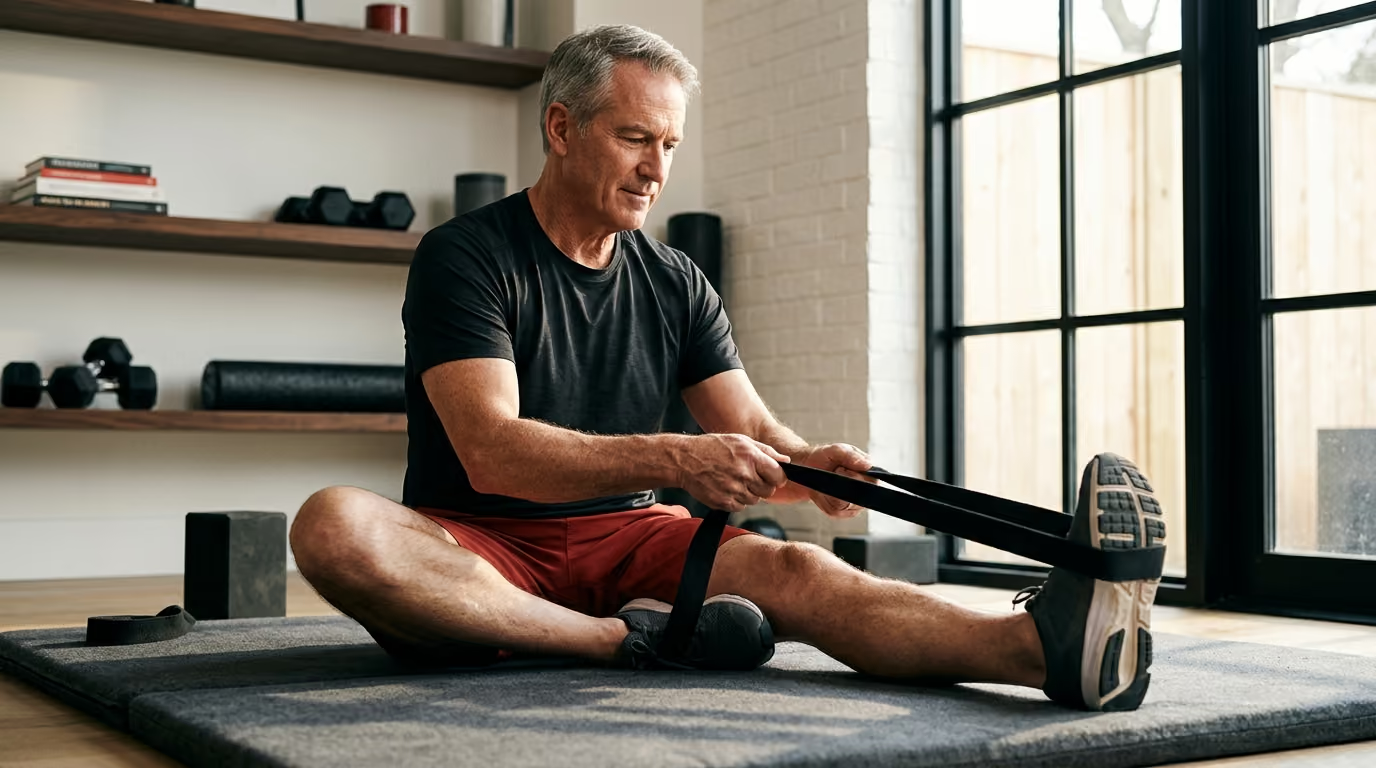
Mobility work for cyclists should focus on opening up the areas that remain closed on the bike, such as the hips, thoracic spine, and chest. It should also build strength at the end ranges of motion rather than relying solely on passive stretching.
- PRIMARY MOBILITY TARGET ZONES
- Hips
- Thoracic Spine
- Cervical Spine
- Ankles & Feet
Hip Extension and Rotation
- Half-Kneeling Hip Opener: Kneel on one knee with your other foot flat on the floor in front of you. Squeeze the glute on your kneeling side and tuck your pelvis slightly under your spine. Shift your weight forward two inches until you feel a gentle stretch across the front of your hip. Hold for 30 seconds while taking slow breaths, then repeat twice per side.
- 90-90 Hip Transitions: Sit on the floor with your front leg bent at 90 degrees in front of you and your back leg bent at 90 degrees to your side. Sit tall, lift your chest, and slowly rotate your knees across your body to switch sides without using your hands for support. Perform 8 to 10 controlled switches.
- Adductor Rock-Backs: Start on your hands and knees, extending one leg straight out to the side with your foot flat on the floor. Keep your spine flat and slowly push your hips back toward your rear heel until you feel a stretch along your inner thigh. Return to the starting position. Perform 10 controlled repetitions per leg.
Thoracic Spine Extension and Rotation
- Quadruped Thread the Needle: Start on your hands and knees. Slide your right arm along the floor beneath your left armpit, rotating your upper back until your right shoulder rests gently near the ground. Reverse the movement and reach your right hand toward the ceiling, looking up toward your hand. Perform 8 repetitions per side.
- Foam Roller Upper Back Extensions: Place a foam roller horizontally across your mid-back while lying on the floor with knees bent. Support your head with your hands, keep your ribs pulled down, and gently extend your upper back over the roller. Return to the start without arching your lower back. Repeat across several spots along your mid-spine for 10 total extensions.
- Open Book Rotations: Lie on your side with your knees bent at 90 degrees and your arms extended straight in front of your chest. Slowly lift your top arm up and rotate it across your body toward the floor behind you, following your hand with your eyes. Hold for 2 seconds and return. Complete 8 repetitions per side.
- DAILY DESK AND RIDE MOBILITY ROUTINE
- Morning/Desk Routine (5-7 Mins)
- 1. Half-Kneeling Hip Openers: 45 sec per side
- 2. Quadruped Thread the Needle: 8 reps per side
- 3. Standing Calf / Ankle Wall Drives: 10 reps per leg
- 4. Chin Retractions / Neck Glides: 10 gentle reps
- Post-Ride Cool-Down (5 Mins)
- 1. 90-90 Hip Transitions: 8 slow switches
- 2. Open Book Rotations: 8 reps per side
- 3. Adductor Rock-Backs: 10 reps per leg
Neck and Shoulder Girdle Relief
- Chin Retractions: Sit or stand tall with your shoulders relaxed. Draw your chin straight backward as if making a double chin, feeling a gentle stretch at the base of your skull. Hold for 2 seconds and release smoothly. Perform 10 to 12 repetitions to relieve neck extension strain.
- Wall Slides with Scapular Lift: Stand with your back, head, and elbows flat against a smooth wall. Slide your forearms up the wall while keeping your ribs down, and reach upward until your arms are fully extended. Lower down with control. Complete 10 repetitions.
Ankle Dorsiflexion and Foot Mechanics
- Knee-to-Wall Ankle Drives: Stand facing a wall with your toes four inches away from the baseboard. Keep your heel firmly on the floor and drive your knee directly over your middle toe until it touches the wall. Back your foot up slightly as your mobility improves. Complete 12 repetitions per leg.
- Single-Leg Balance Drills: Stand barefoot on one foot on a solid floor. Maintain a steady arch in your foot and keep your hips level for 30 to 45 seconds. Add small head turns to increase the balance challenge. Perform 2 sets per foot.
Using structured mobility and recovery strategies helps keep your joints resilient and ready for long rides.
Bike-Fit Principles and Workload Management
A well-adjusted bicycle matches the machine to your current physical capabilities. While an optimal bike fit improves comfort and efficiency, research shows that no single set of bike measurements can prevent all injuries. Workload progression and rider capacity matter just as much as saddle position.
- BIKE ADJUSTMENT PRIORITIES
- Saddle Height
- Handlebar Drop
- Handlebar Reach
- Cleat Placement
Dynamic Saddle Height
Saddle height directly influences the movement of your hips, knees, and ankles. A saddle that is set too high forces your pelvis to rock from side to side at the bottom of each pedal stroke, which can irritate your lower back and hamstring tendons. A saddle that is set too low places high compressive forces across the patellofemoral joint at the front of your knee.
Systematic reviews demonstrate that saddle height is best evaluated using dynamic knee angle measurements while you pedal under load. An ideal knee extension angle at the bottom of the pedal stroke generally falls between 30 and 40 degrees of flexion. If your knee locks straight or your hips rock, lower the saddle in small increments of two to three millimeters.
Handlebar Reach and Drop
The relationship between your saddle and handlebars sets your upper body posture. A large handlebar drop with a long forward reach creates an aerodynamic position, but it demands significant hip flexion, upper back extension, and neck hyperextension.
If you struggle with neck stiffness or lower back discomfort, reducing the reach with a shorter stem or raising the handlebars with headset spacers can reduce physical strain. Modifying your cockpit allows your spine to rest in a more neutral alignment while you build the strength needed for longer rides.
- TRAINING LOAD PROGRESSION RULES
- Keep weekly volume increases to 10% or less
- Separate heavy lifting days from high-intensity interval rides
- Shift cadence to 85-95 RPM on climbs to reduce joint torque
- Vary hand positions every 15 minutes during flat rides
Workload Progression
Rapid spikes in training volume, high-torque climbing, or sudden increases in high-intensity intervals cause far more overuse problems than minor equipment differences. Your connective tissues require time to adapt when you add new riding challenges.
Manage your weekly progression with these practical guidelines:
- Increase total weekly riding time by no more than ten percent from one week to the next.
- Maintain a pedaling cadence of 85 to 95 revolutions per minute on flat terrain and avoid grinding heavy gears at low cadences on steep hills.
- Alternate your hand placement on the handlebars every fifteen minutes between the hoods, drops, and tops to distribute upper body stress.
- Schedule your lower-body strength training sessions on days that do not conflict with your hardest interval or climbing rides.
Clinical Safety Boundaries and Warning Signs
Post-exercise soreness and muscular fatigue are normal parts of training. Certain symptoms indicate that you should pause training and seek professional medical guidance.
- CLINICAL WARNING SIGNS
- Safe to Modify and Monitor: Requires Medical Assessment
- Mild muscle soreness - Radiating limb pain
- General post-ride stiffness - Numbness or tingling
- Gradual fatigue on climbs - Joint swelling or locking
- Minor hand pressure - Persistent night pain
Consult a physical therapist or sports medicine physician if you experience any of the following warning signs:
- Numbness, tingling, or weakness that radiates down your leg, into your foot, down your arm, or into your fingers.
- Sharp, localized joint pain accompanied by rapid swelling, joint locking, or feelings of instability.
- Persistent lower back or neck pain that wakes you from sleep or worsens during non-riding daily activities.
- Bowel, bladder, or balance disturbances that develop alongside back or neck discomfort.
- Chest pressure, heart palpitations, or unexplained shortness of breath while riding.
Riders with diagnosed bone density conditions, past joint replacements, or cardiovascular concerns should work with their healthcare team to adjust their strength training program appropriately.
Common Misconceptions in Cycling Conditioning
Several persistent ideas can steer cyclists toward ineffective training routines.
Myth 1: Cycling Alone Builds All the Leg Strength You Need
Many riders believe that hours of pedaling against resistance replace the need for off-bike strength work. Cycling builds muscular endurance, but the force produced per pedal stroke is a small fraction of your maximum physical strength. Lifting heavy loads preserves fast-twitch muscle fibers, strengthens connective tissues, and stimulates bone growth in ways that pedaling cannot replicate.
- COMMON TRAINING MYTHS
- Myth: Cycling builds complete leg strength
- Fact: Pedaling develops endurance, not peak force or bone density
- Myth: Tight hips always need aggressive stretching
- Fact: Hip discomfort often stems from weakness and fatigue
- Myth: A professional bike fit guarantees zero injury risk
- Fact: Fit must be paired with sensible training load management
Myth 2: Tight Hips Always Require Aggressive Stretching
When cyclists feel stiffness across the front of their hips, they often respond with aggressive stretching. An anterior hip pinch or tight sensation is often a sign of muscular fatigue, poor pelvic control, or irritated connective tissue from sitting in deep flexion. Strengthening the glutes, training the core to control the pelvis, and using active hip openers produces better results than passive stretching.
Myth 3: A Professional Bike Fit Guarantees Total Injury Prevention
Riders sometimes assume that a single bike fit will eliminate all future discomfort. A proper fit helps align the bike with your body, but it cannot compensate for weak muscles, sudden mileage spikes, or inadequate recovery. Injury prevention requires managing your training load, building strength off the bike, and adjusting your riding posture over time.
Limits of Current Scientific Evidence
While research provides clear direction for training, some areas of sports science remain limited or open to interpretation.
Scientific evidence regarding exact joint angles during bike fitting is inconsistent. While dynamic knee measurements offer a solid baseline for saddle height, individual variations in anatomy, limb length ratios, and previous injuries make strict rules unreliable. What feels comfortable and efficient for one rider may cause strain for another.
Research directly comparing specific strength exercises for cyclists is also limited. Studies show that general resistance training improves cycling economy, power output, and physical function in older adults. There is no definitive proof that one exercise variation is superior to another. Goblet squats, barbell squats, and leg presses all build the required leg strength when performed consistently.
Most studies on cycling biomechanics examine younger competitive athletes over short timeframes. High-quality long-term research focused specifically on masters cyclists between 45 and 75 years old is still growing. Training recommendations should be applied with common sense and adjusted based on your personal response.
Long-Term Maintenance and Weekly Implementation
Maintaining physical capability after 45 does not require hours of daily stretching or exhausting workouts. It requires consistent strength training, varied movement patterns, and sensible management of your cycling miles.
To maintain your physical freedom and ride comfortably for decades, keep this core principle in mind:
> Cycling develops your aerobic engine, but off-bike strength, multi-directional mobility, and intelligent workload management protect your joints, preserve your bone density, and keep you riding strong.
- FOUR-WEEK PROGRESSION ROADMAP
- Weeks 1-2: Foundation & Form
- Complete 2 weekly strength sessions using bodyweight or light
- dumbbells. Focus on movement quality and joint control.
- Perform the 5-minute mobility routine daily.
- Weeks 3-4: Progressive Overload & Loading
- Add moderate resistance to squats, hinges, and rows.
- Integrate single-arm carries to challenge core stability.
- Review saddle height and handlebar reach if symptoms persist.
Building durable strength and joint mobility is a steady, progressive journey. Taking an active approach to staying strong and capable after 45 ensures that your time on the bike enhances your everyday life rather than limiting it.
Action Plan for the Upcoming Week
- Schedule two dedicated 35-minute full-body strength workouts on non-consecutive days, placing them away from your longest rides.
- Complete the five-minute thoracic and hip mobility routine every morning or right after your rides.
- Check your saddle height to confirm your hips are not rocking side to side at the bottom of your pedal stroke.
- Practice shifting your hand position every fifteen minutes during long road or gravel rides to reduce upper body fatigue.
- Add one brisk 20-minute walk on a non-riding day to load your bones and move your hips through a full, upright stride.
Sources
- Tackling the top musculoskeletal challenges of cyclists
- Effects of Bike-Fitting on Lower Back Pain in Cyclists - PMC
- Relationship Between Body Positioning, Muscle Activity, and Spinal Kinematics in Cyclists With and Without Low Back Pain - Gabriel M. Streisfeld, Caitlin Bartoszek, Emily Creran, Brianna Inge, Marc D. McShane, Therese Johnston, 2017
- Methods to determine saddle height in cycling and ...
- Neck and Back Pain in Bicycling
- Changes in saddle setback and intensity affect comfort ... - PMC
- Cyclist's Neck
Stay sharp
Get the word
Join our newsletter for the best writing advice and stories from the field.