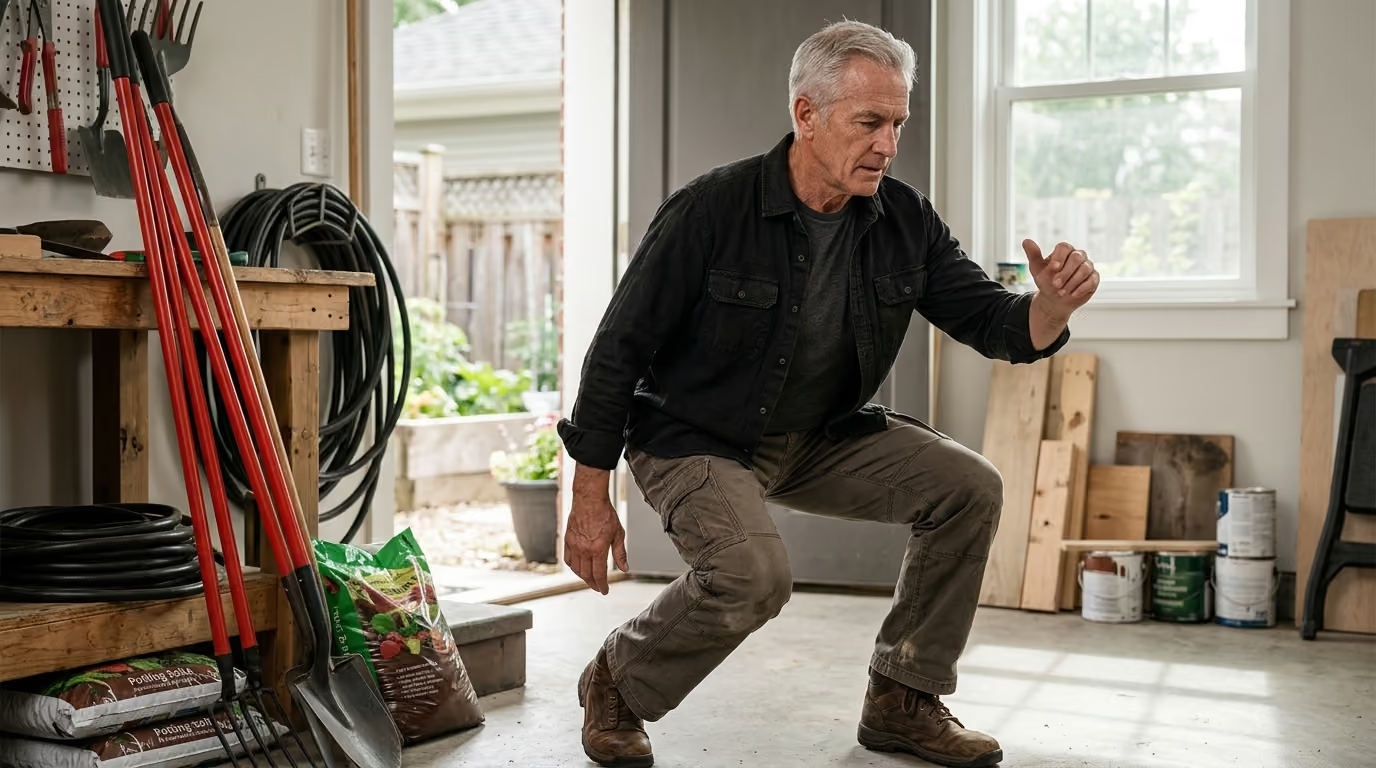
You step out on a crisp Saturday morning with a clear plan. You need to spread twenty bags of mulch, prune the overgrown apple trees, and patch the drywall in the garage. By three o'clock, the mulch is moved, but your lower back feels compressed, your knees ache from the concrete, and your shoulders throb. Getting up from the dinner table that evening requires both hands and a long breath.
Weekend projects place intense, uneven physical loads on the body. A single afternoon of yard work often combines heavy lifting, deep stooping, prolonged kneeling, and sustained overhead reaching.
Approaching home maintenance with a thoughtful preparation routine protects your joints and keeps you productive. When you prepare your body for the specific demands of manual tasks, you get more done with far less physical cost.
What the Research Shows About Yard Work and Home Maintenance Demands
The physical demands of gardening and home maintenance are broad and varied. Observational studies on older gardeners show that yard work is not a single, uniform activity. Instead, it is a complex mix of distinct physical postures repeated over several hours.
Researchers examining the movement patterns of older adults in their gardens found that specific positions dominated their time. Hand gripping was observed in 88 percent of participants, while forward bending occurred in 82 percent. Walking was recorded in 59 percent of individuals, lifting in 47 percent, stretching and reaching in 29 percent, and static standing in 6 percent.
The tasks observed in these studies included weeding, carrying tools, harvesting produce, watering, pruning, mowing, digging, mulching, and planting. These activities require moving between standing, crouching, floor-level kneeling, and carrying loads across uneven turf.
- Movement Demands in Home Projects
- Gripping tools and materials: 88%
- Forward bending and stooping: 82%
- Walking on variable terrain: 59%
- Lifting heavy or awkward loads: 47%
- Overhead or extended reaching: 29%
- Static standing on hard surfaces: 6%
Discomfort during these tasks is remarkably common. In the observational gardening literature, roughly 60 percent of participants reported experiencing pain during yard work. Lower back discomfort was the most frequent complaint, affecting 63 percent of those who reported symptoms. Bending activities showed the strongest association with back irritation.
Surveillance data from emergency departments and hospitals shows that home maintenance carries real physical risks for middle-aged and older adults. Australian injury reports reveal that DIY maintenance accounts for thousands of hospital admissions annually. Almost 40 percent of these admissions involve individuals between the ages of 50 and 69. Men make up over 80 percent of DIY hospitalizations, with gardening and yard maintenance accounting for more than one-fifth of all DIY injuries.
Falls represent a primary mechanism of injury during home projects. Research following adult cohorts demonstrates that individuals with pre-existing musculoskeletal discomfort, dizziness, or balance deficits experience higher rates of domestic accidents. When you combine uneven ground, heavy materials, ladders, and fatigue, the margin for error narrows.
Systematic reviews on warm-up protocols show mixed results for overall injury prevention in broad athletic settings. However, structured, dynamic movement preparation consistently improves joint range, muscle temperature, and neuromuscular coordination. Routine static stretching, by contrast, has not been shown to reduce injury rates during physical activity. Preparation should focus on rehearsing the actual movements you plan to perform.
Why Physical Demands Change After 45
Physical work feels different at 50 than it did at 25 for clear biological reasons. These shifts represent normal physiological changes over time rather than disease. Recognizing these mechanisms allows you to adjust your work habits intelligently.
- Age-Related Mechanical Shifts
- 1. Connective Tissue: Tendons and joint capsules lose water content and passive compliance.
- 2. Muscle Architecture: Gradual reduction in fast-twitch motor units lowers rapid force production.
- 3. Spinal Mechanics: Intervertebral discs lose hydration, transferring more load to facet joints.
- 4. Vascular and Recovery: Slower local blood flow increases recovery time between heavy efforts.
- 5. Sensory Systems: Small declines in vestibular and proprioceptive feedback reduce balance.
Tendon and Joint Capsule Compliance
Tendons and joint capsules gradually lose water content as you age. Collagen fibers cross-link more tightly, which increases passive tissue stiffness.
This stiffness provides joint stability, but it reduces the speed at which tissues adapt to sudden stretching. When you stoop forward rapidly to grab a heavy root, cold connective tissues take on high tension before they are warm. Warming the joints through progressive ranges increases synovial fluid circulation and improves tissue tolerance.
Spinal Disc Hydration and Load Tolerance
Intervertebral discs experience daily fluid shifts that become more pronounced with age. Discs lose a small amount of height and hydrostatic pressure over the decades.
This change transfers more compressive load to the posterior facet joints and surrounding spinal ligaments. Sustained, rounded-spine stooping places continuous passive tension on these structures. Without active muscular support from the hips and trunk, prolonged bending can trigger protective muscle spasms in the lower back.
Motor Unit Recruitment and Muscular Endurance
The nervous system undergoes subtle shifts in how it recruits motor units after midlife. There is a gradual reduction in the rapid recruitment of type II fast-twitch muscle fibers.
During home projects, this shift affects how quickly you stabilize your body when you slip on wet grass or lose your balance. Sustained, low-intensity tasks also draw heavily on postural endurance. When deep spinal stabilizers fatigue after two hours of weeding, larger prime mover muscles take over, leading to generalized stiffness.
Vestibular and Proprioceptive Feedback
Balance relies on the integration of three systems: vision, the vestibular system in the inner ear, and proprioceptive sensors in your joints. Proprioceptive signaling from the ankles, knees, and hips naturally slows with age.
Navigating soft soil, stepping over garden hoses, and climbing step ladders require steady balance. If you are fatigued or moving quickly without warming up, your body responds more slowly to sudden shifts in terrain.
Real-Life Movement Demands in the Yard and Workshop
Home projects require a wide variety of physical skills. Looking closely at these movements helps you understand why generic fitness routines do not always prepare you for yard work. You can find more comprehensive strategies on our mobility, joint health, and functional movement resource hub.
- Core Movement Categories for Home Projects
- The Ground-to-Stand Transition: Moving from kneeling or sitting up to standing.
- The Loaded Hinge: Lifting bags of soil, pavers, or lumber from below knee level.
- Asymmetrical Carrying: Transporting buckets, wheelbarrows, and tools across uneven surfaces.
- Sustained Overhead Reach: Pruning branches, painting ceilings, and hanging garage storage.
- Rotational Bracing: Shoveling wet soil, raking leaves, and swinging a sledgehammer.
The Ground-to-Stand Transition
Weeding, planting bulbs, and laying pavers require you to work directly at ground level. This forces you to transition between kneeling, half-kneeling, deep squatting, and standing dozens of times in a single afternoon.
Each transition requires significant single-leg strength, knee flexion, and hip extension. If your hips lack internal rotation or your knees are irritated by direct pressure, getting up becomes exhausting. Over an afternoon, poor transition mechanics wear out the lower body and overload the lower back.
The Loaded Hinge
Lifting forty-pound bags of soil or gravel from the bed of a truck requires a classic hip hinge. The weight sits low, the load is awkward and shifting, and the lift often starts away from your center of mass.
If you round your lower back to reach the bag instead of hinging at the hips, your lumbar spine takes the brunt of the load. Hinging requires good hamstring length, active glute engagement, and a braced trunk. Repeating this movement dozens of times under fatigue is where most lifting strains occur.
Asymmetrical Carrying and Grip
Carrying a five-gallon bucket of water or pushing a loaded wheelbarrow challenges your core in an asymmetrical pattern. The load constantly tries to pull your torso to one side or pitch you forward.
Your lateral core muscles, including the quadratus lumborum and obliques, must work continuously to keep your spine upright. Meanwhile, your hands and forearms sustain high gripping force to control the handles. Sustained gripping can quickly irritate the tendons around the elbows if your forearms are unprepared.
Sustained Overhead Reaching
Trimming tall hedges, pruning tree limbs, and installing overhead garage racks require prolonged work with your arms elevated. Working overhead demands thoracic extension and upward rotation of the shoulder blades.
If your mid-back is stiff from sitting during the week, you will compensate by arching your lower back to reach higher. This places compressive stress on the lumbar spine while fatiguing the small rotator cuff muscles in the shoulders.
Rotational Bracing and Digging
Digging a trench or shoveling gravel involves repeated rotation under load. You drive the shovel into the ground with one foot, lift the wet material, rotate your torso, and throw the load to the side.
This movement combines axial twisting with forward bending, which places high shear forces on the lumbar spine. Effective digging requires your hips to rotate so your lower back can remain relatively stable. When your hips are tight, your lumbar spine takes on the rotational strain instead.
Building a Movement Preparation Routine
A successful warm-up for home projects does not require special equipment or a trip to the gym. It takes roughly eight to ten minutes and focuses on joint lubrication, active range of motion, and movement rehearsal.
Perform these exercises right before you pick up your tools. Move through each exercise smoothly, without bouncing or forcing your joints into painful ranges.
- 10-Minute Pre-Project Routine
- Step 1: Joint Lubrication Walk (2 minutes)
- Step 2: Standing Hip Hinges with Reach (10 reps)
- Step 3: Torso Rotations with Hip Pivot (10 reps per side)
- Step 4: Half-Kneeling to Stand Transitions (5 reps per leg)
- Step 5: Wall Slide to Overhead Reach (8 reps)
- Step 6: Wrist and Grip Openers (10 reps per side)
- Step 7: Light Tool Rehearsal (1 to 2 minutes)
Step 1: Joint Lubrication Walk
Start with two minutes of brisk walking around your yard or driveway. Swing your arms naturally and take exaggerated, long strides to stretch your hip flexors.
This simple step raises your core body temperature, increases heart rate, and signals your nervous system to prepare for physical work. As you walk, roll your shoulders backward and forward in large, smooth circles.
Step 2: Standing Hip Hinges with Reach
Stand with your feet shoulder-width apart and your hands resting on the front of your thighs. Soften your knees, push your hips straight back toward the wall behind you, and let your hands slide down to your knees.
Keep your spine long and your chest proud. Feel the tension build in your hamstrings and glutes, pause for a second at the bottom, and drive your hips forward to return to standing. Perform ten smooth repetitions to wake up the posterior chain before lifting heavy loads.
Step 3: Torso Rotations with Hip Pivot
Stand with a wide, stable base and raise your elbows to chest height. Rotate your torso smoothly to the right, allowing your left heel to pivot off the ground so your entire lower body turns with you.
Rotate to the left, pivoting on your right foot. This teaches your hips to handle rotational momentum so your lumbar spine does not take all the twisting force during raking or shoveling. Complete ten smooth turns in each direction.
Step 4: Half-Kneeling to Stand Transitions
Place a folded towel, garden pad, or foam mat on the ground. Step forward with your right leg and lower yourself into a controlled half-kneeling position, with your left knee resting on the pad.
Hold for a second, then drive through your front right heel and stand straight up without using your hands for support if balance allows. Step back with your left leg and repeat for five repetitions per side. This prepares your hips, knees, and ankles for the repeated ground transitions common in planting and weeding.
- Transition Mechanics
- Keep the front shin relatively vertical.
- Drive through the entire front foot, especially the heel.
- Maintain an upright torso without leaning heavily forward.
- Use a sturdy tool handle for support if your balance feels unsteady.
Step 5: Wall Slide to Overhead Reach
Stand with your back, head, and buttocks flat against a flat wall or garage door. Place your elbows and the backs of your hands against the wall at shoulder height, forming a goal-post shape.
Slowly slide your arms upward along the wall as high as you can without letting your lower back arch off the surface. Lower your arms back to the starting point under control. Perform eight repetitions to prepare your mid-back, shoulder blades, and rotator cuff for overhead pruning or painting.
Step 6: Wrist and Grip Openers
Extend your right arm straight out in front of you with your palm facing forward and fingers pointing up. Use your left hand to gently draw your fingers back toward your body until you feel a comfortable stretch in your forearm.
Hold for two seconds, then point your fingers down toward the floor and apply gentle pressure to the back of your hand. Repeat five times on each side, then make tight fists and open your hands wide ten times. This increases blood flow to the forearm tendons before you handle shears, pruners, or power tools.
Step 7: Light Tool Rehearsal
Spend the final minute or two performing your primary task at twenty percent effort. If you are shoveling, take three or four very light, half-full scoops to calibrate your timing. If you are mowing, walk the first flat strip at a measured pace. This bridges the gap between your warm-up and the real work ahead.
Working Postures and Technical Strategies
How you position your body during work matters just as much as your preparation routine. Small adjustments in your posture, foot placement, and tool selection significantly reduce unnecessary joint strain. Combining good mechanics with consistent strength and muscle conditioning builds resilience for demanding weekends.
- Postural Strategy Checklist
- 1. Lifting: Keep the load against your thighs, hinge at the hips, and avoid twisting during the lift.
- 2. Kneeling: Use thick closed-cell foam pads and switch between single-knee and double-knee stances.
- 3. Shoveling: Turn your entire body by pivoting your feet rather than twisting through the lower back.
- 4. Overhead: Use lightweight extension poles to keep your hands below eye level whenever possible.
- 5. Carrying: Split heavy loads into two balanced buckets or make two trips instead of one.
Lifting from Ground Level
When picking up bags of compost, stone, or heavy planters, step directly up to the object. Place your feet on either side of the load with a wide, stable base.
Hinge deeply at your hips, bend your knees, and secure a firm grip on the material. Pull the load tight against your thighs or stomach before you begin standing. Drive through the floor with your legs, keeping your spine rigid and your head neutral.
Never twist your torso while lifting an object off the ground. If you need to place the bag in a wheelbarrow to your left, complete the lift first, then pivot your feet to turn your entire body.
Managing Floor Work and Kneeling
Kneeling places direct pressure on the kneecap and creates deep flexion stress within the knee joint. Extended stooping with straight legs, on the other hand, places high passive tension on the lower back.
To manage these competing stresses, rotate through a menu of working postures every ten to fifteen minutes:
- Supported Double Kneeling: Use a thick, closed-cell foam pad under both knees with your toes tucked under for stability.
- Half-Kneeling Stance: Keep one foot flat on the ground and the opposite knee on the pad, switching lead legs frequently.
- The Low Squat: Drop into a flat-footed or heels-elevated squat for short periods while clearing debris.
- The Low Stool or Inverted Bucket: Sit on an overturned five-gallon bucket or a specialized low garden seat to bring the ground within reach without stressing your knees.
- Standing Hinge: Stand with one hand bracing on a raised garden bed or knee while using a hand trowel with the other.
Safe Digging and Shoveling Mechanics
Digging is one of the most physically demanding tasks in home maintenance. To shovel efficiently without straining your back, keep the shovel blade close to your body.
Drive the blade into the ground using your body weight through your foot, not just upper body force. Bend your knees and sink your hips to lever the dirt up, rather than using your spine as a crane.
When throwing the soil, pivot your back foot and step toward the target. Never anchor your boots in place and twist across your body to dump a heavy load of dirt.
Overhead Trimming and Painting
Working overhead creates a long lever arm that magnifies fatigue in the neck and shoulders. When using pole saws, hedge trimmers, or paint rollers, position yourself directly beneath the work area whenever safety permits.
Keep your elbows slightly bent and tucked in toward your ribs rather than reaching out with straight arms. Step into a staggered stance with one foot forward to provide a stable base of support.
Take regular breaks every five minutes to drop your arms, roll your shoulders, and look down at the ground to relieve neck tension. Use extension poles that allow you to keep your hands at chest height instead of working above your head.
- Overhead Work Rules
- Keep elbows slightly bent to engage larger arm and back muscles.
- Use a staggered stance to prevent excessive lower back arching.
- Drop hands below shoulder level for ten seconds every few minutes.
- Use extension attachments rather than standing on unstable perches.
Transporting Materials and Carrying
Carrying materials across uneven grass or gravel tests your grip, balance, and core stability. Whenever possible, divide large loads into two equal parts.
Carrying two half-full five-gallon buckets balances the load across your spine much better than carrying one full, heavy bucket on one side. If you are using a wheelbarrow, position the heaviest items directly over the front wheel rather than near the handles.
This lets the wheel support the bulk of the weight while your arms and legs simply guide and propel the cart forward.
Pacing, Task Rotation, and Workload Management
Home project injuries rarely occur during the first fifteen minutes of work. They happen in the third or fourth hour, when fatigue degrades your movement quality and concentration. Managing your total workload is the most effective way to prevent acute flare-ups. Implementing smart mobility and recovery habits keeps your joints healthy from season to season.
- Workload Management Framework
- The 45/15 Rule: Work for 45 minutes, then spend 15 minutes on a completely different task.
- Heavy to Light Progression: Schedule the most demanding lifting during your first two hours.
- Hydration and Fuel: Drink water every hour, especially when working outside in warm weather.
- Tool Organization: Keep frequently used tools at waist height to eliminate unnecessary bending.
- The Two-Day Split: Spread large landscape projects across both weekend days rather than rushing.
The Concept of Task Rotation
Instead of spending four continuous hours weeding on your knees, break your day into mixed task blocks. Continuous exposure to a single posture is what irritates joints and overloads connective tissues.
Plan your project so you alternate between ground-level tasks, standing tasks, and carrying tasks. For example, spend forty-five minutes kneeling to plant flowers, followed by thirty minutes standing to prune bushes, followed by fifteen minutes using a rake. This rotation allows fatigued muscle groups to recover while you continue making progress on your project.
- Sample 3-Hour Project Rotation
- Block 1 (0 to 45 min): Heavy lifting and soil preparation (hinging, carrying).
- Block 2 (45 to 60 min): Hydration break and tool maintenance (upright standing, walking).
- Block 3 (60 to 105 min): Ground planting and weeding (kneeling, stool sitting, half-kneeling).
- Block 4 (105 to 120 min): Material transport and clean-up (upright walking, light carrying).
- Block 5 (120 to 165 min): Bush trimming and detail work (standing, light reaching).
- Block 6 (165 to 180 min): Tool storage and gentle cool-down walk.
Managing Seasonal Volume Spikes
The first warm weekend of spring often triggers an sudden spike in physical activity. Spending six hours raking, digging, and hauling after three months of relative winter inactivity is a recipe for severe muscle soreness and joint irritation.
Treat the start of the project season like a return to training. Cap your first couple of yard sessions at two to three hours of total work.
Allow forty-eight hours to assess how your back, knees, and shoulders respond before taking on a larger full-day project. Building capacity gradually across three or four weekends allows tendons and ligaments to adapt comfortably to the increased workload.
Recognizing Early Warning Signs
Fatigue shows up in clear ways before pain actually starts. Learning to recognize these subtle physical cues tells you when to switch tasks or take a break:
- Slowing Movement Transitions: Struggling to stand up from a kneeling position or needing to push off your thigh with your hand.
- Loss of Balance: Catching your toe on flat ground or feeling unsteady when stepping over small garden obstacles.
- Grip Fatigue: Dropping hand tools, struggling to open pruners, or feeling forearm tightness.
- Postural Collapse: Catching yourself rounding through your upper back and neck instead of hinging from your hips.
- Irritation or Heat: Mild throbbing or burning sensations around the kneecaps, lower back, or elbows.
When these signs appear, stop your current task immediately. Drink some water, take a ten-minute walk on flat ground, or switch to an easy organizing chore that keeps your body upright.
Post-Project Cool-Down and Joint Decompression
After several hours of manual work, your muscles are shortened and your spine has absorbed hours of compressive forces. Taking five to ten minutes to decompress your joints before sitting down on the couch makes a substantial difference in how you feel the next morning.
- 5-Minute Decompression Sequence
- 1. Passive Walking: 2 to 3 minutes of easy strolling on flat ground.
- 2. The Standing Back Extension: 5 gentle extensions with hands on the pelvis.
- 3. Elevated Hamstring Stretch: 30 seconds per leg with foot on a low step.
- 4. Doorway Chest Opener: 30 seconds per side to open the shoulders.
- 5. Supine Knee-to-Chest Rest: 1 minute flat on the floor with knees supported.
Passive Walking
Do not sit down immediately after putting away your last tool. Walk slowly around your yard or street for two to three minutes without carrying any gear.
This allows your heart rate and blood pressure to return to baseline smoothly. It also helps pump out metabolic waste products that accumulate in your working muscles during heavy lifting.
The Standing Back Extension
After hours of forward bending, stooping, and kneeling, your lumbar spine needs gentle extension. Stand tall with your feet shoulder-width apart and place the palms of your hands on your lower back or pelvis, with your fingers pointing down.
Gently inhale, look slightly upward, and guide your hips forward while leaning your upper body back a few degrees. Do not force a deep backbend.
Hold for two seconds, exhale, and return to standing. Repeat this gentle movement five to six times to restore balance to your spinal discs.
- Standing Back Extension Technique
- Place palms firmly on the sacrum or rear pelvis.
- Keep knees soft rather than locked out straight.
- Shift the pelvis slightly forward as your shoulders lean back.
- Move only into a comfortable, pain-free range of motion.
Elevated Hamstring Stretch
Tight hamstrings pull down on the pelvis, which can maintain tension in your lower back long after you finish working. Place your right heel on a low step, garden retaining wall, or bucket.
Keep your right leg relatively straight with a soft knee. Hinge forward from your hips with a flat back until you feel a gentle, comfortable stretch in the back of your thigh.
Hold for thirty seconds while breathing deeply, then switch to the left leg. Avoid rounding your spine to reach your toes.
Doorway Chest Opener
Carrying heavy bags and using hand tools pulls your shoulders forward and rounds your upper back. Stand in a doorway or next to a garage wall stud.
Place your right forearm against the doorframe with your elbow at shoulder height. Step your right foot forward and rotate your chest gently to the left until you feel a light stretch across your chest and front shoulder. Hold for thirty seconds, then repeat on the opposite side.
Supine Rest and Elevation
If you have ten minutes before dinner, lie flat on your back on a carpeted floor or yoga mat with your calves resting on a couch, chair, or cooler. This position puts your hips and knees at ninety-degree angles.
This posture completely unloads the lumbar spine, relieves pressure on the sacroiliac joints, and helps drain fluid that may have pooled in your lower legs. Close your eyes, breathe into your abdomen, and allow your postural muscles to fully relax.
Common Misconceptions About Home Project Fitness
Several persistent myths prevent men over 45 from preparing effectively for yard work and home maintenance. Understanding what the evidence actually supports helps you avoid wasting time on ineffective habits.
- Common Project Fitness Myths
- Myth 1: Holding long static stretches before yard work prevents back and muscle strains.
- Myth 2: You must keep your spine completely vertical and never round your back during work.
- Myth 3: Knee discomfort is caused solely by hard ground, so thicker knee pads solve everything.
- Myth 4: Yard work counts as all the exercise you need for strength and healthy aging.
Myth 1: Holding Static Stretches Prevents Strains
Many men believe that spending five minutes touching their toes and holding hamstring stretches before starting the lawnmower prevents back strains. Systematic reviews evaluating stretching and injury prevention show that static stretching before activity does not reduce injury rates.
Long static holds temporarily reduce muscle stiffness and can decrease muscle power output. A dynamic warm-up that moves your joints through active ranges and raises tissue temperature is far more effective. Save static stretching for your cool-down or the end of the day.
Myth 2: You Must Never Bend Your Spine
Fitness culture often promotes the idea that any spinal flexion under load is instantly dangerous. The human spine is a strong, mobile structure designed to bend, twist, and adapt to varied loads.
Problems arise from prolonged, unvarying, poorly supported bending under heavy loads, especially when fatigued. Trying to maintain a rigid, perfectly straight spine during four hours of weeding is impossible and creates unnecessary tension.
The goal is to use your hips for heavy lifting while allowing your back to move naturally during lighter, varied tasks.
Myth 3: Thicker Knee Pads Solve All Knee Problems
While closed-cell foam pads and knee pads reduce local skin bruising and direct kneecap pressure, they do not eliminate joint stress. Deep knee flexion itself creates compressive forces between the kneecap and the femur.
Relying entirely on knee pads often encourages men to stay in a deep kneeling posture for far too long. Pads are a helpful tool, but they must be paired with frequent posture changes, standing breaks, and stool sitting.
Myth 4: Yard Work Replaces Structured Strength Training
It is easy to assume that four hours of clearing brush and hauling stone replaces your regular gym workouts. While yard work burns energy and challenges your muscular endurance, it lacks the balanced, progressive loading of structured exercise.
Home maintenance often reinforces unilateral movement patterns, such as always shoveling to the right or carrying tools in the dominant hand. Structured resistance training builds the balanced strength, bone density, and joint integrity needed to handle hard yard work without breaking down. Integrating physical projects into broader strategies for healthy aging keeps you active for decades.
Where the Current Evidence Is Limited
It is important to be clear about the limits of current scientific research regarding home maintenance and physical preparation. We must avoid making claims that go beyond the published data.
First, there are no large, randomized controlled trials evaluating a specific warm-up protocol designed exclusively for home gardening or DIY tasks in adults over 45. The movement recommendations outlined here represent an evidence-informed application of general manual-handling principles, warm-up science, and sports medicine. While this approach is grounded in proven biomechanical principles, the exact routine itself has not undergone clinical trial validation.
Second, the observational studies documenting movement patterns and discomfort in older gardeners involve small sample sizes. While these studies provide valuable insight into how people move in their yards, they rely on self-reported pain questionnaires and convenience samples. They demonstrate a clear association between tasks like bending and lower back discomfort, but they do not establish direct causation or prove specific injury thresholds.
Third, national DIY injury surveillance datasets track emergency room visits and hospital admissions by broad activity and injury mechanism, such as falls or tool lacerations. They do not record granular movement mechanics, such as whether a patient warmed up, their lifting posture, or their exact pacing schedule. We cannot calculate a precise injury risk percentage for lifting a specific weight or working for a given number of hours.
Finally, there is no universally safe threshold for kneeling duration, lifting volume, or overhead work that applies to every individual. Joint tolerance varies widely based on personal injury history, baseline strength, joint structure, and general health. The strategies presented here are practical guidelines designed to manage physical loads, not absolute medical guarantees. Readers with chronic pain, joint replacements, or cardiovascular conditions should consult their physician and review our health and medical disclaimer before undertaking heavy manual labor.
Practical Steps for Long-Term Capability
Preparing for gardening and home maintenance requires the same thoughtful approach you bring to any demanding physical activity. By taking eight minutes to warm up your hips, spine, and shoulders, you prepare your tissues for the varied loads ahead.
Pacing your work, rotating your postures, and using your hips for heavy lifts keeps your lower back and knees protected throughout the weekend.
Take care of your joints, plan your work blocks intelligently, and give your body the preparation it deserves. When you manage your physical workload with care, home projects become a satisfying way to use your strength rather than a source of lingering aches.
When to Revisit This Resource
Revisit this movement guide at the start of each spring project season, before beginning a multi-day home renovation project, or whenever you notice recurring joint stiffness following an afternoon of yard work.
Applying these preparation, pacing, and recovery principles consistently will keep you moving well, working productively, and staying capable through midlife and beyond.
Sources
Stay sharp
Get the word
Join our newsletter for the best writing advice and stories from the field.