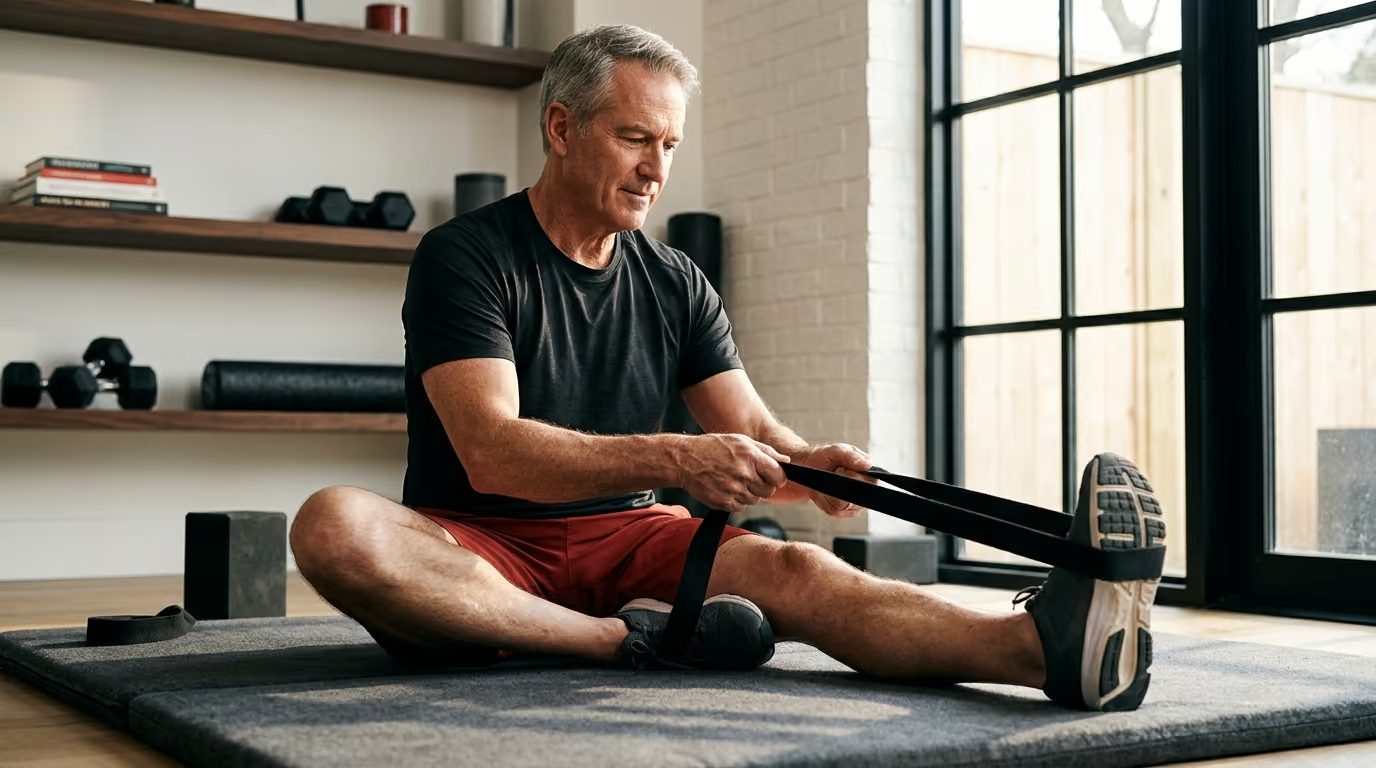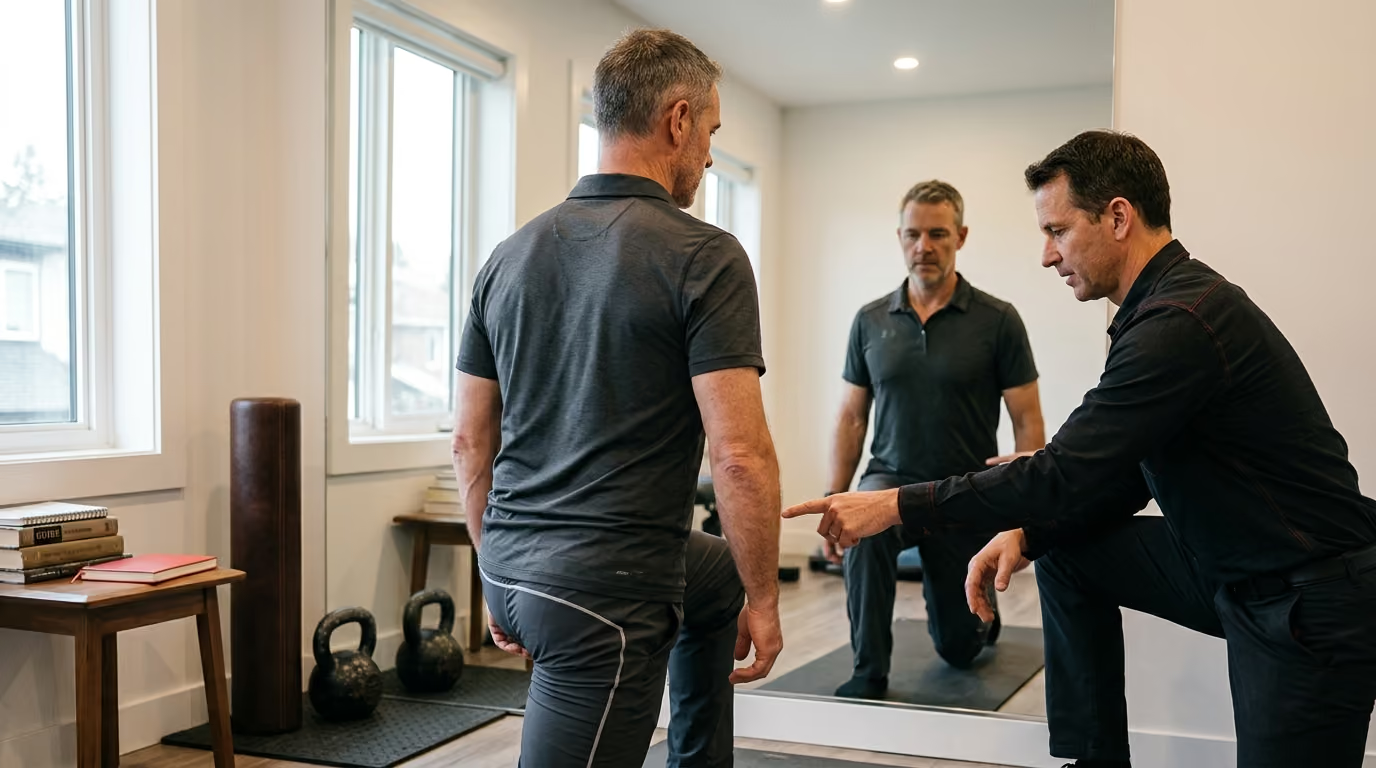
Movement screening is a structured way to observe how your body handles basic physical tasks. It is not a medical diagnosis, an MRI in disguise, or a crystal ball that predicts future injuries. Instead, it is an observational baseline that helps you choose the right training variations, adjust loads, and spot changes in physical capability over time.
For men over 45, physical capacity reflects decades of work, past injuries, recreational sports, and daily habits. A well-designed movement screen respects that history. It provides a structured look at fundamental tasks like squatting, hip hinging, lunging, stepping down, balancing, reaching, and walking.
This guide examines what the scientific evidence actually says about movement assessments. It explains why movement changes with age, how to interpret what you see, and how to convert simple observations into safer, more productive exercise decisions.
What Does the Science Say About Movement Screening?
The primary purpose of a movement screen is to generate useful hypotheses about physical capacity. It tells you how someone performs a specific task under a specific set of instructions. It does not establish the root biological cause of a limitation.
In the sports science literature, popular assessment batteries like the Functional Movement Screen have shown good consistency when scored by trained raters. Studies report strong interrater reliability, meaning two different observers often assign similar scores to the same person. High consistency across repeated tests by the same observer is also well documented.
Repeatability is not the same thing as diagnostic accuracy. A test can yield repeatable scores without identifying why a joint feels stiff or whether an injury will occur. Large systematic reviews examining movement screens have repeatedly shown that composite movement scores have poor sensitivity for predicting future musculoskeletal injuries.
When researchers analyze injury prediction data, the tests frequently produce false positives and false negatives. A low composite score does not mean an active man is guaranteed to get hurt. A high score does not grant immunity from joint irritation or muscle strains.
The evidence is much clearer when we look at standardized functional performance tests in mature adults. Research strongly supports using objective measures like gait speed, the Timed Up and Go test, and the five-times sit-to-stand test for evaluating physical function.
These standardized tests measure tangible capacity in daily tasks. The World Guidelines for Falls Prevention and Management highlight gait speed as a reliable measure for physical risk stratification. Walking slower than 0.8 meters per second serves as a clear benchmark for functional vulnerability.
In contrast, tests that try to compress human movement into a single composite score often hide critical details. Two men might receive the same total score on a movement battery. One man may move stiffly without any discomfort, while the other moves freely but experiences sharp knee pain. Treating those two individuals identically based on a single score leads to poor training choices.
Why Does Movement Quality Change After 45?
Movement changes across midlife and later years through natural biological processes. These changes are not diseases. They are normal adaptations in muscle tissue, connective structures, sensory systems, and the nervous system.
Starting in the fourth and fifth decades, muscle mass and muscle power gradually decline. This process affects fast-twitch muscle fibers more rapidly than slow-twitch fibers. Because fast-twitch fibers generate rapid force, men over 45 often notice subtle changes in balance recovery and sudden deceleration. A quick step off a curb or a rapid direction change requires more conscious effort than it did at 25.
Connective tissues also change their physical properties over time. Tendons and ligaments lose some water content and natural compliance. The collagen matrix becomes cross-linked and stiffer. This structural shift reduces passive joint range of motion, particularly in the ankles, hips, and upper back.
Joint cartilage experiences normal wear and remodels over decades of load bearing. When combined with reduced joint lubrication, these changes can make early-morning movement feel tight until the tissues warm up.
The sensory systems that govern balance and coordination undergo subtle shifts as well. Proprioception, which is your brain's sense of where your limbs are in space, becomes slightly less sharp. The inner ear's vestibular system and the visual system process positional data at a slightly slower rate.
These physiological changes mean the body must adopt new motor strategies to complete everyday tasks. When an ankle has less dorsiflexion, the hip and lower back compensate during a deep squat. When single-leg balance feels unsteady, walking cadence or step width naturally shifts to maintain stability.
Understanding these mechanisms prevents unnecessary worry. Observing a restriction during a movement screen is simply an inventory of current tissue tolerances and motor strategies. It allows you to select exercises that build strength without irritating sensitive structures.
How Do Movement Observations Translate to Everyday Life?
Screening observations gain real value when they connect directly to daily life and recreational goals. A man over 45 rarely cares about achieving an arbitrary visual standard for its own sake. He cares about hiking trails, lifting weights, carrying heavy bags, playing tennis, and maintaining full independence.
When you observe a fundamental movement pattern, you look at how different body segments cooperate under load. If a test exposes instability or discomfort, that finding mirrors real-world physical demands.
For example, difficulty with a controlled step-down points to challenges when descending stairs, hiking downhill, or stepping off a truck tailgate. If the knee collapses inward or the torso wobbles, lower-body eccentric strength and lateral hip control may need targeted work.
A restricted hip hinge pattern often shows up during weekend home maintenance or yard work. If a man cannot hinge at the hips while keeping his trunk stable, he will repeatedly round his lower back when lifting heavy soil bags or tools. Modifying that hinge pattern in training directly protects spinal tissues during daily chores.
Evaluating balance and single-leg stability has immediate implications for fall prevention and athletic confidence. Running, climbing stairs, and stepping over obstacles are fundamentally single-leg activities. If a single-leg stance reveals substantial sway or anxiety, dedicated balance and functional movement work can restore steady footwork on uneven ground.
Screening also provides a safe sandbox to test exercise variations. If a full-depth squat causes front-of-knee pressure, adjusting stance width or using a box target can immediately restore comfort. You learn how your body responds to small adjustments before loading a barbell or starting a high-volume workout.
By translating visual findings into concrete adjustments, training becomes more sustainable. You spend less time resting irritated joints and more time building usable physical strength.
How Can You Screen the Seven Core Movement Patterns?
A reliable movement screen for men over 45 focuses on seven fundamental tasks: the squat, hip hinge, lunge, step-down, single-leg balance, overhead reach, and walking observation.
These assessments require minimal equipment. They allow you to observe mobility, control, and symptom responses across major joint complexes.
The Squat Observation
The squat evaluates bilateral hip, knee, and ankle mobility, along with trunk control.
To perform the observation:
- Stand with feet roughly shoulder-width apart, with toes turned out slightly according to comfort.
- Cross your arms over your chest or hold your hands out in front for balance.
- Lower your hips down as far as comfortable, aiming for thighs parallel to the floor if achievable without pain.
- Pause for one second at the bottom, then return to the standing position under full control.
Observe what happens during the descent and ascent:
- Does the chest collapse forward excessively as the hips descend?
- Do the heels lift off the floor, suggesting restricted ankle mobility?
- Do the knees cave inward toward the midline?
- Is the movement smooth, or does it feel jerky and hesitant?
- Does the movement trigger knee, hip, or lower back discomfort?
If the heels rise or the torso pitches forward, place a small wedge under the heels or widen the stance. If elevating the heels resolves the restriction, ankle mobility is a primary factor. If the bottom position causes pinching in the hip joint, adjusting the foot flare or using a higher target can create a comfortable, productive training range.
The Hip Hinge Observation
The hip hinge assesses the ability to bend forward by moving the hips backward while maintaining a stable spine. This pattern is foundational for deadlifts, kettlebell swings, and safe lifting from the floor.
To perform the observation:
- Stand tall with feet hip-width apart and a slight, soft bend in the knees.
- Place hands on the front of your hips or hold a light dowel along your spine touching the back of your head, upper back, and tailbone.
- Push your hips straight back toward the wall behind you, allowing the torso to tilt forward naturally.
- Stop when your hips stop moving backward, then drive the hips forward to return to standing.
Key observations to record:
- Do the hips travel backward, or do the knees simply bend forward like a squat?
- Does the spine stay neutral, or does the lower back round early in the movement?
- Do you feel tension in the hamstrings and glutes, or do you feel strain in the lower back?
- Can you maintain balance with weight distributed across the whole foot?
If the lower back rounds immediately, the limitation may stem from motor control, hamstring tension, or unfamiliarity with the movement. Placing a bench or wall behind you as a physical target can help teach proper rearward hip displacement.
The Lunge Observation
The lunge assesses split-stance stability, single-leg force production, hip extension in the trailing leg, and core control.
To perform the observation:
- Stand tall with feet together.
- Step backward into a reverse lunge, lowering the back knee toward the floor in a controlled manner.
- Lower until the front thigh is roughly parallel to the floor, or as deep as comfortable.
- Push through the front foot to return smoothly to the starting position, then repeat on the opposite side.
Look for specific control markers:
- Does the front knee wobble sideways or collapse inward during the descent?
- Does the torso pitch heavily forward or twist toward one side?
- Is there a noticeable difference in balance or strength between the left and right legs?
- Does the back hip feel excessively tight, restricting a smooth descent?
A reverse lunge is often kinder to mature knees than a forward lunge because it reduces braking forces on the front kneecap. If balance is unsteady, hold a sturdy pole or light wall support with one hand to separate strength capacity from balance limitations.
The Step-Down Observation
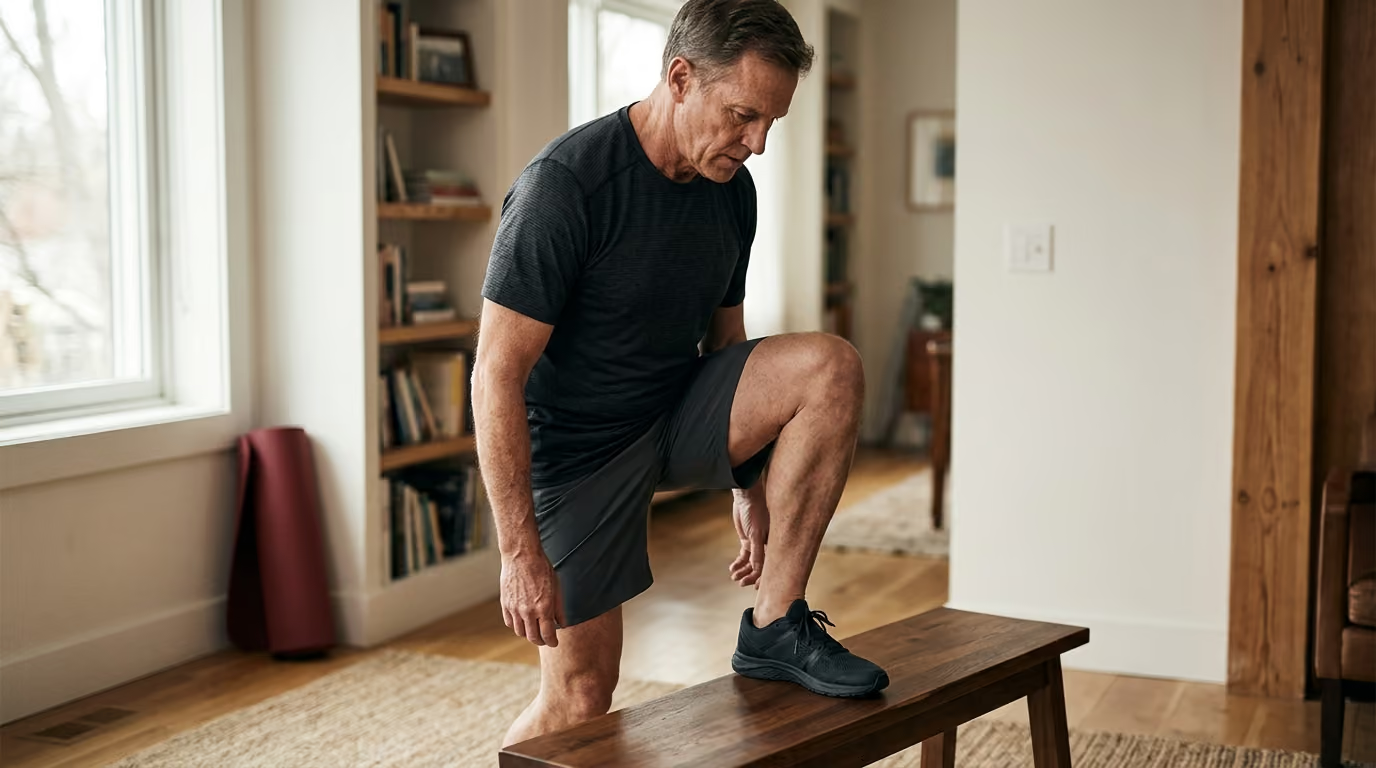
The step-down assesses eccentric quadriceps strength, ankle dorsiflexion, and hip stability on a single leg. It closely replicates descending stairs or hiking downhill.
To perform the observation:
- Stand on a low box or step, roughly 15 to 20 centimeters high.
- Balance on one leg while extending the free leg slightly forward or to the side.
- Slowly bend the stance knee, lowering the heel of the free leg toward the floor without putting weight on it.
- Lightly tap the floor with the heel, then press through the stance leg to return to the top.
Observe the mechanics:
- Does the stance knee dive inward as the leg bends?
- Does the pelvis drop or tilt significantly on the unsupported side?
- Does the movement descend with smooth control, or does the person drop suddenly the last few inches?
- Is there front-of-knee pain or patellar tendon sensitivity?
If controlling the descent is difficult, reduce the step height to 10 centimeters. Improving control on a lower step builds the eccentric strength and hip stability required for higher steps over time.
The Single-Leg Balance Observation
Single-leg balance measures static stability, sensory integration, and foot-ankle control.
To perform the observation:
- Stand near a wall or sturdy counter for safety, with shoes off on a firm, level floor.
- Cross your arms over your chest and lift one foot off the floor, bending the knee to roughly 90 degrees without letting the legs touch.
- Hold the position for up to 30 seconds while breathing normally.
- Repeat the test on the opposite leg.
Record the following variables:
- How many seconds can you hold the position before placing the foot down or grabbing support?
- Does the foot grip the floor excessively, or does the ankle roll inward and outward rapidly?
- Does the pelvis sway heavily from side to side?
- Is there a major time discrepancy between the dominant and non-dominant leg?
A stable hold of 20 to 30 seconds without wild compensation indicates solid baseline balance. If you struggle to reach 10 seconds, incorporating supported single-leg balance drills into your weekly routine can restore neuromuscular control.
The Overhead Reach Observation
The overhead reach evaluates shoulder flexion, thoracic spine extension, and shoulder blade upward rotation without lumbar hyperextension.
To perform the observation:
- Stand with your back flat against a wall, with heels about 10 centimeters away and head, upper back, and sacrum resting against the surface.
- Raise both arms straight out in front and reach overhead toward the wall, keeping elbows straight and thumbs pointing behind you.
- Attempt to touch the wall with your thumbs without letting your lower back arch off the wall or your ribs flare upward.
Watch for these movement patterns:
- Can the arms reach overhead without bending the elbows?
- Does the lower back arch away from the wall to complete the reach?
- Is there pain, pinching, or tightness in the top of the shoulder joint?
- Do the left and right arms move symmetrically?
If the lower back arches heavily, the restriction often involves shoulder mobility, latissimus dorsi tightness, or thoracic stiffness rather than pure shoulder weakness. For overhead lifting, modifying the pressing angle to a landmine press or high incline bench press provides a joint-friendly alternative.
The Walking Observation
Walking is the most frequent movement pattern you perform. A structured gait observation reveals real-world mobility, symmetry, and endurance.
To perform the observation:
- Find a clear, flat hallway or open space at least 10 meters long.
- Walk at your normal, comfortable pace across the distance, turn around, and walk back.
- Walk the distance again at a brisk, purposeful pace.
Observe key gait characteristics:
- Is the walking pace steady, confident, and symmetrical?
- Do both arms swing freely in opposition to leg movement?
- Is there adequate clearance under both feet, or does one foot shuffle or drag slightly?
- Does turning require multiple small, hesitant steps or a single fluid pivot?
- Does walking look stiff, guarded, or painful through the hips and knees?
For objective tracking, time the walk over a measured 6-meter or 10-meter course. Dividing distance by time yields gait speed in meters per second. Maintaining a brisk gait speed above 1.0 meter per second is a reliable indicator of robust functional capacity.
What Practical Factors Convert Screening Findings Into Better Training?
A movement screen is only useful if it leads to better decisions in the gym. Endless corrective drills that replace actual strength training are counterproductive. The goal is to move from observation directly into safe, effective training.
A practical decision cycle follows six clear steps:
- Observe the movement task under standard conditions.
- Identify whether the limitation involves range of motion, motor control, strength, balance, or discomfort.
- Apply a single modification, such as changing stance width, elevating heels, reducing range, or providing hand support.
- Select a training variation that allows loaded work through a pain-free, controlled range.
- Apply progressive overload over time as capacity expands.
- Seek a medical evaluation if pain, numbness, dizziness, or joint instability occurs.
The table below outlines common movement observations and their immediate, practical training adjustments:
Practical Movement Modifications
- Squat depth is limited without pain - Practical adjustment: Set a bench or box target just above the restriction. Train sit-to-stands or box squats with progressive load, and gradually lower the target over several weeks as control improves.
- Squat causes front-of-knee discomfort - Practical adjustment: Elevate the heels slightly with a wedge or switch to a box squat with a vertical shin angle. This shifts the load toward the hips and hamstrings, reducing patellofemoral joint stress.
- Hip hinge causes lower back rounding or tightness - Practical adjustment: Elevate the weight using blocks or a rack to shorten the range of motion. Use a Romanian deadlift from mid-shin height or a cable pull-through rather than pulling straight from the floor.
- Step-down shows poor knee tracking or sudden dropping - Practical adjustment: Lower the step height to 5 or 10 centimeters and use light fingertip support on a rail. Emphasize a 3-second lowering phase to build eccentric quad and hip strength before increasing step height.
- Reverse lunge feels unsteady or wobbly - Practical adjustment: Switch to a static split squat where feet do not leave the floor between repetitions. Hold a sturdy rail or dowel for balance until lower-body single-leg strength improves.
- Single-leg balance lasts under 10 seconds - Practical adjustment: Practice standing on one foot near a kitchen counter or wall during daily routines. Progress from light fingertip contact to hovering hands, then introduce head turns or eyes-closed variations.
- Overhead reach triggers shoulder pinching or rib flare - Practical adjustment: Replace vertical overhead pressing with neutral-grip dumbbell presses, landmine presses, or high-incline chest presses. These angles work the shoulders without crowding the subacromial space.
Building usable strength requires meeting global physical activity standards. The World Health Organization recommends that mature adults perform muscle-strengthening activities involving all major muscle groups on at least two days per week. They also recommend varied multicomponent physical activity emphasizing functional balance and strength training on three or more days per week to support functional capacity and reduce fall risk.
Using screening observations to fine-tune your lifts ensures you can meet these strength recommendations consistently without joint setbacks.
What Are the Most Common Misconceptions About Movement Screens?
Movement screening has sometimes been marketed with exaggerated claims. Clearing away these misconceptions helps you use movement testing responsibly.
Misconception 1: A Movement Screen Diagnoses Medical Conditions
A visual movement screen cannot diagnose osteoarthritis, meniscal tears, tendon degeneration, disc herniations, or nerve root compression. Visual observations simply describe movement output.
A stiff hip might reflect joint capsule changes, a previous ankle sprain that altered mechanics, muscle fatigue, or simple unfamiliarity with the exercise. If you experience persistent, worsening, or sharp pain, schedule a formal evaluation with a physical therapist or sports medicine physician. A screen is an exercise selection tool, not a clinical diagnosis.
Misconception 2: Imperfect Symmetry Always Predicts Injury
The human body is naturally asymmetrical. Decades of sports, hand dominance, occupational postures, and past injuries create slight structural differences between your left and right sides.
Research does not show that minor visual asymmetries automatically lead to injury. Forcing both sides of your body to look identical on every movement can cause joint irritation. The goal of screening is not perfect symmetry, but ensuring both sides possess sufficient strength, control, and range of motion for daily demands.
Misconception 3: You Must Achieve a Perfect Screen Before Lifting Weights
Some fitness philosophies claim that you must fix every movement flaw with bodyweight corrective exercises before lifting any external load. This approach is unnecessarily restrictive.
Loading a movement through an appropriate, comfortable range of motion is one of the best ways to build mobility, connective tissue resilience, and neuromuscular control. If your deep squat is restricted, you do not need to avoid lower-body training. You simply train box squats, leg presses, or split squats through your current pain-free range while building capacity over time.
Where Is the Scientific Evidence Still Inconclusive?
Honest health writing requires stating where the scientific evidence is strong and where it remains limited.
The strongest evidence for movement screening exists at two ends of the demographic spectrum: elite competitive athletes and adults aged 65 and older. In older populations, standardized tests like gait speed, the Timed Up and Go, and five-times sit-to-stand have extensive validation for assessing functional mobility and fall vulnerability. In athletic populations, screening batteries have been studied for consistency and performance tracking.
There is comparatively limited research validating a single, comprehensive movement screening battery specifically for healthy, active adults aged 45 to 64. Midlife men represent a unique group. They often have high physical capacity, yet they also carry cumulative orthopedic wear that makes rigid scoring systems unreliable.
Research is also weak regarding the predictive validity of visual movement scoring. Studies show that composite scores cannot reliably predict which individual will suffer an injury during recreational training.
Furthermore, evidence supporting commercial corrective exercise protocols is often mixed. Research indicates that general strength, mobility, and balance training frequently produce functional improvements comparable to proprietary, highly specialized corrective routines.
A conservative, evidence-based approach is to treat movement observations as practical guides for exercise selection rather than absolute scientific measurements. Use them to pick suitable training variations, monitor progress, and guide your weekly strength and muscle routines.
Pre-Screening Safety and When to Seek Medical Guidance
Before performing any movement assessments or increasing exercise intensity, establishing cardiovascular and orthopedic safety is essential.
The American College of Sports Medicine outlines clear preparticipation guidelines based on current activity levels, known medical conditions, and warning symptoms. Movement screening is designed for individuals who are medically stable and ready for physical activity.
Do not perform movement screening tests if you experience any of the following symptoms:
- Chest pain, pressure, tightness, or discomfort during exertion
- Unexplained dizziness, lightheadedness, or fainting spells
- Shortness of breath at rest or with mild exertion
- Rapid, irregular, or fluttering heart palpitations
- Unusual swelling in both ankles or lower legs
- Burning or cramping sensations in the calf muscles during walking
If any of these cardiovascular or metabolic warning signs occur, seek a medical evaluation before engaging in exercise testing.
From an orthopedic perspective, seek clinical evaluation if you have acute joint swelling, pain that wakes you from sleep, joint locking, sudden muscle weakness, or numbness radiating down an arm or leg. A movement screen is useful for exploring exercise options, but it must never delay medical care when red-flag symptoms appear.
Frequently Asked Questions
How often should a man over 45 perform a movement screen?
Re-evaluating fundamental movement patterns every 8 to 12 weeks is generally sufficient. This timeframe provides enough time for strength, mobility, and motor control adaptations to occur. You can also re-check specific patterns whenever you return to training after an illness, travel, or a joint flare-up.
What should I do if a movement screen reveals painful joints?
If a movement test produces pain, stop that specific movement and test a simpler variation. For instance, if an unsupported squat bothers your knees, try a box squat or a supported sit-to-stand. If discomfort persists across multiple variations, or if pain is sharp, swelling occurs, or symptoms worsen over time, consult a physical therapist or qualified physician.
Do I need special software or video apps to screen my movement?
No special software or expensive technology is required. Simple, repeatable observations using a phone camera or a mirror work well for tracking movement quality. Focus on basic indicators: can you move smoothly, control the lowering phase, maintain balance, and perform the movement without joint irritation? Consistency in how you test matters far more than high-tech scoring tools.
Can movement screening replace a standard workout warm-up?
Movement screening is an assessment method, not a warm-up routine. However, using the core movement patterns at light effort can serve as an effective warm-up. Performing unweighted squats, hinges, lunges, and balance holds prepares joint tissues, warms muscle temperature, and primes the nervous system for loaded training.
The Practical Takeaway
Movement screening after 45 is a practical tool for making sensible exercise adjustments, not a test of athletic perfection or a prediction of injury. Use simple observations of squats, hinges, lunges, steps, balance, reaches, and walking to select tolerable training variations that build usable strength, protect your joints, and keep you capable for decades to come.
Sources
- World Health Organization 2020 guidelines on physical ... - PMC
- 2020 WHO guidelines on physical activity and sedentary behavior - PMC
- World Health Organization 2020 guidelines on physical ...
- Preparticipation Screening Prior to Physical Activity in ... - PMC
- RECOMMENDATIONS - WHO Guidelines on Physical Activity ...
- Physical activity guidelines for older people: knowledge gaps and future directions00079-9/fulltext)
Stay sharp
Get the word
Join our newsletter for the best writing advice and stories from the field.