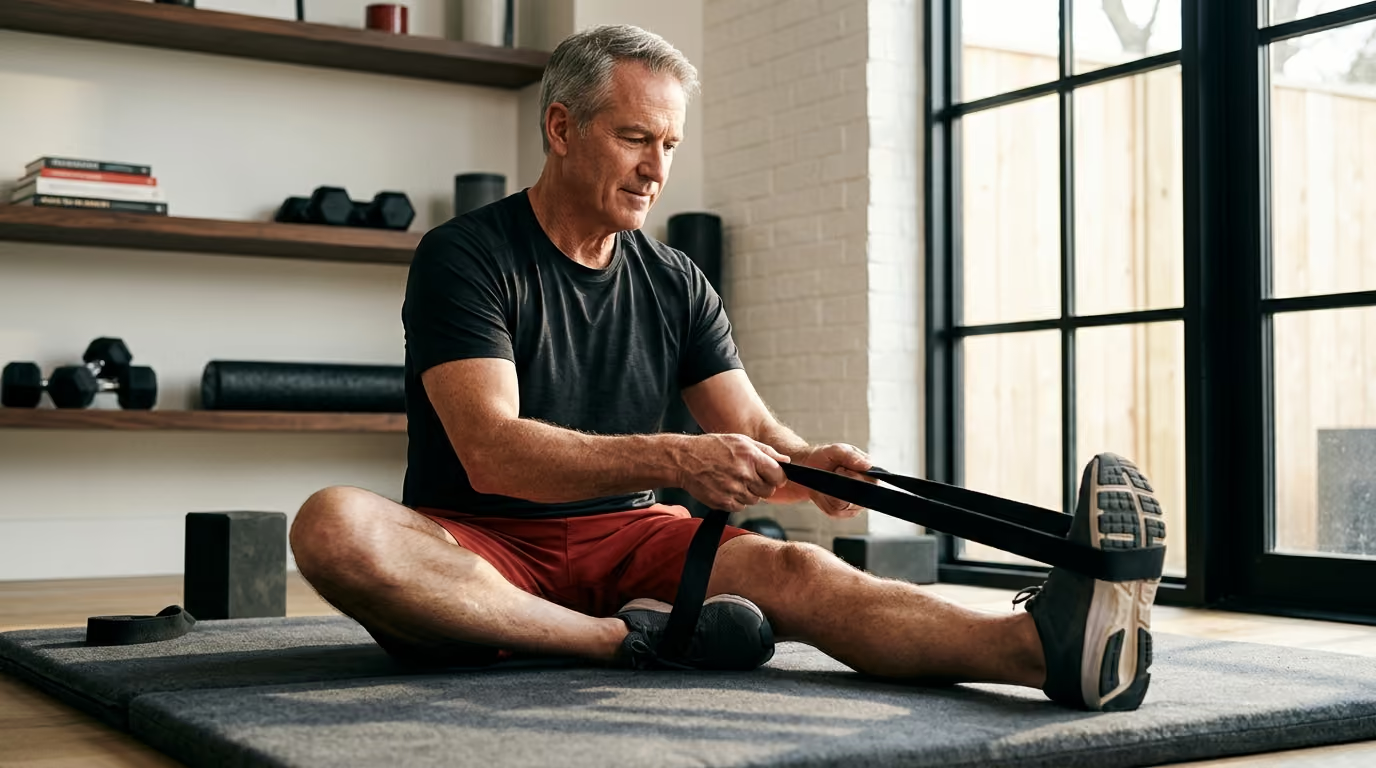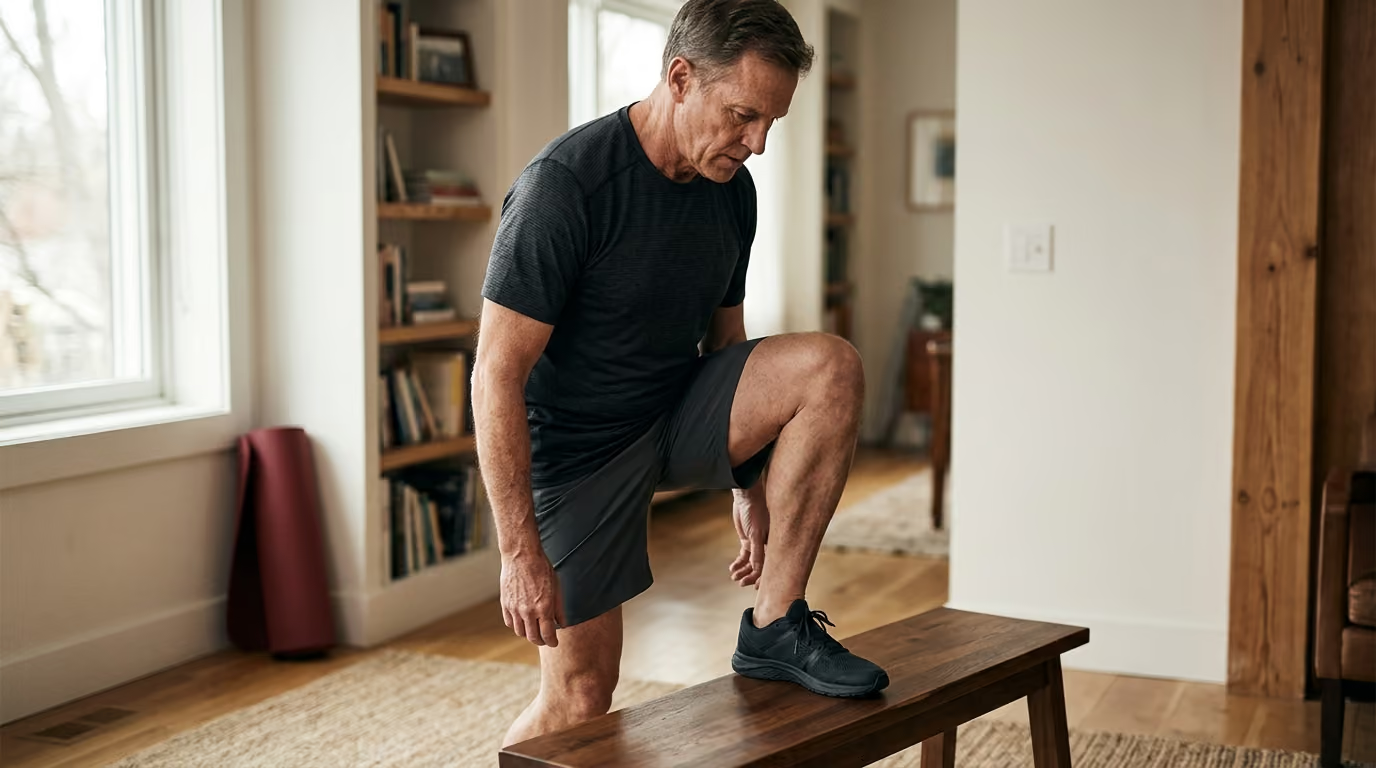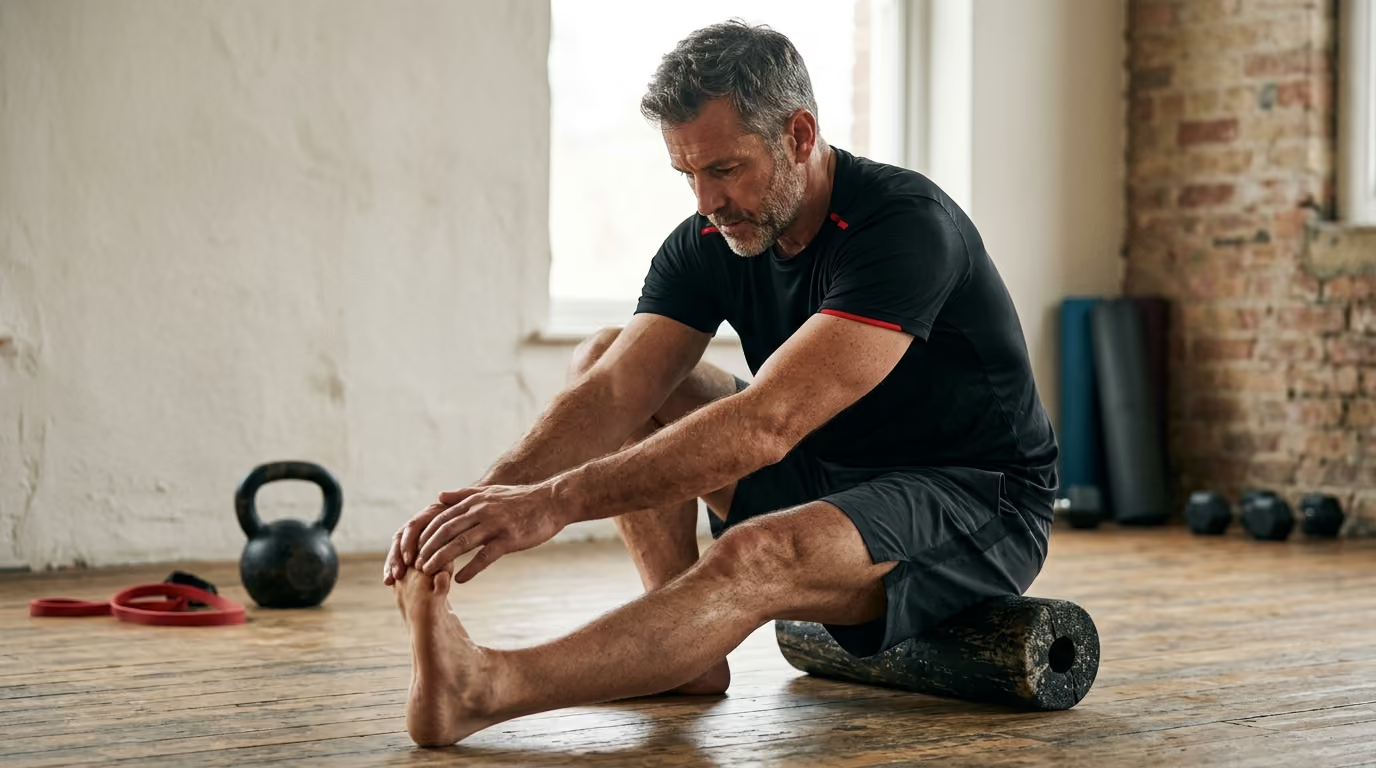
Many men search for ways to stop feeling stiff, tight, or locked up after lifting weights, running, or playing sports in midlife. The common advice tells you to spend twenty minutes aggressively stretching every muscle you just trained to prevent next-day soreness and protect your joints.
The research tells a different story. This guide provides a clear look at what post-workout mobility actually achieves, what it cannot do, and how to build a routine that keeps you moving well.
- DOWNSHIFT (2-4 min)
- Easy walking, nasal breathing
- SCAN (1 min)
- Location, quality, symmetry
- MOVE ACTIVELY (3-5 min)
- Controlled rotations, active ranges
- TARGET FLEXIBILITY (2-3 min)
- Gentle static holds (30-60 sec)
- REASSESS
- Check walking and joint comfort
The Scientific Evidence on Post-Exercise Stretching and Soreness
For decades, athletes were told that post-exercise static stretching prevents delayed-onset muscle soreness, speeds up muscle repair, and clears metabolic waste. Systematic research reviews that evaluated thousands of participants show that post-exercise stretching does not produce a meaningful drop in muscle soreness.
A major Cochrane review evaluated whether stretching before, after, or both before and after exercise reduces soreness in healthy adults. The researchers found little to no effect on muscle soreness recorded at one, two, or three days after training. On a 100-point soreness scale, the average reduction in soreness from stretching was approximately one point. That difference is too small for any athlete or lifter to feel in daily life.
Other systematic reviews and meta-analyses examining post-workout stretching confirm these findings. When researchers compare static stretching after training directly against passive rest, they find no statistically significant difference in soreness at 24, 48, or 72 hours. The available research base contains mixed methods, small sample sizes, and varied protocols. Yet the overall weight of evidence clearly shows that passive stretching is not a cure for delayed-onset muscle soreness.
Post-workout movement serves a different purpose. Gentle mobility work acts as a practical comfort practice rather than a biological repair mechanism. Low-intensity active movement helps your nervous system transition from high output back down to resting levels. It provides temporary relief from the sensation of joint stiffness. Regular mobility practice over weeks and months can preserve joint range of motion, even if a single session does not erase training fatigue.
Research on older adults shows that flexibility training reliably improves joint range of motion over time. A systematic review published in clinical exercise literature showed that structured flexibility programs produce measurable improvements in joint angles for older adults. The same research noted that improvements in joint range do not automatically lead to better functional ability in daily activities. Gaining range of motion is valuable only when you have the strength and control to use that range.
Physical activity guidelines from the World Health Organization emphasize that older adults need multicomponent activity that includes functional balance and muscle-strengthening exercises on three or more days per week. Post-workout mobility fits into a broader training plan alongside structured strength and muscle training. It is an opportunity to practice joint control, maintain usable range, and check how your body tolerated the session.
- WHAT THE RESEARCH SHOWS
- WHAT POST-WORKOUT MOBILITY CAN DO WHAT POST-WORKOUT MOBILITY CANNOT DO
- • Downshift autonomic nervous system • Erase delayed-onset muscle soreness
- • Temporarily relieve joint stiffness • Clear metabolic waste products
- • Maintain usable joint ranges • Prevent soft-tissue injuries alone
- • Identify localized joint irritation • Replace intelligent load management
Structural and Neurological Changes in Midlife Joint Function
Joints, muscles, and tendons change naturally as the decades pass. These changes are a normal part of biological maturity, not an automatic medical condition or a disease state. Understanding these physical shifts helps you pick the right post-workout movements without frustration.
Connective tissues lose water content and change their collagen architecture over time. Tendons and joint capsules become slightly stiffer and less compliant under rapid loading. This reduction in passive tissue compliance means that resting for long periods after hard training can make you feel stiff or rigid. The sensation is not caused by muscles shortening permanently within hours. It reflects temporary changes in resting muscle tone, fluid shifts within the joint capsule, and nervous system guarding.
The central nervous system regulates resting muscle tone based on perceived joint safety and recent physical demands. When you lift heavy loads, sprint, or perform unfamiliar exercises, your nervous system increases baseline muscle tone around working joints to stabilize them. This protective guarding feels like tight muscles. Forcing an aggressive, painful stretch on a guarded muscle triggers the stretch reflex, which causes the nervous system to contract the muscle harder.
Joint history also plays a major role after 45. Decades of sports, heavy physical work, past sprains, and minor joint injuries leave structural signatures. Mild, asymptomatic joint changes in the knees, hips, and spine are normal findings on imaging for most men past midlife. These structural changes mean that your joints prefer progressive warm-ups and calm, active cool-downs rather than sudden stops or extreme passive ranges.
Neuromuscular coordination and position sense change slightly with age. Mechanoreceptors in your tendons and joint capsules provide feedback to the brain about joint position. Low-intensity movement after exercise stimulates these sensory receptors without adding mechanical fatigue. This sensory input helps your brain register that the joint is safe, allowing baseline muscle tone to return to normal resting levels.
These midlife physical changes mean that post-workout mobility should focus on active control rather than extreme flexibility. You do not need the passive flexibility of an Olympic gymnast to stay capable, strong, and athletic. You need clean, pain-free joint control through the specific ranges of motion required for your sport, your lifting, and your daily life.
Real-World Translation for Training Capacity and Daily Function
Understanding the science changes how you organize your training week. When you stop viewing post-workout mobility as a tool to prevent soreness, you can use it for its real benefits: joint comfort, movement quality, and nervous system regulation.
The difference between passive flexibility and active mobility is critical for men over 45. Passive flexibility is the absolute range of motion a joint can achieve when an external force moves it, such as pulling your leg with a strap. Active mobility is the range of motion you can access and control using your own muscular strength. A joint that has large passive range but poor active control is vulnerable during loaded training.
In daily life, active mobility translates directly to functional capability. You need active hip and ankle mobility to squat down, pick up heavy items, or get off the floor without strain. You need thoracic spine mobility and shoulder control to reach overhead, lift luggage into an overhead bin, or throw a ball without neck pain. You need hip rotation and ankle stability to navigate uneven hiking trails or change direction quickly on a tennis court.
- MOBILITY vs FLEXIBILITY
- ACTIVE MOBILITY PASSIVE FLEXIBILITY
- • Controlled by your own muscles • Produced by external force/gravity
- • Directly protects loaded joints • Often lacks end-range strength
- • Transfers to lifting and sport • Weak transfer to functional tasks
- • Stimulates joint mechanoreceptors • May trigger protective guarding
Post-workout mobility provides an ideal window to assess your physical state. As you move through gentle, unloaded ranges of motion right after training, you can spot areas of unusual joint restriction, one-sided asymmetry, or early tendon irritation. Catching these subtle mechanical signals early allows you to modify your lifting volume, adjust your stance, or change exercise selection before a minor issue becomes a chronic setback.
Using a structured cool-down also improves recovery habits. Taking five to ten minutes to transition from hard training back into your daily routine lowers your heart rate, normalizes breathing patterns, and shifts your autonomic nervous system from sympathetic drive toward parasympathetic recovery. This deliberate transition supports better stress management and helps you move comfortably throughout the rest of your day.
If you sit down at a desk or in a vehicle immediately after a hard workout, your joints cool down in a fixed, compressed posture. Taking a few minutes to move your hips, spine, and ankles through easy ranges prevents that locked-in feeling. It allows you to step back into your work, family responsibilities, and active lifestyle feeling loose and capable. You can find more comprehensive approaches in our mobility and functional movement resources.
The Downshift Movement Framework
A successful post-workout mobility plan does not require complex equipment or long routines. It requires a systematic sequence that addresses nervous system arousal, joint movement, and tissue comfort. The five-step framework below provides a repeatable method you can use after any training session.
Step 1: Downshift
The downshift step lowers your heart rate and shifts your nervous system away from the high-stress state of training. Instead of dropping onto a bench or sitting in your car immediately after your last set, spend two to four minutes moving at a relaxed pace.
Walk slowly around the gym floor, pedal a stationary bike with zero resistance, or pace gently while focusing on nasal breathing. Inhale quietly through your nose for four seconds, and exhale slowly through your mouth or nose for six seconds. This extended exhalation stimulates the vagus nerve, which helps lower your heart rate and reduces systemic muscle tension.
Step 2: Scan
While completing your easy movement, perform a quick mental check of your body. Notice how your joints and muscles feel without judging the sensations.
Ask yourself these specific questions:
- Are you feeling muscular fatigue across the worked muscle, or sharp pain near a joint line?
- Is the stiffness equal on both sides of your body, or is one joint significantly restricted?
- Did any specific repetition cause a sudden pinch, pop, or sharp discomfort?
- Does gentle movement make the area feel better, worse, or completely unchanged?
If you notice sharp joint pain, sudden focal swelling, or nerve sensations like numbness or tingling, stop. Do not stretch that area. If you simply feel muscular fatigue and generalized tightness, proceed to active movement.
Step 3: Move Actively
Begin with active, unloaded movements through comfortable ranges of motion. The goal is to lubricate joint surfaces with synovial fluid and signal your nervous system that these ranges are safe.
Move smoothly through five to eight repetitions per pattern. Focus on active control rather than trying to force maximum end-range. If a movement feels stiff, stay within the pain-free zone and let the range expand naturally over several repetitions.
Step 4: Add Selected Flexibility Work
If specific muscle groups feel tight or if you have targeted flexibility goals, add gentle static stretching. Follow the recommendations outlined in American College of Sports Medicine guidance.
Stretch only to the point of mild tension or light tightness. Never stretch into sharp pain, pinching, or joint discomfort. Hold each stretch for 30 to 60 seconds while maintaining slow, calm breathing. Performing two to three sets of 30-second holds provides sufficient stimulus to maintain resting tissue length without over-sensitizing the nervous system.
Step 5: Reassess
Finish your routine by checking your movement quality. Stand up, walk across the room, and perform one slow bodyweight squat or shoulder reach.
Notice if your joints feel looser, more stable, and more comfortable than they did when your workout ended. If a specific stretch made an area feel more irritated or painful, make a note to remove or modify that movement in your next session. Effective recovery mobility should always leave you feeling better, not worse.
- FIVE-STEP COOLDOWN PROGRESSION
- STEP PHASE TIME ALLOCATION PRIMARY FOCUS
- 1 Downshift 2 to 4 minutes Easy walking, slow breathing
- 2 Scan 1 minute Identify pain vs fatigue
- 3 Move Actively 3 to 5 minutes Unloaded joint circles/rocks
- 4 Target Flexibility 2 to 4 minutes Gentle 30-60 sec holds
- 5 Reassess 1 minute Verify comfortable movement
Targeted Movement Patterns and Active Control Drills
Post-workout mobility is most effective when it targets the major joints that bear load during training: the ankles, hips, thoracic spine, and shoulders. You can combine these specific drills into a fast, effective routine.
Ankle Dorsiflexion Rocks
Ankle mobility directly affects knee health, squat depth, and walking mechanics. Stiff ankles force the knees and lower back to compensate during lifting and athletic movement.
- Set up in a half-kneeling position on a mat, with your front foot flat on the floor.
- Keep your front heel glued to the ground throughout the movement.
- Slowly push your front knee forward directly over your middle toes until you feel a gentle stretch in the calf and Achilles tendon.
- Hold the end position for two seconds, then return to the start.
- Perform 8 to 10 controlled repetitions per leg.
Half-Kneeling Hip Flexor Glide
Lifting, running, and prolonged sitting keep the hip flexors in shortened positions. Restoring hip extension prevents excessive arching in the lower back.
- Start in a half-kneeling position with your back knee resting on a comfortable pad.
- Tuck your pelvis underneath you by gently squeezing the glute of your rear leg.
- Maintain an upright torso and glide your hips forward two to three inches until you feel a mild stretch in the front of your rear hip.
- Avoid arching your lower back to chase extra range.
- Hold for two seconds at the end-range, return to the start, and complete 6 to 8 repetitions per side.
Quadruped Thoracic Rotations
The mid-back requires rotational freedom to protect the neck and lower back during overhead work, carrying, and rotational sports.
- Begin on all fours with your hands under your shoulders and knees under your hips.
- Place one hand lightly behind your head, keeping the elbow out wide.
- Rotate your elbow down toward your opposite wrist, feeling a gentle stretch through your mid-back.
- Reverse the movement by rotating your elbow and chest upward toward the ceiling as far as comfortable.
- Perform 6 to 8 slow, controlled repetitions on each side without shifting your hips.
Prone Shoulder Y-Lifts
Active shoulder mobility requires strength in the lower trapezius and rotator cuff to stabilize the shoulder blade against the ribcage.
- Lie face down on a comfortable mat with your forehead resting on a small towel.
- Extend your arms overhead at a 45-degree angle to form a "Y" shape, with your thumbs pointing toward the ceiling.
- Keeping your neck relaxed, gently lift your hands and arms two to three inches off the floor using the muscles between your shoulder blades.
- Hold the top position for two seconds, then lower under control.
- Complete 8 to 10 repetitions, focusing on quality of movement rather than height.
90-90 Hip Transitions
Hip internal and external rotation are vital for deep squats, lunges, and lateral movement. This drill restores rotational freedom to both hips simultaneously.
- Sit on the floor with your knees bent and feet flat, wider than shoulder-width apart.
- Place your hands on the floor behind you for light support.
- Slowly drop both knees to the right until both legs rest on the floor in a 90-degree angle configuration.
- Pause for two seconds, then use your hip muscles to lift the knees and rotate them across to the left side.
- Complete 6 smooth transitions in each direction.
- SAMPLE WORKOUT PROTOCOLS
- SESSION TYPE PRIMARY DRILLS TARGET TIME
- Lower Body Lifting Ankle Rocks, Hip Glides, 90-90 6 to 8 minutes
- Upper Body Lifting Thoracic Rotations, Y-Lifts 5 to 7 minutes
- Running or Rucking Easy Walk, Calf Holds, Glides 6 to 8 minutes
- Quick Daily Cooldown Walking, Deep Breathing, 90-90 3 to 5 minutes
Three Tailored Post-Workout Protocols
Your cool-down should match the time you have available and the physical demands of your workout. Choose the appropriate protocol below based on your schedule and training volume.
Protocol 1: The Minimal Cooldown (3 to 5 Minutes)
Use this quick routine after moderate aerobic sessions, circuit training, or when you are short on time. It provides a baseline reset for your heart rate and joint mechanics.
- Easy walking and nasal breathing: 2 minutes.
- Half-kneeling hip flexor glides: 6 repetitions per side.
- Standing chest and lat stretch: 30-second hold with hands resting on a wall or rack.
Protocol 2: The Standard Strength Recovery Routine (8 to 12 Minutes)
Use this comprehensive routine following heavy lifting, demanding lower-body sessions, or hard conditioning work. It addresses all primary movement junctions.
- Low-resistance cyclic movement: 3 minutes of easy walking or gentle stationary cycling.
- Ankle dorsiflexion rocks: 8 repetitions per leg.
- 90-90 hip transitions: 6 rotations per side.
- Quadruped thoracic rotations: 6 rotations per side.
- Prone shoulder Y-lifts: 8 controlled repetitions with a two-second pause.
- Passive calf and hamstring stretch: 1 set of 30 seconds per leg, kept to mild tension.
Protocol 3: The Standalone Mobility and Balance Session (15 to 20 Minutes)
Use this longer session on non-lifting days, active recovery days, or in the evening. It allows you to build joint range of motion and practice balance without the fatigue of a heavy lifting session.
- General warm-up: 3 minutes of easy dynamic movement and arm swings.
- Full-range active mobility: Complete 2 sets of ankle rocks, 90-90 hip transitions, and thoracic rotations.
- Static flexibility holds: 2 sets of 45-second holds for hip flexors, hamstrings, and chest muscles.
- Single-leg balance practice: Stand near a wall or sturdy countertop for safety. Balance on one leg for 30 seconds per side, focusing on foot stability and upright posture.
- Reassessment: Walk for one minute and evaluate total-body movement comfort.
For men interested in broader longevity and joint care strategies, our guides on healthy aging and mobility offer comprehensive weekly structures.
Common Misreadings of Post-Training Recovery
Several widespread myths about recovery mobility continue to circulate in gyms and online fitness communities. Clearing away these misconceptions helps you avoid wasted effort and prevents training injuries.
- COMMON MISREADINGS
- POPULAR MYTH WHAT THE EVIDENCE SHOWS
- "Stretching clears out lactic acid" Lactate clears on its own naturally
- "Aggressive stretching stops DOMS" Stretching has near-zero effect on
- post-workout muscle soreness
- "Stiffness always means short tissue" Stiffness is often nervous guarding
- "Mobility can replace smart loading" Rest and sensible volume matter most
Claim 1: Stretching Clears Lactic Acid From Fatigued Muscles
This claim is physiologically incorrect. Lactate is a temporary metabolic byproduct of high-intensity energy production. Your body metabolizes and clears lactate from the bloodstream within 30 to 60 minutes after exercise through normal circulation, light movement, and liver function.
Stretching a muscle does not speed up this metabolic clearance. Delayed-onset muscle soreness is caused by microscopic mechanical disruption to muscle fibers and subsequent inflammatory signaling, not by trapped lactic acid.
Claim 2: More Pain During a Stretch Produces Better Results
Many men assume that a stretch must be painful to be effective. Forcing a joint into painful ranges triggers protective muscle spasms and can irritate tendons, bursae, or joint capsules.
ACSM guidelines advise stretching only to the point of mild tightness or slight discomfort. If you are grimacing, holding your breath, or shaking during a stretch, you are overloading the tissue. Mild tension paired with calm, steady breathing produces far better neuromuscular relaxation.
Claim 3: Sensation of Stiffness Always Means You Need to Stretch
When a muscle feels tight, the natural instinct is to pull it into a deep stretch. That tightness is often a protective neurological response to fatigue, joint instability, or unfamiliar volume.
Stretching an already irritated hamstring, hip flexor, or shoulder capsule can worsen tissue inflammation and joint irritation. In many cases, gentle active movement or low-load isometric strengthening reduces the sensation of tightness much better than passive stretching.
Claim 4: A Good Cooldown Protects You From Poor Training Programming
No amount of post-workout mobility can compensate for bad training habits. If you jump your lifting volume too fast, use poor exercise technique, sleep five hours a night, or skip rest days, your joints will hurt.
Mobility work is a supportive tool, not a shield against chronic overtraining. True recovery starts with sensible exercise progression, sufficient protein intake, quality sleep, and proper rest intervals between hard sessions. You can review our detailed evidence-based health resources for more on structured training balance.
Edge Cases and Safety Considerations for Men Over 45
Certain health conditions, structural changes, and past injuries require specific modifications during post-workout mobility. Moving safely means respecting these boundaries.
- SAFETY AND MODIFICATION GUIDELINES
- CONDITION PROGRAMMING MODIFICATION
- Joint Osteoarthritis Work in comfortable, pain-free active ranges;
- avoid forcing inflamed joints into end-range.
- Tendon Irritation Prioritize gentle isometric loading; avoid deep
- aggressive stretching over painful tendons.
- Prior Joint Replacement Strictly follow your orthopedic surgeon's range
- and movement precautions for the affected joint.
- Nerve Symptoms Stop stretching immediately if you experience
- numbness, tingling, or radiating pain.
Joint Osteoarthritis
Men with mild to moderate joint osteoarthritis should emphasize gentle, unloaded movement to circulate joint fluid. Avoid forcing an arthritic hip, knee, or shoulder into extreme end-range stretches, especially on days when the joint feels warm or irritable. Focus on active, pain-free ranges of motion and low-impact movement like cycling or walking.
Tendon Irritation and Tendinopathy
Tendons respond poorly to aggressive stretching across bony prominences. If you have Achilles tendon pain, patellar tendon discomfort, or tennis elbow, pulling the tendon into a deep, sustained stretch can worsen mechanical irritation. Use low-load isometric holds and light active movement instead of long static stretches.
Joint Replacements
If you have undergone a total hip, knee, or shoulder replacement, follow the specific movement precautions provided by your orthopedic surgeon or physical therapist. Never assume that a generic post-workout stretch is safe for a replaced joint. Avoid extreme end-range rotational stretching or deep passive loading on the surgical side.
Nerve-Related Symptoms
Nerves do not like to be stretched aggressively. If you experience numbness, tingling, burning pain, or sensations traveling down your arm or leg, stop stretching immediately. These symptoms suggest neural tension or nerve root irritation, not simple muscular tightness. Pulling on an irritated nerve increases inflammation and delays healing.
Post-Workout Balance Deficits
Hard interval training, heavy leg days, and intense conditioning temporarily fatigue the nervous system and impair balance. If you are completing a cooldown while physically exhausted, perform your balance drills near a wall, counter, or sturdy squat rack. Do not attempt unstable, unsupported single-leg drills when your legs are shaking from fatigue.
Medical Warning Signs
Physical activity screening guidelines highlight specific warning symptoms that require immediate medical attention. If you experience chest tightness, unusual shortness of breath, dizziness, lightheadedness, heart palpitations, or unexplained faintness during or after your workout, stop all activity. Do not attempt a cool-down routine. Sit down safely and seek prompt medical evaluation.
You can learn more about managing physical transitions and joint longevity through our dedicated mobility and recovery guides.
Limitations and Gaps in Current Mobility Research
While exercise science provides clear data on stretching and soreness, several areas of mobility research remain incomplete or mixed.
Much of the published literature on post-workout stretching involves young, competitive athletes, military recruits, or university students. High-quality trials examining post-exercise mobility specifically in recreationally active men aged 45 to 70 are limited. Scientists frequently extrapolate findings from 22-year-old runners to 55-year-old lifters, even though tissue compliance and recovery rates differ between these age groups.
Research on flexibility versus functional capability in older adults shows inconsistent outcomes. While studies show that stretching programs increase laboratory-measured joint angles, they often fail to demonstrate clear improvements in daily tasks like stair climbing, walking speed, or balance performance. More research is needed to determine exactly how much passive flexibility is required to maintain practical functional capability.
Studies evaluating popular recovery tools like foam rollers, massage guns, and mobility bands often suffer from small sample sizes, lack of blinding, and short tracking periods. Many of these tools provide short-term sensory relief, but long-term data proving that they prevent injuries or speed up tissue remodeling remains thin. Most commercial claims for recovery products outpace the underlying scientific data.
Future research needs to evaluate active mobility protocols that combine strength through range with balance practice, rather than testing passive stretching in isolation. Until more comprehensive long-term data exists, men should treat post-workout mobility as a simple tool for movement comfort, joint maintenance, and nervous system regulation.
The Practical Takeaway
Post-workout mobility after 45 will not erase delayed-onset muscle soreness or replace smart training, but it plays a valuable role in restoring comfortable movement, preserving usable joint ranges, and helping your body transition smoothly from hard effort to everyday life.
Next Steps for This Week
Apply this research-backed mobility approach to your training over the next seven days:
- Stop aggressive stretching for soreness: Eliminate long, painful static stretches aimed at preventing next-day muscle soreness.
- Add a four-minute downshift: Finish every hard lifting or cardio session with two minutes of easy walking and two minutes of slow nasal breathing.
- Pick three active drills: Select three active mobility exercises that match the joints you trained, such as ankle rocks, 90-90 hip transitions, or thoracic rotations.
- Use gentle 30-second holds: If you include static stretches, keep the intensity at mild tension and hold each position for 30 to 60 seconds without bouncing.
- Track your joint comfort: Notice how your hips, knees, and shoulders feel one hour after training and the next morning, adjusting your routine to keep movement smooth and pain-free.
Sources
- World Health Organization 2020 guidelines on physical ... - PMC
- Flexibility Training and Functional Ability in Older Adults: A Systematic Review
- Does strength training inhibit gains in range of motion from flexibility training in older adults? - PubMed
- Acute and Chronic Effects of Supervised Flexibility Training in ...
- Table 1.
Stay sharp
Get the word
Join our newsletter for the best writing advice and stories from the field.