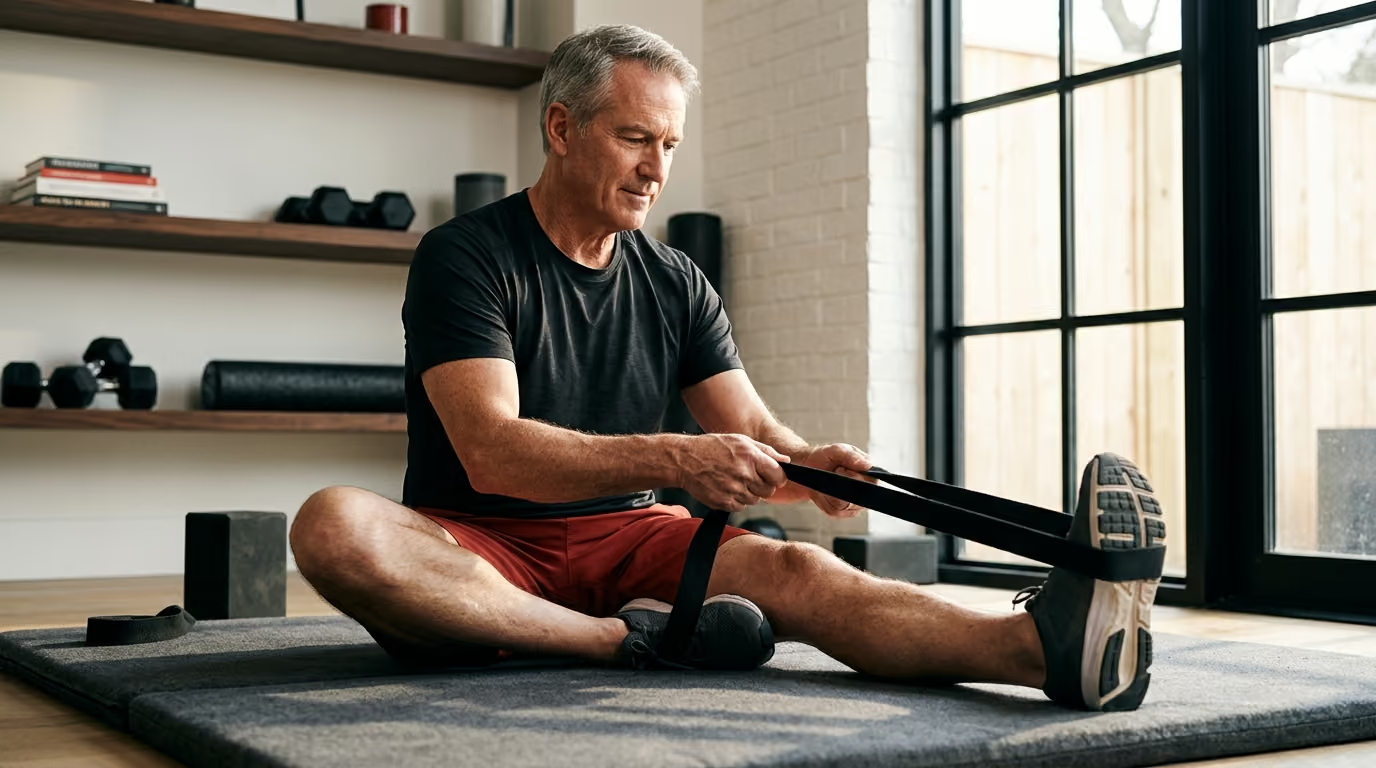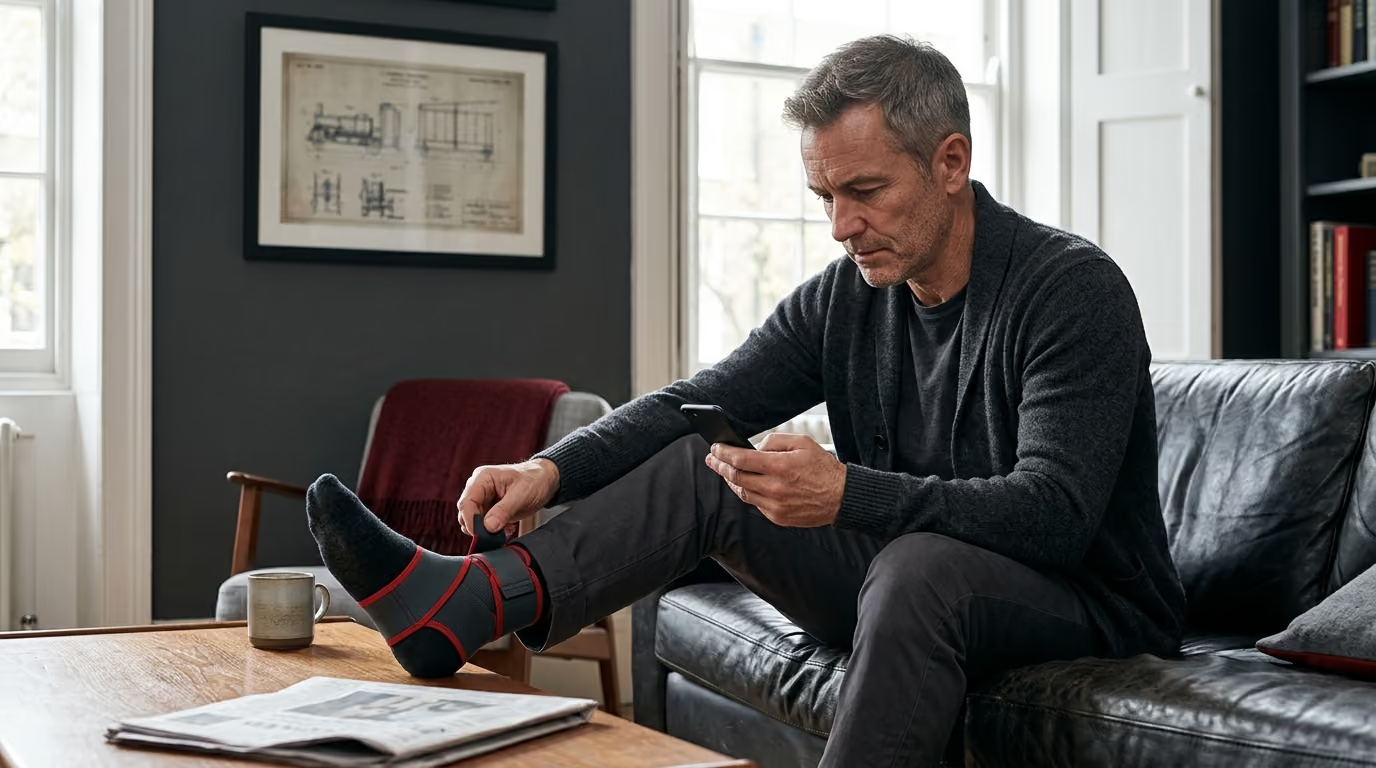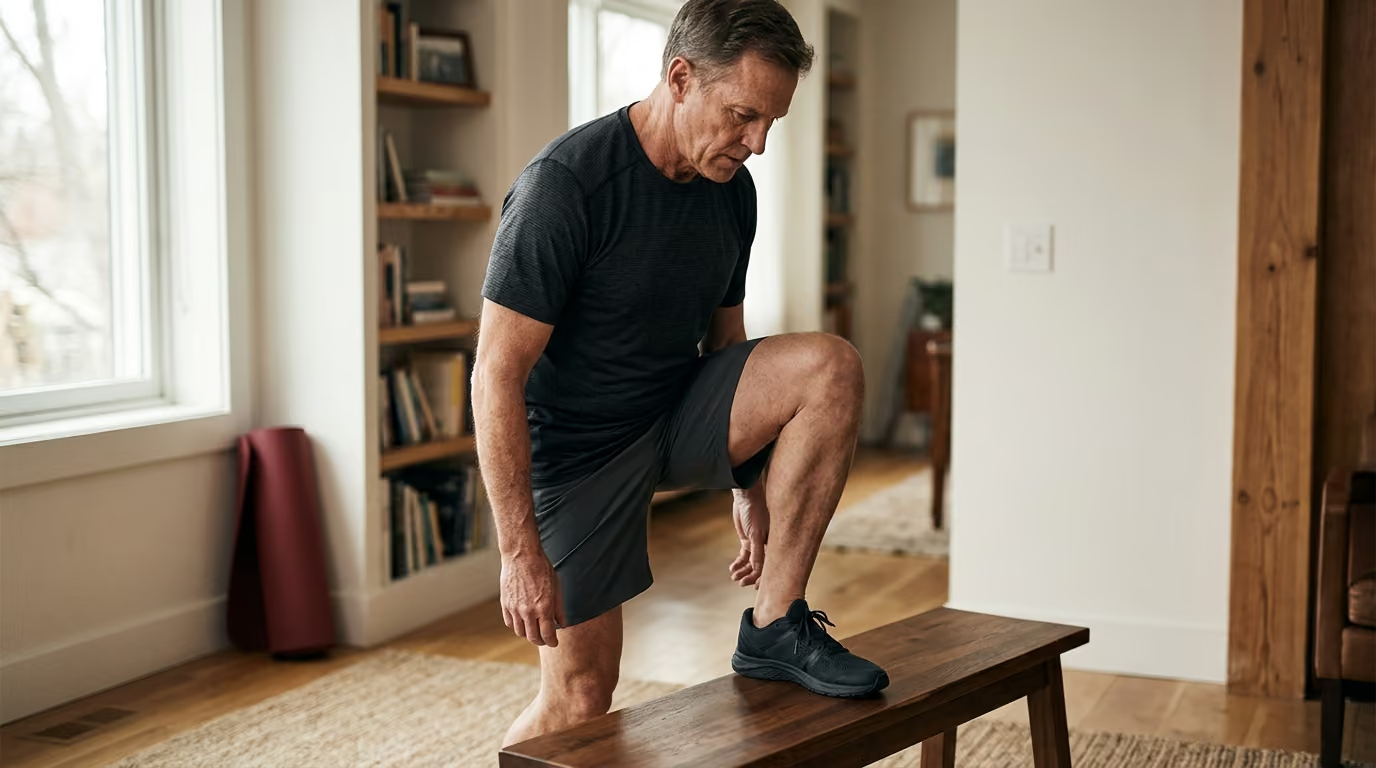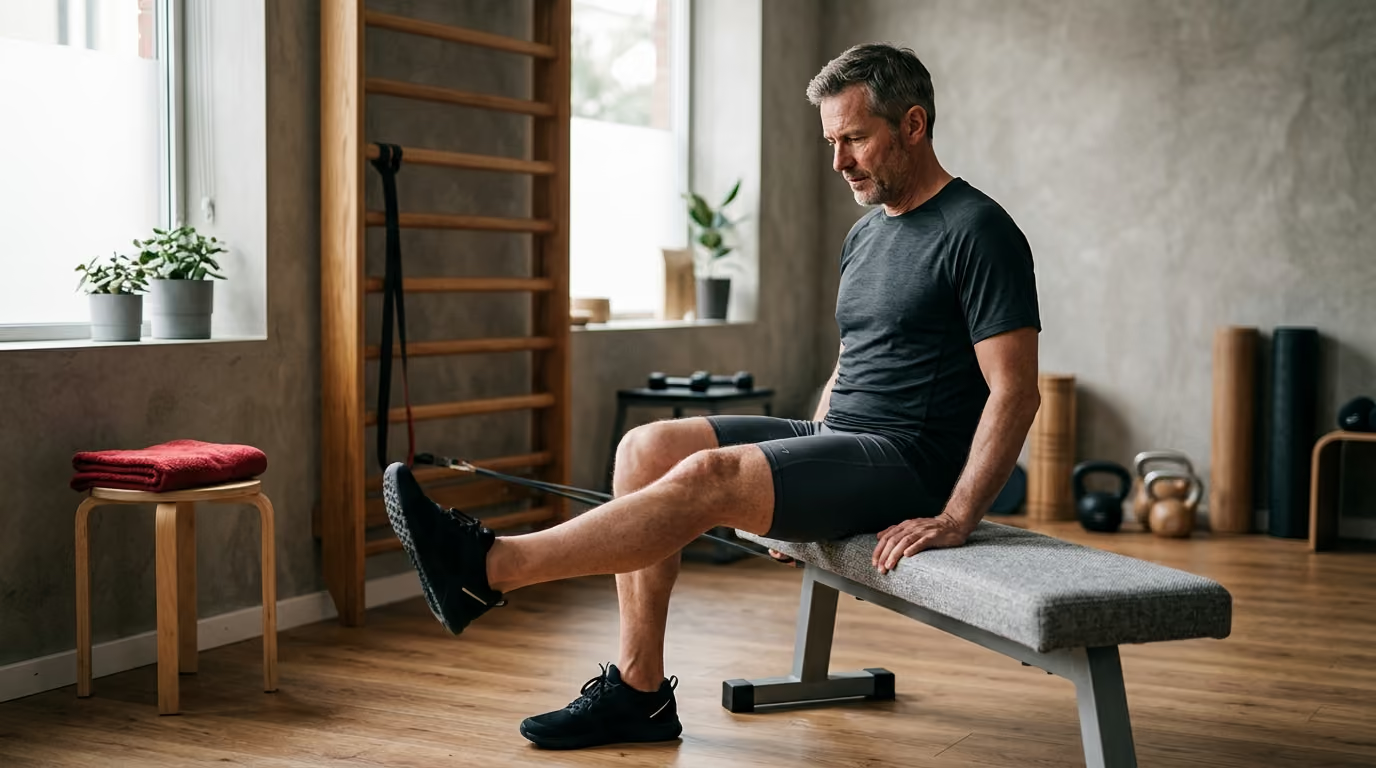
Rebuilding movement after a joint sprain, tendon issue, or period in a brace is not simply about waiting for pain to vanish. It is the structured process of restoring usable physical capacity so your body can handle real-world demands. True recovery means restoring strength, range of motion, balance, and tissue tolerance rather than just watching dates pass on a calendar.
For men over 45, an orthopedic setback often feels more frustrating than it did decades ago. Joints feel stiffer in the morning. Muscles seem to lose conditioning faster during downtime. Old movement habits can shift into lingering compensations that outlast the initial tissue strain.
This guide provides a practical, research-led roadmap for restoring movement after common, uncomplicated musculoskeletal setbacks. You will learn how load interacts with tissue tolerance, how to systematically progress activity without aggravating symptoms, and how to work alongside qualified healthcare providers.
What Does the Research Say About Recovering From Orthopedic Setbacks?
Current sports medicine and physical therapy research has shifted away from prolonged passive rest. Evidence across multiple tissue types shows that physical structures adapt to the mechanical loads placed upon them. When an ankle, knee, or shoulder is completely immobilized without a strict medical need, surrounding muscles, tendons, and ligaments lose physical capacity quickly.
Clinical consensus statements on returning to activity highlight that recovery is a continuous process. Progress should be guided by objective physical criteria rather than arbitrary calendar timelines. Rehabilitation research emphasizes tracking symptom responses, measurable muscular strength, functional movement control, and tissue tolerance to previous exercise sessions.
- Rehabilitation Progress Criteria
- 1. Symptom stability (during and 24 hours post-exercise)
- 2. Range of motion and movement quality
- 3. Muscular strength and local endurance
- 4. Balance and sensorimotor control
- 5. Tolerance to specific functional demands
For common tendon conditions such as Achilles or patellar tendinopathy, high-level systematic reviews show that progressive loading exercise serves as a first-line intervention. Research demonstrates that passive therapies alone rarely produce long-term structural or functional improvements. Tendons require progressive tension, applied through controlled resistance, to rebuild their load-bearing capacity.
Research also supports using structured pain-monitoring models during rehabilitation. Studies on tendon recovery demonstrate that experiencing mild, tolerable discomfort during exercise does not automatically indicate tissue damage. When symptoms remain low and settle back to baseline by the following morning, continued controlled loading is often safe and productive.
Systematic reviews on ligament setbacks, particularly lateral ankle sprains, point to similar conclusions. Clinical practice guidelines recommend early, protected movement, progressive strengthening, and dedicated balance training. Passive rest alone leaves residual deficits in joint position sense, which can increase the likelihood of future instability.
Why Does Movement Recovery Change After 45?
Recovering from an injury in midlife involves different physiological factors than recovering in your twenties. These shifts do not mean your body is fragile or broken. They simply reflect changes in tissue remodeling, metabolic rate, and sensorimotor processing that require a more deliberate approach to loading.
Collagen is the primary structural protein found in tendons, ligaments, and joint capsules. As men age, collagen turnover slows down, and resting tissue stiffness alters. Tendons become slightly less compliant, meaning they adapt more slowly to sudden spikes in volume or speed. When training volume jumps abruptly after weeks of rest, connective tissues experience greater mechanical strain.
- Key Factors in Midlife Recovery
- Slower baseline collagen turnover and tissue remodeling
- Accelerated loss of muscle mass during sudden inactivity
- Gradual changes in joint position sense (proprioception)
- Compounding lifestyle demands (work, stress, sleep patterns)
Inactivity also carries a higher physical cost after 45. Clinical studies on bed rest and immobilization show that older adults lose lean muscle mass and force production rapidly when a limb is completely unloaded. In healthy adults, just ten days of strict bed rest can lead to roughly one kilogram of lower-body lean tissue loss. It can also cause a drop of around 16 percent in knee extension strength.
During short periods of reduced activity, muscle strength often drops faster than visible muscle size. The nervous system becomes less efficient at recruiting high-threshold motor units. When you resume normal activities, your muscles may fatigue sooner, transferring higher mechanical stress to joints and connective tissues that are not yet conditioned for the work.
Sensory receptors within joints, known as mechanoreceptors, also experience subtle age-related changes. These receptors supply the brain with constant feedback regarding limb position and balance. Following a period of joint swelling or limited weight-bearing, this sensorimotor feedback loop can become sluggish. Rebuilding coordination requires targeted practice rather than just basic muscle strengthening.
What Are Capacity, Load, and Compensation in Real Life?
Navigating recovery requires a clear vocabulary. Most setbacks occur because of a mismatch between the physical demands placed on a joint and the current capacity of that joint to tolerate stress. Understanding these concepts helps you make sensible adjustments during daily life and training.
Understanding Capacity
Capacity is the total amount of force, range of motion, impact, or repetition your body can tolerate without triggering lasting irritation. Capacity is not a single number. It is made up of several distinct physical qualities:
- Tissue Capacity: The mechanical strength of muscles, tendons, bones, and ligaments.
- Range-of-Motion Capacity: The usable, pain-free movement available at a joint.
- Endurance Capacity: The ability of supporting muscles to perform repeated contractions without premature fatigue.
- Coordination Capacity: The ability of your nervous system to organize balance, joint alignment, and force timing.
- Confidence Capacity: Your psychological willingness to load a limb without bracing or excessive guarding.
A person might possess sufficient capacity to walk two miles on a smooth sidewalk. However, that same person may lack the capacity to hike down a steep, rocky trail or run across a field. Rehabilitation must be tailored to the specific demands of your target activities.
Deconstructing Load
Load refers to the sum of all physical forces applied to your body. It includes external resistance, but it also encompasses speed, volume, movement angles, and daily physical tasks. Load is influenced by several variables:
- Magnitude: The total weight lifted or force absorbed.
- Volume: The total repetitions, sets, or steps taken.
- Speed: How fast the muscle or tendon must contract and absorb force.
- Impact: The ground reaction forces experienced during running or jumping.
- Context: Underlying fatigue, sleep quality, and mental stress.
A movement is neither good nor bad on its own. A bodyweight squat, a heavy front squat, and a rapid step down from a ladder all place demands on the knee, but they present very different loads. Problems arise when total load exceeds your current physical capacity.
The Role of Movement Compensation
Compensation occurs when your nervous system alters a movement pattern to bypass weakness, pain, or stiffness. When you roll an ankle, you naturally limp to spare the injured joint. This protective compensation serves a helpful purpose during the early, acute phase of an injury.
- Common Compensatory Movement Patterns
- Shifting body weight away from a recovering leg during squats
- Shortening stride length on one side during normal walking
- Rotating the foot outward to avoid bending through a stiff ankle
- Arching the lower back to compensate for limited shoulder reach
- Overusing the uninjured arm for carrying and overhead tasks
Compensations become problematic when they persist long after the primary tissue has stabilized. Habitual movement workarounds can overload other joints, creating secondary aches in the hips, lower back, or opposite limb. A complete rehabilitation plan identifies these learned compensations and systematically restores symmetrical movement.
To learn more about rebuilding joint mechanics, review our guides on functional mobility and movement.
How Can You Build a Progressive Movement Framework?
Rebuilding movement does not require complicated equipment. It requires a systematic framework that guides your decisions each week. By following a structured process, you can make steady adjustments based on physical feedback rather than guesswork.
- The Six-Phase Rehabilitation Process
- Phase 1: Clarify the Problem and Rule Out Red Flags
- Phase 2: Establish a Measurable Functional Baseline
- Phase 3: Identify the Minimum Effective Exercise Dose
- Phase 4: Monitor Immediate and Delayed Symptom Responses
- Phase 5: Advance One Primary Variable at a Time
- Phase 6: Rehearse Real-World and Sport-Specific Demands
Phase 1: Clarify the Problem and Screen for Red Flags
Before starting any self-directed movement program, determine whether your injury requires formal medical evaluation. Self-management is suitable for mild, uncomplicated strains, minor sprains, or general post-rest stiffness. It is not appropriate for serious structural trauma.
Seek immediate clinical evaluation from a physician or physical therapist if you experience any of the following red flags:
- Inability to bear weight on a limb immediately following an acute incident.
- Visible structural deformity or rapid, severe joint swelling.
- A distinct popping or tearing sensation accompanied by immediate loss of muscle function.
- Numbness, tingling, or color changes radiating down the limb.
- Unexplained, severe night pain that disrupts sleep independent of movement.
- Systemic symptoms such as fever, unexplained weight loss, or general malaise.
If these red flags are absent, document the specific movements, positions, and daily tasks that provoke your symptoms. Understanding what triggers discomfort helps you choose sensible starting exercises.
Phase 2: Establish a Measurable Baseline
To track improvement, establish a clear, repeatable baseline of your current physical function. This gives you an objective point of comparison to review every week.
Select simple, functional movements relevant to your injury. For lower-body setbacks, baseline tests might include a double-leg sit-to-stand from a standard chair, a single-leg balance test on a firm floor, or a set of standing calf raises. For upper-body issues, your baseline could be reaching overhead, holding a light weight in front of your chest, or rotating your arm outwards.
Record how these movements feel during the test, how many repetitions you can perform comfortably, and how your joint responds the following morning. If you want to explore general conditioning principles, read our overview of mobility and recovery strategies.
Phase 3: Choose the Minimum Effective Starting Dose
When reintroducing movement, begin with an exercise dose that stimulates muscular and connective tissue adaptation without overwhelming your current capacity. The starting dose should feel manageable and easy to control.
- Core Variables of an Exercise Prescription
- Exercise Selection: Movements that load target tissues without sharp pain
- Contraction Type: Static holds (isometrics) or slow dynamic repetitions
- Volume: Manageable sets and repetitions (for example, 2 sets of 8 to 10 repetitions)
- Resistance: Bodyweight or light external load moved with deliberate tempo
- Frequency: Alternating days to allow tissue response monitoring
Starting conservatively allows you to observe how your body processes mechanical tension over a full 24-hour cycle. You can always increase the challenge later once you confirm the joint tolerates the entry-level dose.
Phase 4: Monitor the 24-Hour Response
Tracking how your body feels during and after exercise is vital. Discomfort is not always a sign of damage, but it serves as valuable data. Use a standard pain scale from 0 to 10, where 0 represents no pain and 10 represents severe pain.
- The Traffic Light Monitoring System
- GREEN LIGHT (Tolerable and Productive)
- Discomfort remains mild (roughly 0 to 3 out of 10) during exercise
- Movement quality remains smooth and symmetric
- Joint stiffness settles quickly after movement
- Symptoms return to resting baseline by the next morning
- Action: Maintain the current routine or progress slightly next session.
- YELLOW LIGHT (Approaching the Limit)
- Discomfort reaches moderate levels (around 4 to 5 out of 10) during exercise
- Movement quality deteriorates slightly toward the end of a set
- Noticeable morning stiffness or mild swelling the following day
- Joint requires several hours to settle back to normal
- Action: Hold the current dose steady or reduce volume until symptoms stabilize.
- RED LIGHT (Excessive Load)
- Sharp, catching, or escalating pain (6 out of 10 or higher)
- Immediate swelling, joint warmth, or significant loss of range
- Visible limping or marked movement compensation
- Symptoms remain elevated well into the next day
- Action: Stop the provocative exercise and consult a qualified clinician.
The delayed response is the most reliable indicator of tissue tolerance. If a joint feels acceptable during an evening workout but is stiff, swollen, and painful the next morning, the total load exceeded current capacity.
Phase 5: Progress One Variable at a Time
When advancing an exercise program, change only one training variable at a time. Modifying multiple elements simultaneously makes it impossible to identify which factor caused a flare-up or drove an improvement.
Use this sequence when progressing an exercise:
- Improve Movement Quality: Perform the exercise with greater control and zero visible compensation.
- Increase Repetitions or Duration: Build local muscular endurance by adding a few controlled repetitions.
- Expand Range of Motion: Move through a deeper, controlled excursion as joint tolerance improves.
- Add External Resistance: Introduce dumbbells, bands, or machines to challenge muscle strength.
- Increase Movement Speed: Introduce faster contraction speeds only after slow, heavy loading is well tolerated.
- Introduce Impact or Dynamic Drills: Reintroduce running, hopping, or directional changes last.
Many recreational athletes rely on the popular ten percent rule, which suggests capping weekly volume increases at ten percent. Research reviews note that while this rule serves as a cautious planning guideline, it is not an exact biological law. Some individuals adapt comfortably to larger steps, while others require smaller adjustments depending on their baseline conditioning and tissue irritability.
Phase 6: Rehearse Real-World Demands
Regaining basic gym strength does not automatically prepare you for the unpredictable forces of daily life, sports, or outdoor recreation. The final stage of rebuilding movement bridges the gap between structured exercise and your target lifestyle.
If your goal is hiking, your training must include descending stairs, stepping down from elevations, and walking on uneven surfaces under light fatigue. If your goal is recreational tennis, golf, or lifting, your program must include rotational control, reactive balance, and multi-directional footwork. A criteria-informed progression ensures you build the specific physical capacities required for your chosen pursuits.
For deeper insights into maintaining physical capacity through midlife, explore our articles on strength and muscle development.
How Should You Manage Tendon and Ligament Setbacks?
Tendons and ligaments serve different mechanical roles and respond to physical loading in distinct ways. Understanding these differences helps you select the right movement strategies for specific issues.
Managing Tendon Irritation
Tendons connect muscle to bone and act like stiff springs that transmit force and absorb elastic energy. Tendinopathy is characterized by localized pain that increases with load, particularly during fast or spring-like movements. It is not a simple inflammatory swelling that resolves with passive rest.
Research indicates that tendons respond positively to progressive mechanical tension. Complete rest decreases a tendon's load capacity, making it more sensitive when you attempt to return to activity.
- Phased Tendon Loading Strategy
- 1. Isometric Loading: Static holds against resistance to reduce pain and maintain muscle activation.
- 2. Heavy Slow Resistance (HSR): Slow lifting and lowering (3 to 4 seconds each way) with moderate-to-heavy loads.
- 3. Functional Range Loading: Performing exercises through deeper joint angles under steady control.
- 4. Energy Storage and Release: Reintroducing fast, elastic movements such as skips or light hops.
- 5. Sport-Specific Integration: Returning to full-speed running, jumping, and cutting drills.
Consider an illustrative model of a 52-year-old man experiencing mid-portion Achilles tendon irritation after adding hill sprints to his weekly routine. An evidence-informed rehabilitation approach would not involve resting in a chair for six weeks.
- Illustrative Tendon Loading Model
- Initial Modification: Temporarily pause hill running while maintaining flat-ground walking within tolerable limits.
- Step 1: Perform standing isometric calf holds on flat ground, holding for 30 to 45 seconds across several sets.
- Step 2: Transition to slow, bilateral heel raises using a three-second lifting and three-second lowering tempo.
- Step 3: Progress to single-leg heel raises with an added weighted vest or dumbbell to build tissue capacity.
- Step 4: Add gentle double-leg hopping and flat-ground jogging intervals once slow strength is restored without morning stiffness.
- Step 5: Gradually reintroduce uphill walking and running intervals over several weeks.
This progressive approach steadily restores tendon capacity while keeping symptom flare-ups within acceptable boundaries.
Managing Ligament Sprains and Instability
Ligaments connect bone to bone, providing passive structural stability and housing crucial sensory receptors. A lateral ankle sprain is one of the most common orthopedic setbacks in active adults. When an ankle rolls, ligament fibers stretch, causing temporary swelling, reduced range of motion, and impaired balance.
Clinical practice guidelines emphasize that ankle rehabilitation should incorporate early protected motion, progressive strengthening of the surrounding lower-leg muscles, and sensorimotor balance training.
- Phased Ligament Recovery Strategy
- 1. Acute Protection: Gentle active ankle circles, toe scrunches, and normal gait practice in supportive footwear.
- 2. Strength and Range: Resisted ankle eversion, calf raises, and controlled bodyweight step-ups.
- 3. Static Balance: Single-leg balance on a firm floor, progressing from eyes open to eyes closed.
- 4. Dynamic Balance: Single-leg balancing on foam pads, catching a ball, or reaching with the opposite foot.
- 5. Agility and Impact: Controlled side-shuffles, ladder drills, and low-amplitude jumping.
Consider an illustrative model of a 48-year-old man who sustained a mild lateral ankle sprain stepping off a curb. Instead of relying solely on an elastic brace for a month, he initiates an active recovery plan once acute pain permits normal walking.
- Illustrative Ligament Progression Model
- Week 1: Practice seated ankle alphabet movements and active calf stretches while restoring a natural walking heel-to-toe stride.
- Weeks 2-3: Perform standing single-leg balance holds for 30 seconds alongside resisted band exercises for the peroneal muscles.
- Weeks 4-5: Introduce dynamic balance drills, such as standing on one leg while tapping the opposite foot forward, sideways, and backward.
- Weeks 6: Introduce light straight-line jogging, progressing to figure-eight running drills and lateral hops once single-leg stability is confirmed.
Restoring balance and proprioception reduces the risk of recurrent sprains, keeping you confident on uneven trails and athletic courts.
How Do Balance and Coordination Protect Aging Joints?
Strength is essential, but it is only one component of movement. Sensorimotor control, which includes balance, reaction time, and spatial awareness, ensures that muscles generate force at the correct split-second to protect joints from awkward loading.
The World Health Organization physical activity guidelines recommend that older adults incorporate varied, multicomponent physical activities that emphasize functional balance and strength training on three or more days per week. In the United States, public health data indicates that more than 14 million adults aged 65 and older fall each year. Research summaries show that structured exercise programs combining balance, strength, and functional movement can reduce fall-related injuries by 32 to 40 percent.
- Balance Progression Levels
- Level 1: Wide double-leg stance on a firm, flat surface
- Level 2: Narrow stance with feet touching side by side
- Level 3: Tandem stance (one foot placed directly in front of the other)
- Level 4: Single-leg stance on a solid floor
- Level 5: Single-leg stance on a compliant foam pad or balance cushion
- Level 6: Single-leg stance combined with head turns or catching a light ball
While a 45-year-old man is not in the older adult demographic, building sensorimotor capacity during midlife provides protective physical reserves. Integrating balance drills into your weekly routine maintains the neural pathways that govern rapid postural corrections.
- Weekly Balance Integration Ideas
- Balance on one leg for 30 seconds while brushing your teeth or waiting for coffee
- Perform bodyweight squats with a slow, controlled five-second lowering phase
- Walk heel-to-toe along a straight line on the floor before your normal lifting session
- Include multi-directional lunges and lateral step-downs in your warm-ups
These simple drills challenge the nervous system, helping joints stay stable during unexpected trips, slips, or sudden direction changes.
What Are the Most Common Misconceptions About Injury Recovery?
Navigating orthopedic recovery can be confusing due to widespread fitness myths and outdated rehabilitation beliefs. Clarifying these misunderstandings helps you make informed, confident choices throughout your physical recovery.
- Myth 1: "Complete rest is the safest way to heal an injured joint."
- Reality: Prolonged inactivity causes rapid declines in muscle mass, tendon stiffness, and neural control. Except for fractures or acute tears requiring surgical immobilization, gentle, progressive loading supports tissue recovery far better than total bed rest.
- Myth 2: "Any pain felt during exercise means you are causing new structural damage."
- Reality: Pain is a complex warning signal managed by the nervous system. Low levels of discomfort that settle quickly after exercise and do not worsen the next morning are generally safe and can help stimulate tissue adaptation.
- Myth 3: "Aggressive static stretching is the best way to fix a stiff joint."
- Reality: Joint stiffness following an injury often results from muscular guarding, joint effusion, or weakness at end-range positions. Controlled active movement and loaded strength exercises through a full, comfortable range restore functional mobility more effectively than passive stretching alone.
- Myth 4: "Passing an isolated strength test means you are ready for unrestricted sport."
- Reality: Isolated machine strength does not account for the high speeds, multi-directional forces, reactive balance demands, and mental focus required in real-world athletics. Full clearance requires progressive exposure to sport-specific drills under mild fatigue.
To learn more about practical, research-backed approaches to vitality and physical health, browse our healthy aging resources.
Where Is the Evidence Still Thin or Mixed?
Honest, evidence-first health reporting requires acknowledging the boundaries of current scientific knowledge. While broad rehabilitation principles are well supported, several specific areas continue to show mixed or preliminary evidence.
- Areas Where Current Research Remains Inconclusive
- Universal load progression metrics (such as the rigid ten percent rule) lack definitive clinical trial confirmation.
- Passive modalities (therapeutic ultrasound, low-level laser, massage guns) show minimal long-term benefit compared to active loading exercise.
- Optimal exercise dosages (specific sets, repetitions, and tempos) vary widely between individuals and tissue types.
- The precise relationship between structural imaging findings (MRIs showing cartilage wear or tendon changes) and actual daily pain levels remains weak.
Many men over 45 have imaging reports that show meniscus fraying, disc bulges, or mild tendon degeneration despite being completely pain-free. Diagnostic scans must always be interpreted alongside clinical examinations and real-world functional capabilities rather than viewed as definitive proof of physical limitation.
For more deep-dive analyses on training science and longevity, check out our men's health research guides.
What Is the Core Takeaway for Moving Forward?
Rebuilding movement after an orthopedic injury is a deliberate process of matching mechanical load to your current physical capacity while monitoring your 24-hour symptom response. Staying consistent with progressive strength work, active mobility, and balance training restores physical resilience far more effectively than waiting for time alone to heal your body.
Frequently Asked Questions About Orthopedic Recovery After 45
How should I adjust my routine if I experience a temporary flare-up?
If your symptoms cross into the yellow or red light zones, do not abandon all physical activity. Reduce one or two training variables, such as external weight, total repetitions, or movement speed, for a few days. Focus on comfortable active mobility and isometric holds until morning stiffness returns to baseline, then gradually build your volume back up.
How quickly does muscle mass return after a period in a walking boot or cast?
Muscle size and neural drive begin recovering as soon as progressive loading is reintroduced. While older muscle tissue may require several weeks of consistent resistance training to fully regain lost mass, neural adaptations occur rapidly within the first two to three weeks. Focus on consistent, progressive resistance exercises two to three times per week.
Can I continue cardiovascular cross-training while rehabilitating a lower-body injury?
Yes, maintaining aerobic fitness supports general tissue healing, mood, and metabolic health. Choose low-impact alternatives that do not irritate the recovering joint, such as stationary cycling, pool walking, swimming, or rowing. Ensure that your cross-training sessions do not leave you overly fatigued for your primary rehabilitation exercises.
When is it safe to transition from slow strength exercises to running or jumping?
You can safely introduce higher-impact activities once you achieve several objective milestones. You should be able to walk briskly for 30 to 45 minutes without symptoms, demonstrate symmetric single-leg strength and balance, and perform repeated single-leg calf raises with good control. Begin with walk-jog intervals on flat, forgiving surfaces before attempting continuous running, hill workouts, or explosive sport drills.
Sources
- 2016 Consensus statement on return to sport
- Paton BM, et al. Br J Sports Med 2023;57:278–29 . doi:10.1136/bjsports-2021-105384
- London International Consensus and Delphi study on ...
- Physical Activity, Injurious Falls, and Physical Function in ...
- Continued sports activity, using a pain-monitoring model ...
- Pain-guided activity modification during treatment for patellar ...
Stay sharp
Get the word
Join our newsletter for the best writing advice and stories from the field.