Joint replacement rehabilitation is not a countdown to a specific date on the calendar. It is a staged process of restoring joint motion, muscle capacity, movement control, and tissue tolerance for physical work. It is not an automatic return to prior athletic capacity just because the damaged joint surfaces have been removed. This guide examines what the scientific evidence shows about rebuilding strength and mobility after total hip, knee, and shoulder arthroplasty, and how to safely navigate long-term training.
What Does the Research Show About Rebuilding Strength After Joint Replacement?
Current clinical trials show that joint replacement successfully relieves joint pain and restores basic daily movement. Research examining postoperative rehabilitation protocols shows that multiple structured approaches produce broadly similar functional recovery. A systematic review evaluating diverse rehabilitation programs after total hip arthroplasty found no clear differences among acute and post-acute pathways for pain relief, strength, and activities of daily living, though the certainty of this evidence remains low.
Pain relief does not automatically rebuild muscle strength or motor coordination. Systematic review data on total knee arthroplasty reveals persistent quadriceps weakness compared to healthy controls at every postoperative milestone examined. The pooled effect sizes for quadriceps deficits ranged from negative 2.81 to negative 0.53 across multiple years. Hamstring weakness was also documented one to three years after knee surgery before evening out in later follow-up periods.
The rehabilitation literature for upper-limb replacements shows substantial variation across clinical centers. Published protocols following anatomic total shoulder arthroplasty recommend sling immobilization anywhere from three to eight weeks. Some shoulder protocols introduce resisted loading within the first six weeks, while others delay resistance for several months.
Observational data on recreational activity shows that most patients resume physical hobbies after joint replacement. An umbrella review of hip replacement studies reported an average return to sport rate of 82 percent, with individual trial results ranging from 55 percent to 104 percent. The higher numbers represent people who adopted new physical activities after surgery that they did not practice beforehand. The same review noted that objective return to previous physical capacity can take up to one full year.
Evidence on shoulder arthroplasty demonstrates high rates of return to general recreation. A systematic review of shoulder replacement patients found an overall return to sport rate of 85.1 percent, with 72.3 percent returning at an equivalent or higher skill level. For reverse total shoulder arthroplasty, reviews show return rates between 60 percent and 93 percent, with an average resumption time of 5.3 months. Resuming overhead athletics or tennis remains more variable after reverse shoulder procedures.
Recent evidence also supports structured preparation before surgery. An overview of systematic reviews and randomized trials found that prehabilitation was associated with fewer postoperative complications, improved strength, and better early functional scores after hip and knee replacement. These benefits were most noticeable in the first six months after surgery before standard rehabilitation narrowed the gap.
Why Does Joint Function and Movement Change After 45?
Joint replacement addresses damaged cartilage and bone, but the surrounding muscular and neurological systems experience natural midlife shifts. Muscle mass and the proportion of fast-twitch muscle fibers decline gradually with age. When an arthritic joint causes months or years of painful movement avoidance, that natural muscle loss accelerates rapidly in the affected limb.
The nervous system also changes how it talks to muscles surrounding a damaged or replaced joint. Joint swelling and surgical trauma trigger arthrogenic muscle inhibition. This is an involuntary neural shutdown where the brain limits full activation of nearby muscles, such as the quadriceps after knee surgery or the rotator cuff after shoulder surgery. The muscle tissue remains healthy, but the central nervous system refuses to recruit all available fibers.
Joint mechanoreceptors, which live in the original capsule and ligaments, provide position sense and balance feedback. Surgical removal of the damaged joint surfaces alters these sensory structures. The brain must learn to rely more heavily on visual feedback, vestibular cues, and receptors in nearby tendons and muscles to manage joint stability.
Connective tissues, including tendons and joint capsules, lose a fraction of their natural water content and elasticity after midlife. This change alters how tissues handle sudden tension or heavy volume. Rebuilding joint tolerance after 45 requires structured progressive overload so that tendons, bones, and muscles adapt without developing chronic irritation.
Understanding these biological changes allows men to approach recovery with realistic expectations. Slower progress is not a sign of surgical failure or personal weakness. It reflects the normal biological pace of neurological retraining, collagen remodeling, and muscle fiber recruitment in mature adults.
What Does Successful Joint Rehabilitation Mean in Real Life?
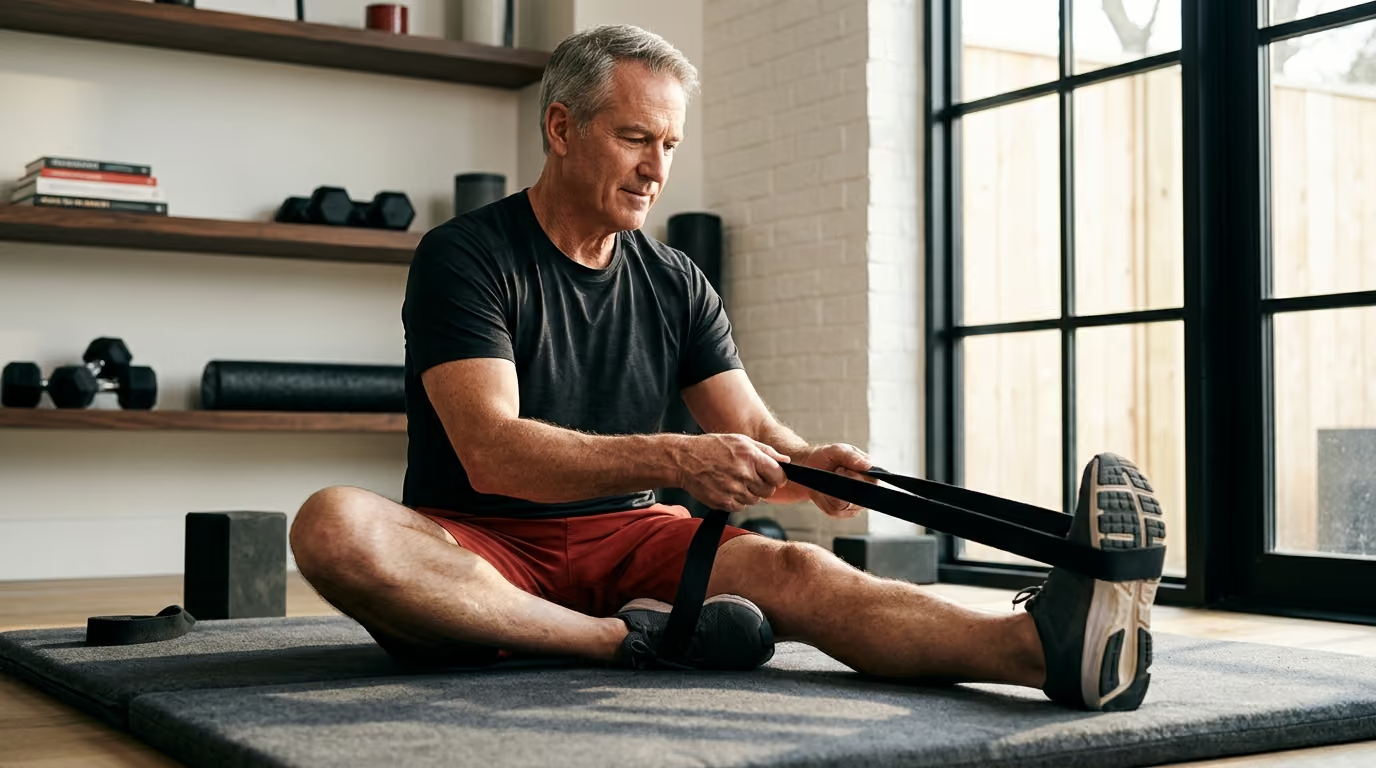
Rebuilding capacity after a joint procedure requires understanding true joint mobility. Mobility is not passive flexibility, such as pulling a leg into a stretch with a strap. True mobility requires active control, joint range, muscular force, balance, and the coordination to perform tasks under fatigue.
Movement quality matters just as much as completing a specific number of repetitions. A clean squat, step-down, or overhead press requires smooth pelvic and trunk control, controlled lowering, and minimal compensation. Dropping onto an operated hip during stair descent or hiking the shoulder blade during an overhead reach indicates that the movement exceeds current muscular control.
Load tolerance must also be separated into acute tolerance and durable tolerance. Acute tolerance is the ability to complete an exercise session or a three-mile walk without stopping. Durable tolerance is the ability of the joint, bone interface, and surrounding muscles to recover without persistent swelling, stiffness, or limping over the next 48 hours.
The practical goal of rehabilitation is restoring functional capacity for work, recreation, and daily independence. This includes moving from flat-ground walking toward negotiating steep trails, carrying heavy objects, climbing stairs smoothly, and getting down to the floor. Improving your movement quality and functional mobility provides the foundation needed for these diverse activities.
How Should Training Be Structured Across Recovery Phases?
Progressing after joint replacement works best through functional criteria rather than rigid calendar dates. Each phase builds the baseline capacity needed for the next level of physical demand.
Phase 0: Preparation and Prehabilitation
Prehabilitation prepares the body and home environment for the physical stress of surgery. The primary focus is building general cardiovascular conditioning, strengthening the surrounding musculature, and practicing movements that will be required immediately after surgery.
Useful prehabilitation priorities include:
- Learning to use crutches, walkers, or canes with correct gait mechanics.
- Practicing sit-to-stand transitions from standard and elevated chair heights.
- Strengthening the upper body for bed mobility and transfers.
- Establishing baseline walking distance, balance metrics, and stair climbing ability.
Entering surgery with higher baseline strength provides a larger physical reserve. It helps men navigate the early days of recovery with greater confidence and reduced complication risks.
Phase 1: Protection, Symptom Management, and Basic Independence
Early postoperative care focuses on protecting healing surgical repairs, controlling swelling, and restoring basic movement. Clinical guidelines from the National Institute for Health and Care Excellence identify core early priorities as gentle range of motion, muscle activation, gait re-education, safe transfers, and personal care activities.
Key objectives during this phase include:
- Safely getting into and out of bed, chairs, and bathrooms.
- Managing acute postoperative swelling with elevation, movement, and prescribed ice routines.
- Restoring voluntary contraction of inhibited muscles through isometric holds.
- Walking short distances with prescribed assistive devices while maintaining a symmetrical stride.
The guiding rule during Phase 1 is restoring safe daily function without provoking excessive inflammation in healing tissues. Progress is measured by independence and movement quality, not heavy resistance.
Phase 2: Restoring Active Range and Movement Control
Once acute surgical pain and swelling subside, the focus shifts toward restoring usable joint range and eliminating movement compensations. A large range of motion that causes pain or instability is less valuable than a slightly smaller range performed with control.
This phase emphasizes:
- Active and active-assisted range of motion exercises within surgeon-cleared boundaries.
- Progressive weaning from assistive walking devices once limp-free gait is established.
- Restoring symmetrical weight bearing during standing, reaching, and partial bending tasks.
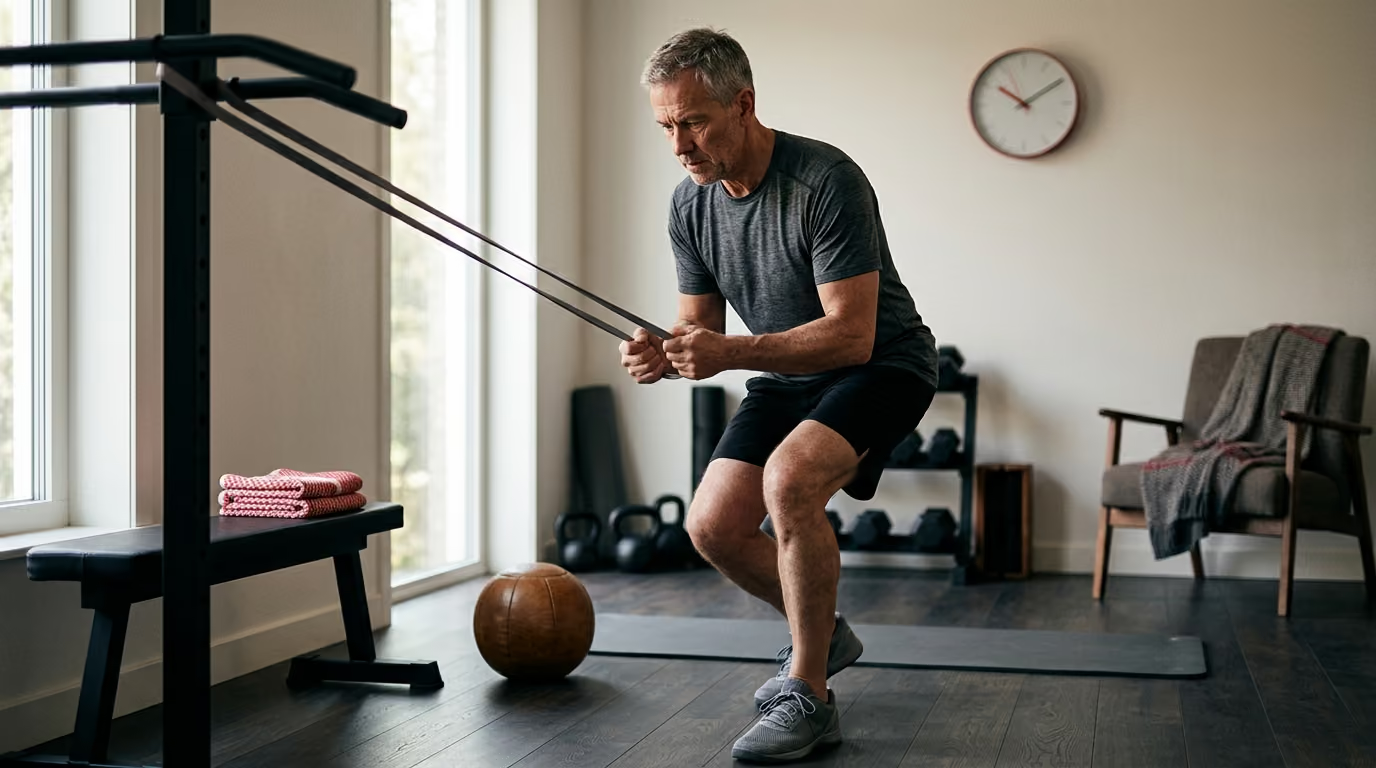
- Introducing light resistance bands or bodyweight exercises to rebuild muscle endurance.
Men recovering from lower-limb replacements work on restoring smooth knee extension during heel strike and active hip extension during push-off. Shoulder replacement patients focus on smooth scapular motion and active arm elevation without excessive shrugging.
Phase 3: Foundational Strength and Muscular Capacity
Phase 3 transitions from isolated movements to multi-joint strength training. The objective is rebuilding force production, eccentric control, and physical endurance across the kinetic chain.
Core movement patterns include:
- Squat variations, starting with box squats and progressing to goblet squats.
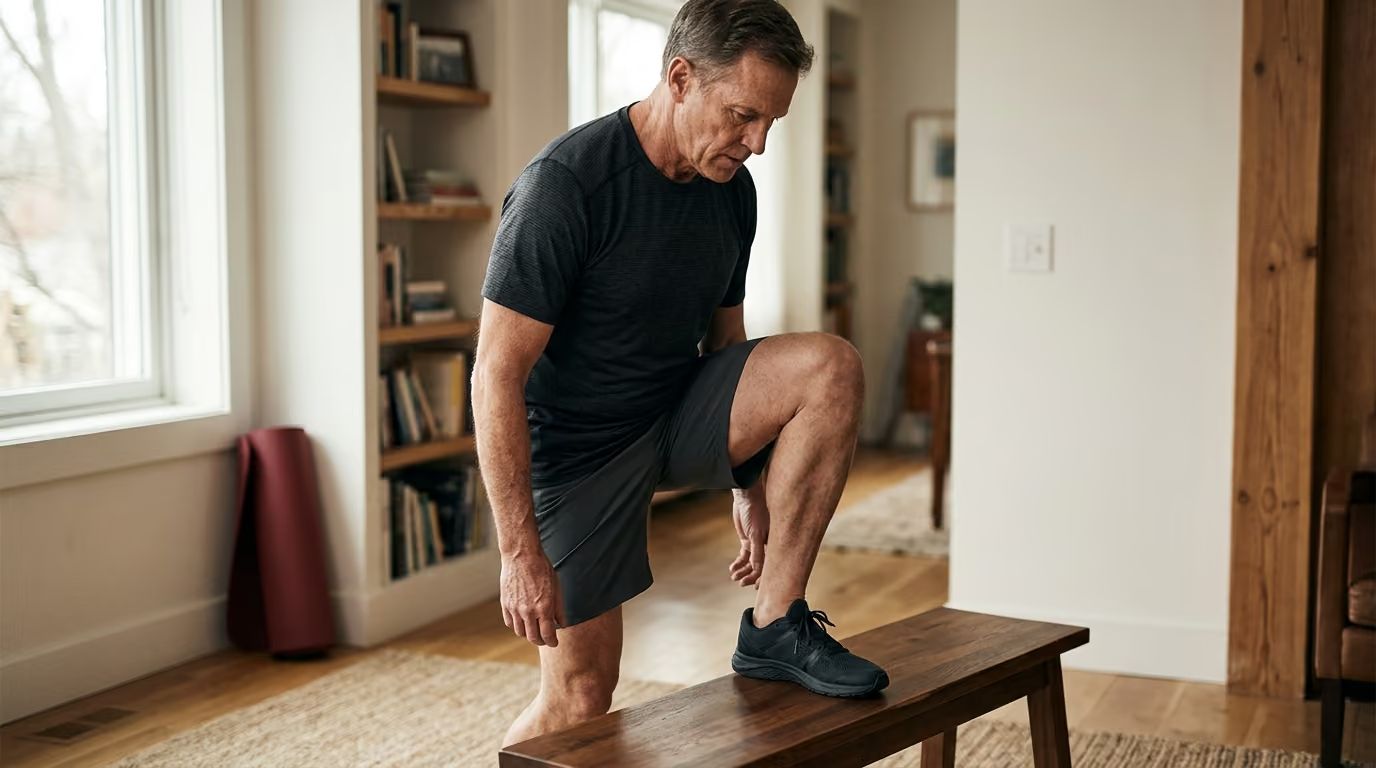
- Step-ups and slow, controlled step-downs using low platforms.
- Hip hinge variations, glute bridges, and hip abduction work.
- Upper-body rowing, horizontal pressing, and guided overhead reaching as permitted by surgical guidelines.
Progressing strength does not rely solely on adding barbell weight. Useful progression variables include slowing the lowering phase, increasing repetitions, adding sets, decreasing hand support, and challenging balance. Incorporating targeted routines for muscle building and strength development helps rebuild functional capacity safely.
Phase 4: Advanced Function and Recreational Preparation
This phase bridges the gap between basic daily living and higher-demand recreation, manual labor, or outdoor sports. The demands of hiking an uneven trail, playing doubles tennis, or carrying heavy bags require specific preparation.
Advanced preparation priorities include:
- Navigating uneven terrain, stairs without handrails, and low-angle hills.
- Floor-to-stand transitions and kneeling tolerance drills where appropriate.
- Multi-directional movement drills, lateral stepping, and controlled deceleration.
- Low-impact cardiovascular training, such as stationary cycling, rowing, or pool-based swimming.
Progression into Phase 4 depends on meeting specific physical criteria rather than passing a certain week on the calendar. Demanding physical activities should be introduced gradually to monitor how the joint responds to new movement patterns.
Phase 5: Long-Term Maintenance Training
Formal physical therapy eventually concludes, but joint health requires ongoing physical maintenance. The American Association of Hip and Knee Surgeons recommends continuing a structured exercise program two to three days per week after completing formal recovery.
Long-term programming should balance:
- Resistance training for the major muscle groups of the upper and lower body.
- Regular low-impact aerobic exercise for cardiovascular health and tissue blood flow.
- Balance, single-leg stability, and joint control drills.
- Sensible volume management that avoids sudden, extreme spikes in training intensity.
Long-term joint protection is not achieved through prolonged inactivity. It is built through consistent, progressive training that keeps muscles, bones, and tendons resilient over time. Combining strength work with structured recovery protocols and joint care keeps mature athletes active for decades.
When Can You Return to Lifting, Running, Golf, or Swimming?
Returning to recreational sports requires matching physical readiness to the mechanical demands of the sport. Orthopedic sports medicine commonly groups activities into a three-tier impact framework.
The Three-Tier Activity Framework
- Low-Impact Activities: Generally recommended for all patients after achieving adequate strength and range. Examples include walking, stationary cycling, swimming, flat-water kayaking, low-resistance strength machines, and golf.
- Intermediate-Impact Activities: Recommended primarily for patients with prior experience, good joint stability, and adequate muscular control. Examples include brisk hiking on moderate terrain, doubles tennis, cross-country skiing, road cycling, and moderate free-weight lifting.
- High-Impact Activities: Generally not recommended for routine participation because of high joint impact, shear forces, and fall risks. Examples include distance running, singles tennis, basketball, soccer, high-impact plyometrics, and contact sports. Decisions regarding these activities require individual discussion with the surgeon.
Hip Replacement Considerations
Return to sport rates after total hip arthroplasty are high, but tissue adaptation requires time. The umbrella review evidence notes that returning to moderate or high-impact activities demanding substantial coordination or muscular strength should be approached gradually at approximately seven months. Returning to full preoperative sporting intensity can take up to a full year.
A clinical study of hip replacement patients found that 73.2 percent of previous athletes returned to sport, while 23.3 percent of inactive individuals began sports postoperatively. Low-impact sports had a higher return rate than high-impact sports, showing 72.4 percent participation compared to 50.0 percent. The study also observed that surgical approach did not significantly alter long-term sporting participation.
Shoulder Replacement Considerations
Anatomic total shoulder arthroplasty preserves normal anatomy and generally allows a high return to recreational activities when rotator cuff integrity is maintained. Reverse total shoulder arthroplasty alters joint mechanics by shifting the center of rotation, relying primarily on the deltoid muscle for arm elevation.
Reviews show that while up to 79 percent of reverse shoulder replacement patients return to recreational sports, overhead athletes experience more mixed outcomes. Returning to sports with high impact forces, heavy overhead loading, or rapid deceleration requires extensive rotator cuff and periscapular conditioning.
Objective Clearance Criteria
Before progressing to higher-demand recreational sports, evaluate these functional criteria:
- Lower-Body Sports: Can you walk briskly for 45 minutes without limping? Can you perform 15 controlled single-leg calf raises and a smooth single-leg step-down from a standard step? Is swelling absent 24 hours after challenging training?
- Upper-Body Sports: Has your surgeon cleared full resisted loading? Can you elevate your arm smoothly without hiking your shoulder blade? Do you possess adequate strength to control unexpected movements or resistance?
Meeting functional criteria ensures that the joint, implant interface, and supporting soft tissues can handle real-world physical forces. Developing full-body capacity through a comprehensive physical performance and athletic training framework protects joints during complex recreational movements.
What Questions Should You Ask Your Surgeon and Physical Therapist?
Clear communication with your orthopedic surgical team and physical therapy provider eliminates guesswork and prevents avoidable complications.
Critical Questions for Your Orthopedic Surgeon
- Which specific implant design and fixation method was used for my joint?
- Were any specific tendons, capsules, or muscle attachments repaired that require movement restrictions?
- Are there absolute movement precautions I must follow, such as limits on hip flexion, internal rotation, or shoulder external rotation?
- What timeline do you recommend before I introduce resistance machines, free weights, or pool activities?
- Are there specific symptoms, such as sudden pain, clicking, or localized heat, that require immediate clinical evaluation?
- Does my bone quality or surgical complexity alter my long-term activity recommendations?
Critical Questions for Your Physical Therapist
- What is my primary physical limitation right now: joint range, muscle activation, eccentric strength, balance, or movement confidence?
- What specific movement compensations are you noticing in my walking, squatting, or reaching mechanics?
- What objective test will tell us that I am ready to progress to heavier loads or higher-impact tasks?
- How much muscle soreness or joint stiffness is normal after our sessions, and how quickly should it resolve?
- How can I modify my home exercise program if I experience a minor joint flare?
Managing Specific Clinical Scenarios
Certain joint replacement procedures require customized management strategies:
- Revision Joint Replacement: Revisions involve removing an existing implant and rebuilding bone or soft tissue. Rehabilitation timelines are usually longer, and weight-bearing or range-of-motion restrictions are strictly tailored to tissue stability.
- Fracture-Related Procedures: Joint replacements performed after traumatic fractures involve injured bone and surrounding muscles. Neuromuscular recovery and balance training require greater attention than in elective procedures.
- Persistent Quadriceps Deficits After Knee Replacement: If quadriceps weakness persists despite good pain relief, prioritize progressive resistance training, eccentric step-downs, and neuromuscular electrical stimulation rather than simple passive stretching.
- Multiple Joint Replacements: When managing bilateral procedures or combined hip and knee replacements, physical progression must respect the capacity of the least stable joint. Whole-body balance and functional coordination take priority over single-joint metrics.
Which Common Joint Replacement Claims Are Unsupported by Science?
Several widespread assumptions regarding joint replacement recovery conflict with current clinical research.
Misconception 1: "The artificial joint makes the limb indestructible."
An artificial joint eliminates joint surface arthritis, but the bone-implant interface and surrounding muscles remain biological. Bones require sensible loading to maintain density, and tendons require progressive overload to adapt. Subjecting an artificial joint to excessive, unconditioned impact risks loosening, wear, or peri-prosthetic soft tissue injuries.
Misconception 2: "Complete pain relief means the joint is fully recovered."
Pain reduction typically occurs within the first few months after surgery, but muscular strength and joint stability take significantly longer to normalize. Systematic reviews demonstrate persistent strength deficits in the quadriceps and hip musculature years after surgery if strength training is discontinued early. Measuring recovery solely by the absence of pain leaves significant athletic capacity unbuilt.
Misconception 3: "Aggressive stretching is the fastest way to restore mobility."
Forcing a newly replaced joint through painful stretches can irritate healing soft tissues, increase localized swelling, and provoke protective muscle spasms. Mobility improves best through active, pain-free movement, gradual neuromuscular activation, and progressive strength training through available ranges.
Misconception 4: "Mature adults should avoid all resistance training after joint replacement."
Avoiding strength training out of fear of damaging the implant is counterproductive. Resistance training strengthens the bone supporting the implant, improves joint stability, restores symmetrical gait, and lowers fall risks. Safe recovery relies on properly dosed resistance, not total avoidance of physical loading.
Understanding the difference between evidence-based guidelines and popular fitness myths is critical for long-term health. Following research-led principles for healthy aging and functional longevity ensures that your training supports lifelong vitality.
Where Is the Joint Replacement Research Still Limited?
While joint replacement surgery is one of the most studied areas of orthopedics, several clinical questions remain unresolved by high-quality evidence.
Rehabilitation protocol comparisons after hip and knee arthroplasty show low-certainty evidence. High-quality randomized trials comparing specific exercise selections, loading intensities, and training frequencies against one another are scarce. Most available studies evaluate broad programs, making it difficult to isolate the single most effective rehabilitation component.
Research on shoulder rehabilitation protocols is highly fragmented. As documented in sports physical therapy reviews, published guidelines vary widely regarding sling duration, active movement initiation, and resistance training timelines. Most shoulder protocols reflect expert consensus and surgical preference rather than direct comparative clinical trials.
Long-term wear rates from high-impact sports on modern implant materials remain largely observational. Modern cross-linked polyethylene, ceramic, and metal components show excellent wear resistance in laboratory simulations. Long-term human trials examining the safety of running, heavy powerlifting, or competitive cutting sports over two decades remain limited. Decisions regarding high-impact athletics must be made individually with your orthopedic surgeon.
Evidence regarding prehabilitation also shows variable certainty. While prehabilitation consistently improves early postoperative function and reduces hospital complications, clinical trials show that benefits often equalize within six to twelve months after surgery.
What Is the Core Takeaway for Staying Strong After Surgery?
Successful long-term recovery after joint replacement requires trading calendar dates for functional criteria, rebuilding muscular strength and movement quality progressively, and maintaining consistent strength training for life.
Frequently Asked Questions About Training After Joint Replacement
How long does swelling typically last after hip or knee replacement?
Mild to moderate swelling is normal for three to six months after lower-limb joint replacement. Swelling often increases temporarily after long walks, prolonged standing, or new strength progressions. Elevation, gentle active movement, and adjusting training volume help manage this normal biological response. If swelling increases suddenly without activity or is accompanied by severe redness, localized heat, or calf pain, contact your medical team immediately.
Can I return to barbell squats and deadlifts after a hip or knee replacement?
Many individuals return to barbell movements after achieving adequate joint range, symmetrical control, and medical clearance. The initial focus should be on lighter loads, controlled tempo, and perfect mechanics using box squats, goblet squats, or trap bar deadlifts. Heavy maximal attempts, rapid bouncing out of the bottom position, and training through joint pain should be avoided to protect the implant interface.
Why does my replaced knee feel stiff even when my range of motion measures well?
Internal joint stiffness is a common subjective sensation after total knee arthroplasty, even in patients with excellent physical measurements. This feeling is frequently caused by mild soft tissue swelling, surgical scar remodeling, and quadriceps muscle tension rather than true mechanical blockage. Consistent active movement, light cycling, progressive strength training, and patience will help the sensation subside over 12 to 18 months.
What should I do if my unoperated joint starts hurting during rehabilitation?
The unoperated joint often absorbs extra mechanical load when compensating for the surgical limb. Asymmetrical walking, stepping, and chair transfers place elevated stress on the opposite hip or knee. Address this by maintaining symmetrical movement patterns, using a walking stick or cane until your surgical leg can support full body weight smoothly, and incorporating balanced bilateral strength exercises.
Sources
- Rehabilitation and Long Term Outcomes Including Return to ...
- Return to sport after shoulder arthroplasty: a systematic ...
- Return to Sport After Shoulder Arthroplasty: A Scoping Review
- Return to sport after reverse total shoulder arthroplasty is highly frequent: a systematic review - PubMed
- Return to sport after reverse total shoulder arthroplasty is ...
- Return to Sport After Reverse Shoulder Arthroplasty: A Systematic Review - PubMed
- Return to sport after reverse total shoulder arthroplasty is highly frequent: a systematic review00317-5/fulltext)
- Return to sport following reverse shoulder arthroplasty: a systematic review
- Return to sport after shoulder arthroplasty: a systematic review
- Return to Sports Activity After Reverse Total Shoulder Arthroplasty - Hyun Gon Kim, Seung-Ho Kim, Su Cheol Kim, Jong Hun Park, Jae Soo Kim, Bo Taek Kim, Sang Min Lee, Jae Chul Yoo, 2023
Stay sharp
Get the word
Join our newsletter for the best writing advice and stories from the field.