Many men search online for why their lower back pinches when they look over their shoulder, swing a golf club, or reach into the back seat of a car. A common piece of advice suggests that twisting is dangerous for the spine and should be avoided entirely. This guide provides a definitive answer based on biomechanical research and exercise science.
Rotational capacity is not an all-or-nothing quality. It is a coordinated whole-body skill that combines joint range, muscular control, strength, and power. Avoiding rotation makes daily life harder and increases stiffness. Learning how to distribute rotational force across your hips, pelvis, rib cage, and shoulders allows you to move freely, protect your joints, and maintain physical capability as you age.
Evidence on Rotational Capacity and Movement Quality
Current research does not show that spinal rotation causes back pain by itself. Studies on occupational exposures and movement patterns demonstrate that physical tasks involving turning or twisting are not direct causes of injury. Clinical guidelines for spinal health consistently recommend movement, active rehabilitation, and structured exercise over rest or complete avoidance.
Evidence shows that rotational capacity depends on how the body shares movement across multiple segments. When you turn to swing a tool, step around an obstacle, or look behind you, the motion requires contributions from the ankles, hips, pelvis, lumbar spine, thoracic spine, and shoulder girdle. If one region contributes less motion, adjacent regions must take on extra work.
Research also demonstrates that mobility and flexibility are distinct physical traits. Passive flexibility describes how far an external force can move a joint. Mobility describes your active ability to control that movement using your own muscular system.
Studies confirm that active control near the end of your range protects joints under load. Clinical guidelines support varied exercise programs that include strengthening, mobility, and motor control for older adults with joint discomfort. The scientific consensus is clear that maintaining rotational capacity requires active muscular engagement, appropriate load management, and regular practice.
Anatomical Distribution and the Kinetic Chain
Rotational movement is a full-body event rather than an isolated action of the spine. Understanding how each anatomical zone contributes to rotation helps you train more effectively and avoid overloading any single joint.
The Hip and Pelvic Base
The hips and pelvis form the foundation of rotational movement. The hip joint is a deep ball-and-socket structure designed to allow substantial internal and external rotation. When you pivot, step, or change direction, the femur rotates relative to the pelvis.
The pelvis also rotates over the lower limbs. This pelvic motion allows your center of mass to shift smoothly during walking, running, and lifting. If hip rotation becomes restricted, the pelvis cannot turn freely. This lack of hip motion forces the lower back to twist more than intended during standing and walking tasks.
The Lumbar Spine
The lumbar spine connects the pelvis to the rib cage. The bony facet joints of the lumbar vertebrae are oriented primarily to permit forward bending and backward extension. They allow only a small degree of axial rotation per segment.
This anatomical design means the lumbar spine works best as a force-transfer zone. It resists excessive twisting while transmitting power between the lower and upper body. It does rotate slightly, but it is not built to be the primary engine of large turning movements.
The Thoracic Spine and Rib Cage
The thoracic spine sits between the lower back and the neck, supporting twelve pairs of ribs. The orientation of the thoracic facet joints permits substantial axial rotation.
Because the ribs attach to this region, thoracic rotation is closely tied to breathing mechanics and thoracic extension. When the rib cage is stiff or held in a slumped position, thoracic rotation drops significantly. Restoring mobility to the thoracic spine allows the upper body to turn freely without straining the lower back or neck. You can find more targeted strategies in our collection on mobility and functional movement.
The Shoulder Girdle and Upper Limbs
The shoulder complex sits at the end of the upper-body kinetic chain. It consists of the glenohumeral joint, the shoulder blade, and the collarbone.
Reaching across your body or behind your back requires coordinated movement between the arm bone and the shoulder blade. If the thoracic spine cannot rotate, the shoulder joint must over-travel to complete the reach. This compensatory pattern often leads to localized shoulder strain.
- Kinetic Chain Contribution
- Foot/Ankle - Hips/Pelvis - Lumbar Spine - Thoracic Spine - Shoulder Girdle
- (Pivots) (Primary Drive) (Force Transfer) (Upper Rotation) (Reach & Finish)
Age-Related Shifts in Spinal and Joint Mechanics
Movement patterns change across decades due to shifts in tissue stiffness, activity habits, and joint structures. These changes represent normal physical adaptations rather than diseases.
Studies examining thoracic spine mobility show that thoracic curvature tends to increase over time. Research reports that thoracic range of motion decreases by roughly 5 degrees per decade, with the largest losses occurring in the mid-to-lower thoracic segments. As thoracic extension and rotation decline, turning the upper body requires more effort.
Gait analysis studies show that pelvic rotation during walking decreases with age. When walking at faster speeds, older adults display significantly less pelvic rotation than younger adults. This reduction in pelvic movement shortens stride length and changes how forces travel through the hips and spine. When the pelvis rotates less during gait, the thoracic spine often increases its rotation to compensate.
Research investigating the lumbar spine demonstrates that age-related changes are direction-specific. While forward bending and side bending show measurable decreases after age 40, axial rotation in the lumbar spine changes very little. This finding shows that age does not eliminate spinal rotation equally across all directions.
Shoulder mechanics also shift over time. Population studies confirm measurable reductions in shoulder range of motion and strength in adults over 45. Research shows that external rotation and abduction strength show notable decreases. Because reaching and swinging tasks rely on shoulder strength, these declines change how men organize rotational tasks in daily life.
Muscular power declines faster than raw muscle strength as the decades advance. Power is the ability to produce force quickly. Many daily rotational tasks, such as catching a falling object or stepping quickly around an obstacle, require rapid force production. Maintaining rotational capability after 45 requires training for speed and coordination, not just slow, static flexibility.
Functional Impact Across Daily Life and Recreation
Rotational capacity influences almost every physical task you perform. When you build control and strength across rotational movement planes, daily activities become smoother and less tiring.
Yard Work and Home Maintenance
Gardening, digging, and shoveling are demanding rotational tasks. Shoveling dirt requires lifting a load, rotating the pelvis and rib cage, and placing the material to one side.
If you keep your feet planted and twist solely through your lower back, fatigue sets in quickly. Training your hips to pivot and your trunk to transfer force makes yard work safer and more efficient. Stepping your feet toward the target distributes the work across large leg muscles.
- Efficient Shoveling Pattern
- 1. Hinge at hips to load shovel.
- 2. Lift load with legs and glutes.
- 3. Pivot back foot to turn pelvis toward target.
- 4. Rotate upper torso to empty shovel.
Recreational Sports
Sports like golf, tennis, and pickleball depend heavily on rotational power. A golf swing or tennis groundstroke is a whole-body sequence that starts from the ground. Force travels from the feet through the hips, passes through the trunk, and releases through the arms.
When hip or thoracic rotation is restricted, swing speed drops. Players often try to regain lost speed by violently twisting their lower back or overusing their shoulders. Restoring hip and upper-back rotation allows you to generate swing speed naturally without joint irritation.
Lifting and Asymmetrical Loading
In real life, loads are rarely balanced like a gym barbell. Carrying groceries, lifting a child, or loading luggage involves uneven, shifting weights.
These tasks require anti-rotation strength, which is the ability to resist unwanted twisting under load. Building strength against asymmetrical forces keeps your pelvis and spine stable when carrying heavy objects. You can explore structured routines in our strength and muscle section to build this foundation.
Daily Mobility and Balance
Simple daily actions rely on rotational movement. Looking over your shoulder to merge on the highway requires neck and thoracic rotation. Reaching for a seatbelt requires shoulder, rib cage, and pelvic coordination.
Recovering your balance after a trip requires rapid rotational corrections from your trunk and hips. Preserving this capacity keeps you agile and confident in everyday environments.
Assessment Strategies and Movement Baselines
Before starting a rotational training program, it is helpful to assess your baseline movement. These low-risk self-assessments help you identify which areas need attention without diagnosing medical conditions.
Seated Thoracic Rotation Screen
Sit tall on a firm chair with your feet flat on the floor. Cross your arms over your chest, placing your hands on opposite shoulders. Keep your knees and pelvis stationary.
Rotate your upper body as far as you comfortably can to the right, then repeat to the left. Notice if one direction feels tighter or if your pelvis tries to slide. A smooth, equal turn of roughly 45 degrees in each direction indicates good thoracic mobility.
- Seated Thoracic Rotation Steps
- 1. Sit upright on a bench with knees together.
- 2. Cross arms over chest.
- 3. Turn rib cage smoothly to the right without shifting hips.
- 4. Return to center and repeat to the left.
Standing Step-and-Turn Screen
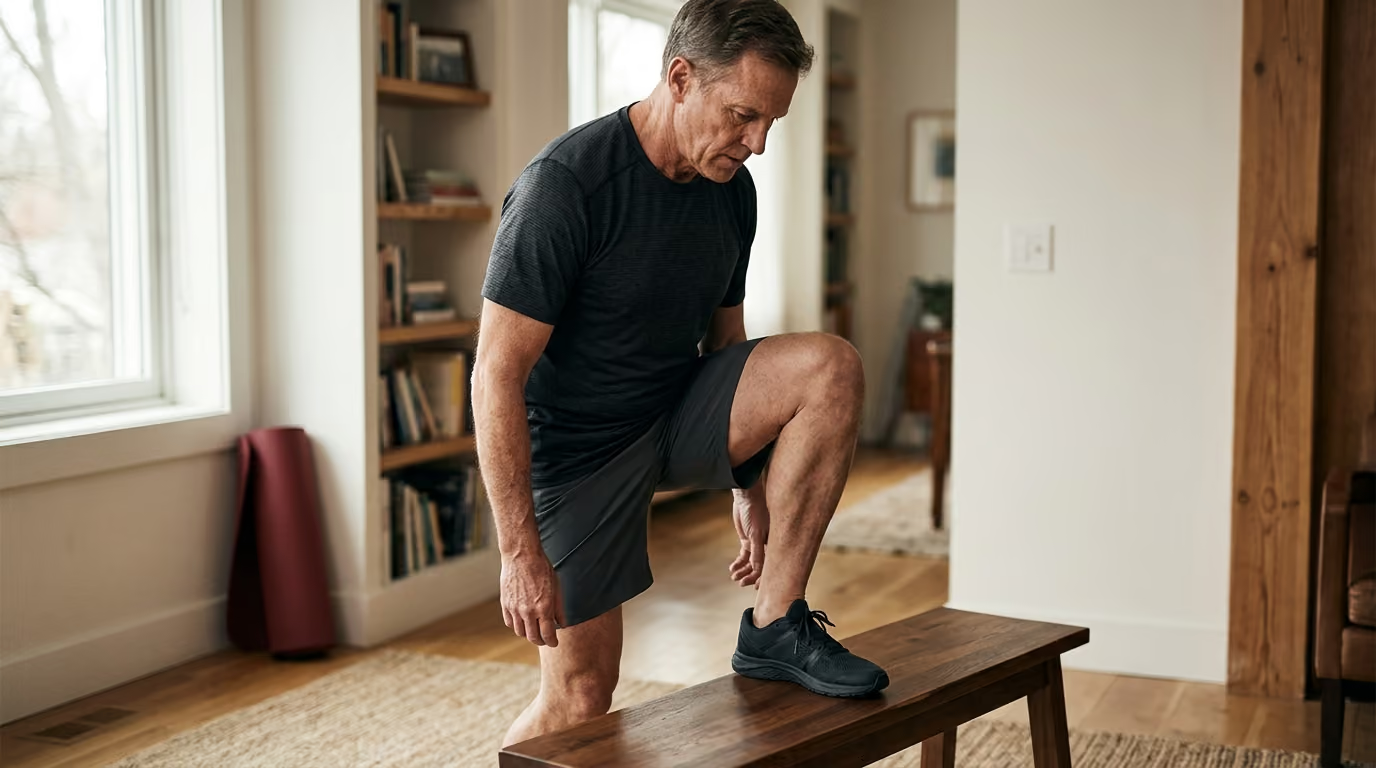
Stand with your feet hip-width apart. Take a natural step forward with your right foot and rotate your upper torso over that front leg. Return to the start and repeat on the opposite side.
Observe whether you can balance comfortably while turning. Note if your front knee collapses inward or if your movement feels jerky. This test highlights how your hips, core, and balance systems interact during dynamic movement.
Supported Hip Rotation Screen
Lie on your back with your knees bent and feet wider than shoulder-width apart. Slowly let both knees drop toward the floor to the right, then reverse to the left.
This windshield-wiper movement checks internal rotation on one hip and external rotation on the other. Look for significant differences between sides or pinching sensations in the hip joint.
- Screening Checklist
- Can you turn your rib cage without moving your pelvis?
- Do your hips rotate smoothly in both directions?
- Can you balance while rotating during a step?
- Are your movement ranges relatively equal from side to side?
Progressive Training Principles for Range, Control, and Power
Building rotational capacity after 45 requires a structured, progressive approach. Moving directly into heavy, fast twisting without preparation can cause discomfort. A balanced progression moves from establishing range to building control, developing strength, and adding power.
Establishing Active Range of Motion
The first step is expanding usable movement without forcing the joints. Focus on active drills where your own muscles guide the motion rather than relying on aggressive passive stretching.
- Side-Lying Thoracic Open Books: Lie on your side with knees bent at 90 degrees. Extend your arms straight in front of you. Slowly rotate your top arm and rib cage open toward the floor behind you while keeping your knees together. Return smoothly and repeat for 8 to 10 repetitions per side.
- Half-Kneeling Trunk Rotations: Kneel on one knee with the other foot flat in front of you. Hold a light dowel across your shoulders. Rotate your upper torso toward the side of the front leg, keeping your pelvis facing forward. Perform 8 controlled repetitions per side.
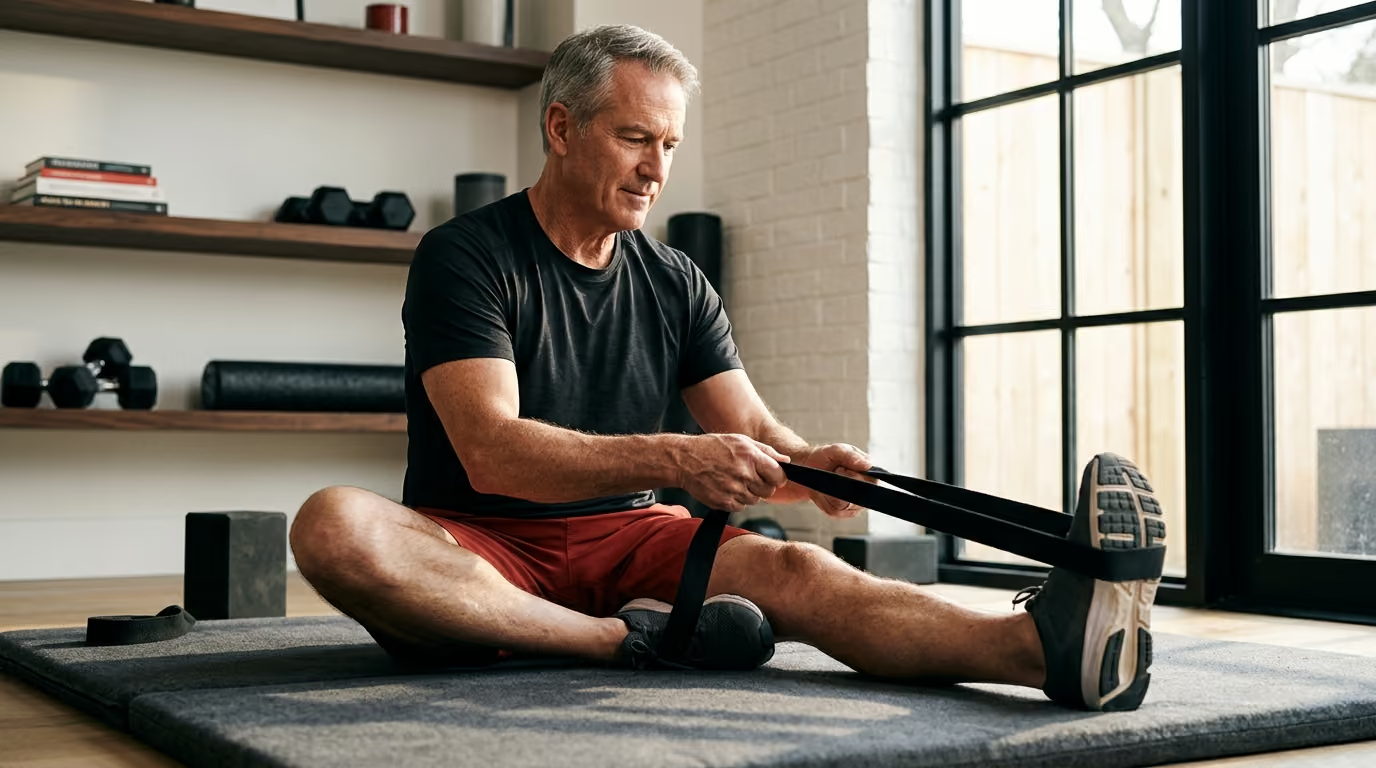
- Seated 90-90 Hip Switches: Sit on the floor with your knees bent and feet wide. Slowly rotate both hips until one leg rests in 90 degrees of internal rotation and the other in 90 degrees of external rotation. Pause briefly, then switch sides with control.
- Phase 1: Range Drills (Perform 2-3 sets of 8-10 reps)
- Side-Lying Open Books
- Half-Kneeling Trunk Turns
- 90-90 Hip Rotations
Building Muscular Control and End-Range Stability
Once you access new range, you must teach your nervous system to control it. This phase uses pauses, slow tempos, and light isometric holds to build stability.
- Half-Kneeling Rotational Holds: Assume a half-kneeling stance. Rotate your upper body toward the front leg and hold the end position for 5 seconds using your trunk muscles. Maintain steady breathing without letting your front knee wobble.
- Quadruped Thread the Needle with Lift: Begin on hands and knees. Reach one arm under your body, sliding the back of your hand along the floor. At the end of the reach, actively lift the hand one inch off the floor using your upper back muscles for a 2-second hold.
- Standing Hip Airplane with Support: Hold a sturdy wall or rack. Stand on one leg and hinge your torso forward. Slowly rotate your pelvis open away from the standing leg, then rotate it closed toward the standing leg. Perform 6 slow repetitions per side.
- Phase 2: Control Drills (Perform 2-3 sets of 6-8 reps with pauses)
- Half-Kneeling End-Range Holds
- Quadruped Active Thread-the-Needle
- Supported Hip Airplanes
Developing Rotational Strength and Anti-Rotation
Strength training prepares your tissues to handle real-world loads. This phase combines exercises that actively generate rotation with exercises that resist rotation. You can explore structured programs in our research-led guides.
- The Pallof Press: Stand perpendicular to a cable column or resistance band anchored at chest height. Hold the handle at your chest with both hands. Press the handle straight out in front of you, resisting the band's pull to twist your torso. Hold for 2 seconds, return to chest, and repeat for 10 to 12 repetitions per side.
- Cable or Band Chops and Lifts: Stand in a split stance. Pull a cable diagonally from high to low across your torso, pivoting your back hip as you turn. Reverse the movement by pulling from low to high in a lifting pattern. Perform 8 to 10 controlled repetitions per side.
- Suitcase Carries: Hold a moderately heavy kettlebell or dumbbell in one hand. Walk smoothly for 30 to 40 paces while keeping your shoulders level and your torso upright. Switch hands and repeat. This exercise builds exceptional anti-lateral flexion and anti-rotation strength.
- Phase 3: Strength Exercises (Perform 3 sets of 8-12 reps or timed carries)
- Standing Pallof Press
- Diagonal Cable Chops and Lifts
- Single-Arm Suitcase Carries
Introducing Rotational Power and Speed
Power training teaches your body to produce force rapidly. The American College of Sports Medicine recommends using moderate loads moved with fast intent for power development. Start with light implements and focus on clean movement mechanics before increasing speed.
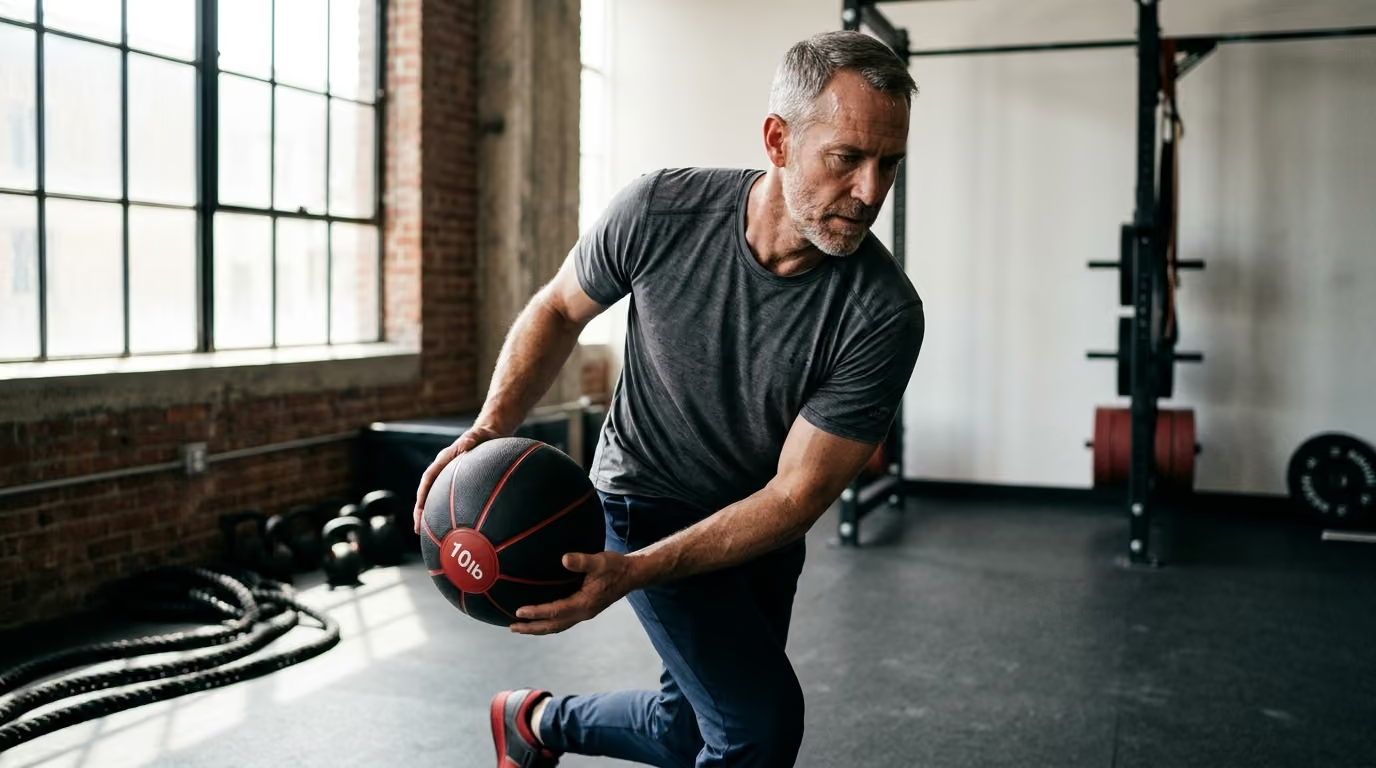
- Rotational Medicine Ball Wall Throws: Stand sideways roughly four feet from a concrete wall, holding a light medicine ball (4 to 8 pounds). Hinge your hips slightly, pivot your back foot, and throw the ball firmly into the wall using your whole body. Catch the rebound and repeat for 4 to 6 explosive throws per side.
- Step-and-Press Cable Punches: Set a cable at chest height. Stand facing away from the machine. Take a quick step forward with one foot while punching the cable handle forward with the opposite arm, rotating through your back hip. Perform 6 fast repetitions per side.
- Band-Resisted Speed Rotations: Anchor a light resistance band at chest height. Stand in an athletic stance and rotate your torso quickly across 30 degrees of range, stopping the movement sharply with your core muscles. Perform 8 rapid repetitions per side.
- Phase 4: Power Drills (Perform 3 sets of 4-6 reps with maximum speed)
- Medicine Ball Wall Throws
- Step-and-Punch Cable Drills
- Rapid Band Rotations
Common Misinterpretations of Spinal Mechanics
Several persistent myths prevent men over 45 from building healthy rotational capacity. Examining what the research actually shows helps clear up confusion.
Myth 1: Twisting the Spine Always Causes Injury
A common belief is that any spinal rotation damages intervertebral discs. This fear leads many men to brace their torsos rigidly during every daily task.
The human spine is built to move in all three planes, including rotation. While combining heavy loads with rapid, uncontrolled flexion and rotation under fatigue carries risk, normal rotation is safe and necessary. Eliminating rotation causes tissues to become less adaptable over time.
Myth 2: The Core Must Remain Rigid at All Times
Some fitness programs teach that you should brace your abdominal muscles as hard as possible during all movements. While maximum bracing is useful when squatting a heavy barbell, it is inefficient for daily life.
Fluid movement requires muscles to contract and relax in coordination. Rigidly locking your torso prevents your pelvis and rib cage from moving naturally during walking and reaching. The goal is adaptable stiffness that matches the demands of the specific task.
Myth 3: Passive Stretching Restores True Mobility
Many men spend twenty minutes stretching their lower back and hips on the floor, only to feel stiff again an hour later. Passive stretching temporarily increases tolerance to stretch sensations, but it does not build strength or motor control.
To create lasting changes in rotational capacity, you must follow range work with active strength exercises. Loading the movement teaches your nervous system that the new range is safe and functional. You can learn more about this approach in our healthy aging resources.
- Misinterpretation vs. Reality
- Myth: Twisting always damages spinal discs.
- Reality: The spine is designed for rotation when loads are managed appropriately.
- Myth: The trunk should be braced rigidly in all tasks.
- Reality: The trunk requires adaptable control that matches the task.
- Myth: Passive stretching builds lasting movement capacity.
- Reality: Active strength and motor control create durable mobility.
Gaps and Boundaries in Current Rotational Research
While exercise science provides strong principles for training, some areas of rotational research remain limited. Being honest about these gaps helps you make informed choices without falling for exaggerated claims.
Limitations in Current Evidence
Much of the published research on spinal biomechanics comes from laboratory settings using young athletic populations or isolated cadaver models. These studies do not always reflect how a healthy 55-year-old man moves during real-world tasks.
Kinematic measurements during walking show clear age-related trends, but individual variation is large. A man in his sixties who has stayed active may demonstrate greater rotational capacity than a sedentary man in his thirties. General age trends should not be taken as rigid rules for every individual.
Measurement tools for thoracic rotation also vary across studies. Tests performed in seated, kneeling, or lying positions measure specific constraints rather than total rotational capacity. Performing well on a seated mobility test does not guarantee you will rotate well when swinging a club or carrying a load.
Clinical Screening and Red Flags
Rotational training is safe for most healthy adults, but certain symptoms require medical evaluation before continuing exercise. If you experience any of the following signs, consult a qualified healthcare provider:
- Severe, escalating back or joint pain that does not improve with rest.
- Pain radiating down the leg below the knee, accompanied by numbness, tingling, or weakness.
- Sudden changes in bowel or bladder function.
- A history of significant trauma, falls, or known osteoporosis followed by acute pain.
- Unexplained fever, weight loss, or persistent night pain.
If you have a history of spinal surgery or joint replacement, work with a physical therapist to modify exercises appropriately. Training should challenge your muscles without creating sharp, escalating joint discomfort. For more foundational principles, visit our men's health overview.
- Medical Screening Indicators
- Radiating nerve pain or limb weakness
- Unexplained numbness or sensory changes
- History of osteoporosis with acute pain
- Severe pain following sudden trauma
Action Plan for Long-Term Rotational Health
Rotational capacity after 45 is a trainable quality that combines joint range, muscular control, whole-body strength, and power. Maintaining the ability to turn, reach, and pivot keeps your joints resilient and your daily movement effortless.
Apply these principles to your weekly routine using the practical steps below:
- [ ] Perform a baseline check: Test your seated thoracic rotation and hip rotation to identify any side-to-side differences.
- [ ] Warm up with active range drills: Spend five minutes before workouts doing open books, half-kneeling turns, or 90-90 hip transitions.
- [ ] Train anti-rotation twice weekly: Include Pallof presses, suitcase carries, or offset holds in your regular strength sessions.
- [ ] Add rotational strength exercises: Practice cable chops, diagonal lifts, or landmine rotations with moderate, controlled resistance.
- [ ] Introduce light power work: Perform two to three sets of medicine ball wall throws or rapid step-and-punch drills once your control is solid.
- [ ] Pivot your feet during daily tasks: Step and turn your whole body when moving heavy loads, gardening, or reaching, rather than twisting from fixed feet.
- [ ] Adjust your training to your recovery: Scale back speed or load if you feel joint irritation, and progress gradually over months.
Sources
- Impact of age on shoulder range of motion and strength - PMC
- Shoulder joint rotational range of motion characteristics ... - PMC
- Acute Low Back Problems in Adults
- The effect of age on lumbar range of motion: a systematic ...
- 73 Low back pain in older adults: from red flags to functional rehabilitation Purchased
- VA/DoD Clinical Practice Guideline: Diagnosis and Treatment of ...
- Establishing reference values for shoulder mobility and ...
Stay sharp
Get the word
Join our newsletter for the best writing advice and stories from the field.