You bend down to tie your shoes or reach into the back of a low cabinet. Your lower back feels tight, your knees feel stiff, and your hips push back with noticeable resistance. The instinct for many men over 45 is simple: spend twenty minutes every morning doing static stretches on the floor. Yet weeks later, the stiffness remains, getting off the floor still feels awkward, and carrying heavy bags up a flight of stairs remains taxing.
This common experience highlights a widespread misunderstanding about how the human body moves as the years advance. We often treat joint stiffness, lost flexibility, and physical capability as the exact same issue. In reality, being able to reach a position passively is very different from owning that position under load. Understanding how stretching, active mobility drills, and resistance training interact is the key to staying capable in midlife and beyond.
What the research shows about stretching and strength
When sports scientists examine joint flexibility and physical capability, the findings challenge many traditional gym beliefs. Research demonstrates that stretching does increase passive range of motion. Systematic reviews indicate that regular stretching performed over several weeks reliably increases the distance a joint can move. However, research examining older populations shows that gains in flexibility alone do not consistently translate to improvements in daily physical functioning. Being able to stretch a muscle farther while resting on a mat does not guarantee better balance, faster walking speeds, or easier stair climbing.
At the same time, clinical evidence shows that resistance training is not merely a tool for building muscle size. Systematic reviews and meta-analyses show that resistance training through a full movement path can improve joint range of motion just as effectively as stretching. When researchers compared strength training with stretching protocols, they found no meaningful difference in joint range improvements between the two methods. Moving a joint through a complete, controlled path against resistance teaches the nervous system that the range is safe while building tissue tolerance.
Public health research underscores that physical independence requires much more than passive flexibility. Major global health organizations emphasize that adults over 45 need multicomponent physical activity. This includes progressive strength work and functional balance training alongside aerobic movement. Static stretching does not reduce overall exercise injury rates in large-scale trials. While stretching has clear value for specific limitations, the broader evidence indicates that strength, coordination, and motor control form the true foundation of long-term mobility.
For a deeper dive into whole-body training frameworks, explore our functional movement and joint health resource section.
Why movement and joint range change after 45
Physical changes after 45 are a normal part of human biology, not an inevitable disease state. Over time, connective tissues throughout the body experience structural shifts. Tendons and ligaments lose some of their water content, collagen fibers cross-link more tightly, and resting tissue compliance decreases. These changes make muscles and tendons feel stiffer when you first begin moving in the morning.
Metabolic and muscular changes also alter how joints function. As men age, natural shifts in anabolic hormone levels and daily activity levels can lead to a gradual loss of muscle mass, known as sarcopenia. Fast-twitch muscle fibers, which are responsible for quick power and rapid stability corrections, decline faster than slow-twitch fibers. When stabilizing muscles around the hips, spine, and knees lose strength, the nervous system often increases resting muscle tone. This protective guarding feels like tight hamstrings or a stiff lower back, but it is actually the brain trying to create stability where muscular strength is lacking.
Joint structures experience natural wear over decades of work. Cartilage thins slightly, and synovial fluid production can take longer to warm up during physical activity. When a joint senses reduced local stability or unfamiliar angles, motor control patterns change. The brain restricts movement paths to protect the joint from positions it can no longer support with adequate muscular force.
Understanding these biological shifts explains why passive stretching alone often fails to produce lasting relief. If a muscle feels tight because the central nervous system is using tension to stabilize a weak joint, stretching that muscle without building strength removes the body's only protective mechanism. The nervous system will simply tighten the tissue again within hours. Real, lasting joint freedom requires tissue resilience, adequate muscular strength, and clear neural coordination.
What this means for daily capability and training
Translating the science of movement into daily life requires looking at the tasks you perform outside the gym. Picking up heavy bags, stepping down from a high curb, hiking on rocky trails, and loading luggage overhead all require active physical capability. These activities do not demand extreme splits or circus flexibility. They require usable range, joint stability, and force production.
Consider the act of descending a steep flight of stairs. Descending stairs requires the ankle to bend deeply while the quadriceps and calf muscles work eccentrically to lower your body weight under control. If you have flexible ankles from passive stretching but lack eccentric quadriceps strength, your knee will feel unstable and painful. Conversely, if your legs are strong but your ankle cannot bend, your body will twist your knee or hip inward to find an alternate path. Both range and strength must work together.
In practical training, this means your workouts must build capacity at the outer limits of your movement. When you train a muscle only in the middle of its range, you leave the joint vulnerable at its deeper angles. A split squat that gently challenges hip extension and knee flexion builds usable mobility that protects you on the trail. A controlled row that lets the shoulder blades glide fully builds upper-back strength that transfers to yard work and sports.
This integrated approach directly affects your energy and recovery. Passive stretching routines that last forty minutes can consume valuable time without providing a metabolic or cardiovascular training stimulus. By using loaded movements through full joint ranges, you simultaneously build muscle, train heart health, and improve mobility in a single efficient workout. To learn more about balancing physical output with recovery, review our dedicated guide to mobility and recovery strategies.
Defining passive range, active control, and loaded movement
To choose the right exercise for your body, you must first understand the four distinct categories of movement capacity. Each category addresses a specific physical quality.
1. Passive range of motion
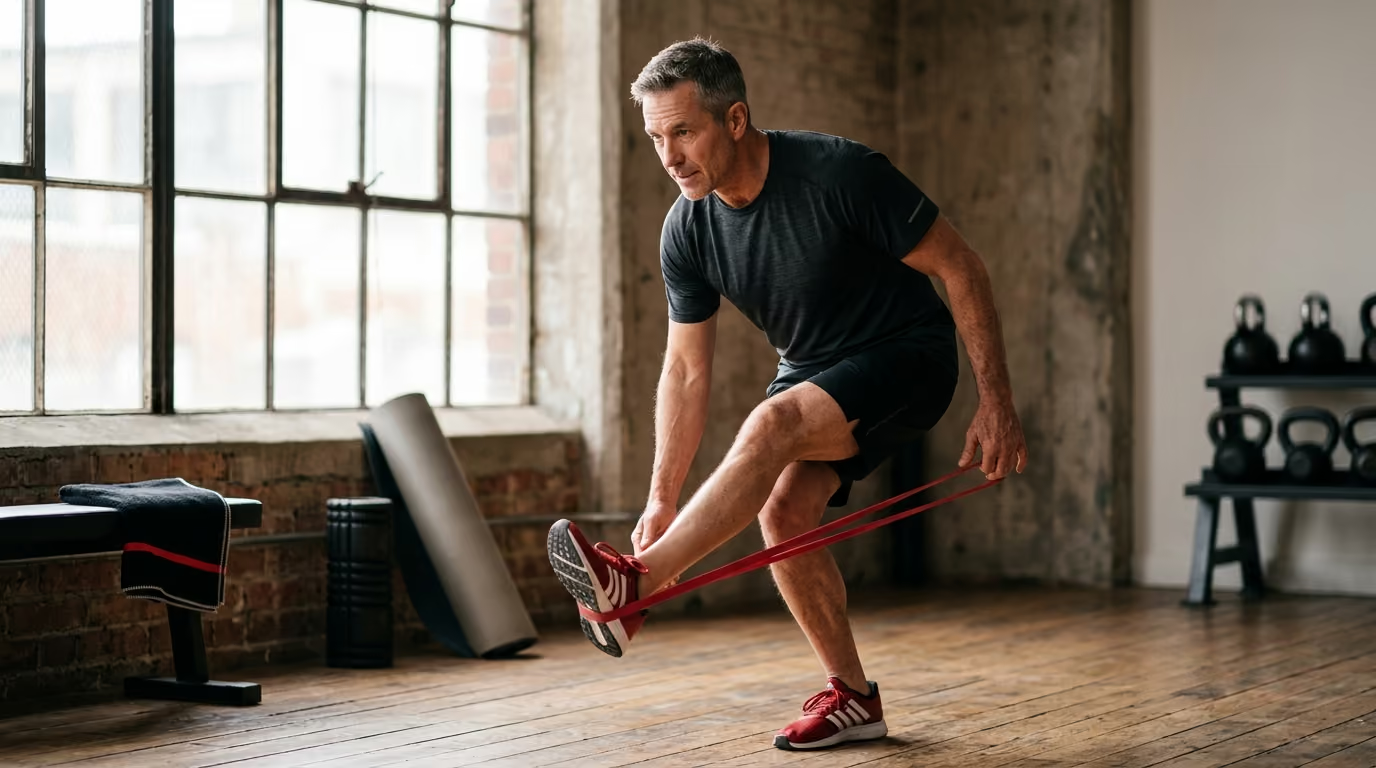
Passive range is the total distance a joint can move when an external force creates the motion. This external force might be gravity, a rubber strap, a therapist, or your own hands pulling on a limb.
Examples of passive range include:
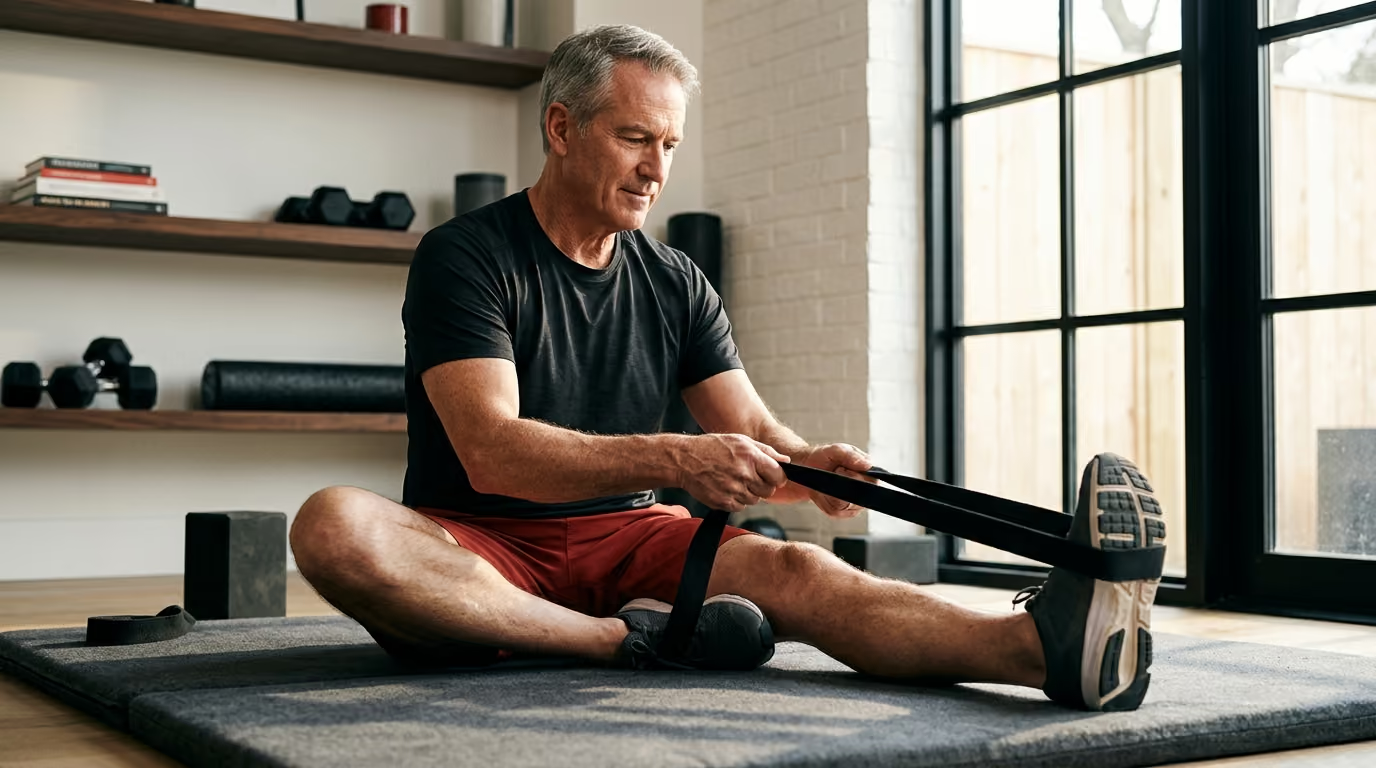
- Pulling your knee toward your chest with your hands while lying flat on your back.
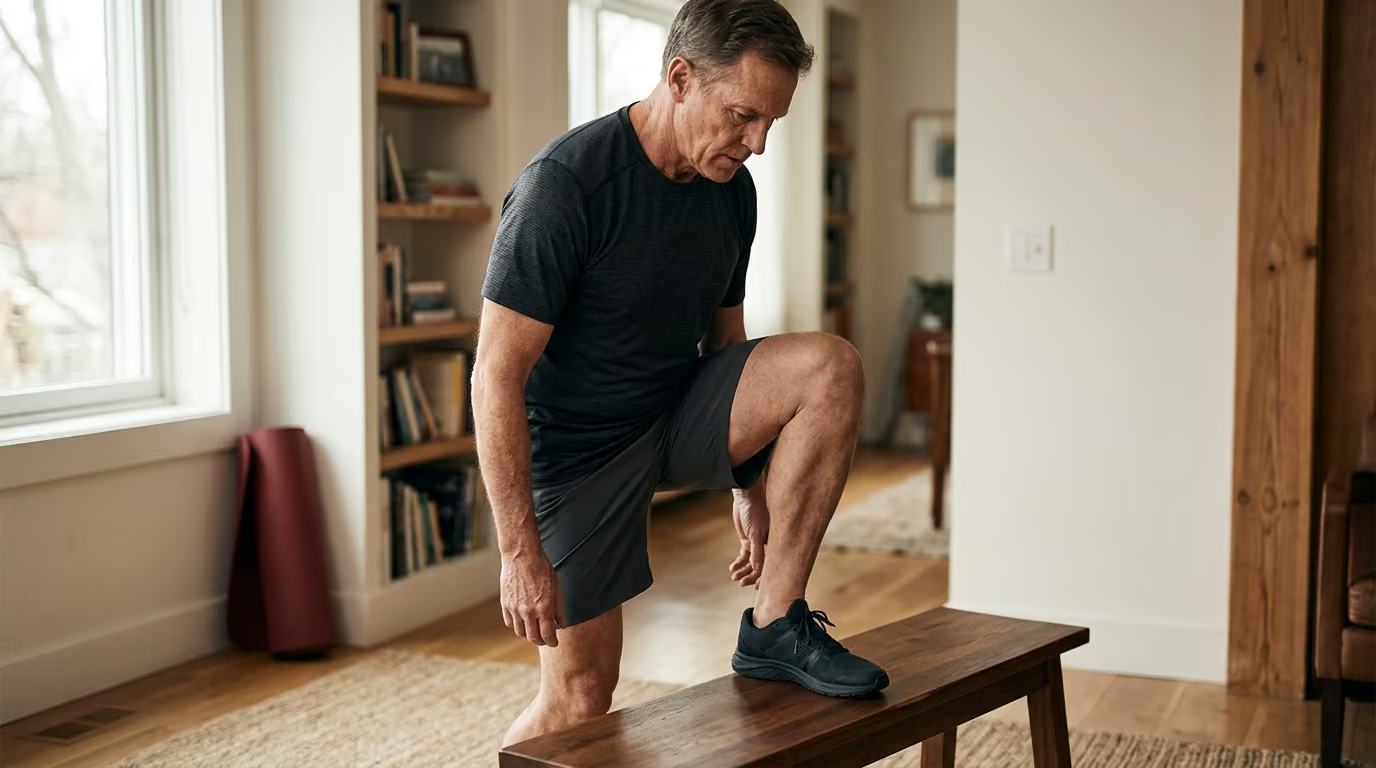
- Resting your foot on a bench and leaning forward to stretch the hamstrings.
- Using a doorway to push your chest open and stretch the front of the shoulders.
- A clinician gently rotating your hip while your leg muscles remain completely relaxed.
Passive range tells you what the joint structure physically permits when no muscular work is required. However, having passive range does not mean your body can safely support weight in that position.
2. Active range of motion
Active range is the distance you can move a joint using only the power of your own muscles. No straps, momentum, or external aids assist the movement.
Examples of active range include:
- Standing tall and lifting your knee as high as possible toward your chest using your hip flexors.
- Raising your arms straight overhead without arching your lower back.
- Actively pulling your toes upward toward your shin while keeping your heel on the floor.
- Sitting tall and rotating your torso side to side using your core muscles.
The difference between your passive range and your active range is known as the mobility gap. A wide mobility gap means you can be pushed into positions that your muscles cannot actively reach or control, which increases the risk of strain during unexpected physical demands.
3. Motor control and functional coordination
Motor control refers to how your brain and nervous system organize muscles to produce smooth, stable, and timely movement. It is the software that drives your physical hardware.
Key elements of motor control include:
- Maintaining balance on one foot while turning your head from left to right.
- Stepping down from a box onto an uneven surface with a soft, controlled landing.
- Lowering yourself into a deep squat without your knees caving inward or your torso pitching forward.
- Smoothly transferring your body weight from the floor to a standing position without using your hands for support.
Motor control allows you to adapt to sudden changes in terrain or body position. Without coordination, even strong and flexible muscles cannot prevent a fall or correct a sudden slip.
4. Strength through range and loaded movement
Strength through range is the ability to produce and absorb force at challenging joint angles. This quality bridges the gap between basic flexibility and real-world durability.
Examples of strength through range include:
- Performing a deep goblet squat where your thighs reach parallel or below under load.
- Descending into a split squat until the back knee lightly taps a pad, then driving back up.
- Performing a Romanian deadlift where the hamstrings stretch under the weight of dumbbells before contracting.
- Pressing a weight overhead from the clavicles to full elbow extension without compensatory body lean.
Loaded movement strengthens tendons, reinforces joint capsules, and signals the brain that deep joint angles are safe and stable.
A diagnostic framework for identifying movement limits
Before adding random exercises to your weekly routine, determine what is actually limiting your movement. Choosing the wrong tool wastes time and can aggravate sensitive joints. Use this diagnostic framework to pinpoint your primary restriction.
Limitation A: True tissue stiffness
You likely have true tissue stiffness if:
- Your movement stops early during both passive stretching and active muscle testing.
- You feel a distinct physical stretch in the muscle belly rather than joint pinching.
- The restricted joint range feels symmetrical and improves noticeably after a general warm-up.
- Once you reach the position, your balance and strength feel solid.
The best tools for this limitation are short static stretches, dynamic movement preparation, and joint-specific mobility drills. For example, if your calves feel tight during a morning walk, two sets of thirty-second wall calf stretches combined with ankle circles will restore normal tissue compliance.
Limitation B: Inadequate muscular strength
You likely have a strength deficit if:
- You can easily reach a position passively, but your limb shakes or collapses when you try to hold it actively.
- An exercise looks smooth with body weight but breaks down immediately when you add a light load.
- You can easily lower yourself into a position, such as a deep chair, but cannot stand back up without pushing off with your arms.
- You avoid deep movement angles because the joint feels weak and unsupported rather than tight.
The best tools for this limitation are progressive resistance training, slow eccentric tempos, and isometric holds at the weak angle. For instance, if you struggle to rise from the bottom of a lunge, perform split squats with your front foot elevated on a small block, gradually building strength before increasing depth.
Limitation C: Balance and motor control deficits
You likely have a motor control limitation if:
- Your isolated joint flexibility and muscle strength test well, but you lose your footing during complex movements.
- Your movement degrades quickly when you turn your head, walk on grass, or carry an object in one hand.
- You can perform a movement perfectly while holding a wall for support, but lose stability the moment you let go.
- You find yourself catching your toes on carpets or struggling to step over obstacles smoothly.
The best tools for this limitation are single-leg balance drills, tandem walking, step-downs, and multidirectional reaching tasks. For example, practice balancing on one leg for thirty seconds near a sturdy countertop, gradually adding gentle head turns to challenge your balance systems.
Limitation D: Joint pain and tissue irritability
You must adjust your strategy if:
- Moving into a position causes sharp pain, joint pinching, or deep aching.
- The restriction is accompanied by visible swelling, joint warmth, or pain that radiates down a limb.
- Your symptoms worsen significantly the morning after training.
The best approach here is not to force the range with aggressive stretching. Reduce the movement depth to a comfortable, pain-free range, utilize isometric holds to quiet tissue sensitivity, and consult a qualified physical therapist or physician for an accurate assessment.
Practical factors for building a balanced movement routine
An effective movement program after 45 does not require hours of complex stretching routines. You can build exceptional joint mobility, balance, and muscle strength by structuring your training logically.
The five-step movement progression
When learning or restoring any movement pattern, follow this sequence:
- Prepare the range: Use brief dynamic drills or light stretches to increase blood flow and reduce resting stiffness.
- Control the range: Perform unweighted, deliberate repetitions to engage stabilizing muscles and coordinate joint tracking.
- Strengthen the range: Introduce moderate external resistance using dumbbells, kettlebells, cables, or bands.
- Load the range: Progressively challenge the movement with heavier loads, varied tempos, or pauses in deep positions.
- Apply the range: Use the movement in real-world functional tasks, such as outdoor hiking, recreational sports, or manual projects.
A 10-minute daily movement preparation routine
Use this simple sequence before strength workouts or as a morning tune-up:
- Easy walking, marching in place, or stationary cycling: 2 minutes to raise core temperature.
- Knee-to-wall ankle rocks: 8 to 10 controlled repetitions per side to mobilize the calves and ankles.
- Bodyweight hip hinges: 8 smooth repetitions focusing on pushing the hips back with a flat spine.
- Quadruped thoracic rotations: 6 repetitions per side on hands and knees to free up the mid-back.
- Standing arm reaches and shoulder circles: 8 controlled repetitions to prepare the upper body.
- Controlled sit-to-stands from a bench: 5 repetitions with a slow, three-second lowering phase.
Structuring weekly training for strength and mobility
A balanced weekly routine combines progressive strength training with active movement and recovery. To see how this integrates with broader lifestyle goals, review our resources on healthy aging guidance.
Monday: Lower-body strength and joint mobility
- Dynamic warm-up: 5 minutes of ankle and hip preparation.
- Goblet squat to a comfortable, controlled depth: 3 sets of 8 to 10 repetitions.
- Romanian deadlift with dumbbells: 3 sets of 8 to 10 repetitions, focusing on a deep hamstring stretch.
- Supported single-leg step-downs: 2 sets of 8 repetitions per side.
- Standing single-leg balance practice: 3 rounds of 30 seconds per leg.
- Light calf and hip flexor stretches: 2 sets of 30 seconds per side.
Tuesday: Aerobic conditioning and active range work
- Brisk outdoor walking, ruck marching, or cycling: 30 to 45 minutes at a conversational pace.
- Floor-based mobility sequence: 10 minutes of gentle hip rotations, cat-camel spinal drills, and thoracic reaches.
Wednesday: Upper-body strength and posture control
- Dynamic warm-up: 5 minutes of shoulder circles and wall slides.
- Dumbbell chest press or incline push-ups: 3 sets of 8 to 12 repetitions.
- Supported chest-supported dumbbell row: 3 sets of 10 to 12 repetitions with a full stretch at the bottom.
- Overhead dumbbell press within a comfortable path: 2 sets of 8 to 10 repetitions.
- Farmer carries with moderate dumbbells: 3 sets of 40-meter walks to build grip and core stability.
- Doorway chest stretch: 2 sets of 30 seconds per side.
Thursday: Active recovery and movement quality
- Gentle walking, swimming, or easy yard work: 30 minutes.
- Full-body active range of motion routine: 15 minutes of unweighted movement practice.
Friday: Full-body strength and functional balance
- Dynamic warm-up: 5 minutes of multi-joint movement preparation.
- Split squats or reverse lunges: 3 sets of 6 to 8 repetitions per leg.
- Lat pulldowns or assisted chin-ups: 3 sets of 8 to 10 repetitions.
- Standing cable or band rotations: 2 sets of 10 repetitions per side for rotational trunk control.
- Standing heel-to-toe tandem balance: 3 sets of 30 seconds per side.
- Seated hamstring and glute stretches: 2 sets of 30 seconds per side.
Saturday and Sunday: Real-world physical activity
- Engage in active lifestyle pursuits: trail hiking, golf, tennis, cycling, or working on home improvement projects.
For men interested in optimizing their training volume and muscle development, our guide on strength training principles for older men provides detailed programming models.
Common movement and flexibility mistakes after 45
Avoiding common training errors will save you months of frustration and prevent unnecessary setbacks.
Mistake 1: Believing muscle tightness always means a muscle is short
When a muscle feels tight, our first reaction is to stretch it aggressively. However, muscles often feel tight because they are weak or overworked from trying to stabilize an unaligned joint. For example, if you sit for long hours, your glute muscles become inactive, and your hamstrings work overtime to keep your pelvis stable. Stretching your hamstrings in this scenario will not solve the underlying issue. Strengthening your glutes and learning to hinge properly will relieve the protective hamstring tension permanently.
Mistake 2: Relying on long static stretches before heavy lifting
Spending fifteen minutes holding deep static stretches immediately before lifting weights can temporarily reduce your muscle power and joint stability. Research indicates that prolonged static stretching dampens the stretch reflex and temporarily decreases force production. Before lifting or playing sports, use dynamic movements, bodyweight exercises, and progressive warm-up sets. Save longer static stretching sessions for the end of your workout or for separate recovery days.
Mistake 3: Forcing joints through painful ranges of motion
Many men adopt an outdated mentality that joint pain during stretching is simply weakness leaving the body. Forcing a joint into deep flexion or rotation when you feel pinching or sharp pain causes joint inflammation and muscular guarding. Always respect your body's structural boundaries. If a deep squat pinches your hips, elevate your heels on small plates or squat to a higher box while you gradually build hip and ankle capacity.
Mistake 4: Treating flexibility as a substitute for strength and balance
It is easy to fall into the habit of doing gentle stretching because it feels relaxing and easy to perform. While flexibility is valuable, passive stretching alone does not build the bone density, muscular strength, or balance reflexes required to prevent falls and maintain vitality. Public health recommendations clearly emphasize that strength training and balance practice must take priority for long-term health and functional capability.
Special situations and edge cases
Every man over 45 has a unique physical history. Certain health conditions require specific adjustments to mobility and strength programs.
Joint osteoarthritis
If you have osteoarthritis in the knees, hips, or spine, your primary goal is building muscular support around the joint rather than chasing maximum flexibility. Aggressive passive stretching can irritate arthritic joint capsules. Focus on low-impact resistance training, isometric holds, and smooth movements through a comfortable range. Synovial fluid circulates during movement, so gentle, repeated exercise often relieves morning stiffness better than forceful stretching.
Osteoporosis and low bone density
Men with osteopenia or osteoporosis must protect the integrity of their spinal vertebrae. Avoid exercises that combine extreme spinal bending with heavy loads, such as seated toe touches with rounded backs or aggressive twisting machines. Focus on maintaining a neutral, supported spine while strengthening the hips, upper back, and legs with deadlifts, goblet squats, and loaded carries.
Joint replacements and past surgeries
If you have undergone a total knee or hip replacement, always adhere to the specific range of motion and rotational guidelines provided by your orthopedic surgeon. General mobility drills found online may violate specific surgical precautions. Once cleared by your physician, focus on rebuilding symmetrical strength and balance through controlled resistance exercises.
Generalized joint hypermobility
Some individuals naturally possess loose ligaments and extreme passive flexibility. If you are naturally hypermobile, doing more passive stretching is counterproductive and can destabilize your joints. Your priority must be strength training, joint stability work, and motor control drills that teach your muscles to protect and support your joints throughout their entire path.
Where the evidence is thin
While sports science provides clear guidelines for strength and range of motion, certain popular wellness claims rest on limited or preliminary evidence.
- Fascial release tools: Foam rollers, massage guns, and specialized scraping tools are widely marketed as methods to break up scar tissue and permanently lengthen fascia. Current research shows that these tools provide temporary neural relaxation and short-term pain relief, but they do not physically remodel deep connective tissues or permanently increase muscle length.
- Extreme mobility protocols: Commercial programs claiming that extreme flexibility regimens can reverse biological aging or cure chronic joint disease are unsupported by high-quality clinical trials. Normal, healthy joint function requires adequate usable range, not acrobatic contortionism.
- Passive stretching for cardiovascular health: While some early studies suggest that stretching may slightly influence arterial stiffness, the cardiovascular benefits of stretching are minimal compared to dedicated aerobic exercise and progressive resistance training.
- Universal joint range standards: Research shows wide natural variations in joint anatomy, hip socket depth, and bone structure across individuals. Rigid claims that every adult must be able to perform a specific deep squat or touching-toes test ignore normal anatomical diversity.
When to revisit this resource and key takeaways
Revisit this guide whenever you experience unexplained joint stiffness, notice a decline in your daily physical balance, or plan a new phase in your training routine. It is especially useful to review these diagnostic steps when returning to physical activity after a layoff or when recovering from minor joint irritation.
Key takeaway
Staying mobile and capable after 45 is not about achieving extreme passive flexibility. Real physical freedom comes from building usable joint range, developing muscular strength across that range, and mastering the coordination required to move with confidence in daily life.
To discover more evidence-led strategies for vitality, physical performance, and long-term health, explore the resources available across the Everfitguys home base.
Sources
- Acute Effects of Static Stretching on Muscle Strength and Power - PMC
- A systematic review into the efficacy of static stretching as part of a warm-up for the prevention of exercise-related injury
- Flexibility Training and Functional Ability in Older Adults - PMC
- Acute effects of muscle stretching on physical performance, range of motion, and injury incidence in healthy active individuals: a systematic review
- Effectiveness of active stretching during training for injury ...
Stay sharp
Get the word
Join our newsletter for the best writing advice and stories from the field.