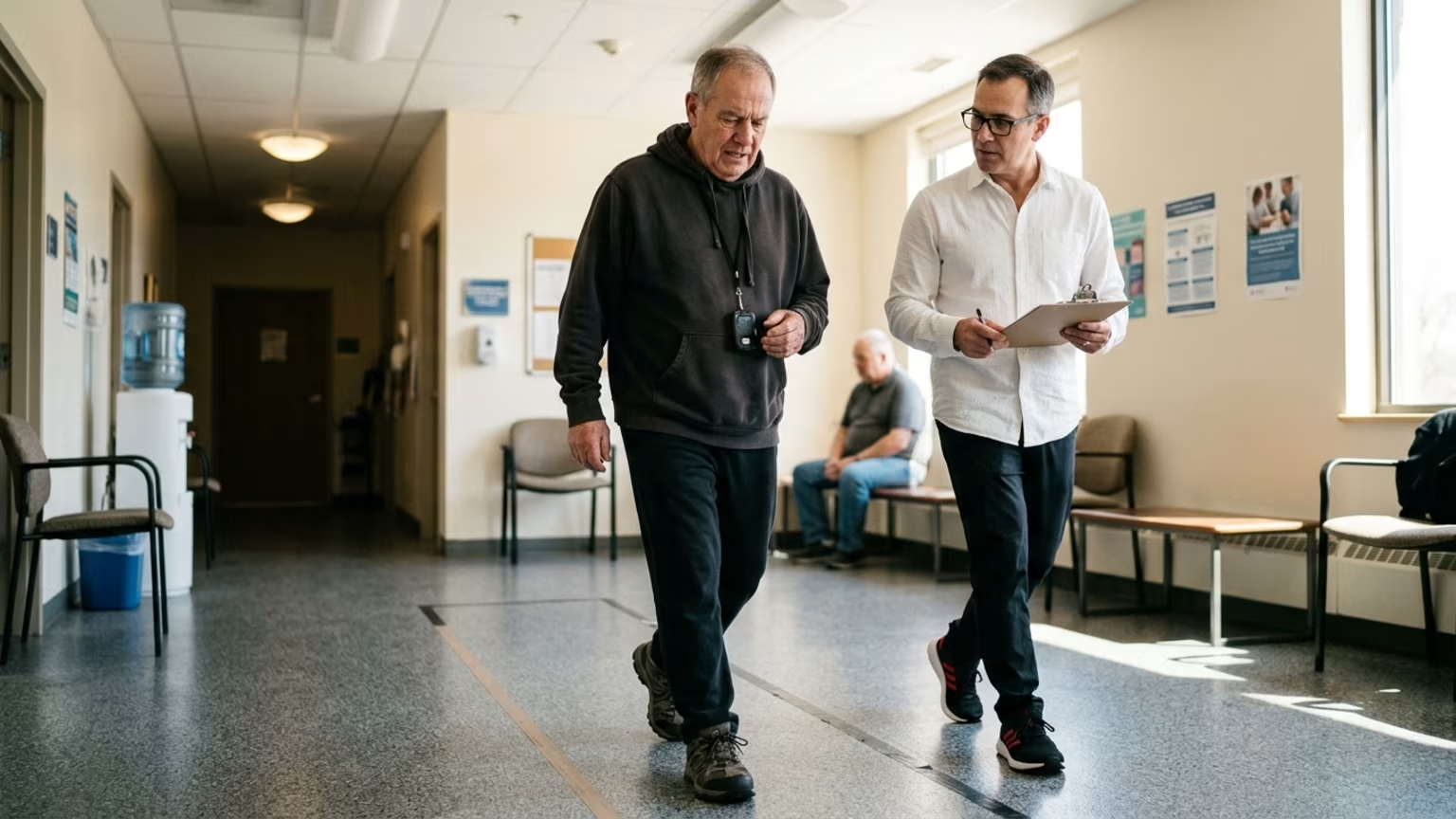
Digital Fitness Programs and Brief Daily Activity for Preserving Memory in Older Adults
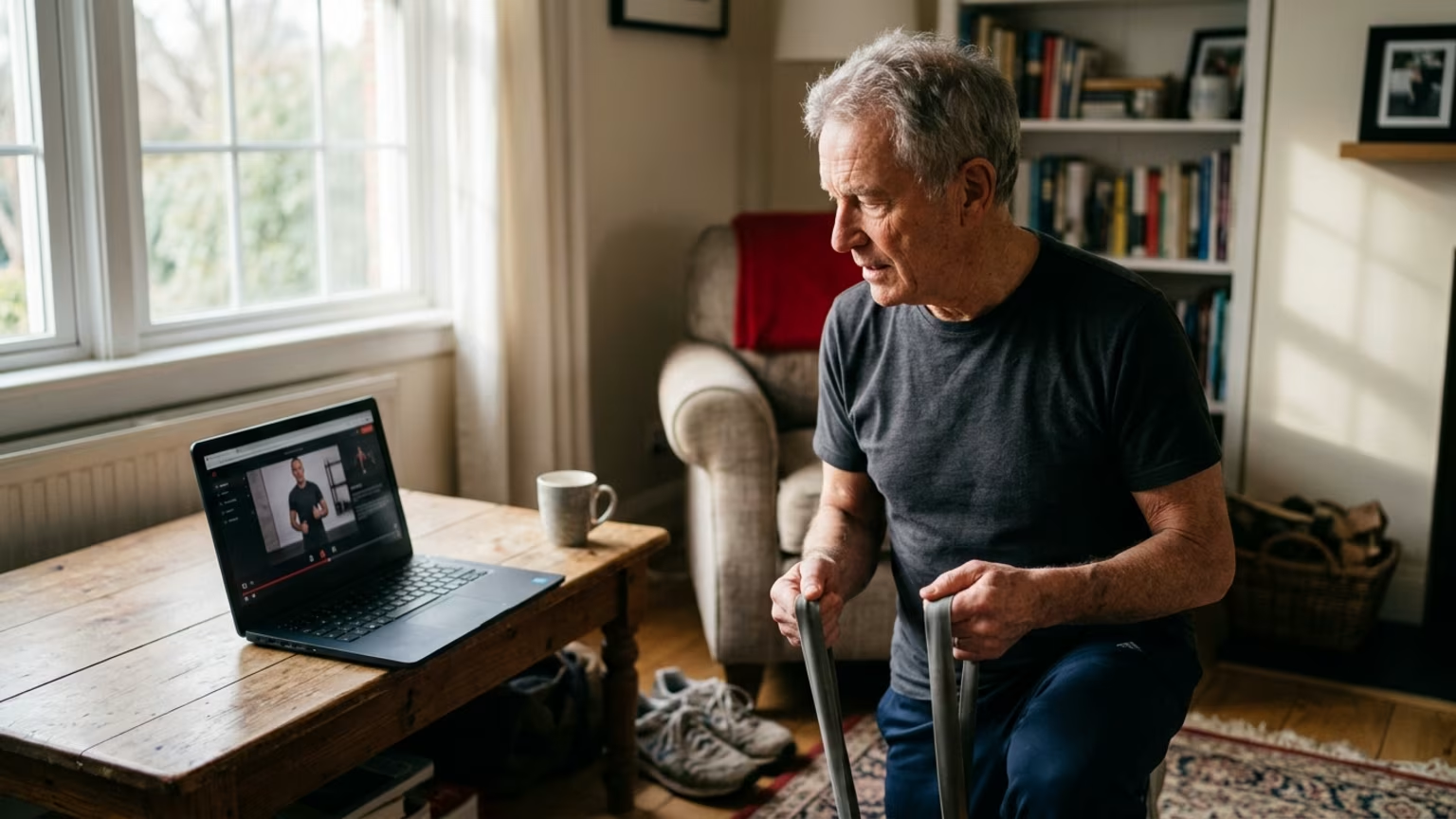
Core Clinical Findings on Exercise and Cognitive Health
- A 2026 systematic review of 51 randomized controlled trials involving 3,673 older adults found that digital exercise interventions produced standardized mean differences of 0.48 for global cognition, 0.31 for executive function and 0.27 for memory.
- The average exercise program in these trials lasted about 12 weeks. Participants trained two to three times per week for roughly 48 minutes per session.
- A cumulative training volume of roughly 1,000 minutes or more over several weeks was associated with more stable memory benefits.
- In a separate observational study of more than 2,500 English adults over 50, better memory trajectories were linked to approximately 14 additional minutes of light activity per day.
- The 2024 Lancet Commission estimated that addressing 14 modifiable risk factors could theoretically prevent or delay up to 45 percent of dementia cases at the population level.
What the Current Data Actually Measures
The 2026 review analyzed 51 randomized controlled trials involving 3,673 adults aged 60 and older. The authors looked at digital exercise interventions and noted positive trends for mental sharpness. Improvements were seen across global cognition, executive function and memory. The average program lasted about 12 weeks, with participants exercising approximately two to three times per week for roughly 48 minutes per session.
The authors of the 2026 digital exercise meta-analysis concluded that comparative effectiveness was highly domain specific. They determined that results did not uniformly favor the most technologically immersive options. Nonimmersive exergaming produced the most consistent findings for global cognition and executive function. Remote exercise produced the most robust memory finding. The remote exercise finding came from a single direct comparison, and the authors advised that it requires multisite replication. Older adults tracking their mental fitness and cognitive performance should view these specific modalities as promising options rather than proven necessities.
A separate review of studies involving adults aged 60 and older found benefits mainly in selected cognitive domains. These included attention, executive function, inhibitory control, working memory, cognitive flexibility, verbal fluency and processing speed. Findings for global cognition were highly heterogeneous in this secondary review.
Observational evidence points toward a clear association between physical inactivity and cognitive decline. The 2026 review noted that physical inactivity correlates with a higher all-cause dementia incidence. The relative risk was 1.39 with a 95 percent confidence interval of 1.16 to 1.67.
An observational English cohort study tracked more than 2,500 adults aged 50 and older for nearly two decades. Those with more favorable memory trajectories averaged about 14 additional minutes of light activity per day. They also logged about 12 fewer minutes of sedentary time.
Why You Should Read the Evidence Cautiously
Statistical heterogeneity was substantial across the 2026 review. Inconsistency reached approximately 73 percent for global cognition, 63 percent for executive function and 72 percent for memory. This means results varied widely between different studies, participants and workout formats. The data provides very low certainty evidence for most comparisons.
The review did not include follow-up assessments beyond the immediate post-intervention period. This makes it impossible to know if short-term cognitive gains delay dementia for years. The studies do not prove that exercise prevents dementia in every single individual. The key randomized evidence measured cognitive test performance rather than long-term dementia incidence.
The observational data carries its own limitations for men evaluating resistance training for brain health. The relative risk of 1.39 for inactivity and dementia incidence is just a correlation. It does not prove that inactivity alone causes the disease. The English cohort study cannot determine if moving more preserved memory or if declining memory reduced physical activity. Baseline health, education, income and early cognitive decline can all influence observational findings.
The analysis also did not evaluate ordinary walking, cycling or resistance training as distinct exercise categories. Cycling mostly appeared in dual-task interventions involving memory games or spatial navigation. This prevents researchers from separating the physical effort from the cognitive challenge. The authors warned that high rankings from sparse networks should not be interpreted as direct evidence of superiority.
How to Structure a Neuroprotective Training Plan
Men over 45 should build a routine they can repeat for months and years. The featured review found that stable memory benefits were associated with a cumulative training volume of roughly 1,000 minutes or more. You reach this volume through consistent effort over several weeks. Men returning to exercise can start with a comprehensive multicomponent training plan to rebuild their baseline fitness.
Walking provides an accessible and reliable base for reducing sedentary time. Public health guidance pairs moderate aerobic activity like brisk walking with muscle-strengthening work. You can add aerobic variety when walking becomes uncomfortable or monotonous. Cycling, hiking or recreational sport can replace walking, but the current evidence does not name a cognitive winner among these activities.
Hiking combines aerobic activity with balance and uneven surface navigation. It also requires visual attention and environmental stimulation. These features make it a plausible way to train physical capacity and movement confidence. The available sources do not provide a hiking-specific cognitive effect size, nor do they prove that hiking protects against dementia.
Sport may add coordination, reaction, decision making and social engagement. These advantages represent plausible benefits rather than established disease prevention effects. The evidence does not demonstrate that competitive or recreational sport is superior to other forms of regular exercise. Older adults must scale their sports participation to match their current fitness, balance, joint health and injury history.
Keep strength training in your weekly schedule to preserve your physical function. Maintaining lower-body strength helps you walk, hike and play sports safely. Preserving physical capacity makes it much easier to sustain your overall exercise pattern as you age. Progress gradually if you are returning from a long layoff.
A sustainable routine that avoids injury is far better than an aggressive program based on unproven neurological claims. Track your adherence to the program rather than chasing a specific step count or mileage target. The evidence does not establish a universal lifting protocol for absolute cognitive protection.
The Long-Term Perspective on Exercise and Mental Sharpness
Physical fitness serves as a long-term defense against multiple cognitive risk factors. The 2024 Lancet Commission estimated that addressing 14 modifiable risk factors could theoretically prevent or delay up to 45 percent of dementia cases at the population level. Physical inactivity is just one piece of this puzzle. High blood pressure, obesity, diabetes and high LDL cholesterol are also identified as relevant risk factors.
The most practical brain health argument for exercise may be cardiovascular and metabolic rather than neurological. Physical activity influences cognitive aging through several overlapping pathways. These pathways include improved vascular function, better metabolic health, reduced sedentary time, improved mood and greater physical independence. The featured review discusses neurotrophic and neuroplastic mechanisms as plausible explanations. It does not prove that changes in biomarkers directly translate into dementia prevention.
Aerobic exercise and resistance training help manage these cardiovascular metrics over time. A person who walks regularly, lifts twice weekly and manages their blood pressure is addressing several pathways at once. Exercise fits into a larger strategy that includes tracking nutrition and maintaining regular nightly sleep for cognitive protection.
Overall fitness matters much more than finding a single perfect workout. The evidence supports a broad risk reduction strategy over claims that one machine or sport has unique cognitive powers. Staying active helps you maintain your independence, protect your metabolic health and keep your brain engaged.
How Everfitguys helps
Protecting mental sharpness through practical physical training requires a man to look past fitness hype, and Everfitguys unpacks the clinical data to make this process straightforward. Declining focus, memory and mental sharpness often complicate the aging process, but we translate the current evidence so men can confidently build routines that support long-term cognitive resilience.
Sources
Stay sharp
Get stories
The best writing on craft and life, delivered once a week. No noise, just the good stuff.