The Functional Longevity Tests: Measuring Strength, Balance, and Mobility After 65
A recent study published in JAMA Network Open examined whether objectively measured physical fitness was associated with all-cause mortality among adults aged 65 and older.
How Did Researchers Measure Physical Fitness and Mortality?
The Taiwanese cohort included 13,423 community-dwelling adults. Their mean age was 72.9 years, and 62.5% of the participants were women. Researchers assessed the participants during 2015 and 2016 to establish a baseline of physical capacity. They then followed the group for a median of seven years to track health outcomes.
Deaths were identified through Taiwan’s national health and death records through December 2022. During the follow-up period, 1,631 participants died. This represented about 12.2% of the entire cohort. The data provides a massive sample size for understanding how physical capability correlates with mortality over time.
The researchers evaluated seven standardized tests. These assessments covered cardiorespiratory fitness, muscular strength, flexibility, balance and agility. The testing protocol required minimal equipment and offered a highly practical snapshot of human movement capacity. Measuring actual physical performance provides a much clearer picture than relying solely on self reported activity levels.
What Were the Primary Longevity Findings?
Participants in the highest composite-fitness group had a 61% lower adjusted risk of death than those in the lowest composite-fitness group. This composite score included multiple dimensions of physical function rather than isolating a single trait. Higher performance across the broader battery was clearly associated with lower mortality overall. The strongest individual associations were observed for balance and agility, lower-body strength and cardiorespiratory fitness.
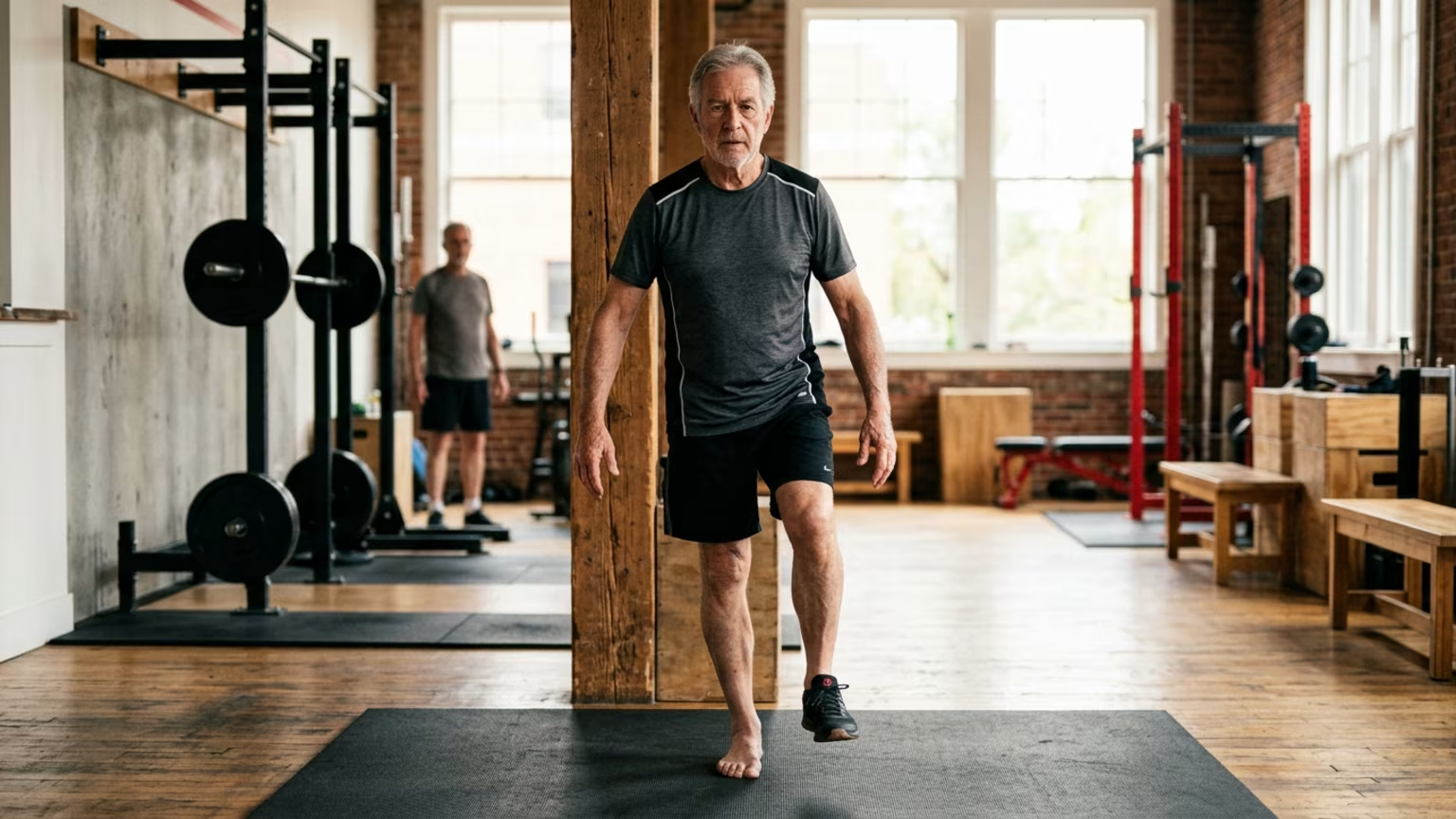
The reported hazard ratios for specific comparisons offered detailed insights. The hazard ratio was approximately 0.41 for the eight-foot up-and-go test. It was 0.50 for the one-leg stance test. The chair stand test showed a ratio of 0.55, and the two-minute step test showed a ratio of 0.58.
In men, the lowest mortality risk was most strongly associated with better performance on the balance and agility tests. In women, lower-body strength showed the strongest association with lower mortality risk. Men and women had similar risk patterns for cardiorespiratory fitness. Exercise physiologist Christopher Anderson said the sex-based findings were notable because of these distinct associations for men and women.
How Can Men Interpret These Specific Physical Tests?
The study evaluated specific movements that translate directly to daily independence. The eight-foot up-and-go test required participants to rise from a chair, walk eight feet around a cone, return and sit down. The faster of two trials was used for the final score. This movement mimics the practical demands of navigating a room and changing direction safely.
Because it involves multiple planes of motion, it tests dynamic control and agility simultaneously. For the one-leg balance test, participants stood on one leg with their eyes open for up to 30 seconds. The longer of two trials was recorded. This stationary balance task relies heavily on the nervous system, joint stability and lower-leg strength.
The assessment battery also included a two-minute step test for cardiorespiratory fitness. This test measures the number of full steps completed in two minutes, reflecting basic aerobic stamina. Men and women had similar risk patterns for cardiorespiratory fitness, reinforcing the universal need for cardiovascular health. Regular aerobic conditioning helps sustain the energy needed for all these physical tests.
A 30-second arm-curl test and repeated chair rises were used to evaluate muscular strength. Finally, researchers used back-reach and sit-and-reach tests to measure flexibility. Understanding these combined metrics helps older adults pinpoint their exact physical weaknesses. Building robust physical capacity often means combining these varied drills with a comprehensive resistance routine.
What Are the Best Ways to Train These Capacities?
Physical therapist and exercise physiologist Milica McDowell described balance, agility, and strength as central to fall prevention and injury avoidance. For men in their late 60s and 70s, treating movement capacity as a vital sign is a highly practical approach. Monitoring several dimensions of function over time is more useful than focusing exclusively on heavy lifting numbers or body weight alone. A balanced plan addresses multiple physical attributes.
The chair-rise test is particularly relevant because it reflects the ability to produce force through the hips and legs. It measures how well you can control a basic daily movement. Training options can include supported squats, step-ups, split squats and progressively loaded leg exercises. Proper training for physical reserve should be adjusted for joint symptoms, balance and previous experience.
Because balance and agility showed especially strong associations in men, balance should not be treated as an automatic side effect of strength training. Appropriate options include supported single-leg stands, tandem stance work, controlled step patterns and carries. A slowing walking speed may prompt you to review strength, joint pain, footwear and sleep with a qualified professional. You can integrate these movements safely by studying proper fall resilience strategies.
Why Does Flexibility Still Matter in Midlife?
The study evaluated flexibility as part of a broader seven-test battery. The strongest individual associations involved balance, agility, lower-body strength and cardiorespiratory fitness. The findings do not support claiming that flexibility alone is a dominant predictor of longevity. Flexibility simply plays a supporting role in preserving functional capability.
However, the study included two flexibility tests, confirming that movement quality is multidimensional. Flexibility still matters for movement quality, joint function, and the ability to perform daily tasks. It remains a necessary component of functional movement capacity. It simply should not be presented as the primary longevity marker above strength or balance.
What Are the Limitations of This Observational Data?
This study was observational, so it cannot prove that improving a test score will directly cause a longer life. Higher fitness may partly reflect other advantages like better overall health, fewer disabling conditions, greater access to care or higher physical activity. The study adjusted for several factors, but observational adjustment cannot eliminate every possible source of confounding. The findings highlight associations rather than clear causes.
The study demographics also limit how widely the findings apply. Most participants had a body mass index in the healthy range. The results may not apply equally to older adults with frailty, severe obesity, substantial chronic disease or other major functional limitations. The findings should be treated as informative population level associations rather than an individualized survival calculator.
Participants’ physical abilities were measured at one point rather than repeatedly over the seven-year follow-up. Domenic Angelino, an exercise scientist and certified strength-and-conditioning specialist, said that poor performance should not automatically be viewed as a reason to panic. It may simply indicate that a person’s fitness is lower in a particular area. Angelino suggested that the results can help identify fitness qualities that may be worth improving.
McDowell cautioned that simple tests could potentially help identify community members at elevated risk of falls. However, she suggested these assessments may be more appropriate as part of routine clinical evaluations rather than as unsupervised home tests. People with a history of falls, unsteadiness, or pain should consult a clinician before attempting unsupported balance tests or timed challenges. A failed test is not a medical diagnosis.
Does This Alter Current Physical Training Advice?
This research confirms existing best practices by showing that a multifaceted training approach covering strength, balance, and mobility is strongly linked to healthy aging.
How Everfitguys helps
Tracking functional movement scores typically falls to the man managing his own longevity, but that solitary task gains precision when Everfitguys translates the latest clinical data. Falling energy, slower metabolism and unwanted changes in body composition routinely undermine physical confidence, so we analyze objective research to help you maintain your daily independence. Read the research
Sources
- Study Finds These 4 Areas of Fitness Are Linked to Living Longer ...
- These simple fitness tests revealed which older adults had the lowest death risk
- Physical Fitness and Aging: Why Balance and Strength Matter Most | BattleVet
- One-Leg Stance Cut Death Risk in Half After 65
- These simple fitness tests revealed which older adults had ...
Stay sharp
Get stories
The best writing on craft and life, delivered once a week. No noise, just the good stuff.