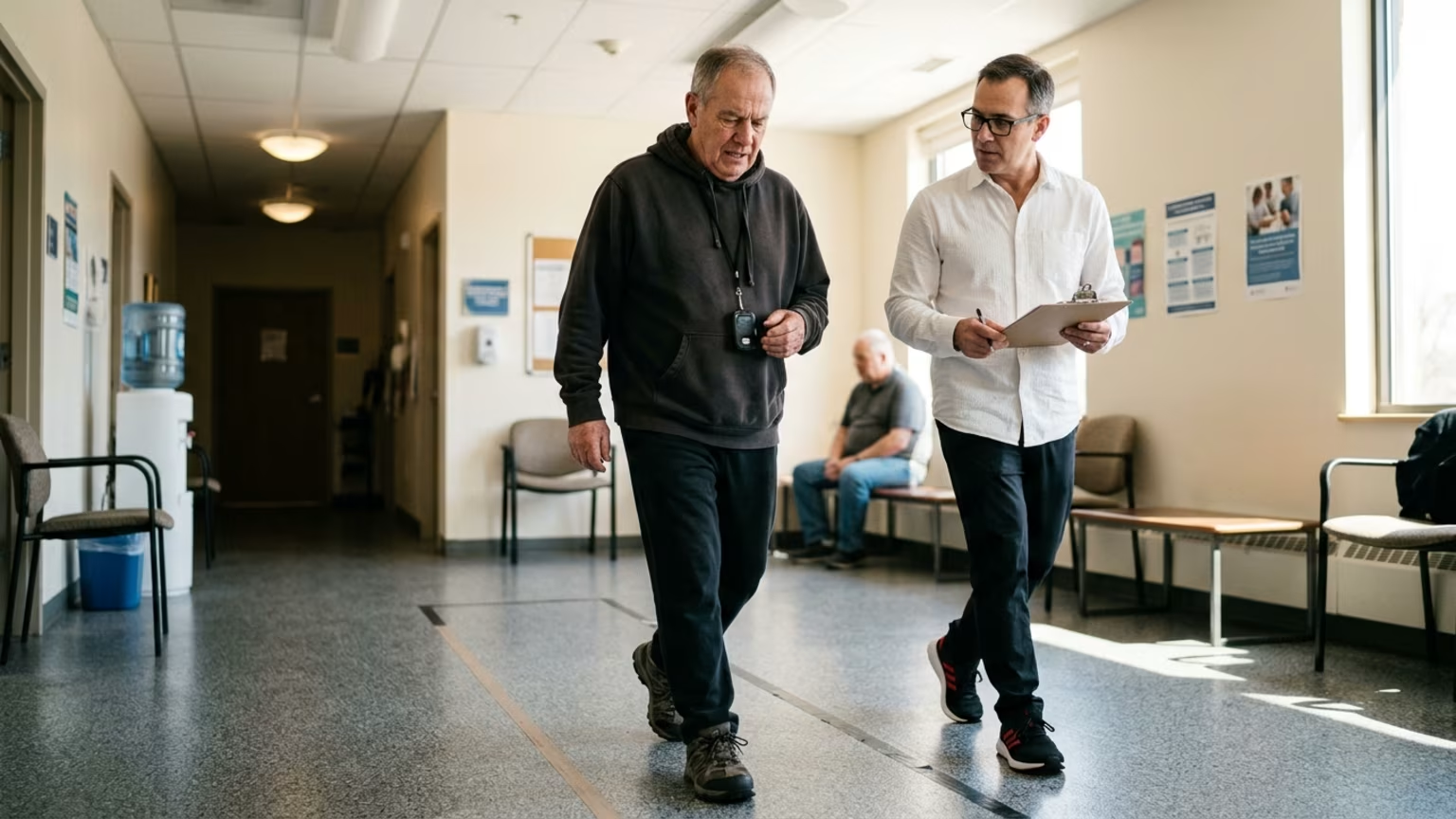
Gerontology Review Finds 8–24 Week Aerobic and Multicomponent Training Boosts Brain Function and Mobility in Older Adults
On September 10, 2026, researchers published an integrative review in The Journals of Gerontology: Series A examining how physical and sensory activities affect motor and cognitive functions in the aging brain. Sabrina Simplício de Araújo Romero Ferrari and nine co-authors, including researchers affiliated with Brazilian academic institutions, synthesized the current evidence on structured exercise for older adults.
How Did Researchers Evaluate Exercise Interventions for Older Adults?
The research team conducted an integrative synthesis to understand the relationship between movement and healthy brain aging. Their review specifically focused on community-dwelling adults older than 50. The scope of their investigation covered physical activity, sensory stimulation, and combined multisystem interventions. The authors wanted to see how these different approaches influenced motor function and cognitive performance over time.
To assess these changes, the researchers looked closely at the duration of the training programs. They focused heavily on interventions lasting roughly 8 to 24 weeks. By isolating this specific timeframe, the review evaluated whether relatively short, structured exercise blocks could produce tangible biological and functional benefits.
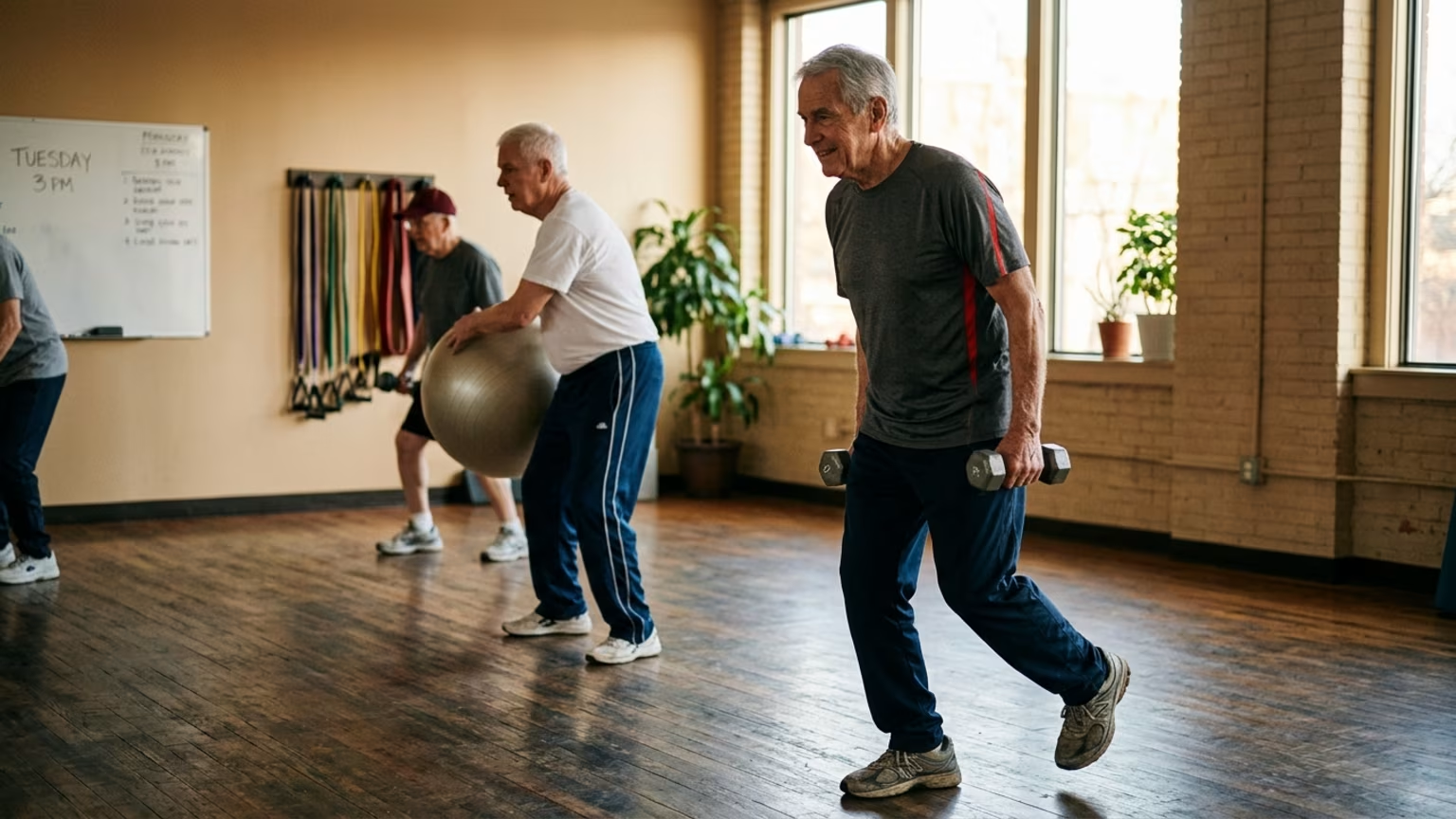
The review included an extensive range of exercise modalities. The authors examined traditional approaches like aerobic work and resistance training. They also evaluated multicomponent training and tai chi. Beyond traditional exercise, the researchers analyzed sensory-rich activities such as choreographed movement routines, proprioceptive training, and musical engagement. This comprehensive methodology allowed the team to evaluate how combining movement with sensory processing impacts the aging brain. They sought to determine if integrating these elements provides unique cognitive demands compared to standard cardiovascular conditioning.
What Physiological Changes Occur During an 8 to 24-Week Training Block?
The review reports that structured exercise regimens link to multiple positive outcomes for adults over 50. Aerobic and multicomponent exercise programs lasting 8 to 24 weeks have been associated with improvements in hippocampal volume. The researchers also noted measurable gains in executive function and functional mobility among the participants. These findings suggest that maintaining weekly resistance training and cardiovascular work directly supports cognitive capacity.
The authors identified several proposed biological pathways to explain these brain benefits. They linked the observed improvements to changes in brain-derived neurotrophic factor and vascular endothelial growth factor. The synthesis also highlighted lactate signaling and cathepsin B as potential contributors to healthy brain aging. According to the publication, these specific pathways may support synaptic plasticity, neurogenesis, and cerebral perfusion. These adaptations are biologically plausible mechanisms for preserving cognitive reserve as men progress through middle age and later life.
Functional integration appears critical for supporting these biological responses fully. The researchers found that sensorimotor activities may strengthen communication among the systems involved in movement, attention, and executive control. Sensory stimulation improves neural processing through multisensory integration. This complex interaction strengthens connectivity within attentional networks, helping older men maintain physical independence and coordination.
How Do Different Exercise Types Compare for Cognitive Benefits?
A separate 2026 systematic review and meta-analysis of exercise interventions in adults older than 50 adds significant quantitative context to these findings. That broader analysis reported a statistically significant improvement in overall cognitive function across 36 distinct studies. The researchers calculated an effect size of 0.29, with a 95 percent confidence interval of 0.17 to 0.41, and a p-value of less than 0.01. This analysis drew on 333 dependent effect sizes, reinforcing the reliability of the observed positive trend.
This meta-analysis found positive point estimates across several different training modalities. Beneficial effects were noted for aerobic exercise, resistance training, multicomponent training, and tai chi. This broad distribution suggests that cognitive health benefits are not restricted to endurance exercise alone. Incorporating an evidence-based daily mobility routine or a structured lifting program can provide meaningful stimulation.
Choreographed movement interventions also show specific but varied cognitive outcomes for older populations. A separate 2026 review noted improvements in global cognition and memory for participants engaged in these specific programs. However, that same review clarified that broad claims about complex attention and executive function were not supported by the available evidence. Additionally, a 2026 review of motion-sensing games found them to be a promising adjunct for balance and functional performance in older adults with chronic disease.
Why Functional Integration Matters More Than Aerobic Capacity Alone
The central interpretation of the primary article is that healthy brain aging relies on the interaction between movement, sensory processing, and cognition. Isolated physical capacity training provides foundational health benefits, but it may not support maximum neural connectivity. The researchers suggest that activities requiring balance, coordination, environmental awareness, or motor learning provide cognitive demands in addition to muscular training.
For a man over 45 who already walks, cycles, or lifts weights, this points toward adding new coordination challenges. Maintaining independence and movement quality requires more than just high aerobic capacity. It demands strength, dynamic balance, executive control, and the ability to respond to changing environments safely. The broader direction of the scientific literature clearly points toward multimodal multicomponent exercise programs that merge cardiovascular conditioning with cognitive and sensory effort.
How Should Men Over 45 Structure Their Weekly Training Blocks?
A practical approach is to organize training into blocks of roughly 8 to 24 weeks. This timeframe aligns with the intervention ranges highlighted in the recent gerontology review. Older adults should treat this period as an evidence-informed planning window rather than a rigid biological deadline. A balanced block could combine aerobic conditioning with resistance training, balance practice, and coordination drills. These structured blocks provide a measurable timeframe to assess progress in walking tolerance, stair confidence, and general physical strength.
Men returning to exercise should prioritize consistency, tolerable progression, and adequate recovery. Attempting to accelerate brain benefits by abruptly pursuing high-intensity exercise often leads to unnecessary fatigue. Instead, focus on practical markers like walking tolerance, stair confidence, physical strength, and daily mood. Modifying intensity appropriately helps older adults protect joint health while building work capacity.
If a man already focuses heavily on resistance training, he might add brisk walking, loaded carries, step-ups, or balance exercises. Someone focused on cognitive sharpness should understand that exercise supports overall brain health without guaranteeing a large improvement in memory for every individual. New activities that require attention or decision-making can easily supplement a traditional lifting program.
What Are the Limitations of Current Research on Brain Aging?
The primary source is an integrative review rather than a single large randomized controlled trial testing one standardized 8 to 24-week program. The conclusions synthesize findings across different exercise types, sensory activities, intervention designs, and outcome measures. The authors specifically state that direct comparative evidence for combined interventions versus single-domain approaches remains limited. They also clarify that the proposed biological mechanisms are not clinically validated tools for predicting an individual response.
Another 2026 review examining exercise dose and cognitive aging highlights additional uncertainties. That publication reported favorable global cognitive outcomes but noted that domain-specific effects were generally small, heterogeneous, and statistically uncertain. The reported association between short programs and improved hippocampal volume does not guarantee that every participant will experience this specific change. Furthermore, the review does not establish that hippocampal volume changes are the sole necessary cause of improvements in executive function or mobility.
The mechanistic discussion involving brain-derived neurotrophic factor, vascular endothelial growth factor, lactate signaling, and cathepsin B represents a proposed biological explanation. It is not a guaranteed predictor of personal cognitive gains. Readers should carefully distinguish between improved test performance on cognitive exams, better functional mobility, and structural brain changes.
The review's mention of emerging technologies like virtual reality and brain-computer interfaces describes an area of ongoing development. It does not serve as proof that these tools are necessary or superior for ordinary healthy aging exercise. The evidence also does not justify promising that exercise will prevent dementia or restore youth-level cognition. New or worsening falls, gait changes, and chest symptoms warrant clinical assessment rather than simply increasing exercise volume. Unexplained fatigue and cognitive decline also require medical evaluation. Ultimately, this research confirms existing knowledge that structured multicomponent exercise programs support overall functional aging, rather than fundamentally altering clinical best practices with a standalone cure for cognitive decline.
How Everfitguys helps
Deciding how to structure an effective multicomponent exercise block requires evaluating complex gerontology data rather than blindly mixing random workout classes. Falling energy, slower metabolism, and unwanted changes in body composition frequently discourage older men from consistent training, so Everfitguys interprets current physiological research to help you build practical routines that support both physical strength and lasting cognitive health.
Sources
Stay sharp
Get stories
The best writing on craft and life, delivered once a week. No noise, just the good stuff.