Why Multicomponent Exercise Protocols Are Essential for Postural Control in Older Adults
On September 11, 2026, The Washington Post published a report by journalist Christa Sgobba detailing five daily movements recommended by physical therapists for adults over 50. The experts selected a short routine intended to improve mobility, maintain balance, and preserve proprioception for older adults.
Clinical Frameworks for Movement Programs
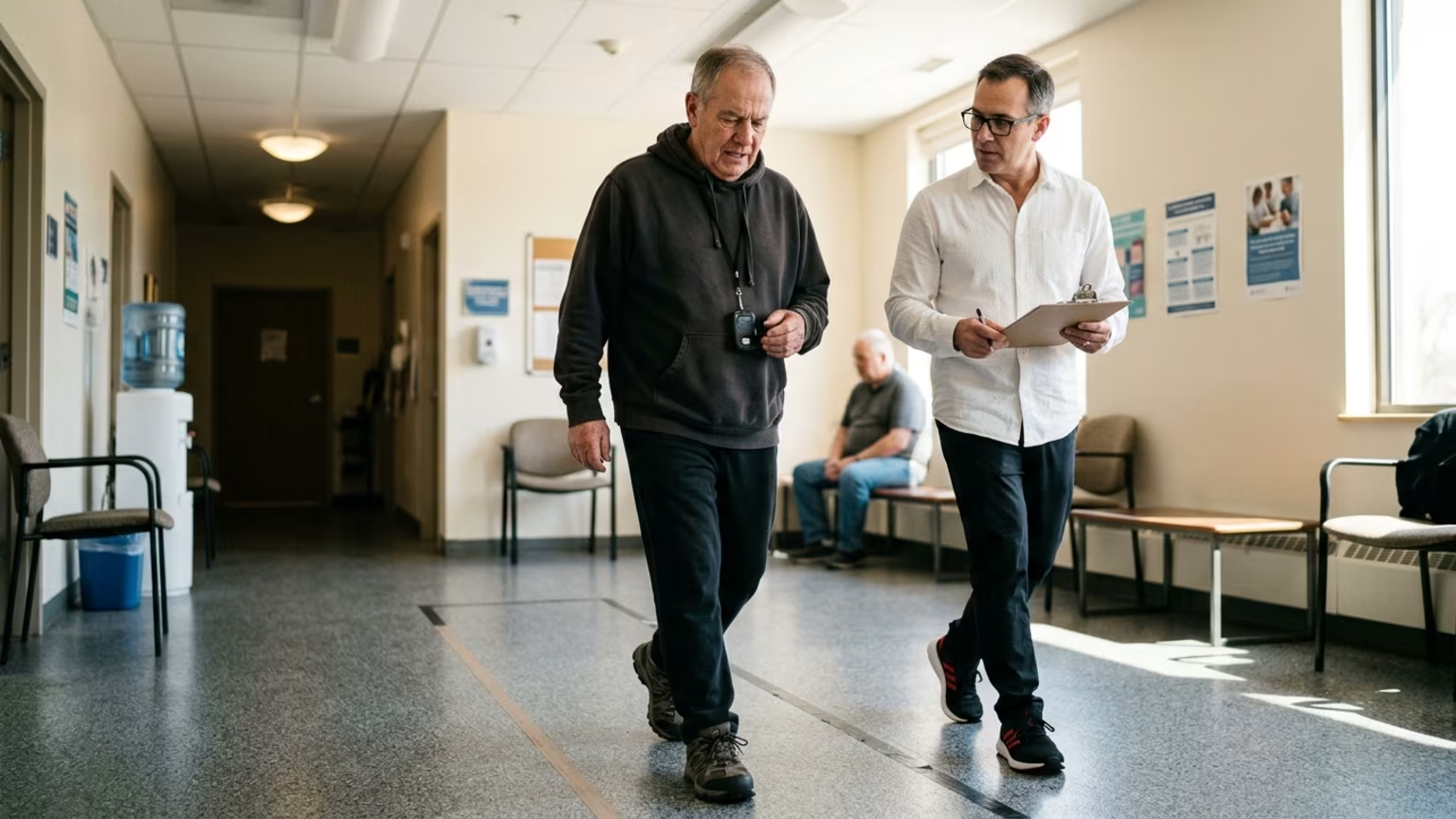
The physical therapists interviewed, Teresa Liu-Ambrose and Na, based their recommendations on how older adults function in daily life. To understand the clinical foundation of these recommendations, we must look at recent study protocols. A 2026 protocol paper published in the scientific literature describes how researchers structure multicomponent exercise trials. The study methodology focuses specifically on frail and prefrail community-dwelling older adults.
Researchers designed a supervised exercise program to measure specific physical changes over time. They structured the trial to combine aerobic activity, resistance training, balance work, and flexibility exercises. This multicomponent approach allows researchers to track applied function rather than relying only on attendance records.
The Primary Functional Outcomes
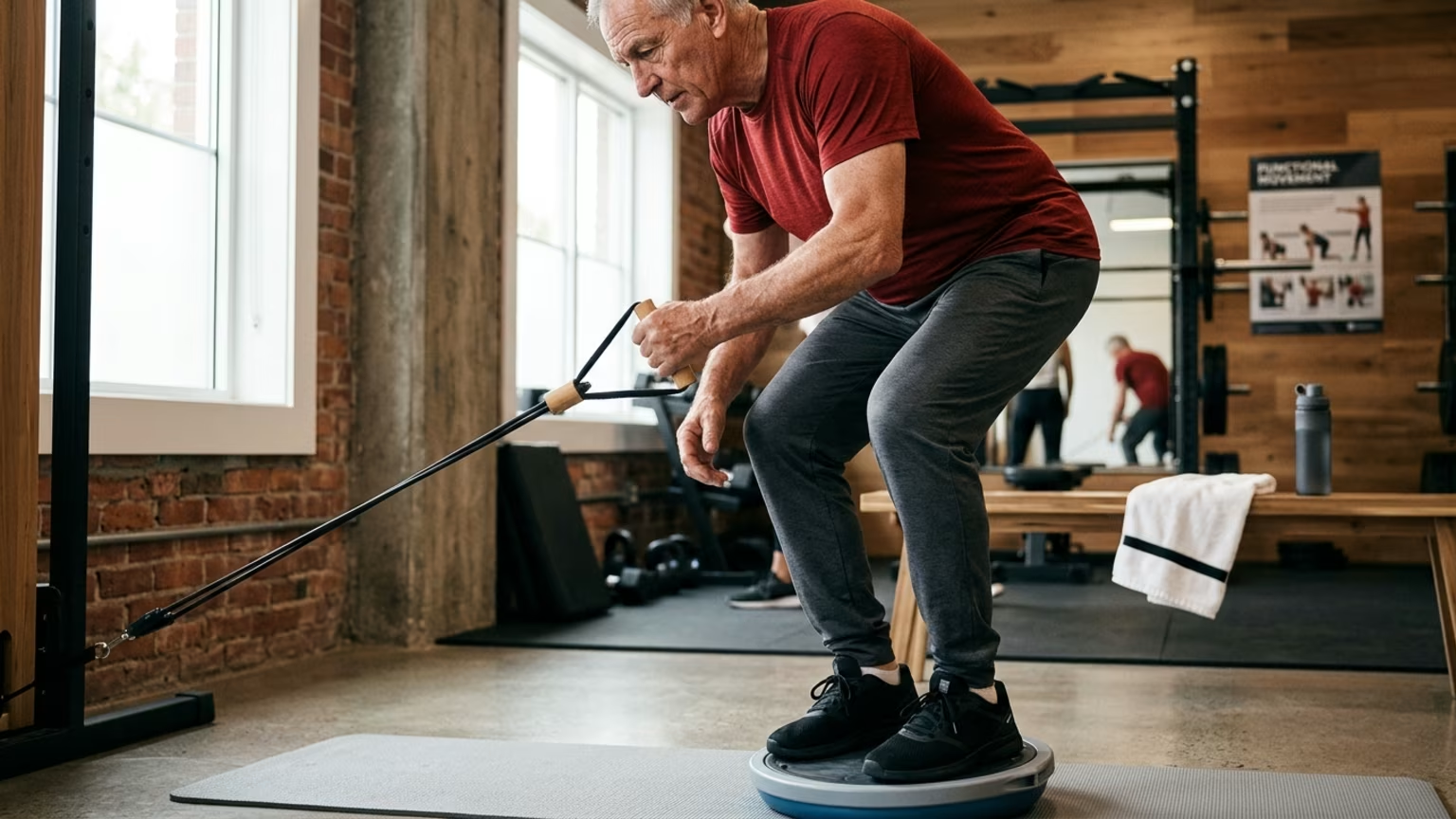
The clinical outcomes of multicomponent exercise programs are highly specific. The 2026 protocol paper notes that combining strength and balance work improves muscle strength, mobility, postural control, and cardiorespiratory capacity. A recent review of cardiovascular risk guidance confirms this approach. This combination of aerobic activity, resistance training, balance work, and flexibility reduces functional decline and fall risk.
The push toward multicomponent programming reflects a deeper understanding of how the body ages. Older adults who only walk for exercise often lose muscle mass and functional strength. Those who only lift weights may lose their rotational mobility and static balance over time. A balanced approach helps multiple physiological systems receive the stimulus needed to function effectively.
The Washington Post article translates these clinical outcomes into five practical movements. The routine prioritizes functional capacity rather than maximal athletic performance. Each movement targets a specific physical adaptation required for everyday independence. The primary physiological findings from the experts highlight several distinct capacities.
Lower-Body Strength and Sit-to-Stand Mechanics
The sit-to-stand movement rehearses a fundamental daily task. Rising from a chair requires coordinated lower-body strength and joint stability. This exercise provides a simple way to observe whether leg strength or joint discomfort limits function. Practicing this movement regularly builds the foundational strength needed for maintaining independence during floor transfers.
Ankle Control and Heel Raises
Heel raises specifically target calf strength and ankle control. Men who lift weights regularly often neglect this specific area of lower leg stability. Gym training does not automatically guarantee good ankle control or single-leg stability. Walking on uneven ground requires significant input from the calves and feet.
Proprioception and Tandem Stance
Tandem stance or tandem walking creates a narrow base of support. This deliberate narrowing challenges balance and proprioception more directly than ordinary walking. The physical therapists selected this movement to directly improve postural control. Better postural control is a necessary physiological outcome for men who want to stay active.
Standing Hip Function
Standing hip exercises address a critical area of aging biology. Healthy aging requires focused attention on the hips and lower limbs. Moving the hips while maintaining a steady standing posture improves overall pelvic control. This movement pattern supports everyday tasks like climbing stairs or carrying luggage.
Postural Mobility and the Wall Chest Stretch
The dynamic pectoral stretch on a wall addresses upper-body mobility. This movement counters the forward posture often developed through daily desk work. The experts present this stretch as a pure mobility exercise rather than a strength builder. Improving chest flexibility helps maintain upright posture during walking and running.
Integrating the Routine with Current Health Guidelines
The five movements offer a practical starting point for daily activity. They do not replace a complete training program. The World Health Organization provides clear physical activity guidelines for older adults. WHO recommends accumulating 150 to 300 minutes of moderate-intensity aerobic activity each week.
Adults can also choose to perform 75 to 150 minutes of vigorous activity. WHO recommends muscle-strengthening work on at least two days per week. The organization also advises varied multicomponent activity focusing on functional balance and strength on three or more days per week. The Washington Post routine serves as a mobility and balance supplement to these guidelines.
A 2026 review on muscle health recommends broader implementation of progressive resistance programs. This literature highlights tracking changes in strength and function over time. A man who already strength trains might use these five movements as a daily minimum. Someone who is currently sedentary may need a slower progression.
Practical Application for Men Over 45
Consistency is the most important factor in any mobility practice. A short sequence of these five movements can serve as a daily reminder to move. Men should use the routine to anchor their physical habits on days without a full workout. It is highly beneficial to treat balance as a specifically trainable capacity.
Start balance work beside a stable counter or wall. Men should progress from holding support to light fingertip contact only when their control is reliable. Sit-to-stands should also be measurable and trackable. Use a consistent chair and record how many controlled repetitions you can perform without using your hands.
This allows you to track true functional progress rather than simply checking a daily box. Do not confuse mobility practice with comprehensive strength training. You must continue appropriately progressed resistance exercise for the major muscle groups. Increase your range of motion, repetitions, or external resistance only when your technique is completely stable.
Recording these small functional details creates a reliable baseline for your physical health. If rising from a chair becomes noticeably harder over a few weeks, you have an early warning sign. This allows you to adjust your recovery, sleep, or training volume before an injury occurs. Treating daily mobility as a diagnostic tool keeps you in tune with your physical state.
Many older men fall into the trap of measuring their fitness strictly by gym numbers. True physical independence relies heavily on how well those numbers translate to real environments. Transitioning from a flat gym floor to a rocky hiking trail challenges the ankles and hips in unpredictable ways. This is why incorporating specific proprioception tasks provides immense value.
These small daily movements bridge the gap between isolated muscle strength and applied physical capability. You do not need to spend hours stretching to see a physical benefit. A few minutes dedicated to targeted mobility work protects your capacity to enjoy outdoor hobbies. For a broad view of joint health, you can review specific strategies for maintaining lower body mechanics.
Clinical Caveats and Limitations
The Washington Post article reports expert recommendations from physical therapists. It is not a randomized trial proving that this exact sequence prevents falls. The available article information does not establish a universal repetition count or progression model. Readers should avoid presenting one fixed dose as clinically validated for all adults over 50.
The term daily should not be interpreted as performing every movement at high intensity. The routine provides functional movements to practice regularly. Tandem stance and tandem walking can actually increase fall risk if performed without nearby support. A sturdy chair or wall provides a sensible starting point for anyone returning to exercise.
The five movements cannot fully train maximal strength, power, cardiovascular fitness, or bone-loading capacity. Men with significant pain, dizziness, recent falls, or neurological symptoms must seek professional advice. Major joint limitations or serious cardiovascular disease require individualized clinical evaluation before beginning new lower-body exercises. New falls, persistent pain, breathlessness, or fear of movement warrant professional assessment rather than adding more repetitions.
Men looking to evaluate their own joint function safely can explore structured hip assessment strategies. Adding aerobic work is a vital component of a healthy aging strategy. Activities like walking, cycling, hiking, or swimming help meet the broader weekly aerobic recommendations. The five-movement routine does not cover these cardiovascular requirements on its own.
Balancing short daily mobility practices with sustained aerobic efforts builds a highly resilient cardiovascular system. We often discuss this concept in our guide to protecting cognitive health through exercise.
The Future of Functional Tracking
The recent focus on multicomponent training highlights a broader trend in healthy aging. Current guidance increasingly treats mobility as a measurable healthspan outcome. This metric sits alongside strength, balance, and the ability to perform daily activities. Relying only on participation or gym attendance is no longer the standard for physical longevity.
Useful markers of functional health include rising confidently from a low chair. Walking safely on uneven ground and recovering from physical activity without excessive fatigue are equally important. Tracking these real-life capacities provides better feedback than merely looking in the mirror. Maintaining this physical capability allows men to fully engage in travel, sport, and family life.
What this changes is that daily movement routines are shifting away from arbitrary step counts and isolated gym exercises toward measurable, multicomponent practices that explicitly prioritize long-term functional independence.
How Everfitguys helps
Integrating daily balance and mobility work into a weekly exercise plan requires understanding current physical therapy protocols rather than guessing at random stretches. Stiffness, joint pain and reduced mobility that limits activity can easily discourage consistent practice, and Everfitguys analyzes clinical biomechanics data to help you maintain functional strength and joint health safely. Read the research
Sources
Stay sharp
Get stories
The best writing on craft and life, delivered once a week. No noise, just the good stuff.