Deadlifts and Strength Training After 70: New Research Breakdown
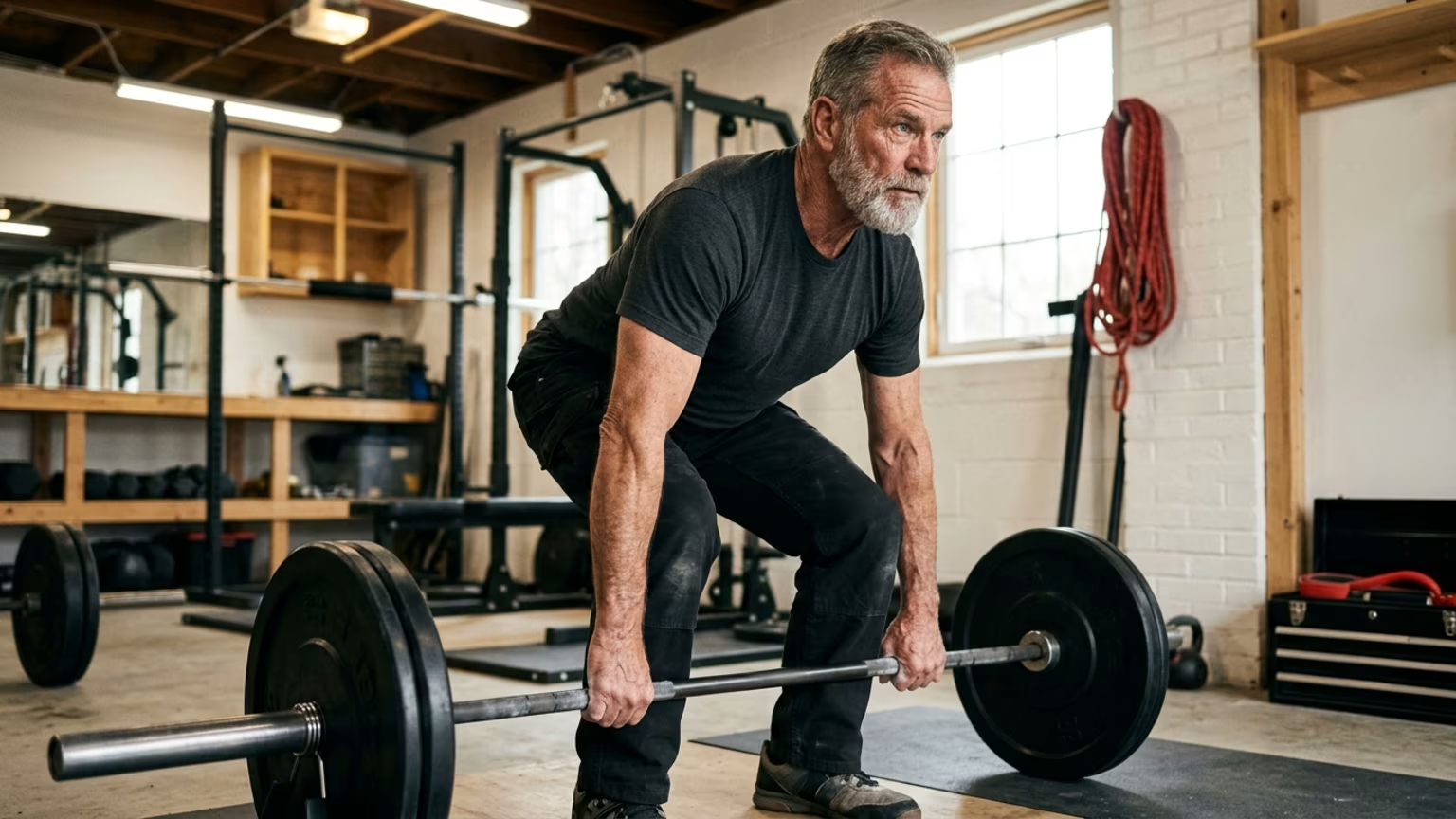
On September 17, 2026, The Indian Express featured 71-year-old Pinkie Roshan performing deadlifts to highlight how older adults can safely use resistance training. This coverage coincides with a recent systematic review and meta-analysis examining the physical effects of resistance training on muscle size and strength in very elderly adults.
The Trial Methods
Researchers evaluated the physical impact of resistance training on older populations through multiple large clinical reviews. One major systematic review and meta-analysis specifically examined adults aged 75 and older. The authors isolated data for adults aged 80 and older to understand outcomes in the oldest demographics. A separate clinical review analyzed fall prevention across 59 distinct studies involving 12,981 participants.
Additional evidence reviewed included an American College of Sports Medicine position stand on resistance training. Furthermore, researchers evaluated a systematic review of exercise specifically for older adults with sarcopenia. This allowed the data to address older adults with clinically recognized muscle loss rather than only healthy exercisers. The broad scope of these reviews captured diverse training interventions and physiological responses across different aging populations.
These extensive clinical reviews collectively form a highly reliable foundation for evaluating physical training protocols. By aggregating data across thousands of mature participants, researchers can identify clear physiological trends that single studies might easily miss. This broad analytical approach helps separate isolated anomalies from highly consistent physical outcomes.
Primary Findings
The systematic review reported significant improvements in overall muscle strength among very elderly adults following resistance training. The strength effect size was 0.97 for the general group, with a 95 percent confidence interval of 0.50 to 1.44. In adults aged 80 and older, the strength effect size reached 1.28, showing a 95 percent confidence interval of 0.28 to 2.29. The same review found a significant improvement in whole-muscle hypertrophy, showing an effect size of 0.30 and minimal reported adverse events.
Beyond sheer muscle size, resistance training supported broader physical function. An American College of Sports Medicine position stand reported clear improvements in muscle power and muscular endurance. The same stand noted measured gains in contraction velocity, gait speed, overall balance and physical function compared with no exercise. A systematic review of exercise for older adults with sarcopenia reported improvements in grip strength, knee extension strength, lower extremity muscle mass and functional mobility.
Exercise can support bone fracture prevention through two primary routes: reducing falls and maintaining or improving bone mineral density. The bone health review cited high certainty evidence that structured exercise directly reduced falls. Researchers reported a fall rate ratio of 0.77 across the 59 analyzed studies, highlighting a significant protective effect for active older adults.
Clinical Assessment
Dr Gazanfar Patel, a consultant in orthopaedic minimally invasive surgery and a sports medicine specialist at Wockhardt Hospitals Mumbai Central, explained the clinical view. He told The Indian Express that the viral video illustrates how aging does not automatically require someone to abandon strength training. Patel noted that appropriately prescribed resistance exercise may help counter age-related declines in muscle mass, raw strength, physical balance and bone density.
Patel described the deadlift as a functional movement involving the hips, thighs, back and core. These muscle groups are used heavily in daily activities such as lifting heavy objects, climbing steep stairs and standing up from a low chair. He linked maintaining this lower body strength directly with preserving physical mobility and independence in later life. This functional perspective aligns with broader research prioritizing daily capability over isolated muscle mass.
The specialist highlighted a central clinical distinction between chronological age and actual training readiness. Patel explained that age alone does not make heavy lifting inherently unsafe for older adults. The more important questions are whether the person has been progressively conditioned for the heavy load and can consistently maintain sound lifting technique.
Progressive Loading
For beginners learning the movement, the practical starting point is not to chase heavy weight. Patel suggested that bodyweight exercises, basic resistance bands, light dumbbells and controlled hip hinge drills are suitable entry points. The practical sequence is to learn the hinge pattern first, use manageable resistance, preserve control and then increase loading gradually. This steady approach allows the body to adapt safely over time.
Proper technique must be strictly protected under physical fatigue. Patel specifically cautioned against jerking the weight from the floor, losing control of the descending movement and repeatedly rounding the lower back under a heavy load. He advised starting with highly manageable resistance and increasing it only when the movement can be performed perfectly. The primary goal is to build structural tolerance before challenging absolute strength limits.
Deadlifts themselves are not strictly mandatory for building this critical capability. The underlying objective of improving lower body, hip and trunk strength can be pursued with appropriately scaled movements based on individual physical limitations. Sit-to-stands, supported functional exercises, seated machines, resistance bands or elevated pulling variations can serve the exact same physiological purpose safely.
Broader Programming
The overall evidence base argues for a broader, multicomponent exercise program rather than relying on heavy deadlifts alone. The bone health review noted that effective programs commonly combine balance or functional training with targeted resistance training. Some programs also integrate mild impact exercise to further support bone density. Fall prevention research heavily favors combining resistance work with balance, functional movement, active gait or coordination training.
Relying exclusively on heavy barbell lifts may limit overall functional adaptation and daily agility. The bone health review cautioned that resistance exercise alone has less certain evidence for reducing falls than comprehensive programs that train balance and functional physical tasks directly. Adding comprehensive multicomponent exercise blocks alongside foundational strength work creates a much more resilient physical base. A well rounded routine efficiently addresses multiple physical qualities simultaneously without excessive systemic fatigue.
Falls represent a major threat to long term physical independence, making their prevention a highly critical clinical priority for aging men. Resistance training builds the raw physical capacity needed to arrest a sudden physical trip. Balance training conditions the nervous system to deploy that strength quickly enough to prevent the actual fall.
Reported Caveats
Researchers noted several limitations and structural caveats in the available clinical data. The meta-analysis of very elderly adults did not find statistically significant improvements in handgrip strength or muscle fiber hypertrophy. The systematic review regarding older adults with sarcopenia noted that measured physical effects varied considerably by the specific outcome and the chosen training intervention.
The recent social media coverage of Roshan also carries important contextual limitations. Her impressive performance is an example of one trained individual rather than broad evidence that every older adult should perform heavy conventional deadlifts. The Indian Express article did not provide a verified weight, an exact number of repetitions, a detailed training history or any medical screening details for her lifting session.
Physical pain should never be ignored or normalized during these loaded movements. Patel advised that persistent back, hip or knee pain should prompt the person to stop the exercise. Physical numbness or sudden weakness also warrant seeking professional assessment immediately. Furthermore, he recommended securing explicit medical advice before training for people with a history of osteoporosis, significant joint problems, spinal issues or previous invasive surgery.
Resistance training can consistently improve important physical outcomes, but it should not be presented as a guaranteed way to prevent falls, fractures, osteoporosis or age-related disease. The bone health source specifically distinguishes observed improvements in risk factors from direct clinical evidence of reduced falls. The overall certainty of evidence varies considerably by the specific exercise type and the targeted physical outcome being measured.
Functional Priorities
The clinical guidance translates into several highly clear steps for older adults approaching heavy resistance work. First, mature readers should treat isolated social media lifting performances as interesting illustrations rather than specific daily training targets. The most relevant question is not whether a reader can match another person’s heavy load, but whether he can perform a controlled hinge with a load strictly appropriate to his current physical ability.
Second, older individuals must build the foundational physical movement carefully before building the external load. Those unfamiliar with the standard deadlift pattern should begin with a bodyweight hinge, a sit-to-stand pattern, a basic resistance band or a very light weight variation. Resistance should increase only when the current variation can be performed with absolute physical control and highly consistent technique. Sudden jumps in load are specifically identified as a major problem.
Finally, physical success should be measured primarily by everyday function rather than gym ego. Better chair rises, easier stair climbing and improved carrying capacity are critical metrics. Faster walking speed, steady balance and prolonged daily independence are also outcomes directly relevant to healthy physical aging. These highly functional metrics are strongly supported in the broader resistance training literature and represent the true value of building lasting physical reserve through middle age and beyond.
Paradigm Shift
This research merely confirms existing knowledge that very elderly adults can safely build meaningful strength and muscle mass through progressively loaded resistance training, rather than altering current clinical best practices.
How Everfitguys helps
Balancing the need to lift heavy loads against the risk of joint injury requires precise load management rather than copying viral social media routines. Losing muscle, strength and physical capability with age demands objective programming, and Everfitguys unpacks current sports medicine data to help you safely build lasting lower body power.
Sources
Stay sharp
Get stories
The best writing on craft and life, delivered once a week. No noise, just the good stuff.