Functional Strength and Independence: Key Muscle Groups for Aging
On September 18, 2026, Men's Journal published practical guidance from performance coach Erik Pride identifying the six muscle groups most responsible for maintaining physical capability. This functional training framework aligns with recent clinical research evaluating how lower body power and grip strength predict healthy aging.
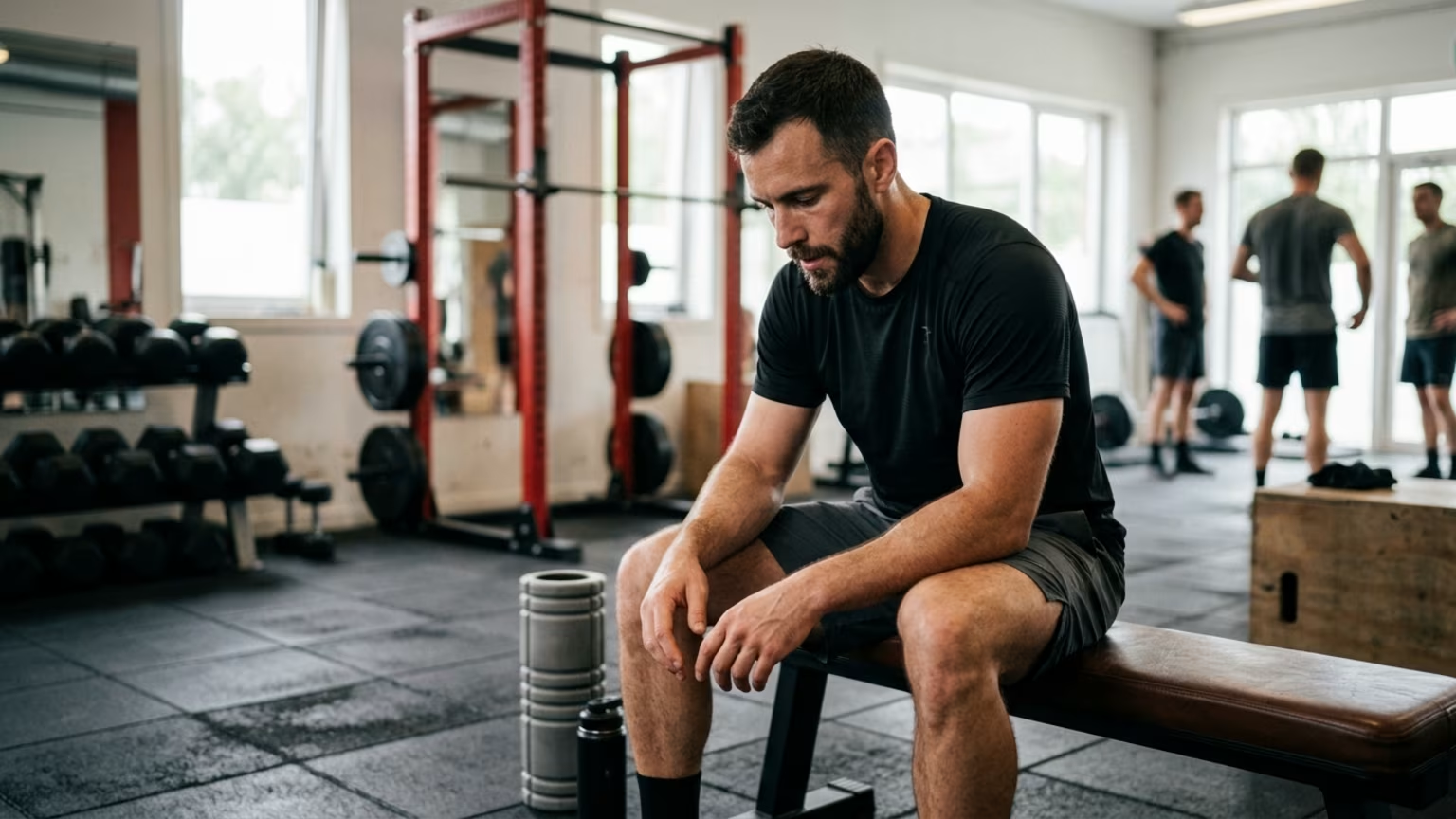
To evaluate how physical capacity changes over the lifespan, researchers rely heavily on standardized functional performance tests. A 2025 pooled analysis published in GeroScience established clear reference values for the five times sit to stand test. The researchers achieved this by evaluating 45,470 participants sourced from 14 different countries. Additional clinical investigations tracked older and middle aged populations to observe how chair stand performance correlated with adverse health events. A subsequent 2026 analysis specifically evaluated how measurable lower body power translated to basic daily living activities and overall mortality risk. Separately, a large systematic review carefully monitored frail older adults participating in guided exercise interventions. The researchers tracked short term functional improvements to compare them against actual recorded fall rates.
Lower Body Power and Rising
The clinical data reveals explicit physiological outcomes tied to leg strength and functional mobility. A 2026 analysis reported that poorer performance on the chair-stand test was associated with increased risks of falls-related injury, difficulty performing activities of daily living, and mortality in older adults. Additional research evaluated these specific capability markers in older populations. In that study, low sit-to-stand power and low handgrip strength were each associated with lower functional ability and mortality, and sit-to-stand power showed comparable predictive capacity to handgrip strength for several outcomes.
Pride translates this data into a targeted lower body training philosophy. He identifies the glutes, quadriceps, and calves as the primary priorities for maintaining basic mobility. The glutes drive hip extension, which directly powers standing up from the floor, climbing stairs, and changing direction rapidly. He recommends loaded hip thrusts or elevated glute bridges to train these actions with lower balance demands.
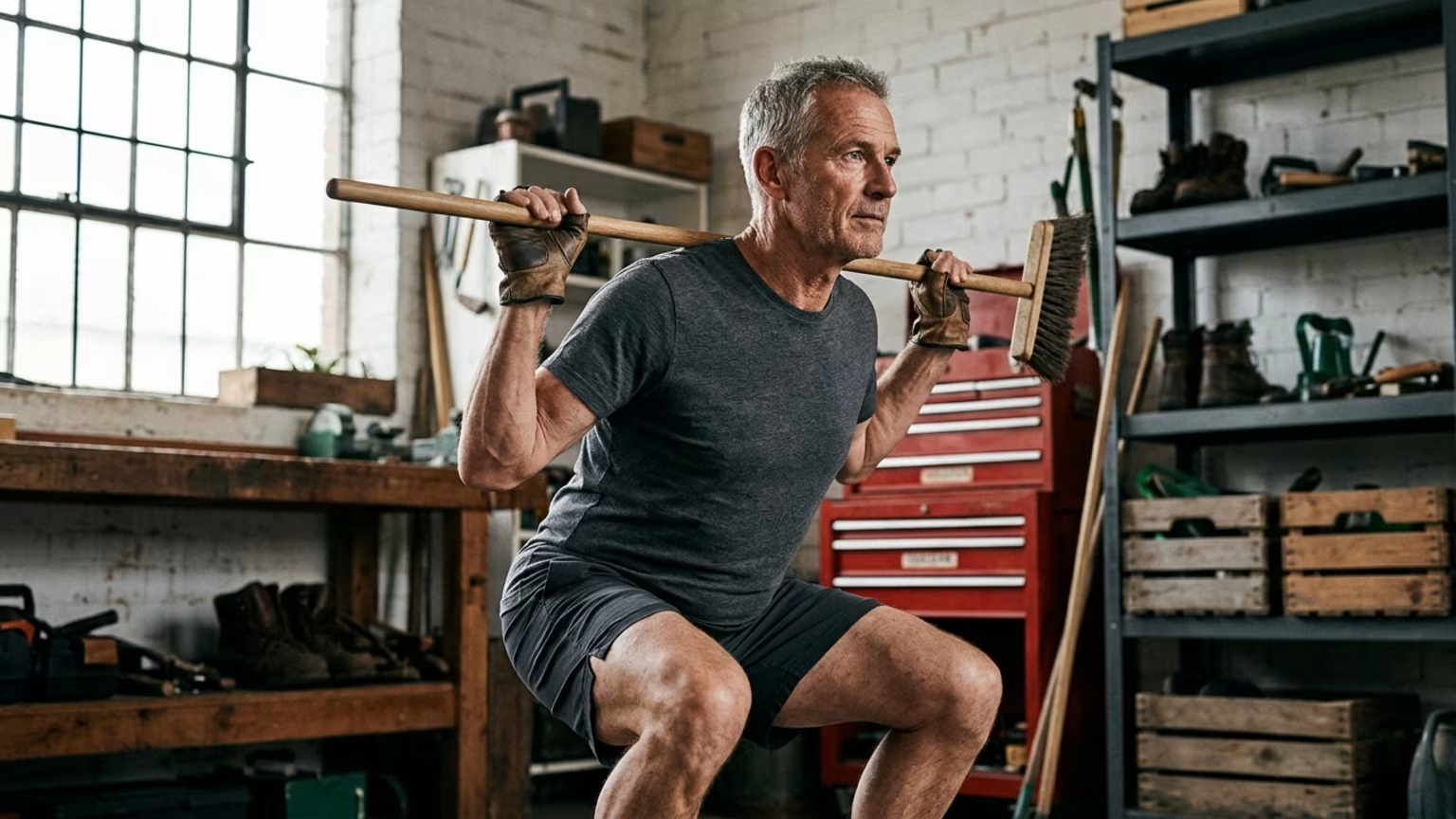
The quadriceps control the body during seated descents and assist heavily in stair climbing. Pride suggests practicing repeated sit to stands to build this specific capacity directly. For more advanced trainees, he recommends progressively loaded squat variations to continue preserving strength and power over time. This targeted approach prevents older men from relying entirely on momentum to rise from a seated position.
The calves provide the necessary support for walking, ankle force production, and push off during movement. Pride advises using the single leg calf raise to build local ankle strength safely. This unilateral movement also helps identify noticeable strength differences between the left and right sides. Addressing these imbalances early helps maintain a steady walking gait.
Upper Body Capability and Grip
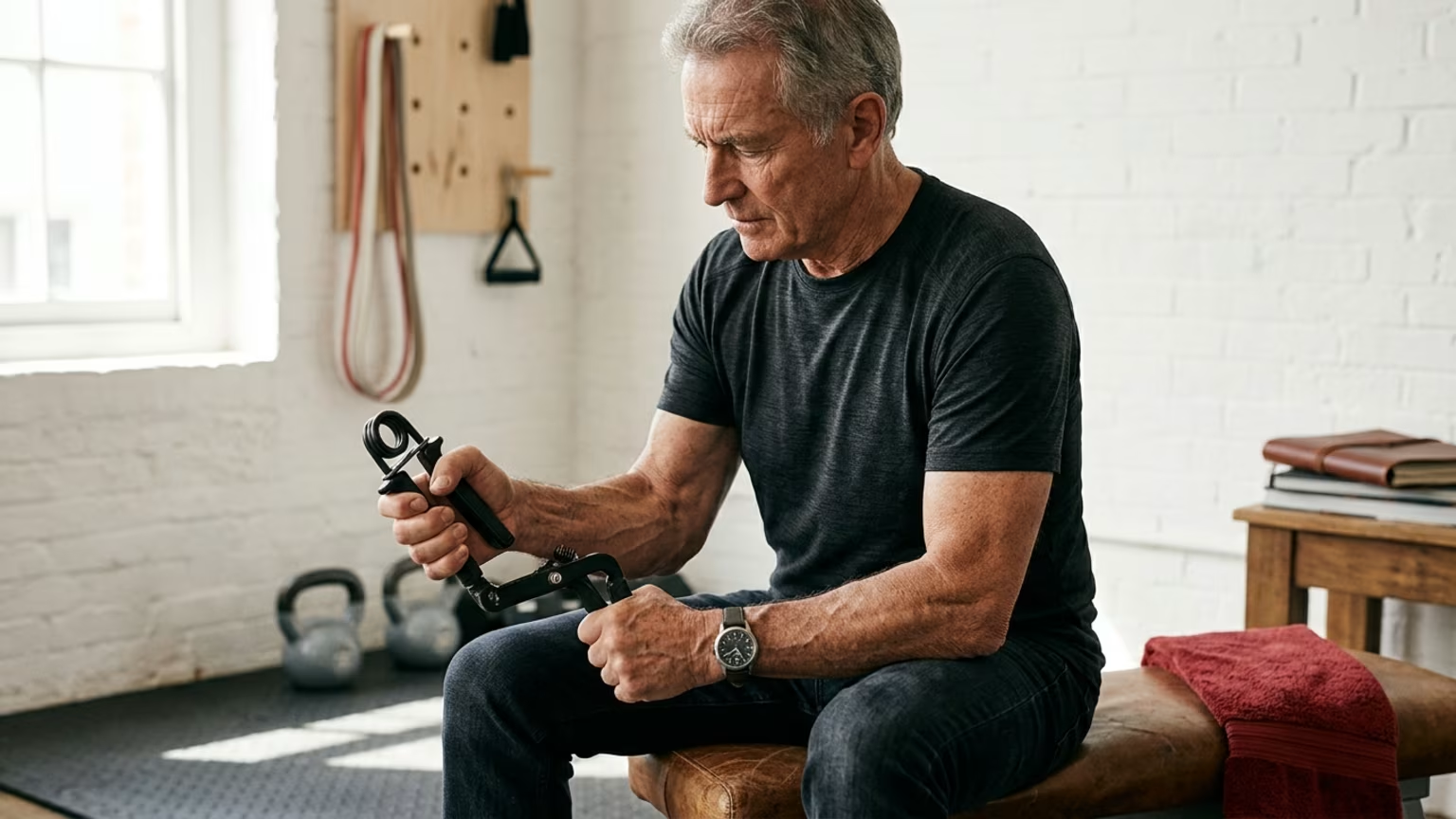
Handgrip capacity serves as another highly prominent clinical marker for evaluating healthy aging. A broad 2025 meta analysis observed that higher grip strength was associated with lower risks of cardiovascular disease, type 2 diabetes, cognitive decline, and disability. A separate review of physical capability measures found that people in the weakest quarter for grip strength had a pooled mortality hazard ratio of 1.67 compared with those in the strongest quarter. This association makes grip strength a valuable metric for tracking total physical resilience.
Pride addresses this upper body requirement by targeting the forearms, upper back, and core musculature. He views the forearms and grip as mandatory for carrying heavy groceries, using manual tools, and holding objects safely. His primary recommendation is the farmer's carry, where a person walks holding weights at both sides while maintaining a tall posture. This directly translates to everyday physical chores.
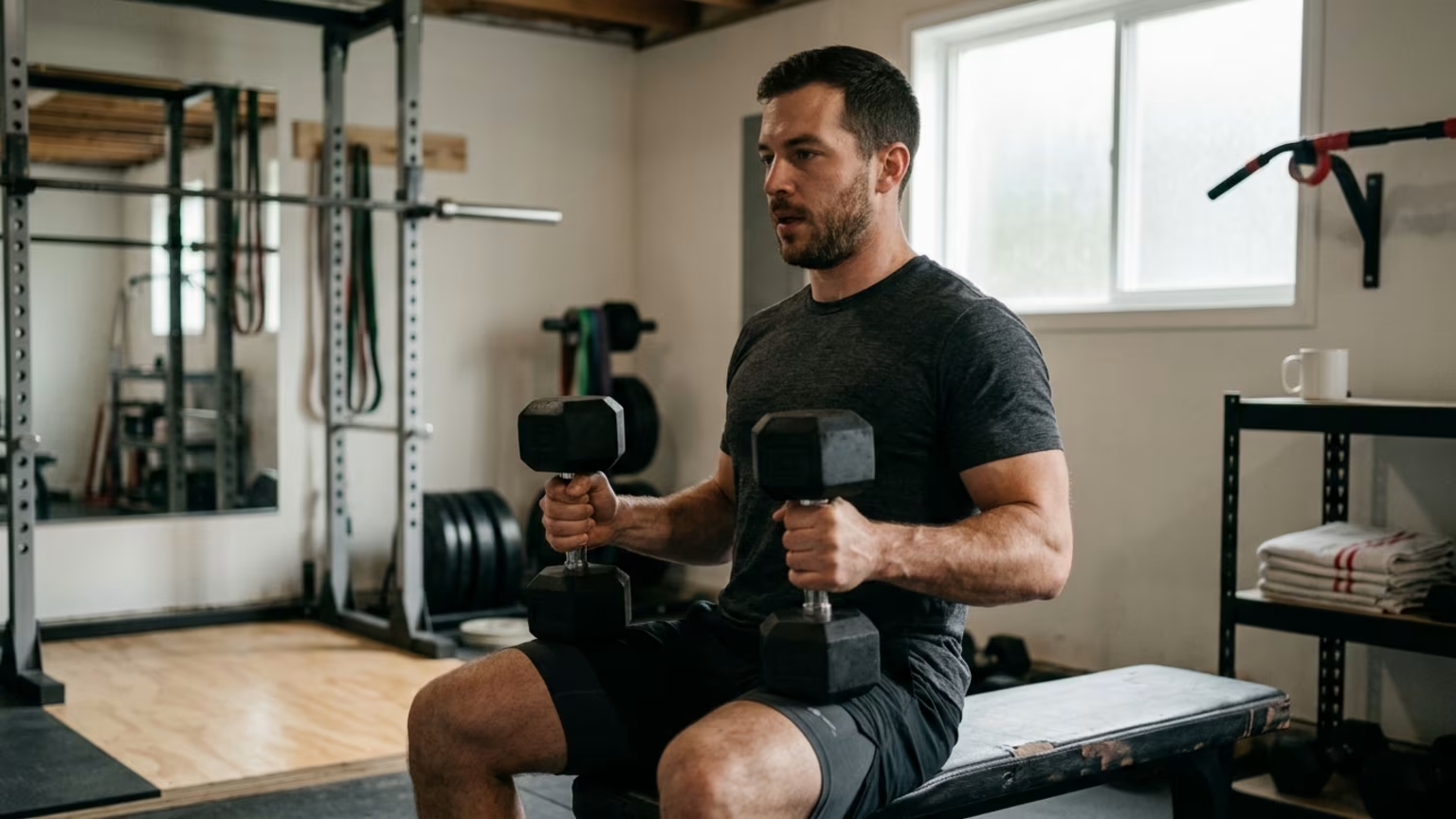
The upper back supports pulling actions, carrying capacity, and upright posture. This muscle group includes the trapezius, rhomboids, and rear deltoids. Pride recommends the chest supported row to build fundamental pulling strength safely. This specific movement reduces the spinal endurance demands compared to unsupported rowing exercises, which helps in managing joint health and training load as men age.
The core and obliques act primarily as trunk stabilizers rather than prime movers. Pride values these muscles for resisting unwanted motion and efficiently transferring force between the upper and lower body. He suggests the suitcase carry, where holding a weight in one hand forces the trunk to resist leaning sideways. Training the core as a rigid stabilizer prevents dangerous spinal twisting during heavy lifts.
Comprehensive Weekly Activity
The World Health Organization outlines specific targets that perfectly complement these functional strength priorities. Their guidance recommends muscle strengthening activity involving all major muscle groups on at least two days per week. For older adults, they recommend varied multicomponent activity focusing on functional balance and strength on three or more days per week. This structured multicomponent approach helps improve overall functional capacity safely.
Aerobic conditioning remains a separate but highly required physical target for overall health. The guidance calls for 150 to 300 minutes of moderate intensity aerobic activity per week. Adults who can safely perform vigorous activity may target 75 to 150 minutes instead. These aerobic recommendations work alongside resistance training rather than replacing it, offering a complete framework for redefining physical independence.
Applying the Framework After 45
Men focusing on longevity can use this clinical evidence to structure their weekly resistance training frequency and exercise selection. Training the hips directly through bridges or hinges builds the specific force required to climb stairs or stabilize the body. Practicing basic sit to stands serves as a highly practical way to rehearse a vital daily movement. These simple additions directly support long term physical autonomy.
Trainees should also include focused ankle work to maintain their walking speed and hiking capability. Loaded carries provide an extremely efficient way to challenge grip strength, posture, and coordination simultaneously. However, trainees should always begin with lighter loads and shorter distances to maintain perfectly controlled movement. Pulling exercises like chest supported rows help maintain upright posture while minimizing unnecessary lower back strain.
Pride argues that slow resistance training alone remains insufficient for aging adults. Older men must also maintain the physical capacity to catch themselves during a stumble, rotate efficiently, and move quickly. His practical focus targets preserving the ability to squat down, rise unassisted, and carry heavy objects. Being able to push, pull, and react rapidly forms the true foundation of capability.
Anyone returning from a long period of inactivity should seek a professional assessment before attempting heavy loaded carries or squats. Training intensity must be scaled appropriately for joint health, blood pressure, and individual recovery capacity. Active men can use functional tests as occasional progress markers rather than definitive medical diagnoses. Improving a chair stand time provides highly useful feedback, but it does not guarantee total immunity from future decline.
Methodological Limitations
The researchers note clear structural limitations in interpreting physical capability tests and exercise interventions. A systematic review found that exercise improved short-term function in frail older adults, but the authors cautioned that improvements in functional tests were not always robustly linked to reductions in actual falls. High performance on a controlled test does not completely eliminate real world fall risk.
Grip strength acts strictly as an observational health marker rather than a direct clinical cure. The studies highlight a strong statistical association between weak grip and adverse health events, but they do not establish causation. They cannot prove that isolated grip training independently causes better longevity or prevents chronic disease. A person can improve their grip strength without ever correcting poor gait, inadequate balance, or severe joint pain.
Additionally, the five times sit to stand test does not perfectly diagnose a person's overall mobility or total independence. Test performance is heavily influenced by joint pain, neurological conditions, standardized chair height, and total body mass. Finally, Pride's six priority muscle groups represent a practical coaching framework rather than an established clinical ranking. Everyday functional tasks require tightly coordinated contributions from the nervous system, vision, and cardiovascular system rather than isolated muscles.
What This Changes
This research confirms existing knowledge that specific clinical markers like grip capacity and sit to stand performance accurately predict future capability, shifting healthy aging protocols away from purely aesthetic goals and directly toward functional physical independence.
How Everfitguys helps
Choosing exercises that build real functional capacity rather than aesthetic muscle creates a persistent challenge for the aging adult, and this process becomes much simpler when Everfitguys unpacks the current capability metrics. Preserving physical independence routinely stalls when men experience falling energy, slower metabolism and unwanted changes in body composition, so Everfitguys explains the underlying clinical evidence to help readers stay strong, mobile, energetic and mentally sharp.
Sources
- Muscle groups for aging mobility and independence
- Impact of Relative Muscle Power on Hospitalization and All-Cause Mortality in Older Adults.
- Exercise improves short-term function in frail older adults but its effect on actual falls remains unproven, meta-analysis finds
- Sit-to-stand power vs. handgrip strength for the assessment of muscle function in older people: Impact on functional ability and mortality in the Toledo study for healthy aging.
- What Your Handshake Already Knows About You | Magellan
Stay sharp
Get stories
The best writing on craft and life, delivered once a week. No noise, just the good stuff.