How Hand Strength Serves as a Key Biomarker for Broader Cardiovascular and Systemic Health
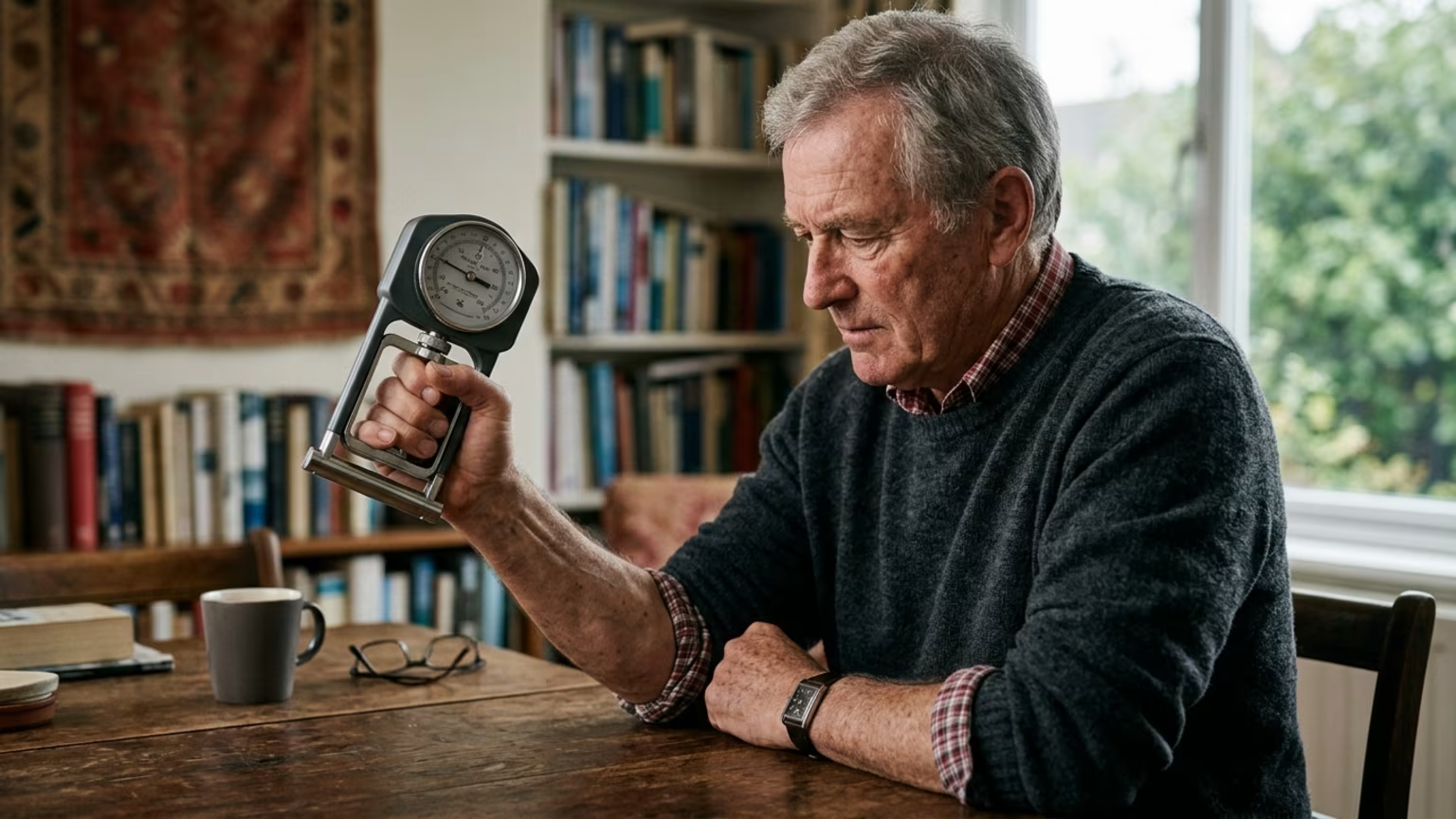
On September 25, 2026, USA Today published a detailed report connecting population-level grip strength research with practical training recommendations. The article explains how doctors use hand strength to measure broader physical function in older adults.
The findings draw on two major data sets observing adults over time. A 2024 study tracked more than 9,300 adults aged 45 and older for an average of about three years. Additionally, a large international effort tracked nearly 140,000 people across 17 countries to measure their physical capability against long-term medical outcomes. A separate 2026 review evaluated the international PURE cohort data while adjusting for individual physical activity levels and other risk factors.
The physiological outcomes show a clear mathematical relationship between hand strength and health risks. In the 2024 study, each 5-kilogram increase in a person's grip strength was associated with a nearly 8 percent lower risk of developing heart disease. The international cohort found that every 5-kilogram decrease in grip strength was associated with a 16 percent higher risk of death from any cause. The 2026 review noted that this measurement predicted all-cause and cardiovascular mortality more strongly than systolic blood pressure.
The USA Today report explicitly cautions against viewing these numbers as a simple cure. Grip strength acts as a reflection of physical activity, muscle quality, nutrition and nervous system function. It should not be treated as a standalone measure. The research establishes an association but does not prove that hand exercises directly lower mortality risk. The report also notes that testing scores naturally vary based on age, sex, body size and testing posture.
Why Hand Strength Reflects Systemic Health
Medical professionals have long used basic physical assessments to estimate overall vitality. According to Nick Maroldi, as quoted in the USA Today report, grip strength serves as a biomarker for overall musculoskeletal and systemic health. It requires the brain to send a strong signal through the central nervous system to the muscles of the forearm and hand. When this pathway works well, it indicates that the underlying neural and muscular systems remain structurally sound.
Keith Baar, also quoted in the report, points out that the connection is often misunderstood by the public. Improving your whole-body health and strength can naturally improve your grip, while strengthening the hands alone might fail to address underlying conditions. A focused hand routine will not repair poor metabolic health or resolve a lack of cardiovascular conditioning. The practical goal is building a capable body that happens to have strong hands.
This distinction matters deeply for men over 45 tracking their own health metrics. A low reading on a hand dynamometer is not a specific diagnosis. The 2026 review positions it as one potentially useful signal of overall function that should prompt a broader health assessment. Developing true physical capacity requires training the entire mechanical system.
How to Build Real World Holding Power
Many men assume that improving hand strength requires specialized grip trainers or endless squeezing motions. Maroldi argues against relying on these isolated squeezing tools. He recommends using whole-body movements that force the hands to grip, pull or carry heavy loads. This approach aligns with the need to build a solid foundation for healthy aging and full-body capability.
The USA Today article outlines several specific movements that challenge the hands while training the rest of the body. These recommended exercises include deadlifts, rows, pull-ups and loaded carries. For men who already lift weights, incorporating these exercises provides a highly efficient way to stimulate the central nervous system. When you perform a heavy deadlift, your hands must secure the bar while your legs move the weight.
For those returning to exercise, the approach can easily be scaled down safely. Everyday carrying and pulling activities provide a valuable starting point. Carrying heavy groceries, moving yard materials or pulling a loaded sled will challenge the fingers and wrists effectively. The goal is to perform physical work that demands sustained tension over time.
Structuring Your Weekly Grip Training
Varying the duration and intensity of your physical effort produces the best results. Baar recommends changing the challenge by using heavier weights for short durations and lighter weights for longer durations. Holding a reasonable amount of weight for 30 to 60 seconds can be just as beneficial as continuous lifting. This time under tension forces the muscle fibers to adapt and grow more resilient over time.
If you are adding these movements to your weekly routine, pay careful attention to recovery. The muscles and tendons of the forearm are dense and require adequate rest between heavy sessions. Performing loaded carries or dead hangs twice a week is usually sufficient for most older men. This frequency supports the development of sustainable power and joint health without overtaxing the elbows or wrists.
Safety remains a critical factor when dealing with heavy loads or hanging movements. The USA Today article stresses the importance of using equipment or structures that are completely secure and designed to support your weight. This is particularly important for dead hangs, where a failing grip could lead to an unexpected drop. Prioritize safe equipment and choose a level of effort that matches your current physical ability.
Addressing Joint Pain and Physical Limitations
Older men frequently deal with previous injuries or chronic joint conditions that complicate their training. The USA Today report advises anyone with hand numbness, a recent injury, an arthritis flare or persistent pain to consult a clinician or hand therapist. A medical professional can help you modify your approach before you progress to heavier work. Ignoring sharp pain in the wrist, elbow or shoulder will only lead to further physical setbacks.
Sometimes the simple act of changing the handle size or your arm position can alleviate discomfort. The report notes that testing and training results can be heavily affected by these minor positional adjustments. Using a thicker grip or a neutral hand position often reduces the strain on the elbow joint. Honest assessment of your physical state is necessary for building true carrying capacity after 45.
Connecting Systemic Health to Daily Vitality
Physical capability encompasses more than just the ability to move heavy objects. For men over 45, preserving muscle mass acts as a crucial defense against falling energy levels and unwanted changes in body composition. When you perform heavy deadlifts or sustained farmer's carries, you demand an immense amount of energy from your body. This intense physical work forces the metabolic system to adapt and supports better long-term health.
Furthermore, heavy resistance training plays a role in managing stress and improving recovery. Performing a challenging physical task requires deep concentration, forcing you to remain mentally sharp and present in the moment. The physical exhaustion that follows a session of heavy pulls or loaded carries often leads to improved sleep quality. The hands are simply the physical contact point for this demanding, full-body stress.
Modifying Movements for Older Adults
Not every man stepping into the gym is ready to deadlift heavy barbells or perform strict pull-ups. For those easing back into training, practical modifications make these whole-body movements much safer. If a barbell deadlift causes lower back discomfort, you can achieve a similar stimulus using a trap bar or heavy dumbbells. The trap bar allows you to keep the weight closer to your center of gravity while still challenging your hands.
Similarly, dead hangs can be altered to match your current physical capacity. If hanging freely from a bar causes shoulder pain, you can keep your feet lightly touching the floor or a small box. This reduces the total load on the joint capsule while still forcing the fingers and forearms to support significant weight. As your tendons adapt over several weeks, you can gradually reduce the assistance from your feet.
The same logic applies to loaded carries, which can easily be adjusted for different environments. You do not need professional strongman equipment to execute a farmer's carry effectively. Heavy kettlebells, dumbbells or even securely loaded backpacks can provide the necessary resistance. The key is maintaining a rigid posture, keeping the shoulders back and walking with purpose until your grip begins to fatigue.
Maintaining Perspective on Health Markers
It is very easy to look at striking medical statistics and draw the wrong conclusions about how to train. The reported data clearly shows that losing 5 kilograms of grip strength increases your risk of death. However, rushing to the gym to maximize your dynamometer score will not magically repair a failing cardiovascular system. The score is a reflection of your underlying physiology, not the direct driver of your mortality risk.
Instead, use this research to evaluate your current physical habits objectively. If you struggle to open jars, carry luggage or hold onto heavy objects, your overall physical reserve is likely declining. This decline points to a need for comprehensive resistance training and better daily movement habits. Responding to that physical warning with compound, heavy exercises will benefit your entire body.
Ultimately, this research confirms existing knowledge that full-body physical capability is a primary driver of long-term health and functional longevity. Maintaining muscle mass requires regular, demanding effort over decades, and the associations found in these large studies reinforce the value of staying highly active. Rather than fearing the natural decline of age, men can use targeted resistance training to maintain their physical independence. Training the hands through heavy carrying and pulling serves as a fundamental part of that process.
How Everfitguys helps
Organizing complex longevity data into a practical physical routine typically falls on the individual man directing his own fitness, and his daily decisions become much clearer when Everfitguys evaluates the clinical evidence. Not knowing which longevity and healthy aging claims are actually supported by research complicates exercise programming, so we analyze the latest strength studies to help readers maintain long term physical independence. Read the research
Sources
Stay sharp
Get stories
The best writing on craft and life, delivered once a week. No noise, just the good stuff.