Multicomponent Training After 45: Strength, Power, and Mobility
- A 2026 systematic review of 41 trials involving 3,141 older adults found resistance exercise significantly improved muscle-specific strength with a standardized mean difference of 0.61.
- The same clinical review reported that aerobic training and nutritional supplementation did not produce statistically significant improvements in pure muscle strength.
- A review of short exercise bouts noted age-dependent aerobic results but found peak power output improved across all measured age groups.
- A supervised exercise study tracking older adults reported that physical performance scores, measured grip strength, and average gait speed all improved following a training intervention.
- A longitudinal analysis spanning up to 20 years connected accelerated anthropometric aging with distinct declines in standing balance, manual dexterity, and eccentric muscle strength.
- Daily protein intake of 1.2 grams per kilogram of body weight is associated with 40 percent less muscle loss over three years compared to an intake of 0.8 grams.
- Global health guidelines advise 150 to 300 minutes of moderate aerobic activity and at least two days of muscle-strengthening work each week.
- For adults aged 65 and older, authorities recommend adding multicomponent activity that emphasizes functional balance and strength on three or more days weekly.
Reviewing Clinical Metrics
A 2026 systematic review and meta-analysis evaluated training outcomes across 41 randomized controlled trials. These trials collectively involved 3,141 adults aged 60 or older. Researchers determined that resistance exercise significantly improved muscle-specific strength in this older population. This measurable improvement was recorded with a standardized mean difference of 0.61 and a 95 percent confidence interval spanning from 0.27 to 0.94.
The review also assessed other common interventions for older adults to determine their specific impact. The authors found that aerobic exercise, concurrent training, and combined exercise and nutrition did not produce statistically significant improvements in muscle-specific strength. Nutritional supplementation alone also showed inconclusive results for building pure muscular force. These findings highlight targeted resistance training as the primary tool for this specific physical adaptation.
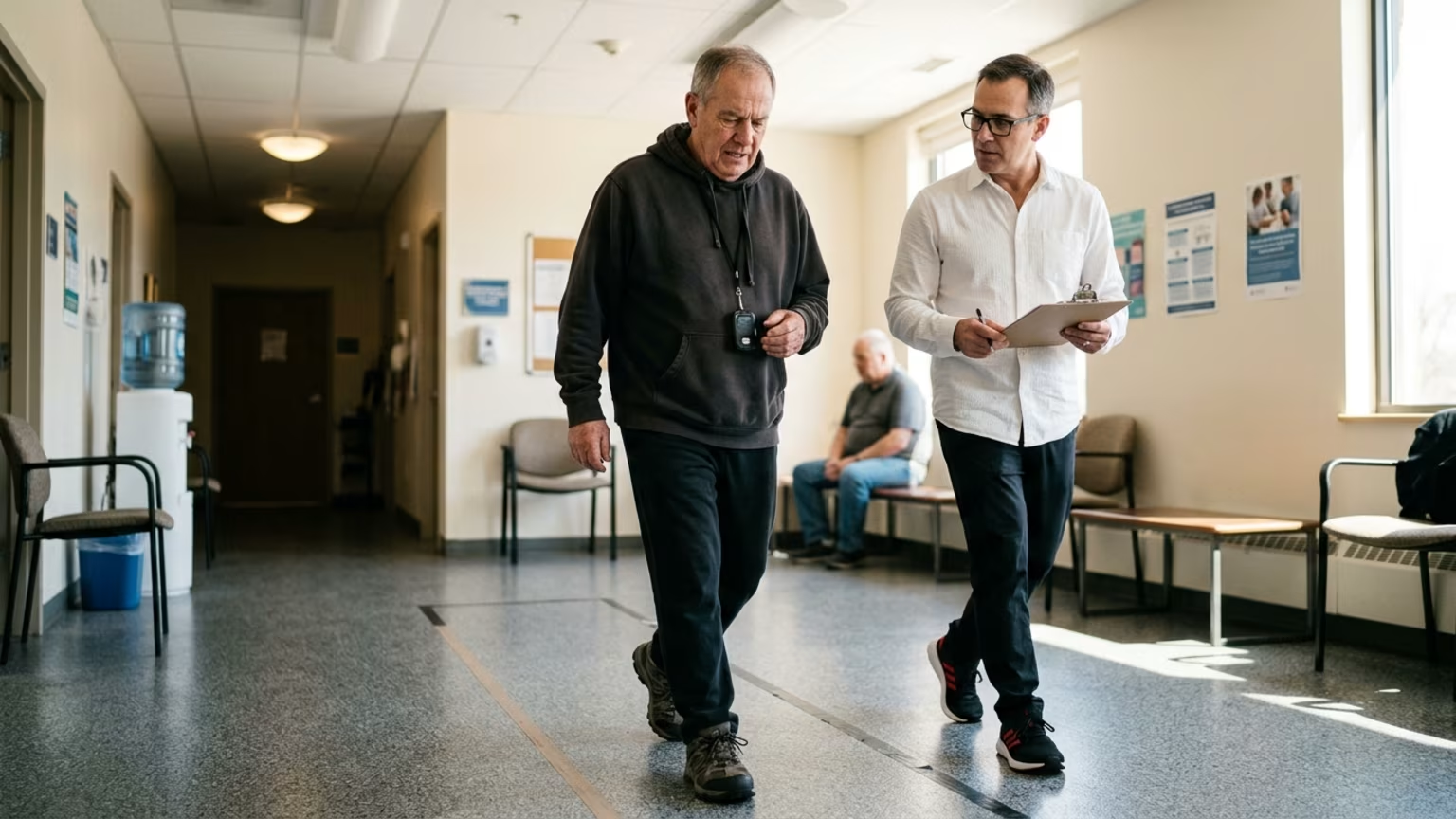
Specific intervention studies track how these physiological adaptations translate into measurable physical performance. One 2026 supervised exercise study recorded clear functional changes in its older participants. The subjects improved their Short Physical Performance Battery score from 9.1 to 10.1 following the supervised program. They also increased their measured grip strength from 16.9 to 18.3 kilograms, while their average gait speed improved from 0.78 to 0.85 meters per second.
Muscle power represents a distinct physical quality from absolute maximal strength. A 2026 systematic review of brief exercise bouts, often called exercise snacks, examined power outcomes across different age groups. The review found that peak power output improved across all measured age strata. However, improvements in VO2max were only statistically significant in participants younger than 50.
In the higher-age group from that same review, the reported VO2max effect was 0.56. This result carried a 95 percent confidence interval spanning from -0.17 to 1.30. Because the statistical interval crosses zero, the aerobic benefits of very short exercise bouts appear less consistent for older adults. This indicates that while brief bouts build speed and peak power, longer sessions remain highly relevant for cardiovascular capacity.
Long-term observational data emphasizes that aging affects multiple physical domains simultaneously. A longitudinal analysis spanning up to 20 years linked accelerated anthropometric aging with several distinct functional drops. The researchers associated this structural aging process with declines in standing balance, manual dexterity, and eccentric muscle strength. They also noted related declines in lower-extremity lean mass and fat mass.
Nutrition provides the foundational materials required to support these varied physical adaptations. One clinical review noted that daily protein intakes of 1.0 to 1.2 grams per kilogram of body weight are frequently recommended for older adults. The review cited specific evidence associating an intake of 1.2 grams per kilogram with 40 percent less skeletal-muscle loss over three years. This outcome was compared directly against a lower intake of 0.8 grams per kilogram.
Analyzing The Constraints
The available clinical evidence carries several important statistical limitations that dictate how it should be applied. The resistance-training meta-analysis reported a high heterogeneity level of 81 percent. This high variation indicates that the 41 included studies differed substantially in their participant profiles, training protocols, and chosen outcomes. These results confirm resistance training works broadly, but they do not isolate one perfect repetition range or weekly volume.
Observational findings require careful reading to separate simple correlation from direct causation. The 20-year longitudinal analysis establishes a clear link between anthropometric aging markers and functional decline. However, this association does not prove that structural aging directly causes balance loss or muscle weakness in total isolation. Functional decline remains a multidimensional process that cannot be reduced to a single biological metric.
The inconclusive findings regarding aerobic exercise must be interpreted narrowly. The review noted that aerobic work did not significantly improve muscle-specific strength, but this finding only applies to absolute force production. This finding does not test or negate the well-documented benefits of cardiovascular training for physical endurance, metabolic health, or blood pressure. Aerobic conditioning remains a central requirement for healthy human aging.
Data on multicomponent programs and dietary nutrition also requires clear boundaries. The cited multicomponent protocol paper summarizes prior evidence rather than presenting new randomized trial results. Furthermore, while the protein review highlights the benefits of a 1.2-gram daily target, these dietary findings summarize earlier observational studies. Protein supplementation cannot replace the structural stimulus provided by progressive resistance training.
Finally, the recent research on brief exercise bouts shows that age directly impacts physiological responses. The wide confidence interval for VO2max improvements in older adults highlights the variability of aerobic adaptations. While these short protocols show real promise for building peak power, the data does not establish a universal minimal-dose prescription for men over 45. Older trainees often need individualized progressions rather than standardized brief protocols.
Structuring Weekly Training
Global health frameworks support a broad and manageable approach to weekly activity levels. The WHO guideline summary recommends 150 to 300 minutes of moderate aerobic activity every week. Men can meet this baseline aerobic target through brisk walking, cycling, hiking, or swimming according to their current fitness. The guidance explicitly advises adding muscle-strengthening activity on at least two days per week to maintain force production.
Older adults benefit from a wider variety of movement practices to preserve their full independence. For adults 65 and older, the guidance adds multicomponent activity emphasizing functional balance and strength on three or more days weekly. This broader approach is particularly recommended where joint mobility is limited or where fall risk is a concern. These recommendations represent sensible ranges for population health rather than minimum requirements for athletic performance.
A defensible training plan assigns each physical quality a clear, distinct job. Resistance training builds and preserves force-producing capacity through progressive full-body movements. Aerobic conditioning maintains the fundamental ability to walk, hike, cycle, and recover from sustained physical effort. This foundation for everyday mobility requires consistent execution of both heavy strength and cardiovascular work.
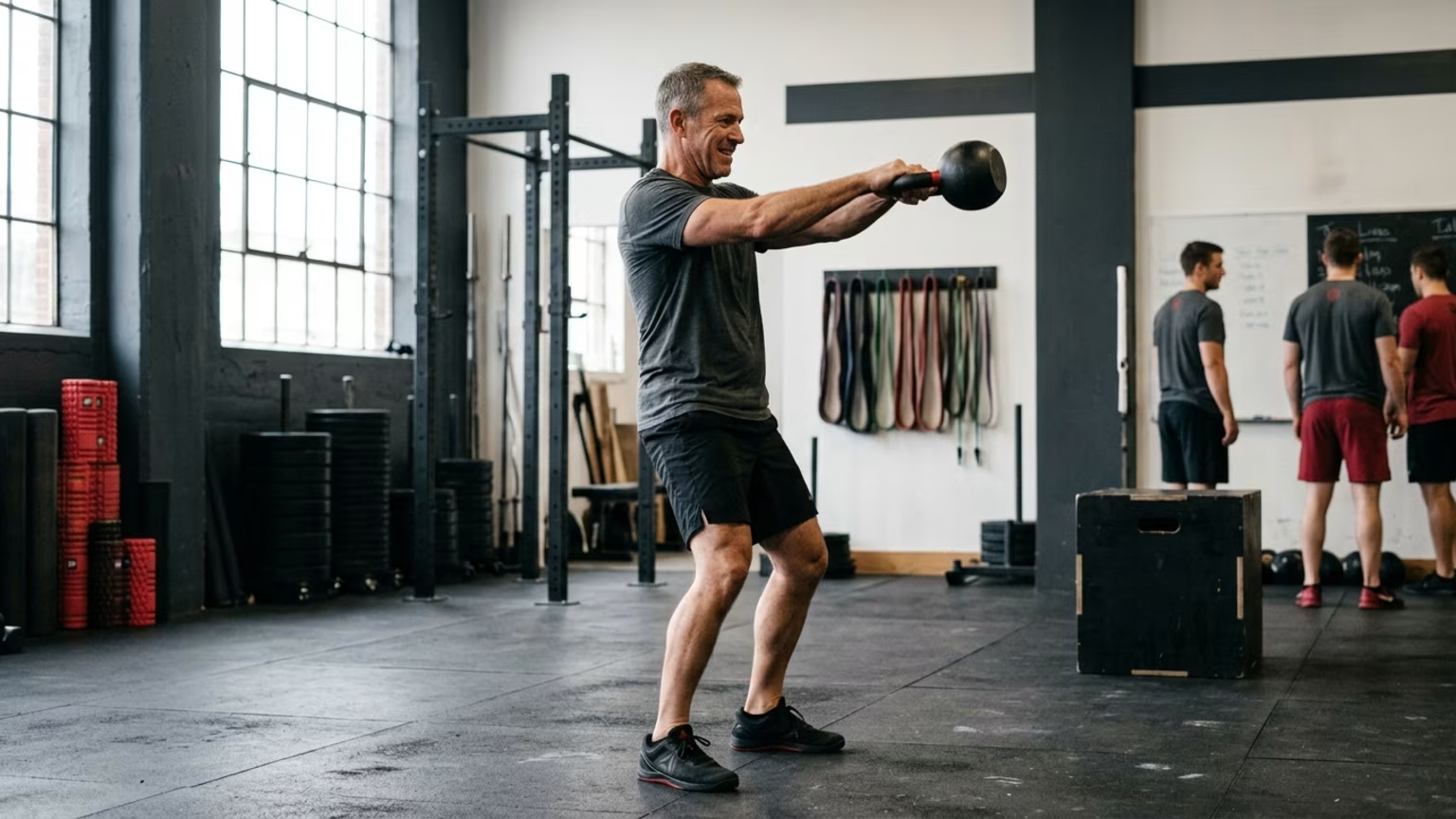
Power and movement control require dedicated practice beyond heavy lifting. Men can train muscle power through brisk step-ups, fast sit-to-stands, or medicine-ball throws, provided their joints tolerate the speed. Returning trainees and individuals with joint limitations must prioritize safe movement technique over raw velocity. Building power safely helps older men recover from trips or climb steep stairs efficiently.
Balance practice involves more than simply standing on one leg for as long as possible. Real-world balance involves sensory integration, stepping, braking, and the vital ability to recover from unexpected perturbations. Routine practice should include single-leg control, tandem walking, step-over tasks, direction changes, and controlled weight shifts. Regular mobility practice preserves usable movement through the specific joint ranges required for daily activities.
A practical week organizes these demands without requiring excessive gym time. One reasonable template includes two full-body resistance sessions and several moderate aerobic sessions accumulated through daily walking or cycling. Men can add short balance practice on multiple days and attach brief mobility work to standard warm-ups or recovery periods. This multicomponent approach addresses all major physical needs efficiently.
Applying this functional longevity framework requires sensible scaling for individual capacity. A man returning after years of inactivity should begin well below the recommended volume ranges and build his physical tolerance gradually. Anyone managing diagnosed conditions, significant balance issues, or recent joint injuries should seek appropriate clinical guidance before starting. The ultimate goal is consistent progression over time, not immediate maximum intensity.
The Long View
The big picture of physical capability centers on preserving your long-term movement options. Absolute strength helps you produce force against heavy resistance, while aerobic fitness provides the endurance required for sustained activity. Muscle power gives you the distinct ability to react quickly to physical obstacles. Functional balance helps you manage instability safely, and mobility allows all these capacities to function smoothly without pain.
Aging creates multidimensional physical changes that require a broad, multidimensional response. Relying entirely on a single fitness metric ignores the varied physical demands of daily independence. You do not need extreme training volumes, exhaustive intervals, or maximal athletic performance to secure your long-term physical health. Moving consistently across different exercise modes builds a highly resilient foundation for the years ahead.
How Everfitguys helps
Preserving multiple physical capacities often leaves active men battling the stiffness, joint pain and reduced mobility that limits everyday activity. Balancing a complete routine requires clear pacing rather than extreme athletic effort, and this daily schedule gains focus when Everfitguys translates current multicomponent training data. We clarify healthy aging research to help men stay strong, mobile and mentally sharp through later life. Read the research
Sources
Stay sharp
Get stories
The best writing on craft and life, delivered once a week. No noise, just the good stuff.